Hip-Opening Yoga Poses: 9 Deep Stretches for Tight Hips
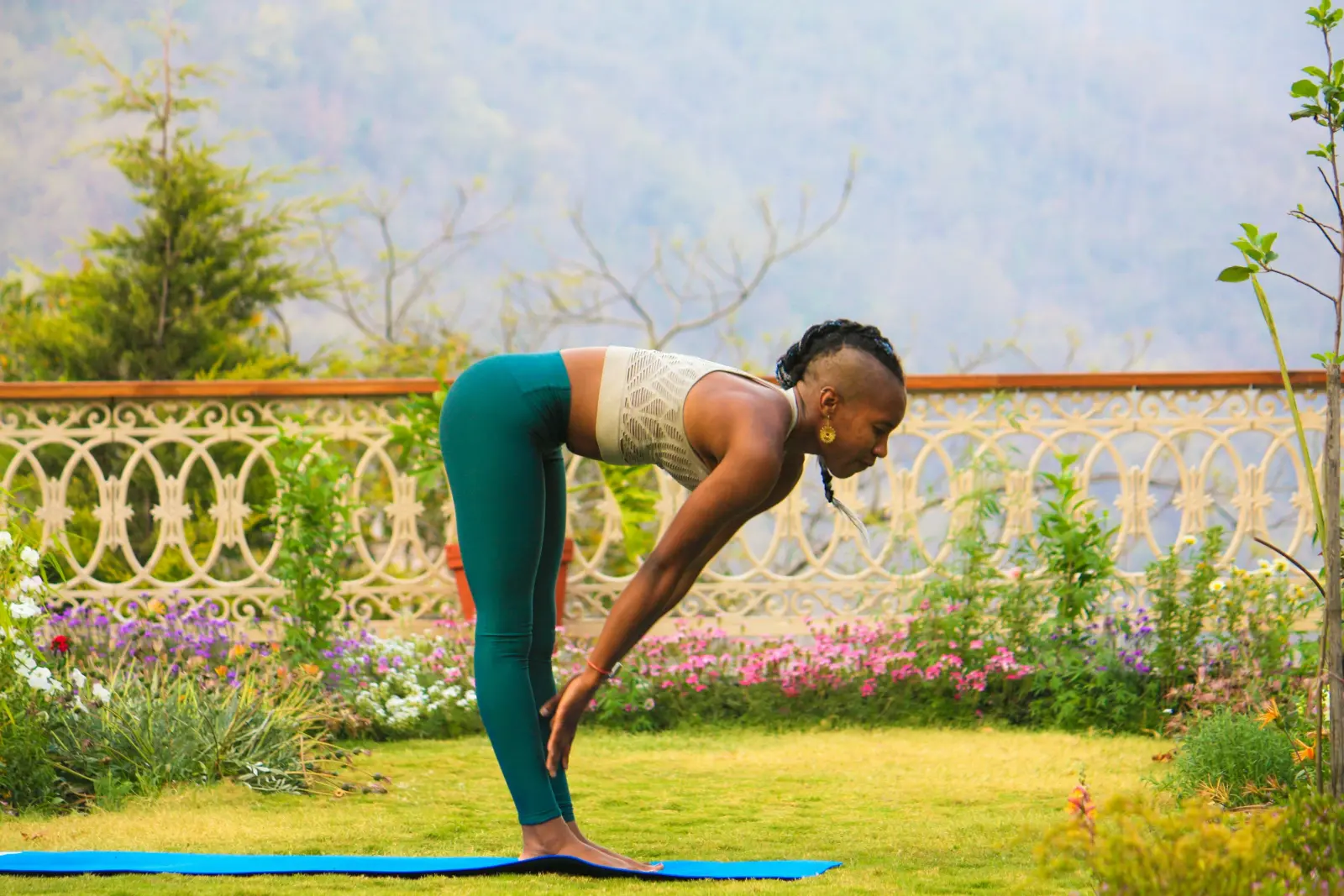
Hip-opening yoga poses are stretches that restore range of motion to the hip joint by releasing the muscles wrapped around it — the hip flexors at the front, the adductors along the inner thigh, and the deep rotators and glutes at the back and side. If your hips feel tight, you are in the majority: hours of daily sitting keep the hip flexors short and the rotators unused, and the body politely adapts to whatever we ask of it most.
The nine poses below work around the whole joint, front to back, in a sensible order — with the modifications that make each one honest for stiff bodies, not just bendy ones. Ten to fifteen minutes, a few times a week, is enough to feel the difference within a month.
Why do hips get so tight?
The hip is a ball-and-socket joint built for a huge range of motion — squatting, striding, sitting cross-legged on the ground. Modern life uses almost none of it. Chairs hold the hip flexors shortened for hours; the rotators and glutes, with nothing to do, stiffen from disuse; the inner thighs rarely reach the end of their range at all. Runners and cyclists add strong, repetitive flexion on top. The result is the familiar package: a stiff low back, aching hips after long sitting, and knees that complain in cross-legged positions.
"Opening" the hips doesn't mean forcing the joint anywhere new. It means patiently reintroducing the ranges the joint already owns — and yoga's hip openers are among the oldest toolkits for exactly that.
How to practice hip openers safely
Hips respond to patience and rebel against force. Five rules before you begin:
Warm up first. A few rounds of gentle movement — cat-cow, easy lunges, or a sun salutation or two — make every stretch below deeper and safer.
Protect your knees. The knee is the hip's innocent neighbor: in seated hip openers, pain should never appear in the knee. If it does, elevate the hips higher or back out.
Sit on height. For every seated pose here, a folded blanket or block under the sitting bones transforms the stretch. Props are technique, not surrender.
Stay at 6 out of 10. A strong, breathable stretch sensation — never sharp, pinching or radiating. Deep positions reached slowly last; positions forced today are gone (or sore) tomorrow.
Breathe longer than feels natural. Hip tissue releases slowly. Most of these poses only begin to work after five or six unhurried breaths.
A tip from our teaching hall: students always ask which single pose will "fix" their hips fastest. The honest answer is the boring one — the pose you'll actually hold, most days, for a minute or more. Depth impresses; frequency works.
1. Low Lunge (Anjaneyasana) — the front of the hip
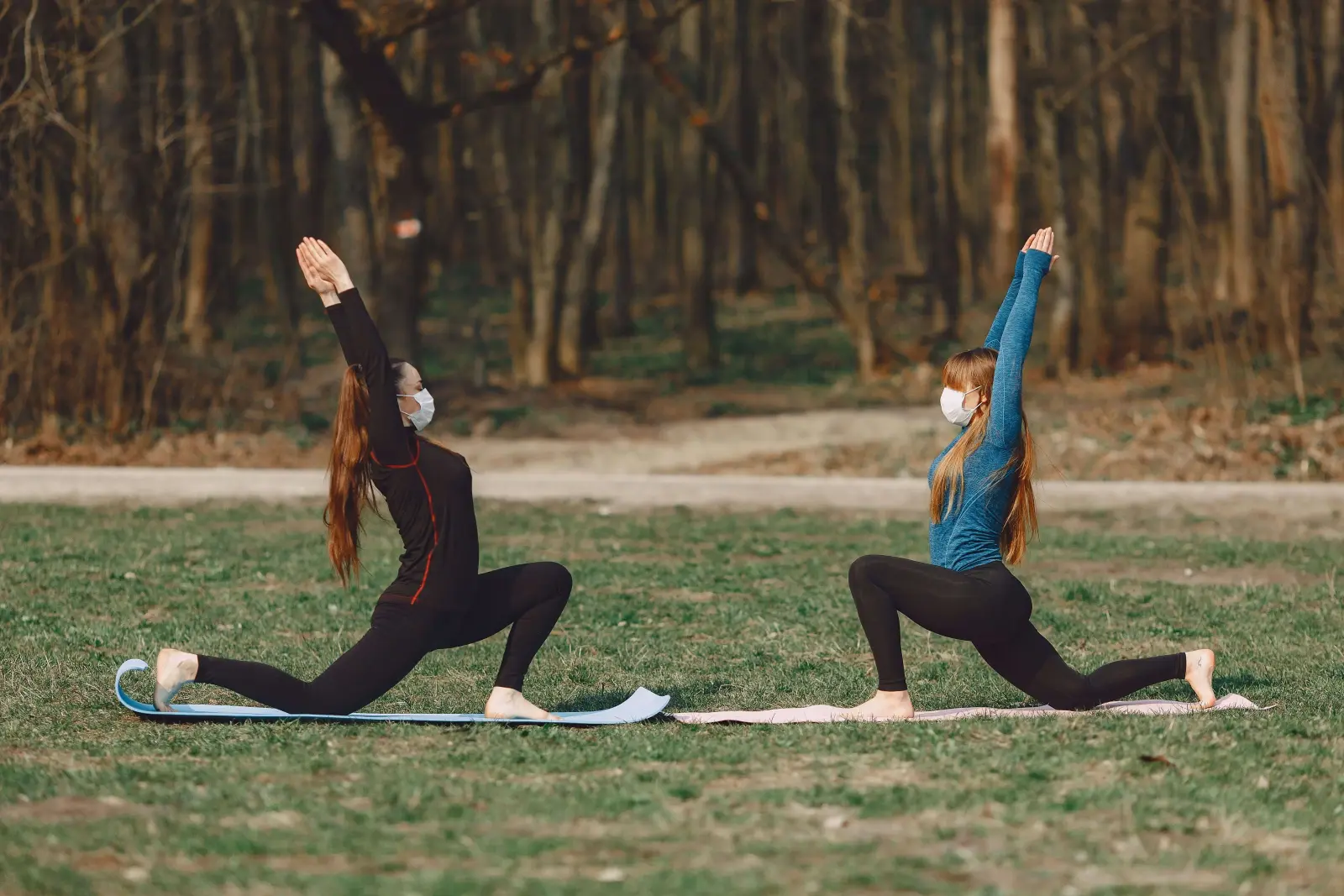
The direct antidote to sitting. Step your right foot forward between your hands, lower the left knee to the mat (pad it with a blanket), and let the hips sink gently forward and down until you feel a long stretch up the front of the left hip and thigh. Hands on the front thigh or reaching overhead. Five to eight breaths, then switch. Keep the front knee over the ankle, and lift the lower belly slightly so the stretch stays in the hip rather than pinching the low back.
2. Lizard Pose (Utthan Pristhasana) — the deep all-rounder
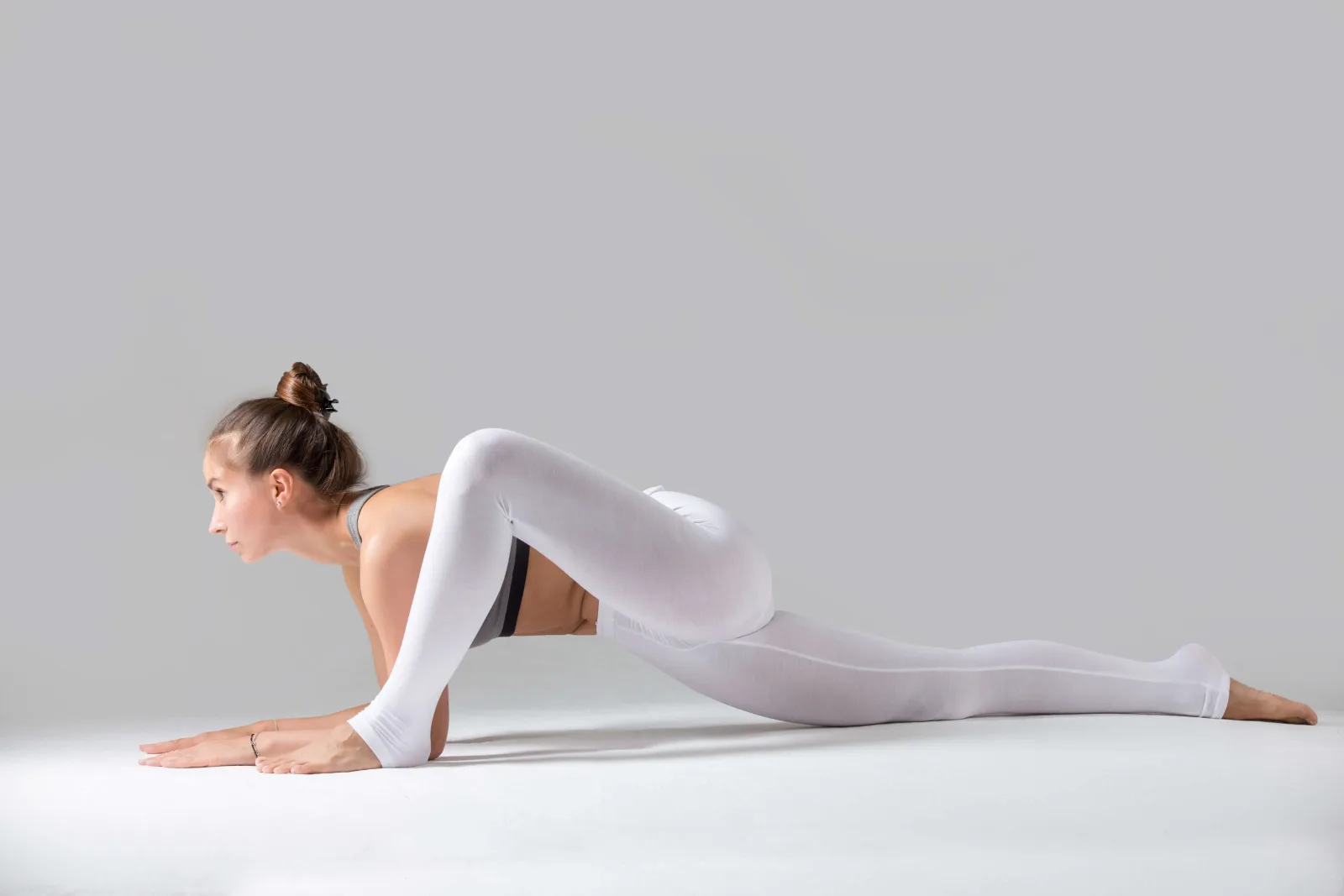
From that same lunge, walk both hands to the inside of the right foot and let the right knee drift open a few degrees. This one position reaches nearly everything at once: the back leg's hip flexor, the front hip's outer rotators, the inner thigh, the hamstrings. Stay tall on straight arms, or — if your body invites it — lower onto the forearms. A block under the forearms is the pose's best friend: it lets stiff bodies keep a long spine instead of collapsing to reach the floor. Five to ten breaths per side. Skip or modify with any knee or shoulder injury.
3. Butterfly (Baddha Konasana) — inner thighs and groin
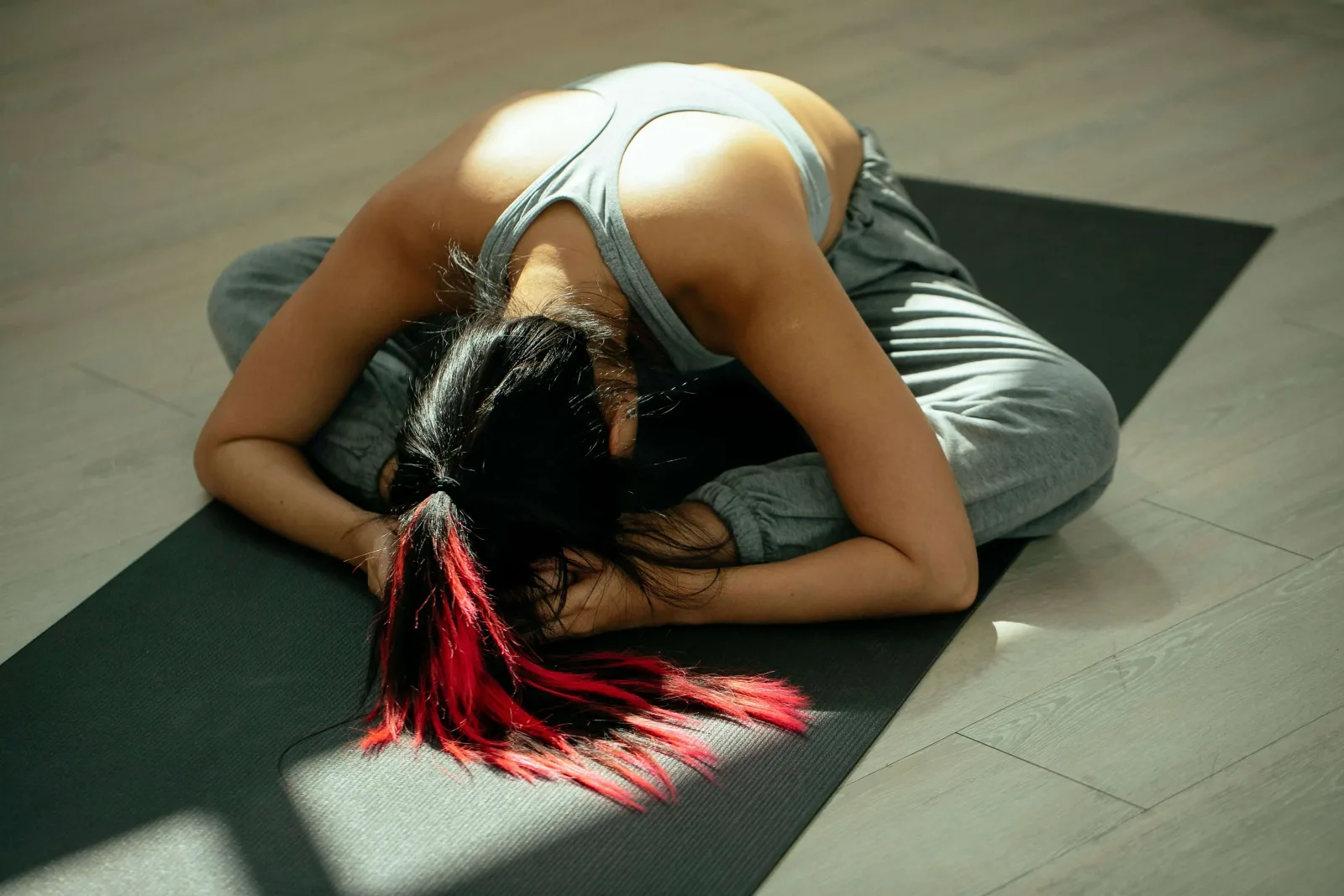
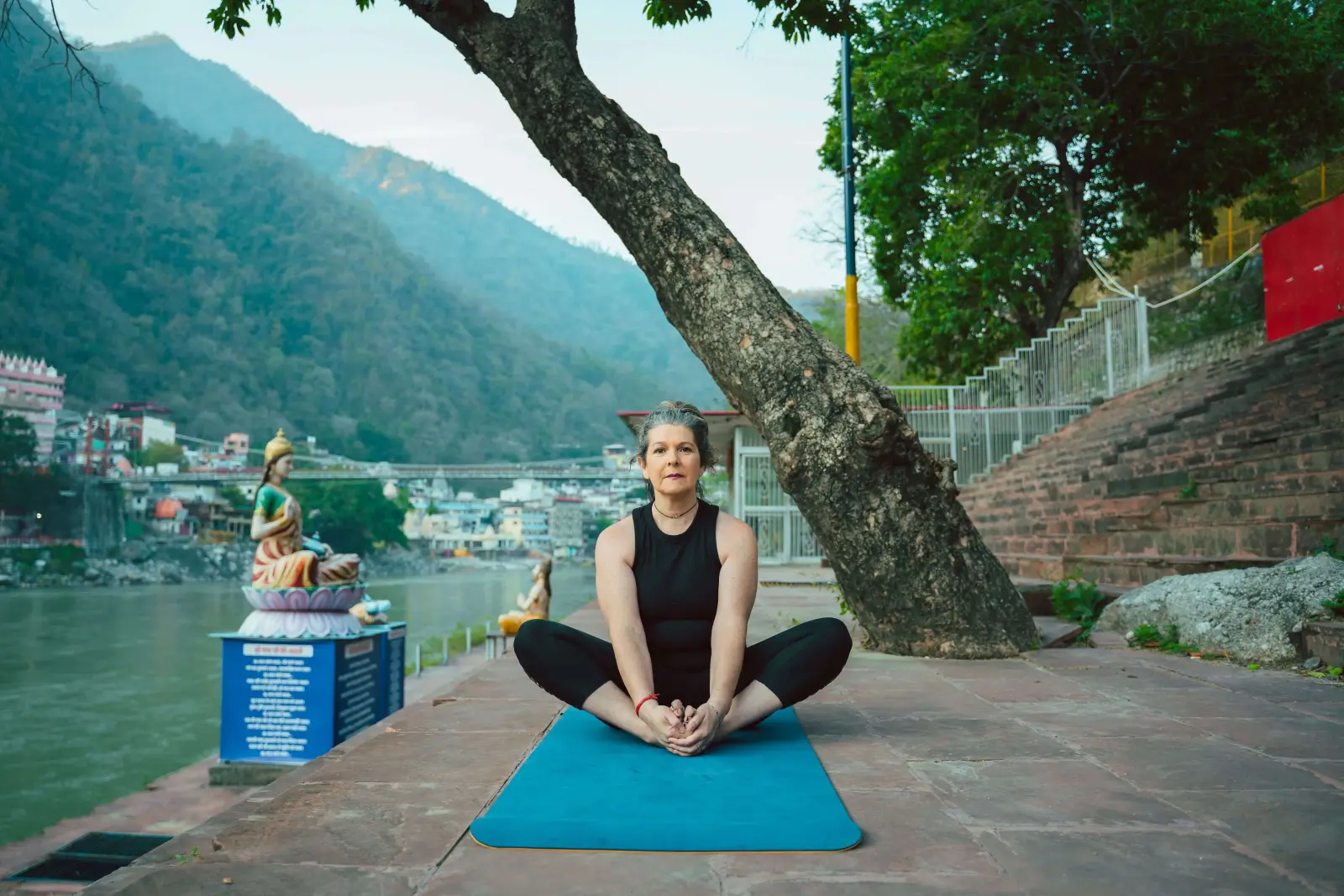
Sit on the front edge of a folded blanket, bring the soles of the feet together and let the knees fall wide. Hold the ankles, lengthen the spine, and — only if the fold comes without rounding — hinge slightly forward. The knees do not need to reach the floor this year, or ever. Six to ten slow breaths. Feet farther from the pelvis is gentler; closer is deeper.
4. Fire Log Pose (Agnistambhasana) — the deep outer hip
The strongest seated stretch in this list for the outer hip and glute. Sit tall and stack the shins like two logs in a fireplace: right shin parallel to the front of the mat, left shin stacked directly on top, left ankle over right knee, left knee over right ankle. Flex both feet to protect the knees. If the top knee towers in the air — completely normal — support it with a block or cushion, or simply practice with the legs loosely crossed and the top ankle on the bottom knee. Sitting tall is already the pose; folding forward over the shins is the advanced expression, not the requirement. Five to ten breaths per side.
Two honest notes from the teaching floor: this pose is where props earn their keep — sit on enough height that the pelvis can tip forward — and its deep outer-hip stretch reaches the territory around the piriformis, which is why gentle versions are sometimes suggested when hips and lower back feel congested from long sitting. Sharp or radiating sensation means come out; nerves are not to be stretched through. Avoid entirely with knee or ankle injuries.
5. Reclining Figure-Four (Supta Kapotasana variation) — the safe deep rotator stretch
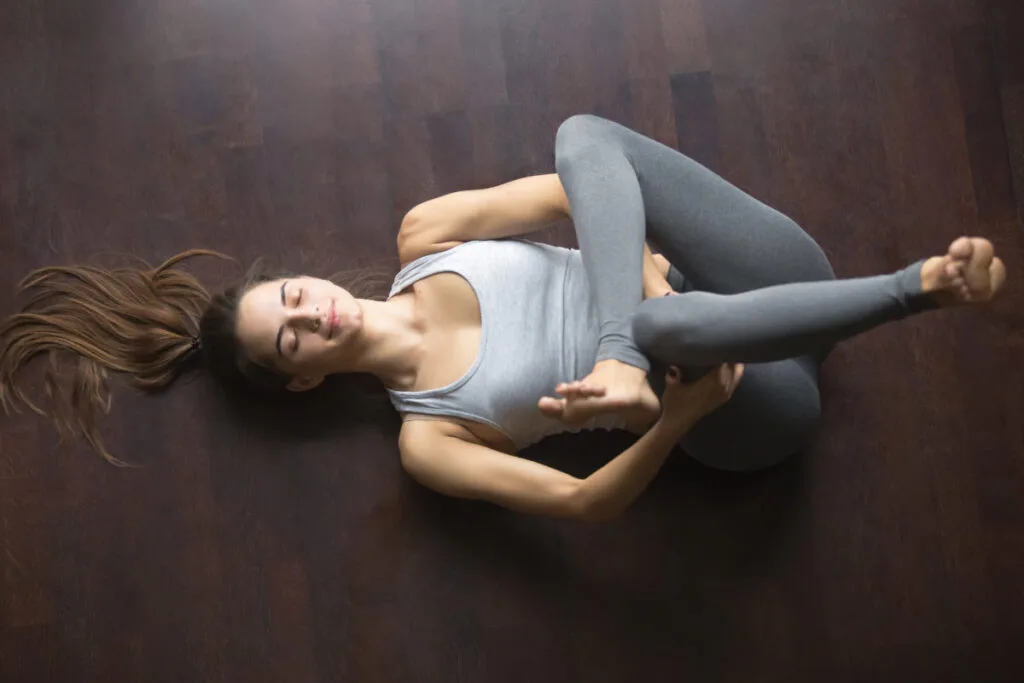
Lie on your back, knees bent, and cross the right ankle over the left knee, flexing the right foot. Either stay there or draw the left thigh toward the chest, holding behind it. This stretches the same deep rotators as the famous pigeon pose, with the floor supporting your spine and the intensity entirely in your hands. Five to ten breaths per side. This is the version we hand to beginners, stiff hips, and anyone with knee concerns — no exceptions needed.
About pigeon pose: the classic front-facing pigeon (Eka Pada Rajakapotasana) is probably the best-known hip opener in yoga, and it deserves — and will get — its own full guide. Until then, know this: everything pigeon does for the outer hip, the reclining figure-four does more forgivingly. Start there; graduate to pigeon with a teacher's eyes on you.
6. Garland Pose (Malasana) — the forgotten squat
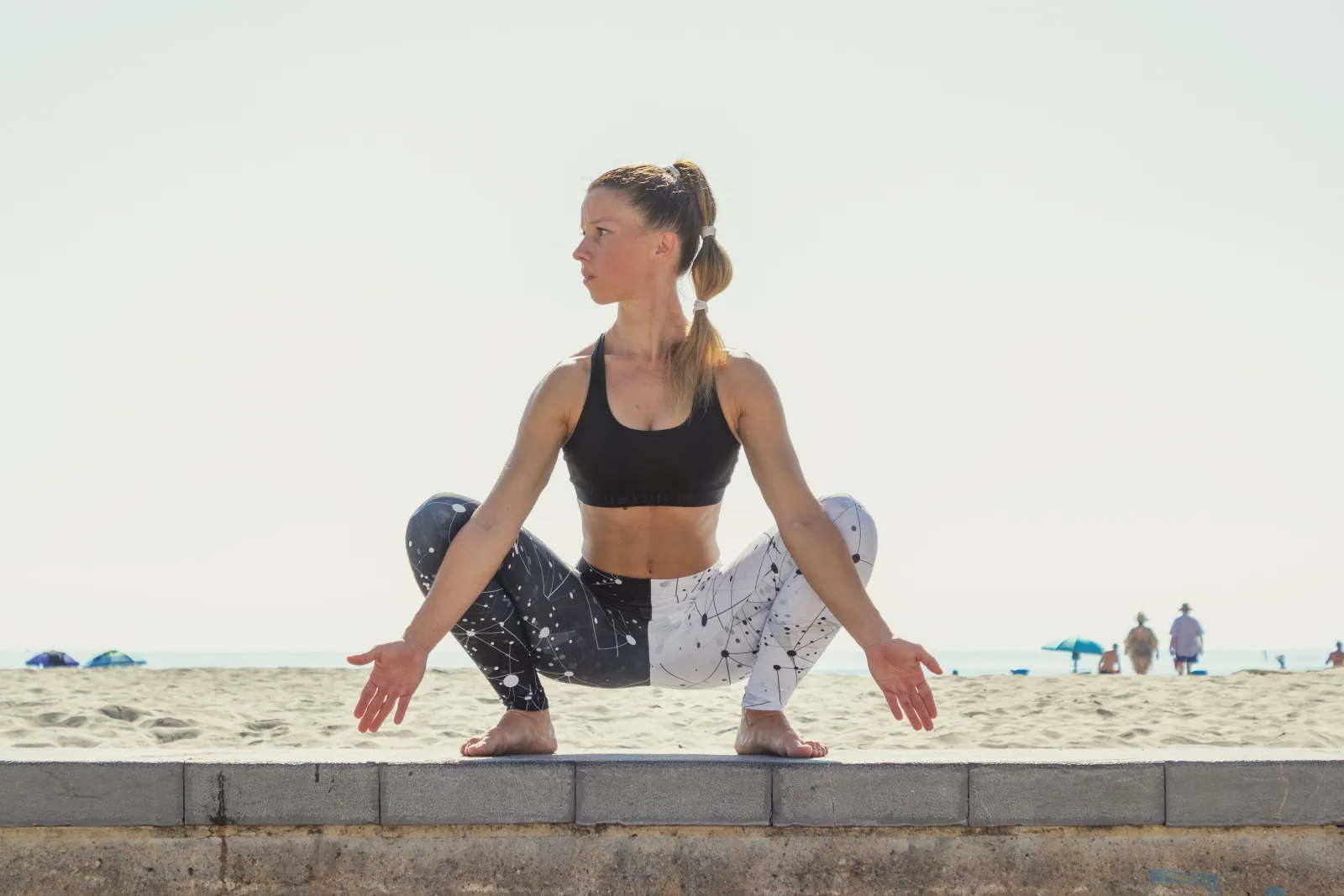
Stand with feet a little wider than the hips, toes turned out, and lower into a deep squat, palms together at the chest, elbows gently widening the knees. Heels down if they reach; a folded blanket under them if they don't. The squat is the hip position humans used daily for millennia and modern life deleted — it works ankles, inner thighs and deep hips at once. Five to ten breaths, or sit on a block and stay a while.
7. Happy Baby (Ananda Balasana) — release without effort
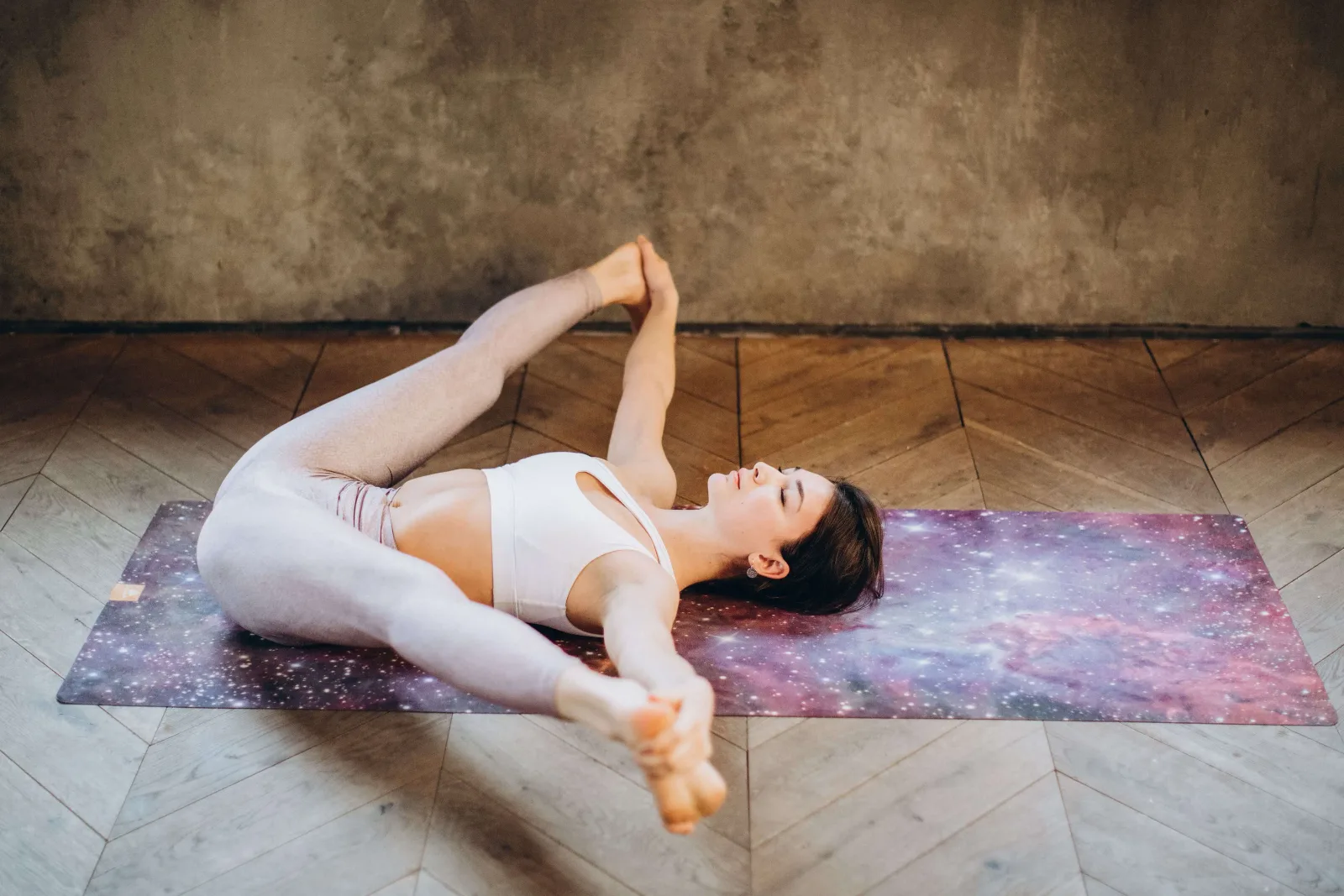
On your back, draw the knees toward the armpits and hold the outer edges of the feet, shins vertical. Let the sacrum drop toward the floor and rock gently if it feels good. Inner thighs, outer hips and low back all release with the floor doing the supporting. A strap around each foot works when hands don't reach. Eight to ten breaths.
8. Cow-Face Legs (Gomukhasana) — the stubborn outer line
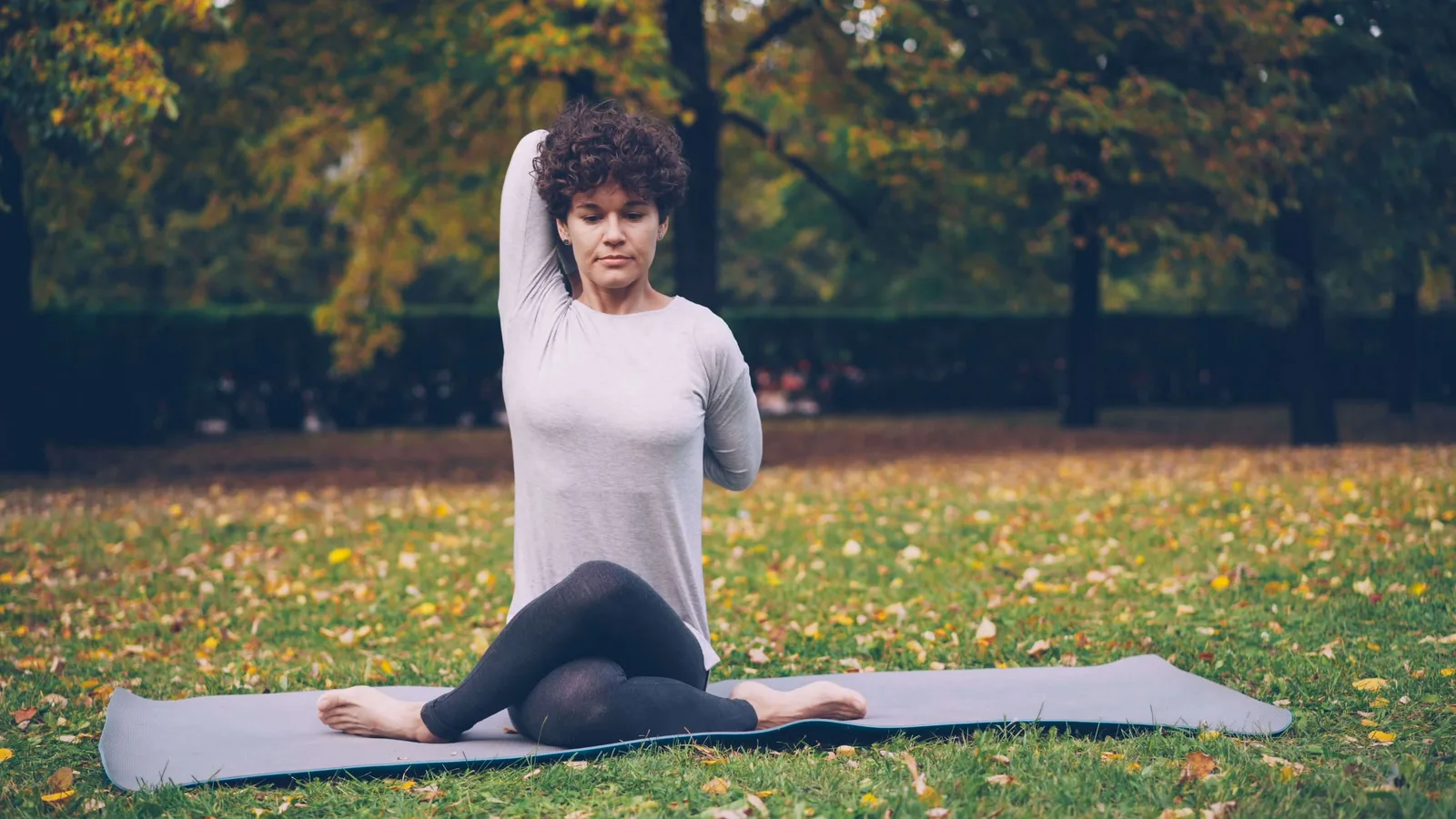
Sit and cross the right knee over the left, working the feet back beside the hips, knees stacked as closely as your body allows. Sit tall on a blanket — for most people, sitting upright here is already a strong stretch along the outer hips. Fold forward only if the spine can stay long. Five to eight breaths, then re-cross. If the knees protest, return to figure-four, which covers similar ground more kindly.
9. Wide-Angle Seated Fold (Upavistha Konasana) — inner thighs at length
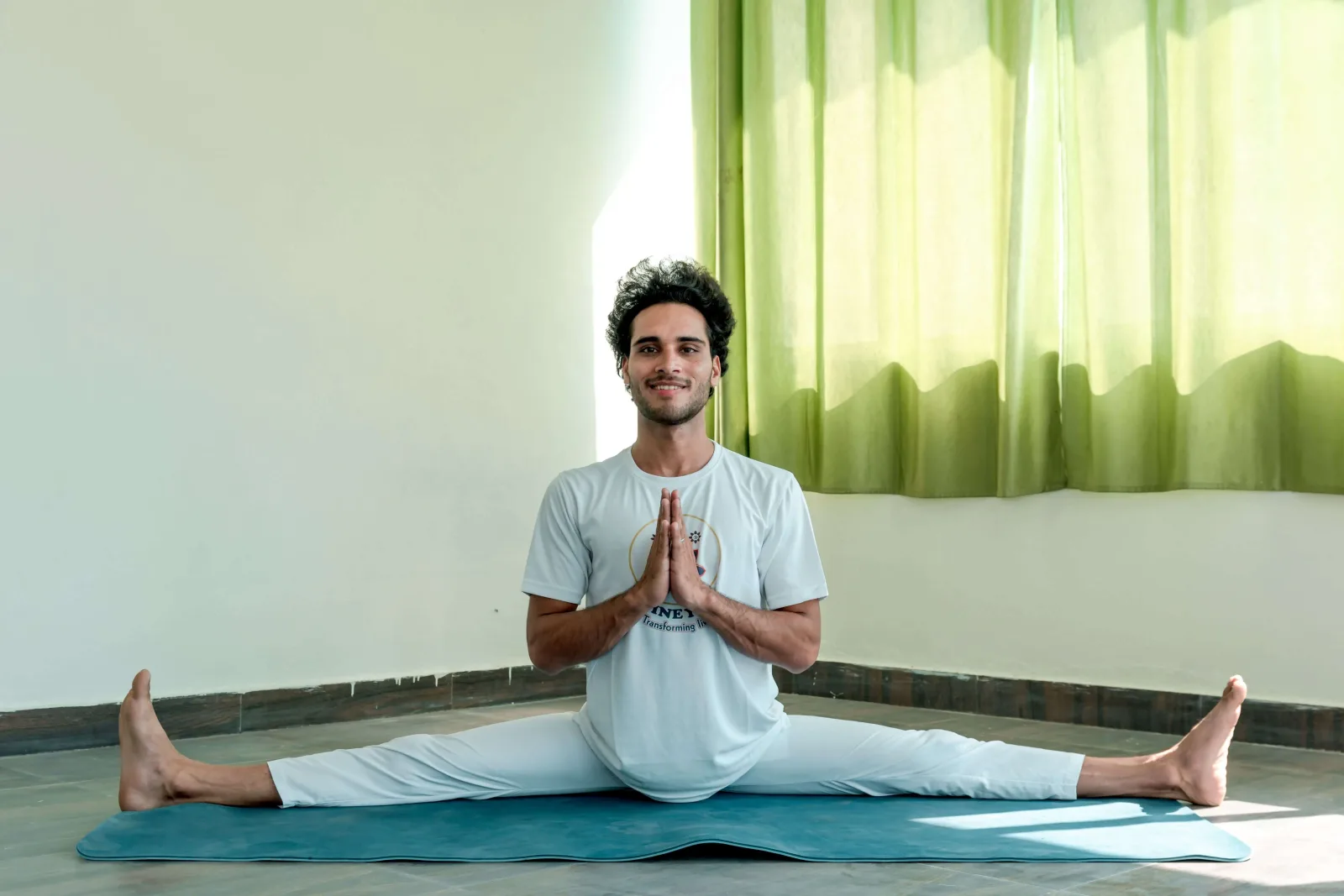
Sit with legs wide (a right angle between them is plenty), kneecaps pointing up, hands on the floor behind the hips to help the spine grow tall — that alone is the pose for many. To deepen, walk the hands forward, hinging from the hips with a long back. Six to ten breaths. It pairs naturally with the straight-ahead seated fold, Paschimottanasana — the two together close a hip session beautifully.
Do hips really "store emotions"?
You will hear it in almost every yoga class: hips store grief, tension, old emotion — and a deep hip opener may release it. Here is the honest version. Emotional responses during long hip stretches — welling up, unexpected tears, waves of relief — are commonly reported by practitioners, but the "stored emotion" explanation is not clinically established. What can be said more modestly: stress shows up as muscular holding patterns, the hips are dense with musculature we rarely release, and slow stretching with long breathing shifts the nervous system toward its calmer mode. Whether you call the result "emotional release" or simply deep relaxation reaching tissue that hasn't relaxed in years, the experience is real; the mechanism is best held lightly. If strong emotion visits during practice — let it. It passes, and the practice is a safe place for it.
Building hip openers into your practice
Two approaches work, and they suit different temperaments:
Little and often: poses 1, 3 and 5 daily — about eight minutes — is the most reliable route to change. Tie it to something you already do (after your run, before bed).
The long-hold session: once or twice a week, hold four or five of the seated and reclining poses for two to five minutes each, propped generously, breathing slowly. This is the yin yoga approach — hip openers are yin's home territory, since long passive holds are what deeper connective tissue responds to. It's a practice we love enough to train teachers in specifically, on our Yin Yoga teacher training in Rishikesh.
For step-by-step foundations on these and every other posture family, our yoga pose library is the map.
Frequently asked questions
Which yoga poses open the hips?
The reliable core: low lunge and lizard for the front of the hip, butterfly and wide-angle fold for the inner thighs, fire log, figure-four and cow-face legs for the outer hip and deep rotators, malasana and happy baby for everything at once. Pigeon is the famous one; the reclining figure-four gives you its benefits more forgivingly while you learn.
What are the benefits of hip-opening yoga?
Restored range of motion for daily movement (squatting, stairs, sitting cross-legged), less stiffness after long sitting, and — because tight hips push the low back into compensations — many people find their lower back feels easier too. Practitioners also commonly report emotional lightness after deep hip work; that experience is widely shared, though not clinically established.
How do I safely do hip-opening yoga?
Warm up first, sit on props, keep every sensation out of the knees, stay around 6 out of 10 intensity, and hold poses for five breaths or more rather than bouncing. Sharp, pinching or radiating sensations mean back out. Consistency over weeks — not depth on any single day — is the entire secret.
Do hip-opening exercises really work?
Yes, within honest limits. Regular stretching measurably improves range of motion over weeks to months, and the hips respond as well as any joint when practice is consistent. What stretching won't do is permanently "open" anything in a session or two, and part of your hip range is simply bone structure — every body has a genuine end point, and yours is allowed to differ from your teacher's.
How long should you hold a hip stretch?
For active practice, five to eight breaths (30–45 seconds) per side. For yin-style passive work, two to five minutes with generous props. Both work; the long holds reach deeper, provided the intensity stays gentle enough to sustain.
Learn to open hips the patient way
If long-hold hip work is the part of practice that speaks to you, that instinct is worth following. Our Yin Yoga teacher training in Rishikesh is built around exactly this territory — safe long holds, propping, and the anatomy of why every student's fire log looks different — and hip openers are part of daily asana work on our 200-hour multi-style training too. Not sure which fits you? Ask us on WhatsApp — we answer honestly, including "neither, yet."
Author note (byline): Gangesha Adi (E-RYT 500, RCYT, RPYT), founder of Pure Soul Yoga School in Rishikesh, has spent a decade watching desk-tight new arrivals rediscover their hips over a month of patient daily practice — and still prescribes the humble low lunge more than any other pose.