Ashtanga Yoga: A Complete Guide to the Primary Series
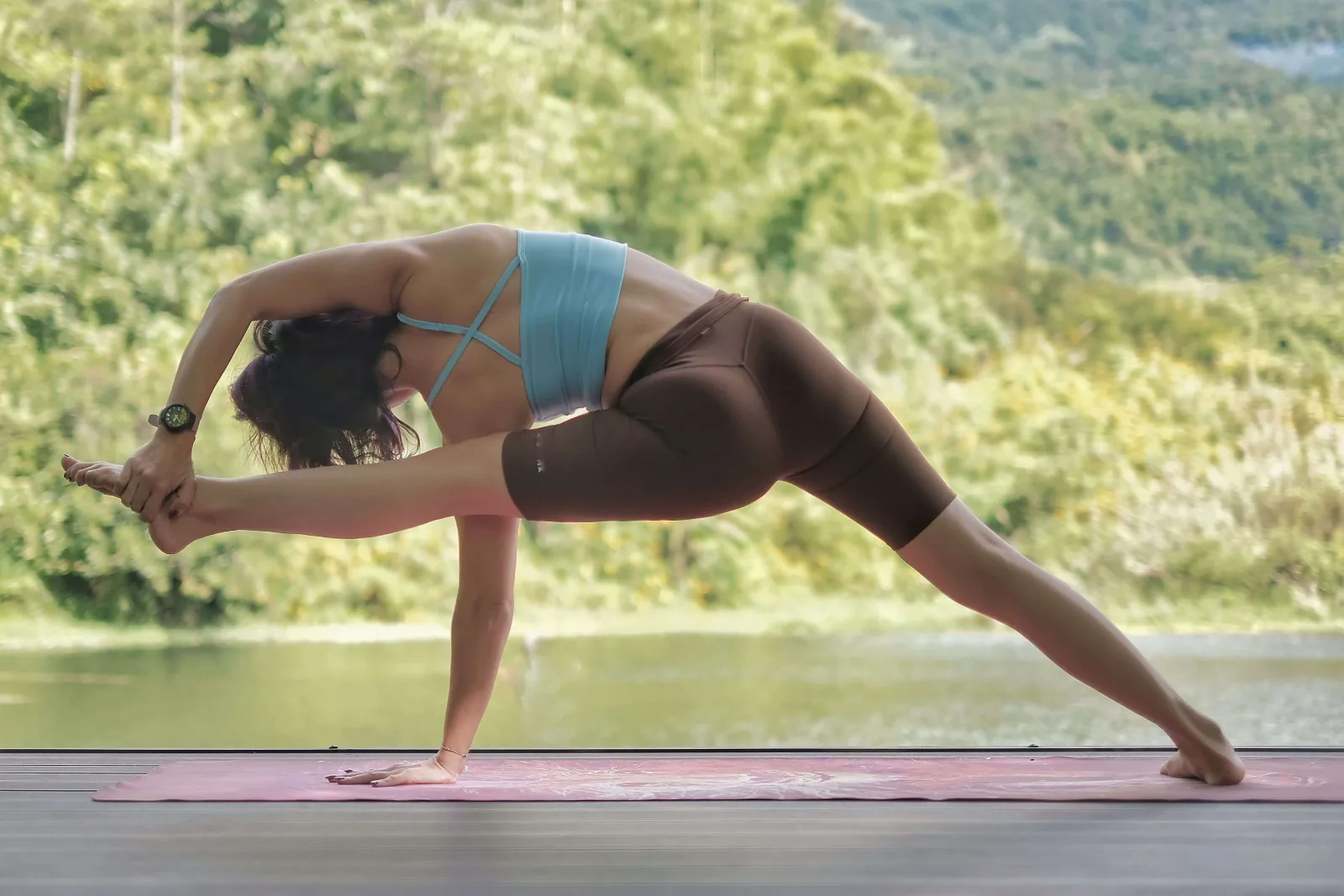
Ashtanga yoga is a structured, physically demanding style of yoga in which you practice a fixed sequence of postures — the same poses, in the same order, every time — linked together by breath-synchronized movement. The foundational sequence, and the one almost every Ashtanga practitioner spends years with, is the Primary Series, known in Sanskrit as Yoga Chikitsa. It runs from sun salutations through standing poses, a long chapter of seated forward folds and twists, and a closing sequence that winds the body down toward rest.
That fixed structure is the whole personality of the style. Where a Vinyasa teacher choreographs something new each class, Ashtanga hands you one sequence and asks you to meet it daily — which turns the practice into a kind of moving meditation, and makes your progress impossible to miss.
This guide walks through the Primary Series section by section, explains the method's three engines (breath, gaze, energy locks), untangles Mysore-style from led classes, and answers the question we hear most from students: is Ashtanga right for me, honestly?
What is Ashtanga yoga?
Ashtanga yoga (often called Ashtanga Vinyasa yoga) is a method built on three commitments: a set sequence of postures, breath-led movement — each transition assigned to an inhale or an exhale — and regular practice, traditionally six mornings a week. It was systematized and popularized in the city of Mysore, South India, by K. Pattabhi Jois, drawing on the teachings of his teacher, T. Krishnamacharya, and it has since traveled to studios on every continent while keeping its Mysore roots unusually intact.
A few features tell you instantly that you are in an Ashtanga room rather than any other class: the audible ocean-sound of ujjayi breathing, students moving through identical postures at their own pace, an opening chant, and a teacher who adjusts bodies more than she talks.
One word, two meanings: Ashtanga the philosophy vs Ashtanga the style
This trips up almost everyone at first, so let's settle it early.
Ashtanga is Sanskrit for "eight limbs" (ashta — eight, anga — limb). In Patanjali's Yoga Sutras, ashtanga yoga means the classical eightfold path: ethical restraints (yama), personal observances (niyama), posture (asana), breath regulation (pranayama), sense-withdrawal (pratyahara), concentration (dharana), meditation (dhyana), and absorption (samadhi). That eight-limbed framework belongs to all of yoga, not to any single class style — we've unpacked it fully in our guide to the eight limbs of yoga.
Ashtanga Vinyasa — the style this guide covers — borrowed the name deliberately. Pattabhi Jois taught the physical sequence as a doorway into that larger path: master the third and fourth limbs (posture and breath) through disciplined daily practice, and the inner limbs begin to open on their own. So when a studio timetable says "Ashtanga," it means the flowing, fixed-sequence practice. When a philosophy text says "ashtanga," it means the eight limbs. Same word, related intention, different referent.
The six series of Ashtanga yoga
The full Ashtanga system contains six sequences, practiced in strict order of progression:
Series | Sanskrit name | Traditional focus |
|---|---|---|
Primary | Yoga Chikitsa ("yoga therapy") | Forward folds and hips; traditionally said to realign and purify the body |
Intermediate | Nadi Shodhana ("channel cleansing") | Backbends and deeper hip work; traditionally aimed at the nervous system |
Advanced A–D | Sthira Bhaga ("strength and grace") | Four sequences of demanding arm balances and deep postures for very advanced practitioners |
Here is the honest context those tidy rows hide: the overwhelming majority of Ashtanga practitioners — including many lifelong ones — practice the Primary Series, full stop. That isn't a failing. Primary is not a stepping stone to the "real" practice; it is the practice, deep enough to keep revealing new layers for decades.
The Ashtanga Primary Series, section by section
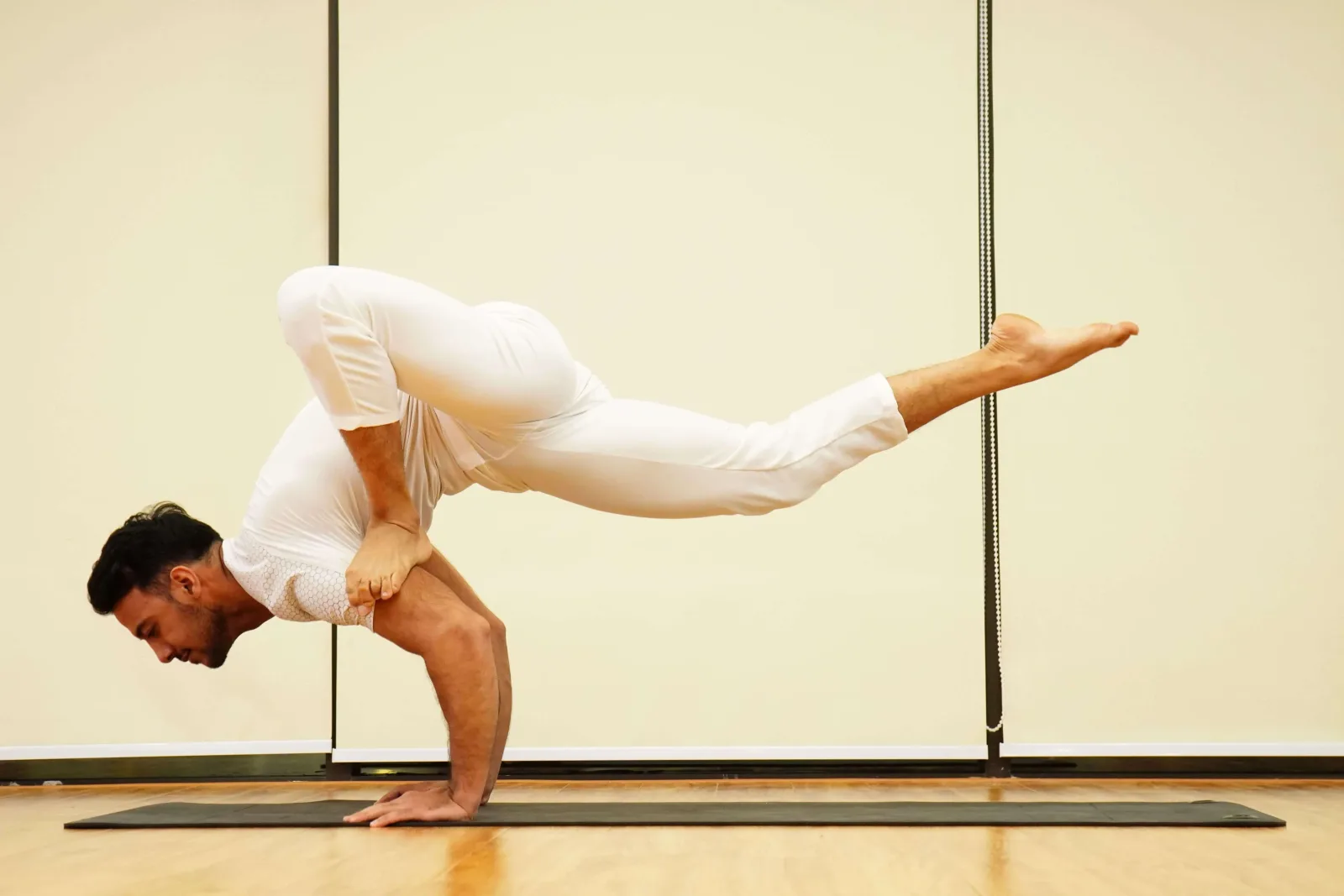
A full Primary Series practice takes roughly 90 minutes and follows a five-part arc. (In traditional counted practice, every movement between postures is numbered — the vinyasa count — which is why two Ashtanga classes anywhere in the world feel almost interchangeable.)
1. The opening chant
Practice traditionally begins with the Ashtanga opening mantra, recited once, together:
Vande gurunam charanaravindesandarshita svatma sukhavabodhenihshreyase jangalikayamanesamsara halahala mohashantyaiabahu purushakaramshankhachakrasi dharinamsahasra shirasam shvetampranamami patanjalim
In brief, the chant bows to the lineage of teachers who awaken the happiness of the true self, and offers respect to the sage Patanjali, traditionally depicted with a thousand serpent heads, holding a conch, a discus and a sword. No belief is required to chant it; most students come to value it simply as the doorway between ordinary time and practice time.
2. Sun Salutations — Surya Namaskar A and B
Five rounds of Surya Namaskar A and three to five of Surya Namaskar B open the series, warming the body and establishing the breath-movement rhythm everything else rides on. Ashtanga's version B adds Chair Pose (Utkatasana) and Warrior I to the classical flow. If you want to study the sequence that forms Ashtanga's ignition system, our step-by-step guide to Surya Namaskar breaks it down breath by breath.
3. The standing sequence
Forward folds, triangle and side-angle poses, wide-legged folds and balancing postures — about a dozen poses that build the legs, open the hamstrings and teach alignment under load. The standing sequence stays with you forever: it opens every Ashtanga practice from Primary through Advanced.
4. The seated sequence — the heart of Primary
The longest chapter, and the one that gives Yoga Chikitsa its forward-folding character: seated folds, the Janu Sirsasana and Marichyasana families, boat pose and deep hip postures, each connected by a short flowing transition (a "vinyasa") that keeps heat and rhythm alive. The seated sequence works patiently on the hips, hamstrings and spine — and on the mind that would rather be anywhere else during a long-held fold.
5. The finishing sequence
Backbends (Urdhva Dhanurasana), then the closing postures — shoulder stand and its family, headstand, and a final seated lotus or easy cross-legs — before rest. The finishing sequence deliberately slows breath and heart rate so you leave the mat settled rather than wired. It ends with "taking rest" — the Ashtanga room's traditional name for Savasana, one of the style's small cultural signatures.
The three engines: breath, gaze and bandhas
Take away the postures and Ashtanga still has a method. Three techniques run underneath the entire sequence, and they are what make the practice feel meditative rather than gymnastic:
Ujjayi breath. A steady, slightly audible breath, throat gently narrowed, inhale and exhale even in length. It builds internal warmth, gives every movement a metronome, and gives the wandering mind one continuous thing to listen to.
Drishti (gaze points). Every posture assigns the eyes a resting place — the nose tip, the thumb, the navel — nine traditional drishtis in all. When the eyes stop shopping around the room, the mind largely follows.
Bandhas (energy locks). Subtle internal engagements — mula bandha at the pelvic floor, uddiyana bandha at the lower belly, jalandhara bandha (chin lock) in specific practices. Traditionally described as directing prana, the body's vital energy; practically, students first meet them as the deep core support that makes floating between poses possible.
Breath, gaze, posture working together is called tristhana — the three places of attention. It is the reason experienced practitioners describe the Primary Series as a 90-minute meditation that happens to be athletic.
Mysore style vs led classes: what's the difference?
Ashtanga is taught in two formats, and the difference confuses nearly every newcomer, so here it is plainly.
In a led class, the teacher calls the sequence aloud — often with the traditional Sanskrit count — and the whole room moves together, pose by pose, at the teacher's pace. Led classes are wonderful for learning the rhythm and the correct vinyasa count, and they keep you honest about the poses you'd rather rush.
In a Mysore-style class (named for the city where Pattabhi Jois taught), there is no group instruction at all. Each student practices the sequence from memory, at their own breath pace, while the teacher moves around the room giving individual adjustments and — when you're ready — the next posture. A Mysore room holds beginners doing thirty minutes of sun salutations beside seasoned practitioners deep in the series, everyone inside their own practice.
Mysore style sounds intimidating and is actually the most beginner-friendly format: you receive the sequence a few poses at a time, one-to-one. Don't wait until you've "learned the sequence" to attend — learning it is precisely what the Mysore room is for.
A tip from our teaching hall: new students often try to memorize the Primary Series from a chart in one ambitious week. Learn it the traditional way instead — sun salutations until they're automatic, then the standing sequence, then a few seated poses at a time, always finishing with the closing postures and rest. The sequence learned slowly stays for life; the sequence crammed evaporates by Thursday.
What makes Ashtanga distinct?
If you're comparing styles broadly, our types of yoga pillar puts Ashtanga beside nine other styles in one table. In one paragraph, though, its distinctness is repetition with progression: attention goes to breath and refinement instead of choreography, progress is measurable against an unchanging benchmark, and the practice meets you identically on good days and terrible ones — which is exactly when its meditative quality shows up. The cost is variety, and it's a real cost: novelty-lovers often find Ashtanga confining; ritual-lovers find it liberating.
Is Ashtanga yoga right for you?
Honest framing, because this style gets oversold in both directions.
Ashtanga is demanding. A full Primary Series asks for real strength, hamstring and hip mobility, and 90 minutes of sustained effort. It builds all of those — but expect months of humbling, especially in the jump-throughs and deeper seated poses, and expect some poses to take years. Sore hamstrings and bruised egos are standard-issue equipment early on.
Ashtanga is also more adaptable than its reputation. In a good Mysore room, an older beginner, a stiff runner and a hypermobile dancer all practice suitable versions of the same sequence. You do not need to touch your toes to start; you need to be willing to show up repeatedly.
It tends to suit people who love structure, ritual and measurable progress, and students drawn to yoga's meditative depth who find seated stillness inaccessible — the sequence gives the mind a moving anchor. It tends to frustrate variety-lovers and anyone wanting a gentle unwinding practice (for that, look at Yin or Restorative in the styles guide).
A note on safety: like any vigorous practice, Ashtanga carries injury risk when effort outruns technique — most commonly hamstrings and knees, from forcing folds and lotus positions. A qualified teacher and a patient pace are the real safety equipment. If you have existing injuries or health conditions, check with a healthcare professional before starting, and tell your teacher.
What does the practice actually give you?
Practiced consistently, Ashtanga reliably builds strength (the sequence is generous with chaturangas), flexibility, stamina, and an unusually steady quality of attention — the tristhana effect. Its brisk, continuous pace gives practice a genuinely aerobic quality, and many practitioners report better sleep and steadier mood, consistent with research on vigorous yoga generally, though studies vary and benefits differ person to person. Traditional teaching goes further — Yoga Chikitsa is said to purify and realign the body. We teach that frame respectfully as tradition; it is not a clinical claim, and Ashtanga is not a treatment for any condition.
How often — and how long — should you practice?
Traditionally: six mornings a week, resting one day plus new- and full-moon days ("moon days" — a charming Ashtanga institution). That rhythm is ideal and it is not the entry fee. Two or three practices a week will change your body; consistency over months matters far more than density in any week. A full Primary takes about 90 minutes, but a complete short practice — sun salutations, a few standing poses, the finishing sequence and rest — takes 25, and doing it four mornings a week beats one heroic Sunday session every time.
Frequently asked questions
Is the Ashtanga Primary Series for beginners?
Yes — with the right format. Traditionally, Primary is exactly where every beginner starts, taught a few poses at a time in a Mysore-style setting. What beginners should not do is drop into a full led Primary class cold and try to survive all 90 minutes. Start with Mysore style or a beginner Ashtanga course, and build the sequence gradually.
Is Ashtanga the hardest yoga?
It is among the most physically demanding traditional styles — the sequence is non-negotiable, cumulative and brisk. But "hardest" is slippery: the Primary Series scales to the practitioner in a Mysore room, while its real difficulty is showing up daily for the same sequence. Plenty of strong practitioners find that discipline harder than any posture.
How long does it take to master the Ashtanga Primary Series?
Memorizing the sequence typically takes a few months of regular practice. Practicing it well — full breath count, steady drishti, honest expressions of every pose — is a project of years, and traditional teachers would gently reject the word "master" altogether. The series is designed to keep teaching you.
What are the different series in Ashtanga yoga?
Six: the Primary Series (Yoga Chikitsa), the Intermediate Series (Nadi Shodhana), and four Advanced Series (Sthira Bhaga A–D). Each must be developed in order, posture by posture, before the next is added. Most practitioners spend their yoga lives in Primary, and it loses none of its value for that.
What's the difference between Ashtanga and Vinyasa yoga?
Vinyasa is Ashtanga's free-form descendant: it kept the breath-linked flowing transitions and dropped the fixed sequence. A Vinyasa class is different every time and always teacher-led; Ashtanga is the same sequence every time and, in Mysore style, self-practiced. If you love flow but need variety, choose Vinyasa; if repetition deepens rather than bores you, Ashtanga will fit.
Do I have to chant or follow the spiritual side?
No — students are always free to stand quietly through the chant. That said, Ashtanga makes most sense when you know it was built as a doorway into the eight limbs, not as a workout; the philosophy tends to enrich the sweat.
Practicing Ashtanga where the mornings start early
At Pure Soul Yoga School in Rishikesh, dynamic Ashtanga Vinyasa is part of the daily practice on our 200-hour yoga teacher training — taught alongside classical Hatha, Yin and Restorative work, with pranayama, meditation and philosophy classes that put the sequence back inside its eight-limbed context. Batches are capped at 20 students, so the teaching stays close to the Mysore ideal: your practice, individually guided. Wondering whether your current level is "enough"? Ask us on WhatsApp — the honest answer is usually yes.
Author note (byline): Gangesha Adi (E-RYT 500, RCYT, RPYT), founder of Pure Soul Yoga School, has guided sunrise Ashtanga practice for teacher-training students of 50+ nationalities in Rishikesh — and still considers the standing sequence, done slowly, the best teacher on campus.