
Sattvic Diet: What Yogis Eat and Why — a Practical Guide
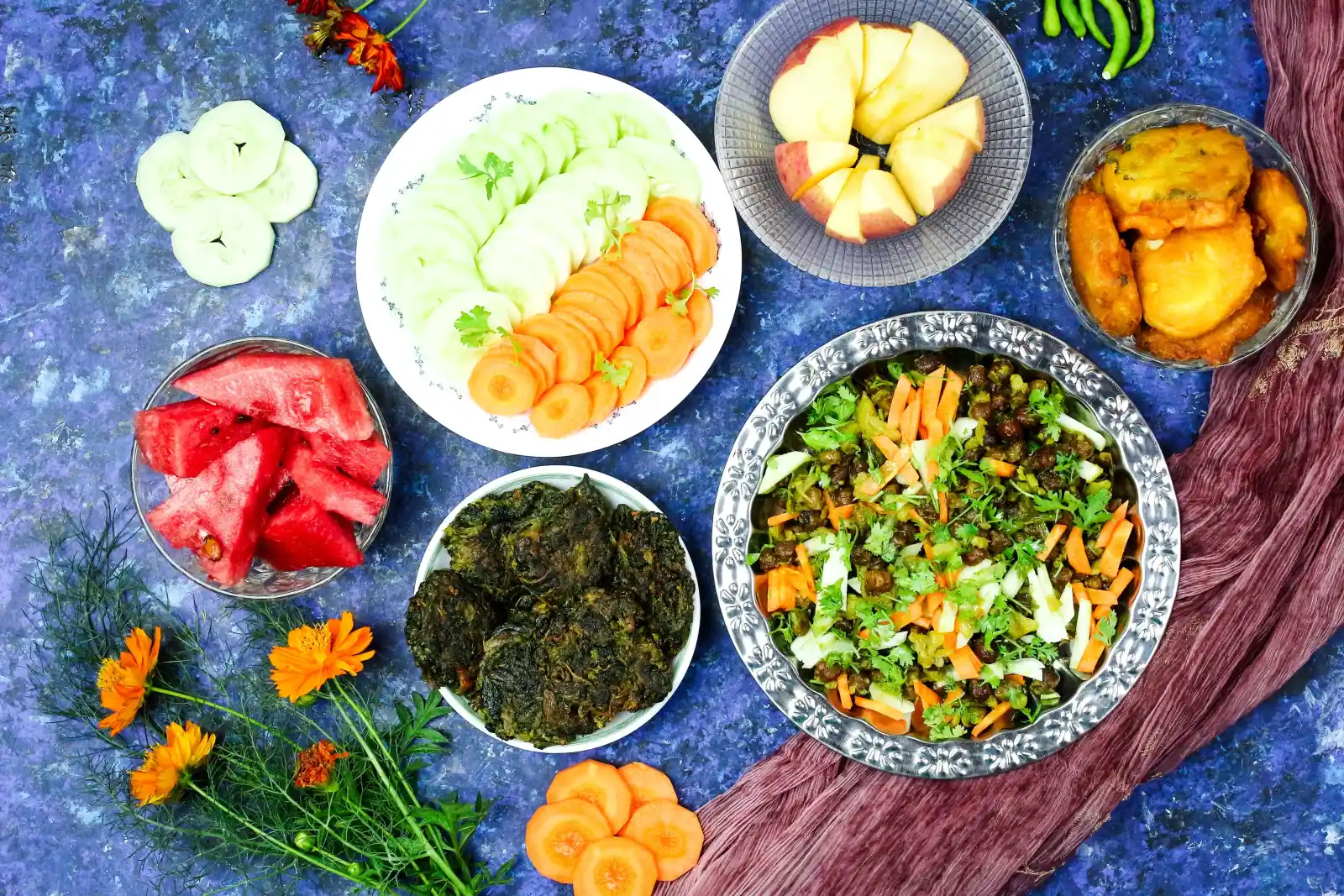
A sattvic diet is the traditional way of eating followed in yoga schools and ashrams: fresh, simple, vegetarian food — fruits, vegetables, whole grains, legumes, nuts, seeds, mild spices and (traditionally) fresh dairy — prepared and eaten with care. The word comes from sattva, the quality of clarity and harmony in yogic philosophy, and the diet's purpose is stated just as plainly in the tradition: eat food that leaves the mind clear and the body light, because a heavy, agitated body makes practice and meditation harder.
Two things this guide will not do: dress the sattvic diet up as a weight-loss plan, or pretend a teaching from classical India is a modern clinical prescription. It is a tradition — a genuinely liveable and largely sensible one — and we'll present it exactly that way: what it means, what's on and off the plate, what a real sattvic day looks like in our own kitchen in Rishikesh, and the honest nutrition notes most articles skip.
In this guide: - What does sattvic mean? - Sattvic, rajasic and tamasic foods compared - A real sattvic day - Mitahara: the forgotten half of the teaching - What to eat before and after yoga - An honest nutrition note - FAQs
What does sattvic actually mean?
Sattva is one of the three gunas — the three qualities that yogic philosophy says run through all of nature. Sattva is clarity, harmony and light; rajas is activity, heat and restlessness; tamas is heaviness, dullness and inertia. Everything, in this model, carries all three qualities in shifting proportion — moods, weather, work, and, in the Bhagavad Gita's seventeenth chapter, food. If the framework is new to you, our guide to the three gunas explains it properly; the one-line version is that the tradition sorts food by the state of mind it tends to feed.
A sattvic diet, then, is simply eating on the side of clarity: food that is fresh, whole, mild and easy to digest, prepared without violence (ahimsa is why the diet is vegetarian) and eaten without agitation. The claim behind it is experiential rather than biochemical — generations of practitioners observing that what and how they ate showed up on the meditation cushion within hours.
You don't have to accept the metaphysics to notice the pattern. Most people already know the difference between how they feel after a fresh, unhurried lunch and after a heavy fried one eaten over a keyboard. The sattvic teaching starts exactly there and builds a whole kitchen on it.
Sattvic, rajasic and tamasic foods compared
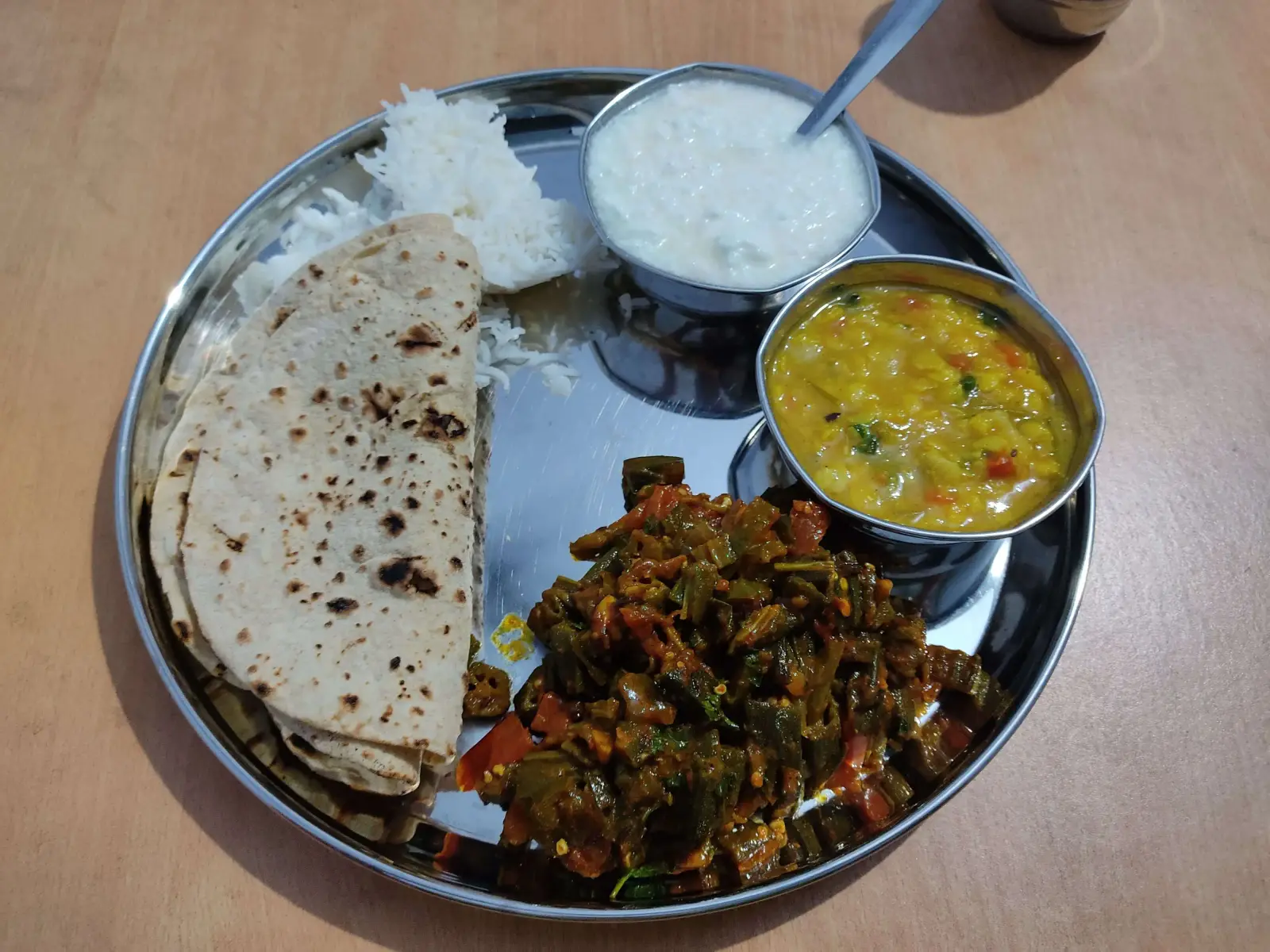
The Gita describes the three categories by their qualities; centuries of tradition filled in the food lists. Stated as tradition, not as laboratory findings:
Sattvic | Rajasic | Tamasic | |
|---|---|---|---|
Character | Fresh, mild, nourishing, easy to digest | Overly stimulating: very spicy, salty, sour, hot | Heavy, stale, dulling, hard to digest |
Typical examples | Fresh fruit and vegetables, whole grains, dal and legumes, nuts, seeds, mild spices (turmeric, ginger, cumin, coriander), fresh dairy, honey, herbal teas | Chilli-heavy and deep-fried dishes, excess salt, coffee and strong tea, energy drinks, chocolate, onion and garlic (in many traditional lists), food eaten in a hurry | Meat, fish, eggs, alcohol, stale or reheated leftovers, overly processed and packaged food, fermented excess, food cooked long ago |
Said to feed | Clarity, contentment, steady energy | Restlessness, craving, agitation | Lethargy, dullness, heaviness |
In practice | The everyday plate | Occasional, consciously | Minimised |
Three honest notes on the table. First, the lists vary by lineage — onion and garlic, for example, are excluded in most ashram kitchens as rajasic/tamasic, while many Indian households consider them ordinary food; there is no single canonical list. Second, the categories describe tendencies, not moral rankings — the tradition itself says all three gunas are part of nature, and a labourer's body may genuinely need heartier food than a meditator's. Third, how you eat moves food between columns: the freshest meal eaten standing up, scrolling, at speed, is being eaten rajasically.
A real sattvic day: what our kitchen actually serves
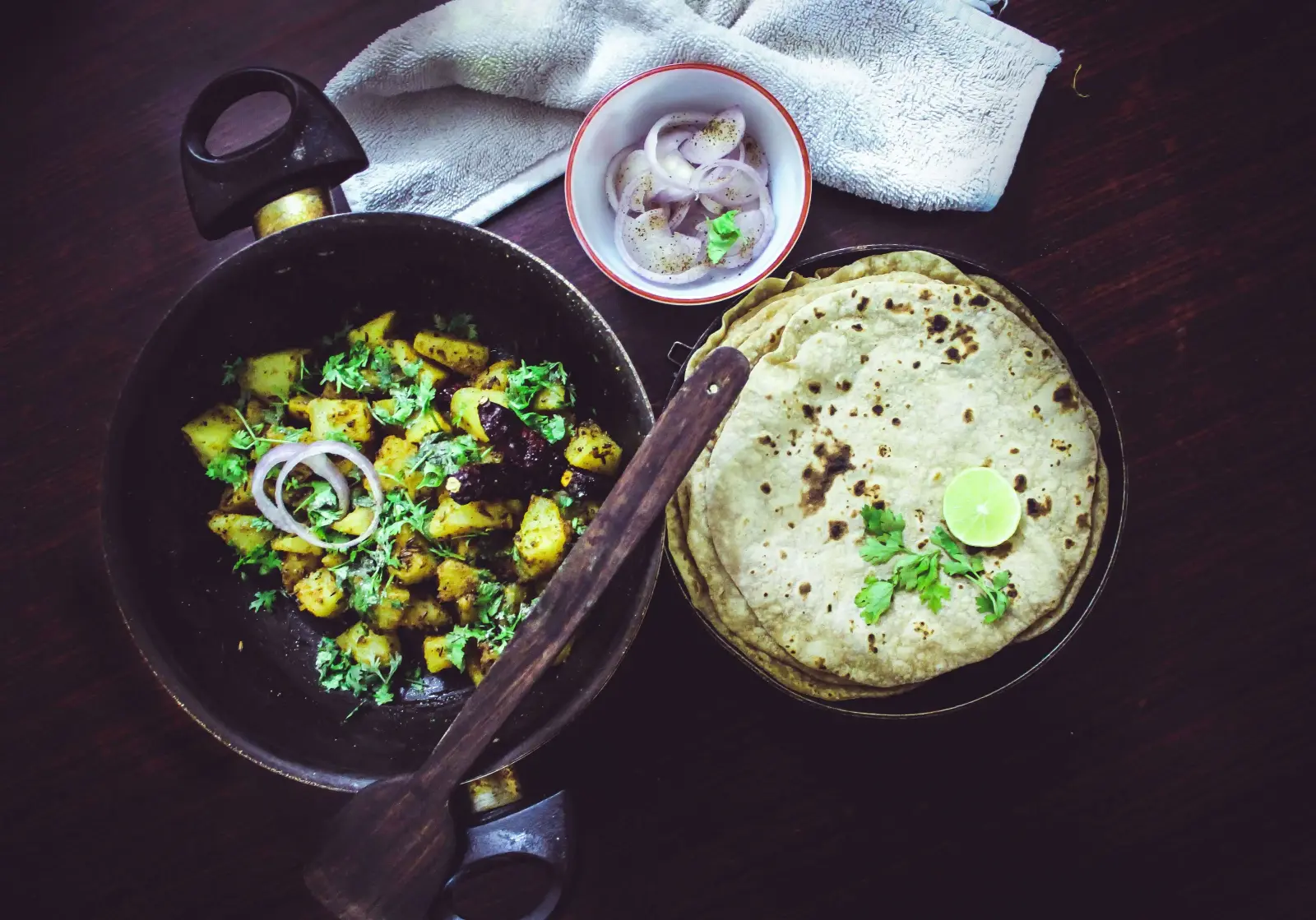
Food articles love inventing elaborate "sattvic meal plans." Here is something more useful — what students actually eat during a training day at our school in Tapovan, Rishikesh, where the kitchen has served sattvic vegetarian food, cooked fresh daily with filtered water throughout, to students from 50+ nationalities. (The full hour-by-hour timetable is in our day in the life post.)
06:25 — herbal tea. The day opens with tea on the terrace, not breakfast. Morning asana and pranayama are practiced essentially on an empty stomach, the traditional way.
09:25 — breakfast, after roughly three hours of practice: fresh fruit, porridge, and Indian options — warm, simple, and easy on international stomachs.
13:00 — lunch, the main meal of the day. Ayurveda, yoga's sister science, teaches that digestive fire (agni) is strongest at midday, so the largest meal sits there — dal, rice, vegetables, salad; simple food cooked the same day it's eaten.
16:00 — tea break between afternoon classes.
19:00 — a lighter dinner, giving digestion a long runway before the 22:00 lights-off. The traditional logic is simple: nobody sleeps well on a full stomach, and nobody meditates well at 6 a.m. on last night's heavy dinner.
Notice what's absent: nothing exotic, no superfoods, no supplements, no menu engineering. A sattvic kitchen is defined less by rare ingredients than by rhythm — fresh food, cooked simply, eaten at consistent times, largest meal at midday, light in the evening. Students routinely tell us the food is the change they feel first, usually within the first week; we pass that on as consistent student experience, not as a measured outcome.
On our Ayurveda retreats, the same kitchen adjusts meals to your consultation — dosha-specific versions of the same sattvic principles, prescribed rather than generic. Our guide to Ayurveda and panchakarma explains how that system thinks about food and digestion in full.
Mitahara: the forgotten half of the teaching
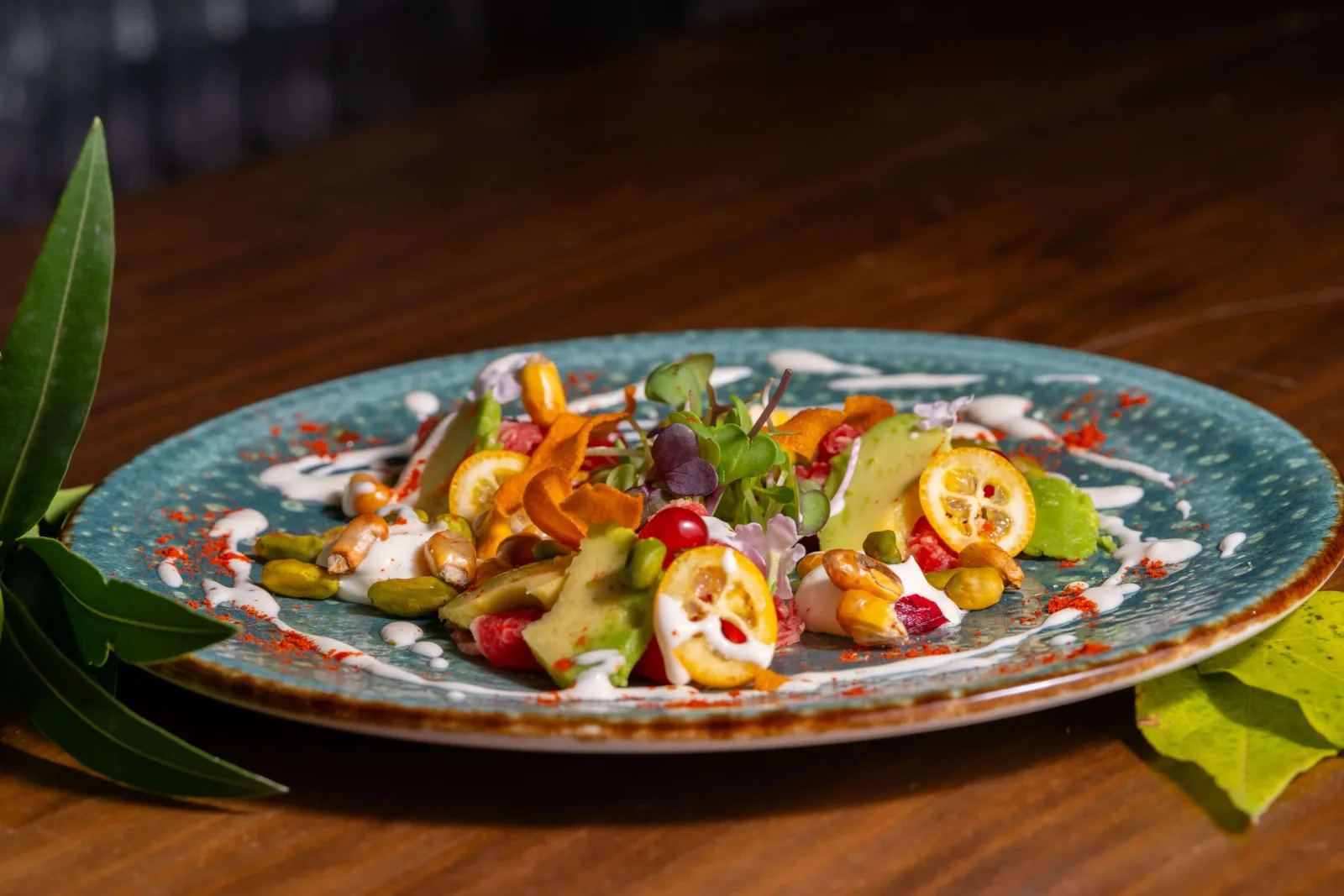
Most sattvic-diet articles stop at what to eat. The classical texts spend at least as much attention on how much — a principle called mitahara, moderate eating, which the Hatha Yoga Pradipika lists among the essentials for a practitioner. The traditional guideline is memorable: fill the stomach half with food and one quarter with water, and leave one quarter empty — eating pleasant, wholesome food, and stopping short of fullness.
The same texts warn against the opposite errors with equal force: overeating and harsh fasting are both listed among the things that undo a practitioner. This is worth underlining, because "yogic diet" is sometimes confused with severe restriction. The classical position is closer to a grandmother's advice than a cleanse: eat good food, eat it warm, don't stuff yourself, don't starve yourself, keep regular hours.
In practice, mitahara tends to matter more than any food list. A technically sattvic meal eaten to bursting produces exactly the heaviness the diet exists to avoid — while a slightly imperfect meal eaten moderately and calmly does most of what the tradition promises.
A tip from our teaching hall: the simplest mitahara practice we give students is to stop at the point where you could comfortably practice gentle asana half an hour later. It calibrates portion size to your own body with no measuring, and after a week it becomes automatic.
What to eat before and after yoga practice
The most practical question in the whole topic, and the one search engines say readers actually ask.
Before practice. The traditional and the practical answer agree: as little as possible. Asana twists, folds and compresses the abdomen; a full stomach makes that unpleasant and sometimes nauseating. Working guidelines most teachers use:
After a full meal, wait roughly 2–3 hours before practicing.
If you need something closer to practice, keep it small and simple — a piece of fruit or a few soaked nuts about an hour before is the classic choice.
Morning practice is traditionally done on an empty stomach, perhaps with water or a light herbal tea — exactly how our 6:40 a.m. Ashtanga class runs, with tea at 6:25 and breakfast after practice.
Hydrate through the day rather than immediately before class; a sloshing stomach in downward dog convinces everyone of this rule exactly once.
After practice. Rehydrate first, then eat normally within an hour or so — practice tends to sharpen genuine appetite. A post-practice meal in the sattvic pattern (grains, legumes, vegetables, fruit) covers the carbohydrate and protein that recovery is generally understood to need, no sports products required. If you practice in the morning, this is simply breakfast — and there's a reason breakfast after three hours of practice tastes the way students never stop mentioning.
An honest nutrition note
Here is the section a school that feeds people every day owes you.
The sattvic diet is a tradition, not a clinical prescription. Its categories come from the Bhagavad Gita and centuries of ashram practice, not from nutrition trials. That doesn't make it wrong — a diet of fresh vegetables, fruits, whole grains, legumes, nuts and dairy overlaps heavily with what mainstream dietary guidance already encourages, and cutting down on ultra-processed food, excess salt and alcohol needs no ancient justification. But claims that sattvic food "purifies the blood" or cures conditions are traditional or invented, and we won't repeat them as fact.
A well-planned vegetarian diet is widely regarded as healthy — with the word planned doing real work. Health authorities generally hold that vegetarian diets can meet nutritional needs at every stage of life when reasonably varied. The known attention points:
Vitamin B12 occurs naturally in animal-source foods; long-term vegetarians — especially vegans — are commonly advised to use fortified foods or supplements. Traditional sattvic eating includes dairy, which helps, but anyone eating fully plant-based should take B12 seriously rather than spiritually.
Iron, zinc and omega-3s deserve variety: legumes, seeds, nuts, whole grains and green vegetables, rather than a narrow rotation of the same few dishes.
Protein is rarely a problem in a dal-and-grain kitchen, but very restrictive interpretations of "pure food" can under-feed an active practitioner. Mitahara means moderation, not depletion.
Fasting, which the tradition uses as an occasional discipline, is best kept light and infrequent unless supervised — and is not appropriate for everyone, including anyone pregnant, underweight, diabetic on medication, or with a history of disordered eating.
If you're managing a health condition or making a major dietary change, talk with a qualified professional first. This article is for general education and is not medical or dietary advice.
Frequently asked questions
What is not allowed in sattvic food?
Traditionally excluded: meat, fish, eggs, alcohol, stale or reheated food, heavily processed and packaged food, and overly hot, sour or salty preparations. Most ashram kitchens also omit onion and garlic as over-stimulating, and many practitioners limit coffee and strong tea. Lists vary by lineage — the consistent principle is fresh, mild, vegetarian and moderate.
Can you eat eggs on a sattvic diet?
No — eggs are traditionally classed with animal foods and excluded from sattvic eating, which is vegetarian by way of ahimsa. Fresh dairy, by contrast, is traditionally considered sattvic. (Whether to eat eggs is, of course, your decision — this answers what the tradition says.)
Are avocados sattvic?
Avocados don't appear in classical lists for the simple reason that they weren't part of the classical Indian kitchen. Judged by sattvic qualities — fresh, mild, unprocessed, nourishing — most modern teachers would happily class a ripe avocado as sattvic-compatible. The tradition is a set of principles, not a museum inventory; apply the qualities to whatever your local market grows.
What is the 3-3-3 rule diet?
Nothing to do with sattvic eating — "3-3-3" is a modern internet dieting formula (the number is variously attached to meals, portions or timing rules depending on who's selling it). The yogic tradition's actual numerical guideline is mitahara: stomach half food, one quarter water, one quarter empty.
Is a sattvic diet good for weight loss?
It isn't designed for that, and we won't pretend otherwise. People who move from a heavily processed diet to fresh, home-cooked sattvic food often do lose some weight, plausibly because the pattern is lower in ultra-processed calories — but results vary, and the tradition's stated goal is a clear mind, not a number on a scale.
Do I have to eat a sattvic diet to practice yoga?
No. Plenty of dedicated practitioners eat conventionally. The tradition recommends sattvic eating because it supports practice — the honest way to evaluate that claim is to try it for a few weeks and observe your own energy, digestion and sleep, which is exactly the experiment a month at a yoga school runs for you.
Taste it for yourself
Reading about sattvic food is like reading about swimming — the interesting part starts when you're in it. On our Ayurveda retreat in Rishikesh, the diet arrives prescribed for your constitution after a consultation with our Ayurvedic physician, with a private room, one complimentary massage, and any-day start dates. And every 200-hour yoga teacher training includes a full month of the daily rhythm this article describes — three sattvic meals, morning tea, and the quiet experiment of noticing what changes. Questions about the food (allergies, vegan options, "will my stomach cope in India")? Ask us on WhatsApp — real humans answer, and food questions are our favourite kind.
References
Bhagavad Gita, chapter 17 (17.8–17.10) — the classical sorting of food into sattvic, rajasic and tamasic.
Hatha Yoga Pradipika — mitahara (moderate eating) among the practitioner's essentials; classical warnings against overeating and harsh austerity.
National and international dietary guidance on vegetarian diets and vitamin B12 (e.g., NIH Office of Dietary Supplements fact sheets) — final URLs added at publish per flip checklist.
Author note (byline): Gangesha Adi (E-RYT 500) leads the teaching team at Pure Soul Yoga School, Rishikesh, where the kitchen has fed the sattvic rhythm described here — tea at 6:25, main meal at midday, light dinner — to training students from 50+ nationalities.