Yoga Nidra: Benefits, How It Works, and What a Session Is Like
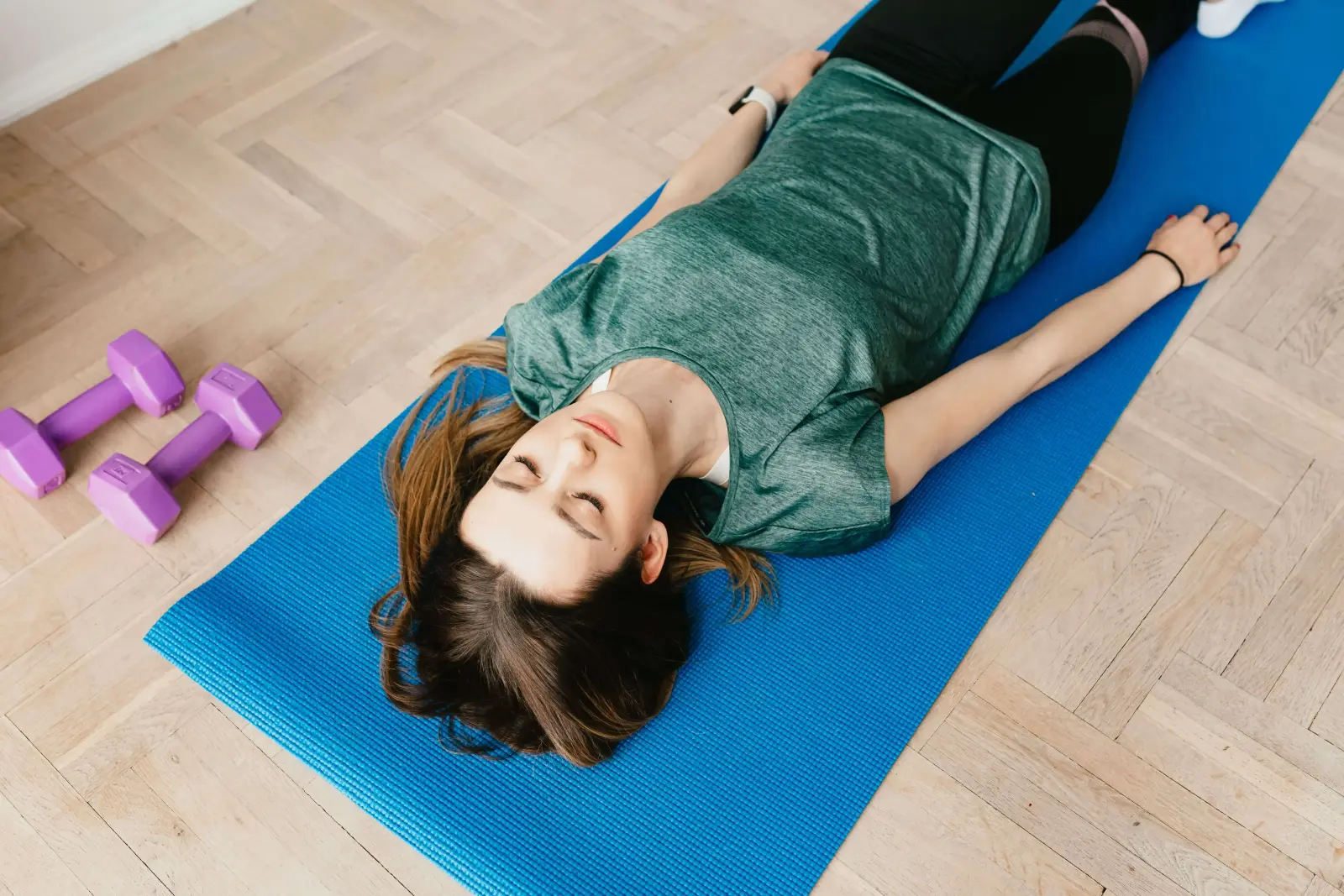
Yoga nidra — "yogic sleep" — is a guided deep-relaxation practice done lying down, in which a teacher's voice systematically leads your attention through the body and breath until you rest in the border state between waking and sleep: profoundly relaxed, yet aware. Its most reliable benefit is the one you'd guess — deep rest and a calmer stress response — with promising early research around sleep, anxiety and mood, and a set of traditional claims worth knowing and worth holding lightly. You cannot do it wrong, there is nothing to achieve, and falling asleep on your first attempt is so common that we plan for it in class.
If you've heard the term NSDR — "non-sleep deep rest" — that's a modern, secular name for closely related guided-rest protocols; the practice underneath is recognisably yoga nidra. This guide covers what the practice is, its benefits graded honestly by evidence, a step-by-step tour of a session, how nidra differs from sleep, meditation and savasana, the sankalpa, and home practice.
In this guide: - What is yoga nidra? - Benefits, graded honestly - What a session looks like - Nidra vs sleep vs meditation vs savasana - The sankalpa - Practicing at home - FAQs
What is yoga nidra?
Yoga nidra is a guided practice — that word matters. Unlike seated meditation, where you direct your own attention, in nidra you lie comfortably on your back, close your eyes, and follow a voice. The teacher leads what the tradition calls a rotation of consciousness: attention is moved systematically through the body — right thumb, second finger, third finger… palm, wrist, elbow — point by point, side by side, in a set order. No moving, no visualising effort, no trying. Just hearing the body part named and noticing it.
This simple procedure has an outsized effect. Rotating attention through the body occupies the thinking mind, releases tension you didn't know you were holding, and progressively withdraws the senses from the outside world — what classical yoga calls pratyahara. Most practitioners drift into the hypnagogic borderland between waking and sleeping: the body deeply asleep, a thread of awareness still listening. That threshold state is yoga nidra.
The modern, systematised form was developed by Indian teachers of the recent era, drawing on much older tantric nyasa techniques in which attention is placed on the body part by part. Sessions typically run 20 to 45 minutes.
Yoga nidra benefits, graded honestly
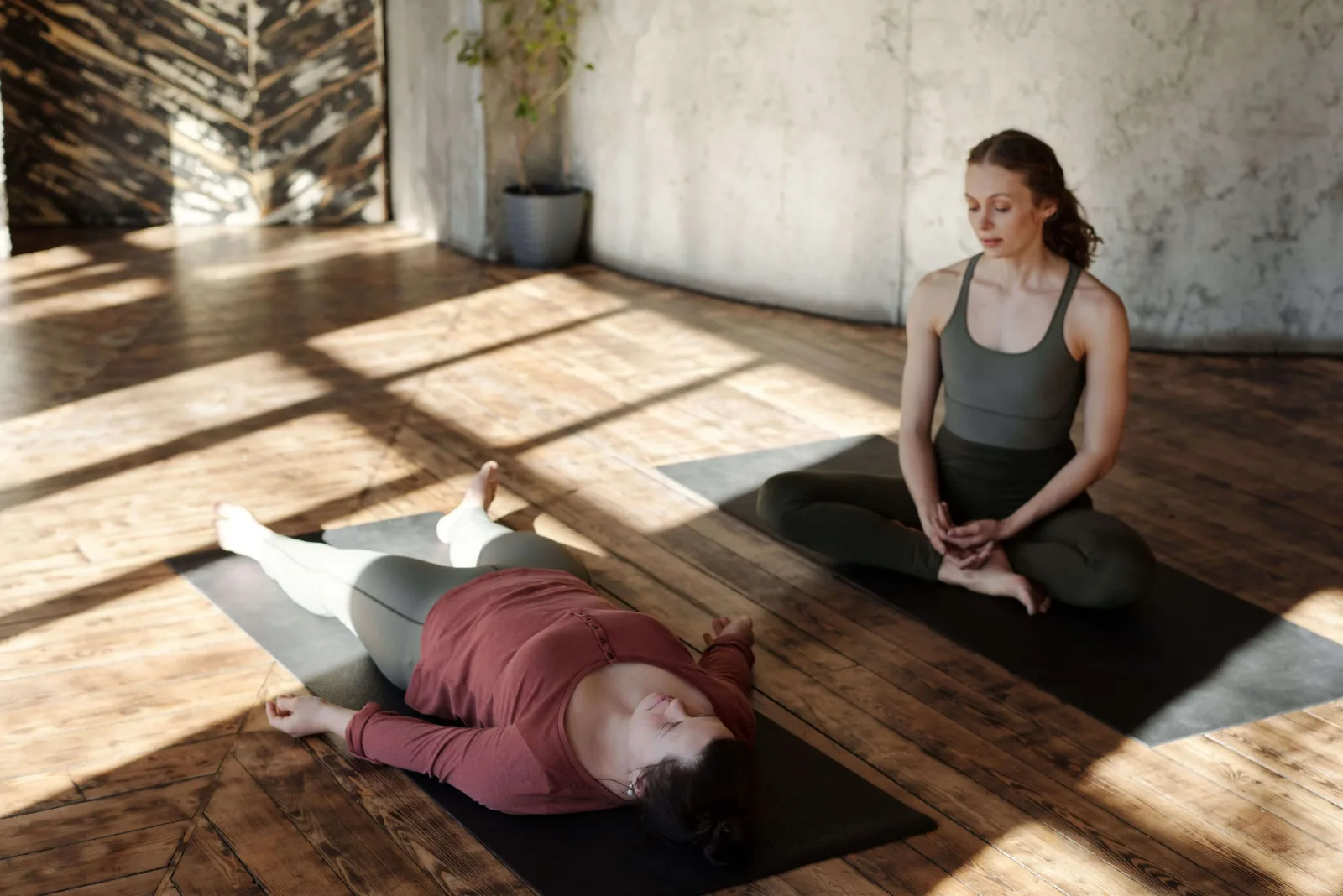
Nidra attracts extravagant claims. Following the same honesty rule as our guide to the benefits of meditation, we grade them in three tiers — and it's worth saying up front that the specific research base for yoga nidra is smaller and younger than for meditation generally, so we grade conservatively.
Well-supported: deep relaxation and a calmer stress response
This is the practice's home ground and the least controversial claim in the field. Lying still with slow breath and systematically released muscle tension engages the body's relaxation response — the parasympathetic "rest-and-digest" counterweight to fight-or-flight. Guided relaxation practices of this family are consistently associated with reduced self-reported stress, and reviews of yoga nidra specifically point the same way, while noting that studies are often small. It is also the effect you're most likely to notice from your very first session.
Promising: sleep, anxiety, mood and blood pressure
Sleep. The natural fit. Early research suggests yoga nidra practice may improve sleep quality and help people fall asleep more easily, plausibly by rehearsing the descent into sleep and lowering pre-sleep arousal. It is not a treatment for a diagnosed sleep disorder — persistent insomnia deserves a doctor — but as a wind-down practice it has earned its reputation.
Anxiety and mood. Small studies suggest regular practice may reduce anxiety symptoms and support mood, consistent with the broader evidence on relaxation and meditation practices. Promising, not settled — and never a substitute for professional mental-health care.
Blood pressure and stress physiology. Some research observes modest improvements in markers like blood pressure among regular practitioners of relaxation practices, nidra included. Plausible via the same relaxation-response pathway; still early. Anyone managing hypertension should follow their doctor's plan and enjoy nidra as a pleasant addition, not an intervention.
Traditional: what the lineage itself teaches
The tradition frames nidra's purpose beyond symptom relief: rest said to refresh more deeply than ordinary sleep; access to a receptive layer of mind where a resolve (sankalpa, below) can take root; and training for the pratyahara limb of classical yoga — the deliberate withdrawal of the senses. Practitioners across generations report these fruits consistently. They are valuable on their own terms, and they are not clinical claims; we present them as exactly what they are.
One popular claim needs flagging here: you will read that "one hour of yoga nidra equals four hours of sleep." That is a traditional and anecdotal saying, not an established finding — see the FAQ.
What a yoga nidra session looks like, step by step
Every lineage varies the details, but a classic session moves through recognisable stages. Here is what to expect, roughly in order:
Settling. You lie on your back — knees supported, blanket on (body temperature drops in stillness), eyes closed. The teacher guides a few minutes of getting genuinely comfortable, because you won't move again for half an hour.
Intention to stay aware. A gentle instruction that the practice is to remain awake and listening — the thread you'll try to keep hold of.
Sankalpa. You silently repeat your short personal resolve a few times (explained below).
Rotation of consciousness. The heart of the practice: attention led point by point through the whole body in a set sequence, often quite quickly. Nothing to do but hear and notice.
Breath awareness. Counting breaths backwards, or feeling breath at the belly and nostrils.
Opposite sensations. Pairs like heaviness/lightness or warmth/coolness, evoked in turn — a traditional stage said to build equanimity.
Images. Brief, neutral images to witness without holding on; some lineages use a longer guided visualisation.
Sankalpa again. Repeated in the deeply receptive state the practice has produced — this placement is the point of the whole architecture.
Return. Awareness is guided back — sounds in the room, the body on the floor, fingers moving — slowly, so the state isn't shattered but carried out.
From the outside, forty minutes of lying down. From the inside, a structured descent and return. Students at our school meet it daily — the 18:00–19:00 slot in the training-day schedule alternates meditation and yoga nidra — and "I've never rested like that" is among the most common things we hear in the first week.
A tip from our teaching hall: if you keep falling asleep, practice earlier in the day, and try nidra after light activity rather than after dinner. If you stay tightly awake instead, let the voice do the work — the most common beginner error is trying to relax, which is rajas wearing a yoga costume.
Yoga nidra vs sleep vs meditation vs savasana
Yoga nidra | Sleep | Seated meditation | Savasana | |
|---|---|---|---|---|
Awareness | Maintained at the edge of sleep | Absent | Alert, self-directed | Relaxed, unstructured |
Guidance | Continuous, by a teacher's voice | None | Usually none after learning | Usually brief or none |
Posture | Lying down, supported | Lying down | Seated, spine upright | Lying down |
Structure | Fixed multi-stage sequence | Sleep cycles | One technique sustained | Stillness, no sequence |
Purpose | Deep conscious rest; sankalpa | Biological restoration | Training attention | Integration at the end of asana practice |
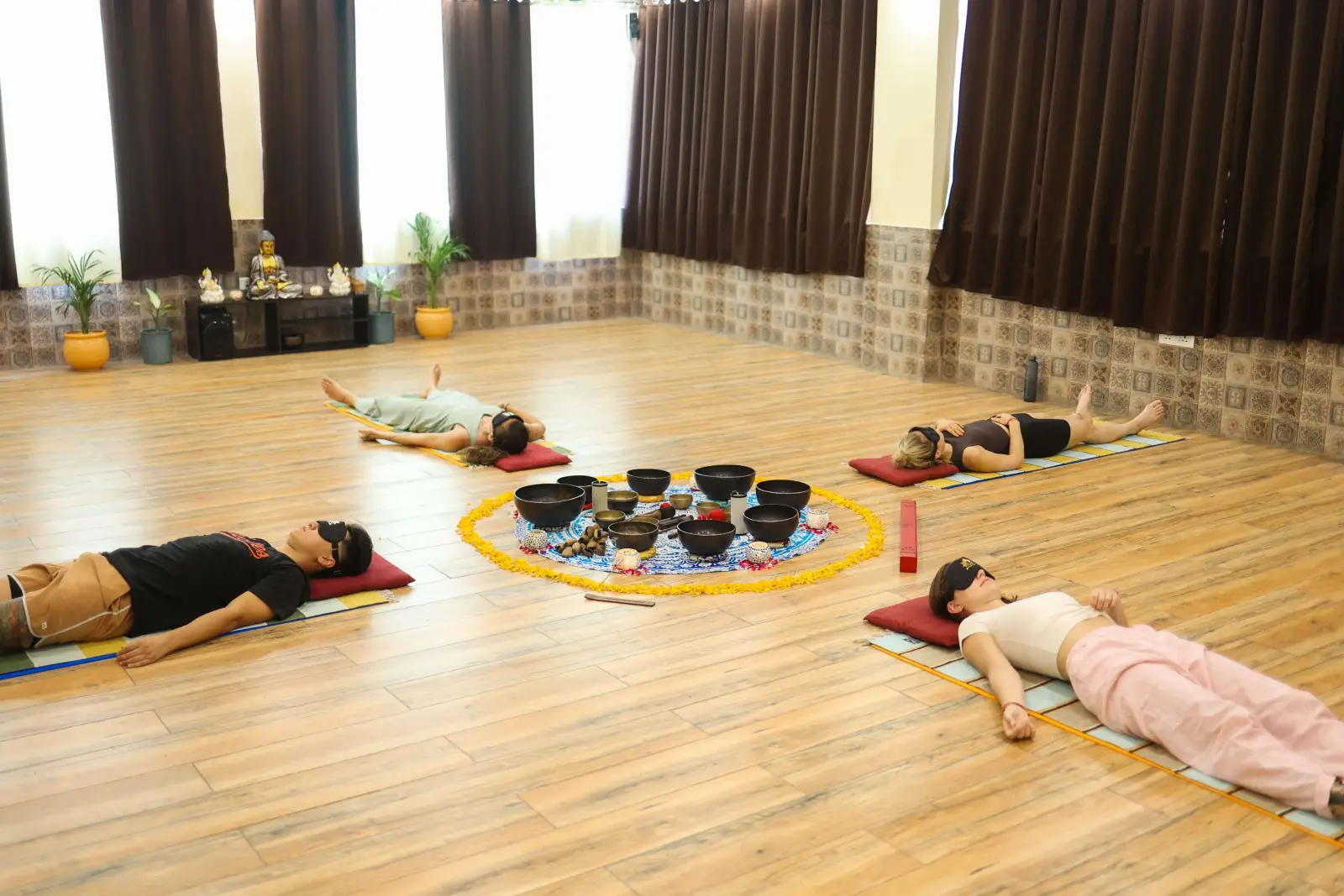
The short versions: nidra is not sleep, because awareness is deliberately kept; it differs from most meditation in being guided, lying down, and aimed at conscious rest rather than attention training; and it differs from savasana in being a full guided method rather than a resting pose — savasana is the position nidra borrows, and the corpse pose deserves its own article. Many practitioners use seated practice to sharpen the mind and nidra to restore it — our guide to healing meditation shows where nidra sits among the restful practices.
The sankalpa: a resolve planted in soft ground
A sankalpa is a short positive resolve — traditionally phrased in the present tense, as if already true ("I am calm and steady"; "I practice with kindness"), kept private, and kept the same across many sessions. It is repeated at the start and again near the end of nidra, when the mind is at its most quiet and receptive.
The traditional teaching is that a resolve planted in that receptive state works on you from below, as an intention set at the surface of a busy mind does not. The pragmatic reading is gentler but real: returning repeatedly to one honest sentence about the direction of your life, in a calm and undefended state, is a practice of clarity that costs nothing. Choose something true and kind, and traditionally, keep the same sankalpa until it has flowered.
How to practice yoga nidra at home
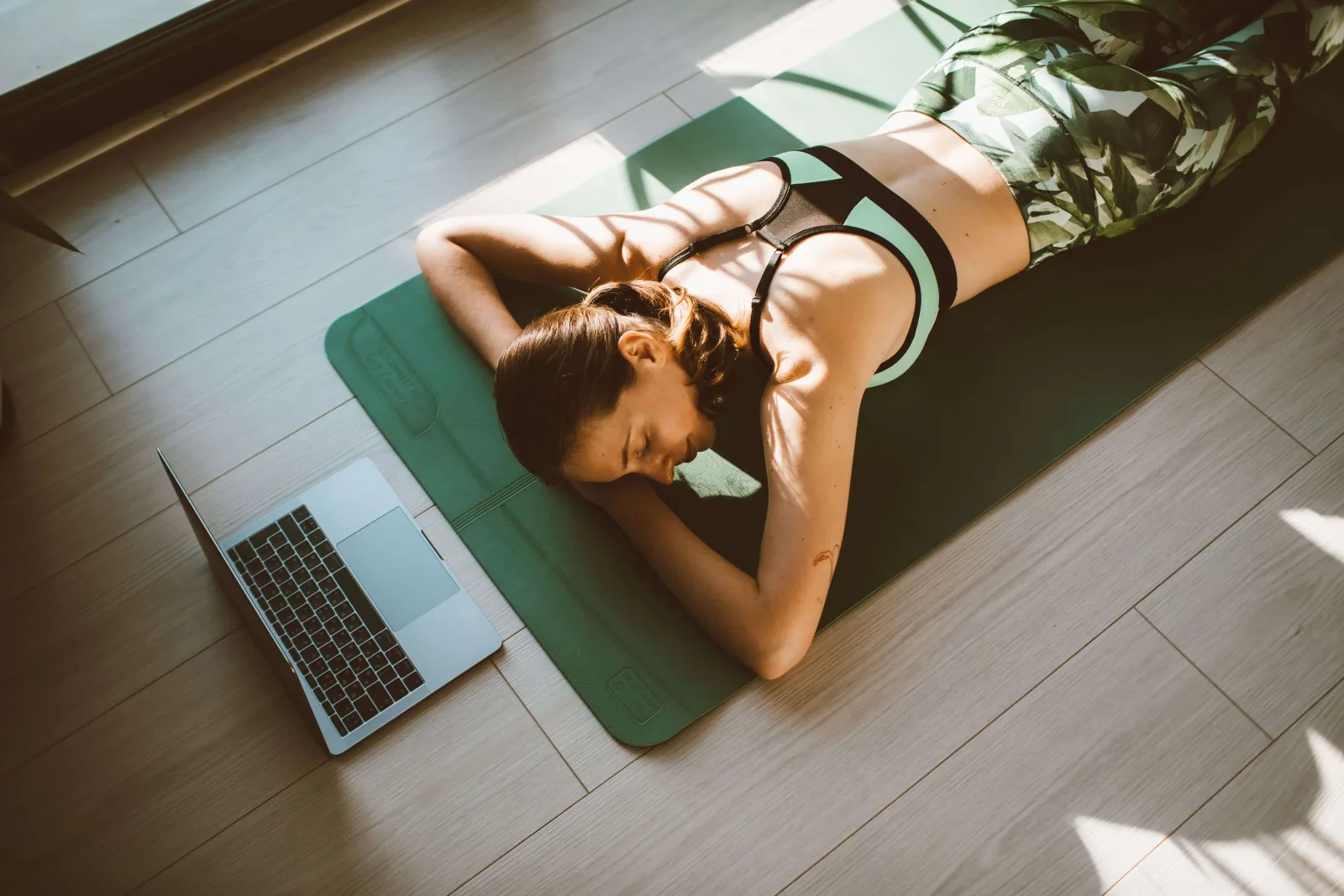
You need a teacher's voice — live or recorded — because reading a script to yourself defeats the design. Recorded guided sessions are widely and freely available; choose any teacher whose voice genuinely relaxes you, at a length you'll finish (20–30 minutes is a good start). Beyond that:
Set up properly: firm surface (bed invites sleep), cushion under the knees, blanket over you, eyes covered if you like, phone in do-not-disturb.
Time it kindly: late afternoon or early evening suits most people; bedtime nidra is fine if your goal is sleep, but you'll likely not hear the ending.
Frequency: daily is traditional and safe for most people; even two or three sessions a week is worth having. Short and regular beats long and occasional.
Never practice while driving or doing anything that needs your attention — it is designed to switch you off.
A gentle caution: nidra is low-risk, but deep-relaxation practices can occasionally surface difficult emotions, particularly for people carrying trauma. If sessions reliably leave you distressed, practice with a qualified teacher's or therapist's support rather than alone. And nidra complements professional care for insomnia, anxiety or depression — it doesn't replace it.
This article is for general education and is not medical advice. Please consult a qualified healthcare professional about your individual situation.
Frequently asked questions
What happens in yoga nidra?
You lie still while a guide leads you through relaxation stages — body rotation, breath awareness, paired sensations, imagery — until you rest on the border between waking and sleep, deeply relaxed but aware. A session typically runs 20–45 minutes and ends with a slow, guided return.
Does yoga nidra actually work?
For deep relaxation and a calmer stress response — yes, comfortably within what evidence and everyday experience support. For sleep quality, anxiety and mood, early research is promising but modest. The grander claims (replacing sleep, healing conditions) are not established. It reliably delivers rest; treat everything beyond that as a possible bonus.
How many hours of sleep is yoga nidra equal to?
The popular "one hour equals four hours of sleep" line is a traditional saying, not a measured finding — no research establishes such an exchange rate, and nidra does not replace sleep's biological work. What's true in it: practitioners commonly emerge from a session feeling disproportionately restored. Enjoy that; keep sleeping at night.
Is yoga nidra better than meditation?
Neither is better; they train different things. Seated meditation builds self-directed attention; nidra provides guided, effortless deep rest. Beginners often find nidra far easier to start with — there's no posture to hold and a voice carries you. Many practitioners keep both: meditation to sharpen, nidra to restore. If you're starting from zero, our meditation techniques for beginners guide covers the seated side.
Is it good to do yoga nidra every day?
For most people, yes — it's low-risk, and daily practice is the traditional pattern; regularity is where the calmer baseline comes from. If daily is unrealistic, a few sessions a week still count. The one wrong dose is using nidra to avoid actual sleep.
Who should not do yoga nidra?
Almost everyone can lie down and listen. Sensible exceptions: never practice anywhere you must stay alert (driving); people with significant unresolved trauma, severe depression or psychosis should practice with professional guidance, since deep relaxation can surface intense material; and if lying flat is uncomfortable (late pregnancy, reflux, some back conditions), practice propped or side-lying — the guidance works in any comfortable position.
Learn it — or learn to teach it
If nidra becomes your practice, the deepest way in is the teacher's route: our Yoga Nidra Teacher Training in Rishikesh is a residential immersion in the practice's stages, scripts and delivery — for future teachers, and equally for practitioners who simply want the practice from the inside. Training students here meet nidra nightly in the 18:00 session, which is how most discover that the description "rest you can stay awake for" undersells it. Questions? Ask us on WhatsApp — a real person answers.
References
National Center for Complementary and Integrative Health (NCCIH) — relaxation techniques and meditation overviews (evidence characterisation; final URLs at publish).
Peer-reviewed review literature on yoga nidra's origins and clinical relevance (PubMed Central–indexed review; final citation pasted at publish per flip checklist).
Sleep-medicine and academic-health publisher overviews of yoga nidra for sleep and relaxation (final URLs at publish).
Patanjali, Yoga Sutras — pratyahara, the fifth limb (classical frame for sense-withdrawal); tantric nyasa tradition as historical root of the body-rotation method.
Author note (byline): Gangesha Adi (E-RYT 500) leads the teaching team at Pure Soul Yoga School, Rishikesh, where guided yoga nidra closes the training day — and where he has watched students from 50+ nationalities fall asleep in their first session and learn to stay on the border by their second week.