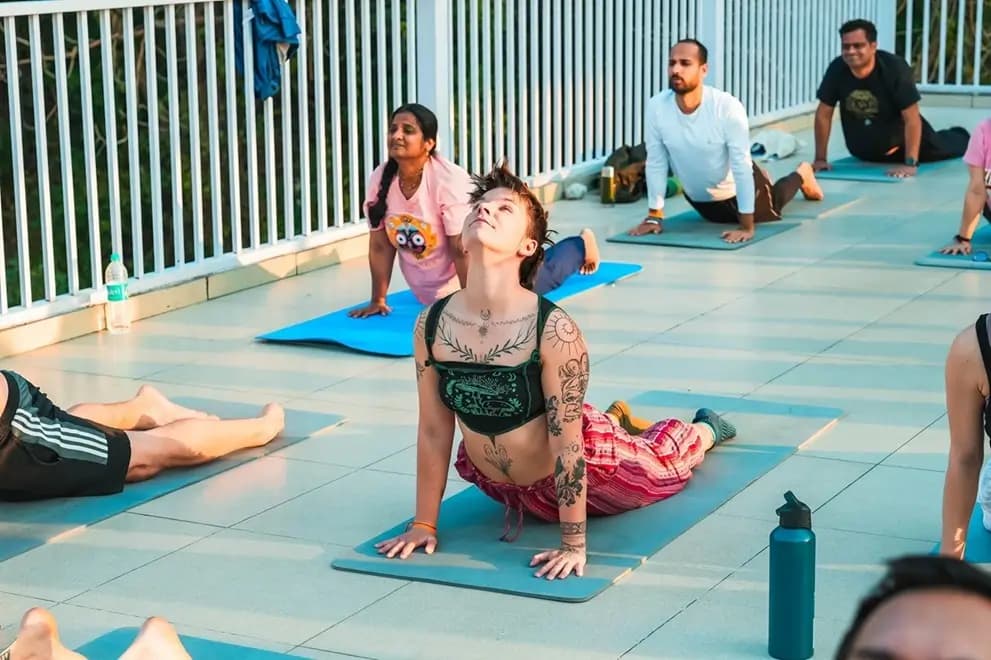
Meditation Techniques for Beginners: 7 Simple Ways to Start
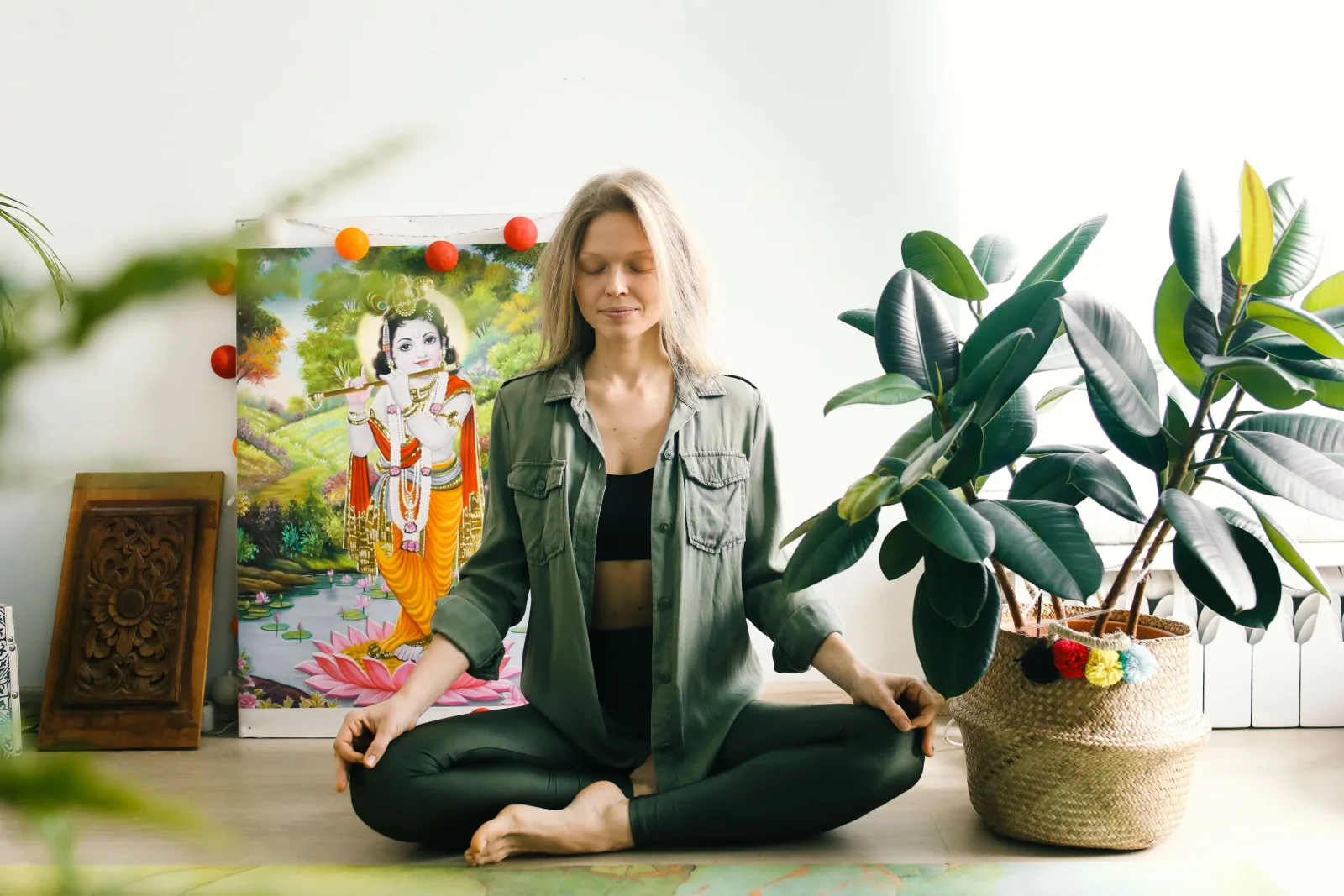
If you are new to meditation, here is the honest starting point: there is no single "correct" technique, and the best one for a beginner is the one you will actually do tomorrow morning. For most people that is simple breath awareness — sit comfortably, follow the sensation of your own breathing, and return to it every time the mind wanders. That last part is not failure; it is the practice.
This guide walks you through seven beginner-friendly meditation techniques — breath awareness, body scan, loving-kindness, mantra, walking meditation, guided meditation and Yoga Nidra, and trataka — each with plain step-by-step instructions, the obstacle that most often trips people up, and who the technique tends to suit. At the end you'll find a 10-minute starter plan you can begin with today, and straight answers to the questions beginners actually ask.
In this guide: - What meditation actually is (and isn't) - How should a beginner start meditating? - The 7 techniques - Which technique should you choose? - Does meditation have real benefits? - Your 10-minute starter plan - FAQs
What meditation actually is (and isn't)
Meditation is the practice of training attention. You choose an anchor — the breath, the body, a phrase, a flame — rest your attention on it, notice when the mind drifts away, and gently bring it back. Everything else is variation.
In the yoga tradition, meditation (dhyana) is the seventh of the eight limbs of yoga — the stage where sustained attention deepens into effortless absorption. You don't need the philosophy to begin, but it helps to know that the tradition never treated meditation as a quick relaxation hack. It is a skill, built the way any skill is built: small sessions, done often.
Two myths to clear away before we start:
"Meditation means emptying the mind." It doesn't. Minds produce thoughts the way ears produce hearing. Meditation is noticing thought and returning to your anchor — thousands of times, without drama.
"I'm too restless to meditate." Restless is the normal starting condition. If your mind were already quiet, you wouldn't need a practice.
How should a beginner start meditating?
Before any specific technique, get four basics in place. This is how to start meditating in the simplest terms:
Pick a time you already own. First thing in the morning works best for most beginners — the mind is quieter and the day hasn't claimed you yet. Attach the sit to an existing habit: after brushing your teeth, before your tea.
Sit comfortably, spine tall. A chair is completely fine — feet flat, hands on thighs. On a cushion, sit cross-legged with your hips slightly higher than your knees. Comfort matters more than looking like a statue; pain is not a spiritual achievement.
Start with five minutes. Set a gentle timer so you're not clock-watching. Five honest minutes daily beats thirty ambitious minutes once a week — and you can grow the number when five feels short.
Redefine success. A "good" session is not a blissful one. A good session is one where you noticed the mind had wandered and came back — even if you did that fifty times. Noticing is the repetition that trains the muscle.
That's genuinely it. Everything below is a choice of anchor.
The 7 techniques
1. Breath awareness — the universal starting point
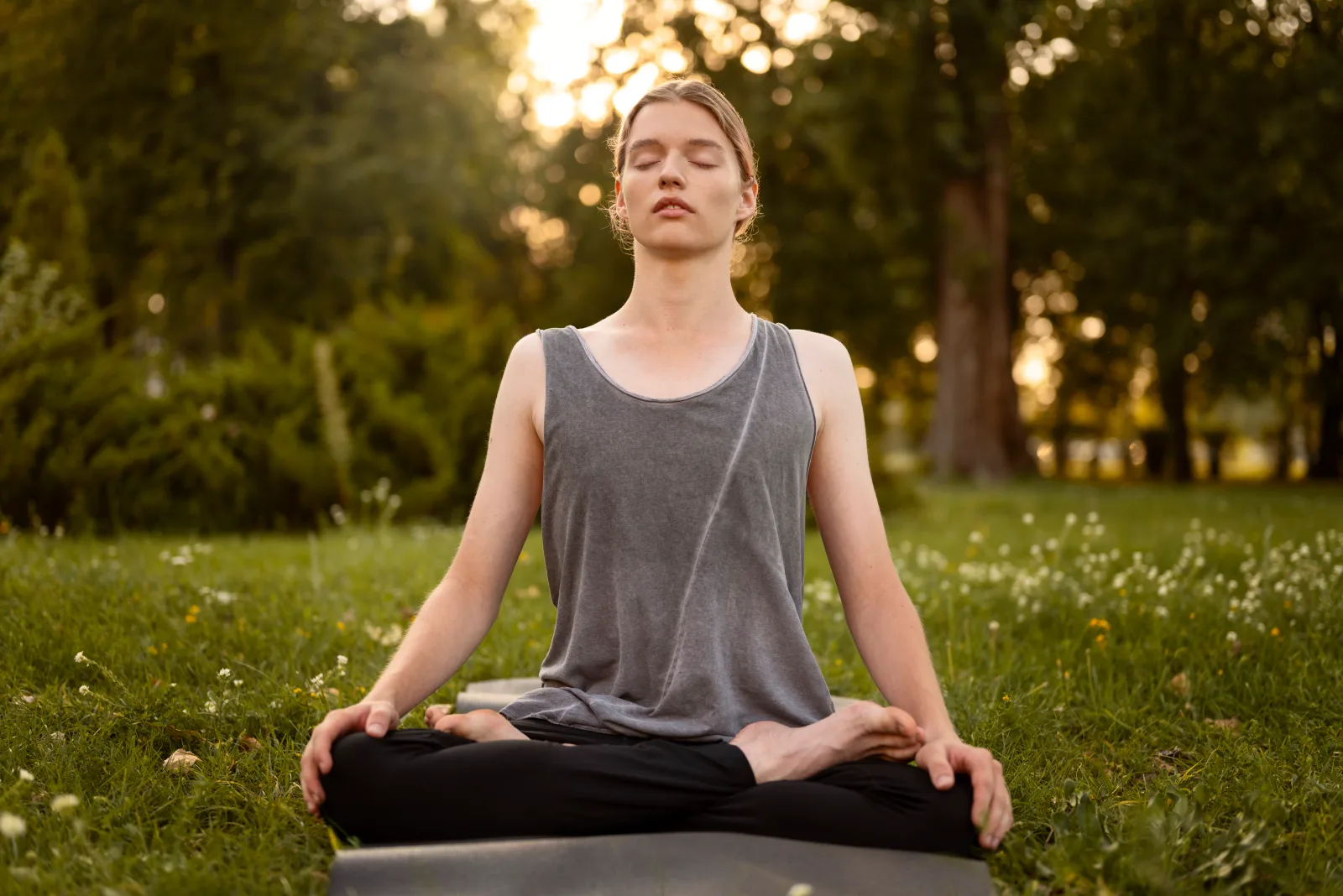
Watching the natural breath is the most widely taught meditation technique in the world, and for good reason: your anchor is always with you, costs nothing, and responds to attention almost immediately.
How to practice: 1. Sit comfortably, close your eyes or soften your gaze downward. 2. Take two or three slightly deeper breaths to arrive, then let the breath return to its natural rhythm — you are watching it, not steering it. 3. Rest your attention where the breath is most vivid: the coolness at the nostrils, or the rise and fall of the belly. Choose one spot and stay there. 4. When the mind wanders — it will — note it kindly ("thinking"), and return to the breath. 5. Continue for five to ten minutes.
If keeping attention on the bare breath feels slippery, count breaths from one to ten and start over. Lose count? Begin again at one, without commentary.
The common obstacle: trying to control the breath instead of observing it. If watching the breath makes your breathing feel forced or tight, drop the nostrils and watch the belly instead — it's further from the "control panel" and easier to observe neutrally.
When it suits you: you want one dependable daily practice; you like simplicity; you also practice pranayama breathing techniques and want a meditative complement to them. (The distinction is worth keeping: pranayama deliberately shapes the breath; breath-awareness meditation simply watches it.)
2. Body scan meditation — for people who live in their heads
The body scan moves attention slowly through the body, part by part, noticing whatever is actually there — warmth, tingling, pressure, nothing at all. It builds the skill meditation depends on (placing attention where you choose) while quietly releasing tension you didn't know you were holding.
How to practice: 1. Lie on your back or sit supported. Close your eyes and take three easy breaths. 2. Bring attention to your left toes. Don't visualise them — feel them. Whatever sensation is there (or isn't) is fine. 3. Move gradually: foot, ankle, calf, knee, thigh. Then the right leg. Then hips, belly, chest, both arms, shoulders, neck, jaw, eyes, scalp. Spend a few unhurried breaths in each region. 4. If you find tension, don't wrestle it — just breathe there and let attention do its softening work. 5. Finish by feeling the body as one whole field for a minute before opening your eyes.
Ten to twenty minutes is typical; even a five-minute scan of shoulders, jaw and hands is worthwhile on a busy day.
The common obstacle: falling asleep, especially lying down. If that happens regularly, scan sitting up, or practice earlier in the day. (And if you fall asleep at night doing it — congratulations, you've found a better use for it than scrolling.)
When it suits you: you're tense without knowing where; you overthink; you want a practice that doubles as deep physical rest. It's also the foundation for Yoga Nidra, which we'll meet at technique six.
3. Loving-kindness (metta) — for the self-critical
Metta meditation cultivates goodwill on purpose. Instead of watching an anchor, you repeat quiet phrases of well-wishing — first for yourself, then outward in widening circles. Beginners are often surprised by how practical it is: the inner critic that makes meditation feel like a performance is exactly what metta softens.
How to practice: 1. Sit comfortably and settle with a few breaths. 2. Silently repeat three or four simple phrases toward yourself: May I be well. May I be at ease. May I be safe. May I live with kindness. Unhurried — one phrase per breath. 3. After a few minutes, bring to mind someone you love easily, and offer them the same phrases: May you be well… 4. Widen: a neutral person (the neighbour you nod at), then — only when you're ready — someone difficult. 5. Close by extending the phrases to everyone, everywhere, for a minute.
The common obstacle: the phrases feel mechanical or false, especially toward yourself. That's normal and not a problem — you are planting a habit of intention, not manufacturing an emotion on demand. Keep the phrases; the feeling follows in its own time. If self-directed metta is genuinely painful, start with the easy-to-love person and return to yourself later.
When it suits you: harsh self-talk, resentment you're tired of carrying, or a season of grief or recovery — metta is one of the five practices we cover in our guide to healing meditation.
4. Mantra meditation — giving the mind something to hold
A mantra is a word or phrase repeated silently as the anchor. It suits minds that find the bare breath "too quiet" — the gentle inner sound gives thought-prone attention something to hold onto.
The mantra we teach beginners most often in Rishikesh is So-Ham, which rides on the breath itself: So on the inhale, Ham (pronounced "hum") on the exhale. Traditionally it is understood to mirror the natural sound of the breath.
How to practice: 1. Sit tall, eyes closed. Watch the natural breath for a minute to settle. 2. On each inhale, silently hear So. On each exhale, Ham. Let the syllables be soft — a whisper of thought, not an inner shout. 3. When the mind drifts, return to the sound riding the breath. 4. After ten minutes, let the mantra fade and sit for a few breaths in the quiet it leaves behind.
Any calming word works if Sanskrit doesn't speak to you — "peace" on the exhale, or simply "in… out". The mechanism is the same.
The common obstacle: speeding up. The mantra gradually races ahead of the breath and becomes mental chatter of its own. When you notice this, deliberately let the mantra follow the breath's pace rather than lead it.
When it suits you: busy, verbal minds; people who found breath awareness frustrating; anyone drawn to the sound-and-vibration side of the yoga tradition — in our 200-hour training, students meet this practice in the daily mantra class and many adopt it as their personal anchor.
5. Walking meditation — for those who can't sit still (yet)
Meditation does not require a cushion. Walking meditation uses slow, deliberate steps as the anchor, and for restless beginners it is often the door that finally opens.
How to practice: 1. Find a quiet stretch of ten to twenty paces — a hallway, a garden path. 2. Stand still for a few breaths. Feel your feet on the ground. 3. Walk noticeably slower than normal. Place attention in the soles of the feet: lifting… moving… placing. Let the arms hang naturally. 4. At the end of your path, pause, breathe, turn around mindfully, and walk back. 5. When the mind wanders, stop walking, return attention to the feet, then continue. Ten minutes is a full practice.
The common obstacle: feeling self-conscious and drifting into "just going for a walk". The slowness is the practice — if you can be watched by a neighbour and still walk at half speed, your concentration is doing fine. Practicing indoors solves the audience problem entirely.
When it suits you: high restlessness, long desk days, back pain that makes sitting hard — or as a bridge between sitting sessions. Students at our Tapovan campus often take this practice to the quiet lanes above the school in the free hour after lunch.
6. Guided meditation and Yoga Nidra — when you'd rather be led
There is no rule that beginners must meditate in silence. In a guided meditation, a teacher's voice leads your attention — which removes the "am I doing this right?" doubt that stops many people in week one. Guided practice is how most students meet meditation at our school: every evening of the 200-hour training day ends with a guided meditation or Yoga Nidra session.
Yoga Nidra deserves its own mention. Practiced lying down, it guides you through intention-setting, a systematic body rotation and breath awareness into a state of deep, conscious rest on the edge of sleep. Beginners almost always fall asleep the first time. That's allowed — the depth comes with familiarity.
How to practice: 1. Choose a guided recording or a live class, ten to twenty minutes to start. 2. Sit (guided meditation) or lie down warm and supported (Yoga Nidra). 3. Let the voice do the navigating. Your only job is to follow it without effort — when you notice you've drifted, rejoin the voice wherever it is now. 4. Resist the urge to evaluate the session while it's happening.
The common obstacle: dependence — the practice only "works" with the recording. Guided practice is a wonderful entry, but keep one short unguided sit in your week (even three minutes of breath awareness) so the skill becomes your own.
When it suits you: complete beginners, anxious minds, poor sleepers, and anyone drawn to deep-rest practices. If Yoga Nidra becomes your practice — as it does for many — we teach it to teaching depth in our Yoga Nidra teacher training in Rishikesh.
7. Trataka (candle gazing) — a brief introduction
Trataka is a traditional concentration practice: steady, soft gazing at a single point, classically a candle flame. It trains one-pointed attention unusually fast, which is why it appears early in traditional syllabi — but it's also easy to overdo, so treat this as a light introduction.
How to practice: 1. Place a lit candle at arm's length, flame at eye level, in a draft-free, dim room. 2. Sit tall. Gaze softly at the flame — relaxed eyes, natural blinking is fine as you begin. 3. After a minute or two, close your eyes and watch the after-image of the flame in the inner darkness until it fades. 4. Reopen the eyes and repeat. Two or three rounds, five to ten minutes total.
The common obstacle: straining the eyes by forcing an unblinking stare. Keep the gaze soft, stop if the eyes burn or water heavily, and skip trataka if you have glaucoma, significant eye conditions or find it triggers headaches — when in doubt, ask an eye-care professional first. The other six techniques will serve you fully.
When it suits you: you're drawn to the traditional practices, your concentration scatters easily, and you can practice in a quiet, dim space.
Which technique should you choose?
Any of the seven will train the same underlying skill. Let temperament choose:
If you are… | Start with | Because |
|---|---|---|
Brand new and unsure | Breath awareness | Simplest anchor, always available |
Tense, body-disconnected | Body scan | Releases tension while training attention |
Self-critical or grieving | Loving-kindness (metta) | Softens the inner voice that sabotages practice |
Verbal, busy-minded | Mantra (So-Ham) | Gives the thinking mind something to hold |
Restless, can't sit still | Walking meditation | Movement becomes the anchor |
Anxious about "doing it wrong" | Guided / Yoga Nidra | A voice removes the doubt |
Craving traditional depth | Trataka (gently) | Fast-acting concentration training |
A tip from our teaching hall: choose one technique and give it two honest weeks before you judge it. Beginners who rotate daily through five techniques are sampling meditation; beginners who repeat one are learning it.
Does meditation have real benefits?
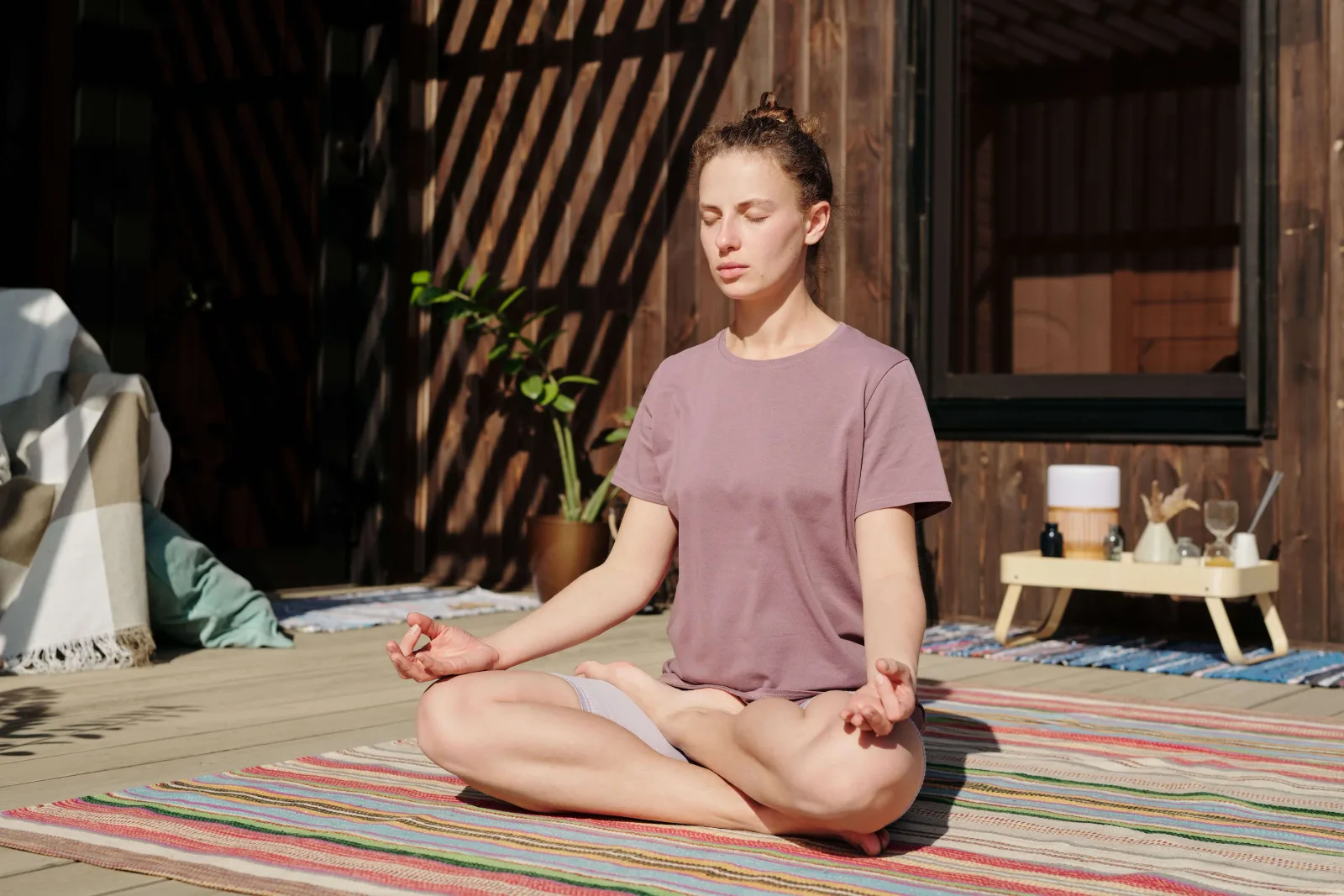
Yes — with honest limits, and the research picture is worth stating carefully. Reviews of meditation studies suggest regular practice may help reduce symptoms of stress and anxiety, support emotional balance, and modestly improve sleep and attention. Bodies like the NCCIH note the evidence is promising but mixed in quality — many studies are small, and meditation is not a treatment or a replacement for professional care for any condition. If you are struggling with your mental health, meditation can sit alongside proper support; it should not stand in for it. (Our guide to yoga for anxiety says the same thing plainly.)
What beginners actually notice tends to be humbler and arrives sooner: you catch yourself mid-reaction more often, sleep comes a little easier, and the space between a trigger and your response widens by a breath. In the tradition's own framing, these are side effects — the practice's real aim is a steadier, clearer mind. A full, carefully hedged guide to the benefits of meditation is on our writing list; this pillar's job is to get you practicing.
This article is for general education and is not medical advice. If you live with a mental-health condition, trauma, or find that meditation reliably increases distress, please practice with the guidance of a qualified professional.
Your 10-minute starter plan
Your first two weeks, in one card:
Minutes 0–1 — Arrive. Sit on your chair or cushion, spine tall, hands resting. Three slower breaths, then let the breath go natural.
Minutes 1–3 — Body settle. A quick scan: soften the jaw, drop the shoulders, unclench the hands, feel the weight of your seat.
Minutes 3–9 — Your anchor. Breath awareness (or your chosen technique from the table). Mind wanders; you notice; you return. Count breaths one to ten if it helps.
Minutes 9–10 — Close gently. Let the anchor go. Sit in the plain quiet for a few breaths. Open your eyes before the timer's second ring, if you can — ending on your own terms builds the habit.
Do this daily for fourteen days — same time, same seat, five minutes if ten feels long. Then decide whether to extend the time, keep the technique, or trade it for another from this page.
Frequently asked questions
What are the five basic steps to meditate?
Strip any technique to its bones and you get the same five steps:
(1) sit comfortably with a tall spine,
(2) choose one anchor — breath, body, phrase or flame,
(3) rest your attention on it,
(4) notice when the mind wanders, and
(5) return to the anchor, kindly, as many times as needed. Everything in this guide is a variation on those five.
What are the 5 R's of meditation?
You'll find several "R" mnemonics online, worded differently by different teachers — a common version runs Relax, Rest, Recognize, Release, Return. They all describe the same loop at the heart of practice: settle the body, notice when attention has drifted, let the distraction go without a fight, and come back to your anchor. Learn the loop and you've learned every version of the mnemonic.
What are the 4 R's of meditation?
The four-step versions compress the same cycle — typically Recognize (the mind has wandered), Release (the thought, without judgment), Return (to the anchor) and Repeat. Don't worry about memorising anyone's exact wording; the skill is the cycle itself, and you practice it every time you come back to the breath.
How long should a beginner meditate each day?
Five to ten minutes, daily. Consistency builds the habit and the skill; duration can grow later. Most students find that after a few weeks, ten minutes starts feeling short on its own — that's the moment to extend, not before.
Can I meditate lying down?
Yes — body scan and Yoga Nidra are traditionally practiced lying down. For other techniques, sitting is usually better simply because lying down invites sleep. If pain makes sitting hard, lie down without guilt: an attentive practice lying down beats a distracted one sitting up.
Is meditation religious? Do I have to adopt any beliefs?
No. Meditation appears within many traditions — including yoga, where it's the seventh of the eight limbs — but the techniques on this page are attention-training practices that require no belief at all. Practice them as secular exercises or within your own tradition; they work the same way.
When you want more than ten minutes a day
Home practice is complete in itself — everything on this page can be practiced free, forever. But if meditation takes hold of you, there is a depth that ten minutes a day only hints at, and it's easier to reach with teachers beside you.
That's what our 50-hour Meditation Teacher Training in Rishikesh is for: five residential days covering mindfulness, loving-kindness, mantra, chakra meditation, Yoga Nidra and more — for practitioners who want structure and for teachers who want to guide others. And if what you need is not training but rest, our destress retreat in Rishikesh wraps daily meditation, breathwork and gentle yoga into a stay you can start on any date, at whatever length your life allows. Questions about either? Message us on WhatsApp — real humans answer.
References
National Center for Complementary and Integrative Health (NCCIH) — Meditation and Mindfulness: What You Need To Know.
NHS — Mindfulness and mental wellbeing guidance.
Goyal M. et al., JAMA Internal Medicine — systematic review and meta-analysis of meditation programs for psychological stress and well-being.
Patanjali's Yoga Sutras — dhyana as the seventh limb (classical framing of meditation within yoga).
Author note (byline): Gangesha Adi (E-RYT 500) has guided daily meditation and Yoga Nidra sessions for students of 50+ nationalities at Pure Soul Yoga School, Rishikesh, where every training day closes with the practices described in this guide.