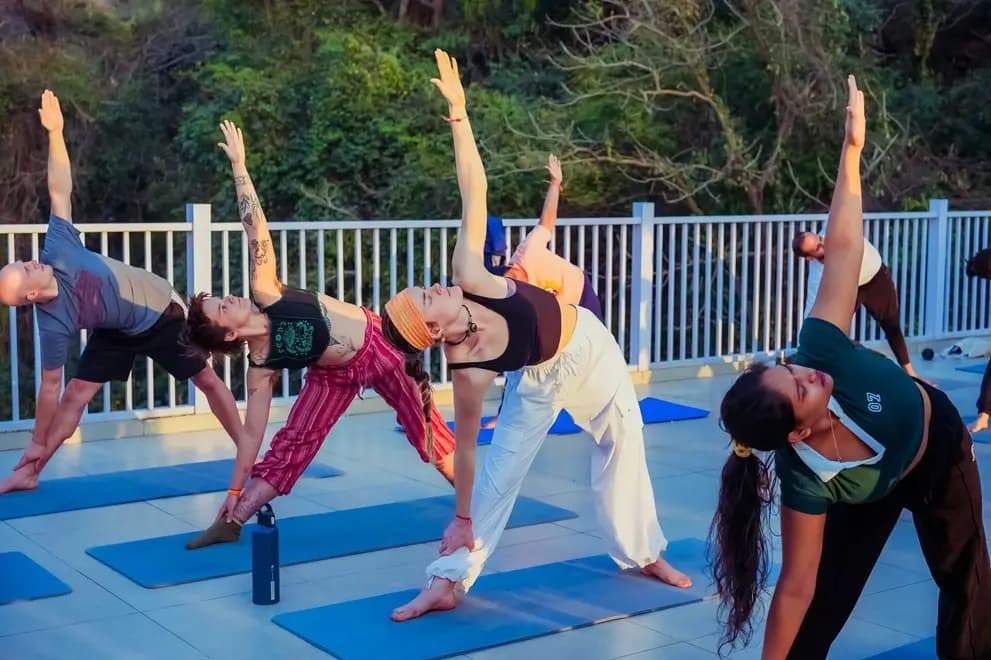
How to Prepare for Your First Yoga Class: 10 Simple Tips
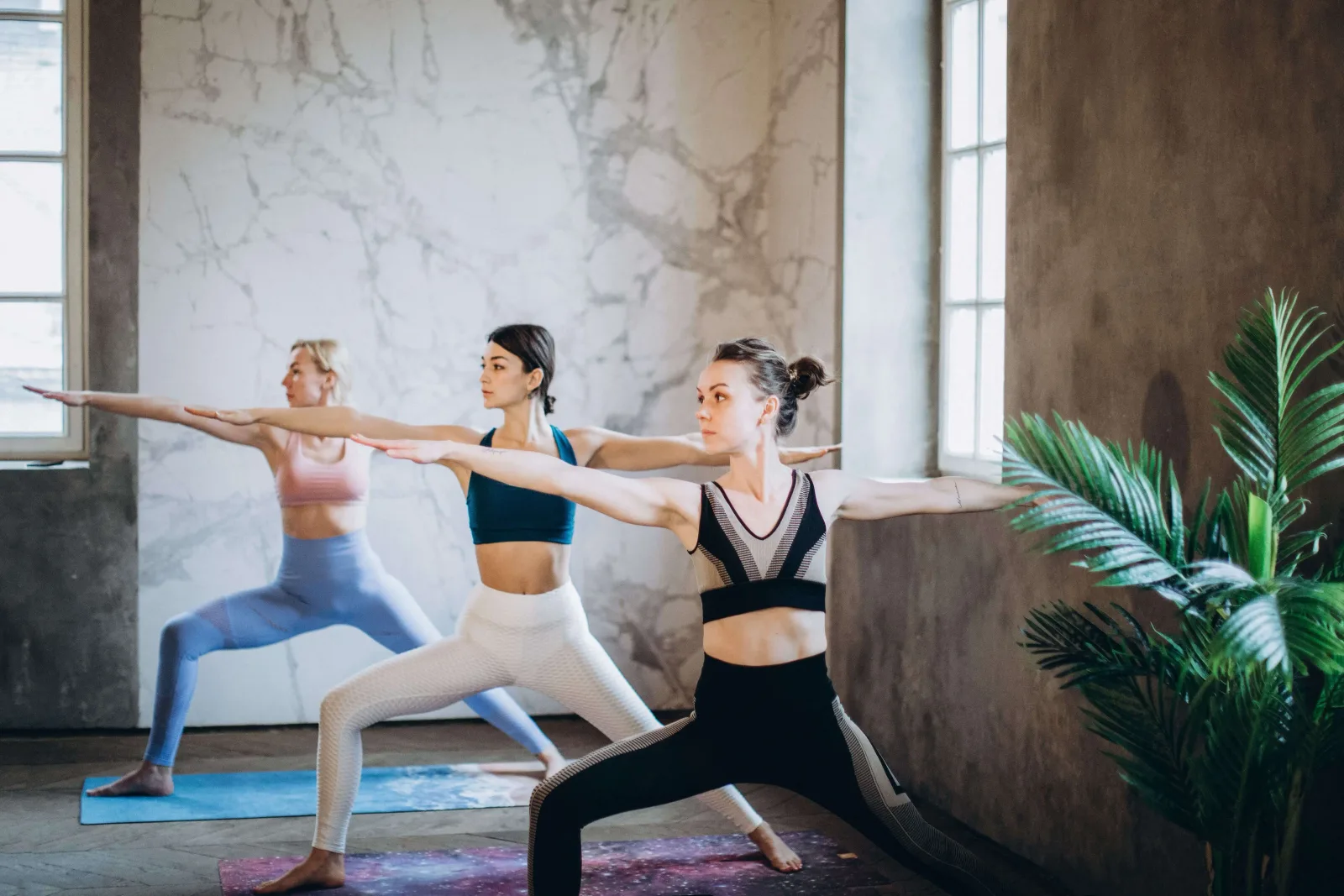
Preparing for your first yoga class comes down to a few simple things: wear comfortable clothes you can move in, eat only lightly in the two hours before, bring water (and a mat if you own one — most studios lend them), arrive ten to fifteen minutes early, and tell the teacher it's your first time. That's genuinely the whole checklist. Everything else — the flexibility you think you need, the poses you think everyone else can do — matters far less than beginners fear.
We've welcomed thousands of first-timers onto the mat at our school in Rishikesh, and the nerves are always the same: Will I look silly? Am I flexible enough? What if I can't keep up? So here are the ten tips we'd give a friend before their first class — the practical ones, plus the honest reassurance behind them.
1. Know what kind of class you're walking into
Yoga classes vary enormously. Hatha is slower and foundational; Vinyasa flows continuously with the breath; Ashtanga follows a set, physically demanding sequence; hot yoga happens in a heated room; Restorative barely moves at all. A beginner who wanders into a fast flow expecting gentle stretching will have a very different first impression than one who chose deliberately.
Before you book, read the class description, and if it doesn't say "beginner-friendly," ask. Our guide to the types of yoga styles walks through the common ones and who each suits — five minutes there will save you a mismatched first hour.
2. Wear comfortable clothes (nothing special required)
You do not need branded yoga wear. You need clothes that stretch, breathe, and stay put when you bend forward: leggings or joggers and a t-shirt that isn't so loose it falls over your head in Downward Dog. Layers help — you'll warm up during practice and cool down in final relaxation.
Yoga is practised barefoot, which helps with grip and balance, so wear shoes you can slip off easily. Socks come off at the mat's edge.
3. Bring water and, if you have one, a mat
Most studios lend or rent mats, so don't buy one just to attend a first class. If you decide yoga is for you, a mat of your own is a worthwhile early purchase — better hygiene, and having it at home quietly nudges you to practise between classes. Grippy and thin beats plush and slippery for standing poses; thicker cushioning is kinder to knees.
A water bottle is the other essential. That's the complete kit.
4. Hydrate through the day, not at the door
Drink water steadily across the day rather than gulping a large bottle in the changing room — a sloshing stomach makes twists and forward folds miserable. Sip small amounts during class if you need to, and drink properly afterwards. Heated classes ask for noticeably more water on both sides of the session.
5. Eat light, and not right before
A full stomach is the most common avoidable discomfort in a first class. Aim to finish any proper meal one and a half to two hours before you practise; if you're hungry closer to class, a small, easily digested snack — a banana, a few nuts — is enough. Heavy, greasy or spicy food just before folding your body in half is a lesson everyone learns exactly once.
6. Arrive ten to fifteen minutes early
Early arrival does three jobs at once: you find the studio without rushing, you choose a spot and settle your mat, and your nervous system gets a few minutes to arrive before the practice asks anything of it. Walking in flustered at the last second means spending the first fifteen minutes catching up with yourself.
A quiet etiquette note while you're there: shoes off at the door, phone silenced and left with your bag, and if class has started with a moment of stillness, enter softly.
7. Tell the teacher you're new
This is the single most useful thing a first-timer can do, and the one nerves talk people out of. A simple "this is my first class" lets the teacher offer you modifications, keep a helpful eye on your alignment, and reassure you about anything unfamiliar. Teachers are genuinely glad to know — every one of us remembers our own first class.
Mention any injuries or health conditions at the same time, so poses can be adapted for you.
8. Listen to your body, not the room
Yoga is not a competition, though a nervous mind in a room of strangers will try to make it one. A mild stretching sensation is fine; sharp, pinching or radiating pain is your signal to ease out — every time. Resting in Child's Pose mid-class is normal and nobody thinks anything of it.
A tip from our teaching hall: beginners often park themselves in the back corner "to hide," then can't see or hear the teacher properly. The middle of the room is actually the beginner-friendly spot — you can follow the teacher and glance at experienced students on either side.
9. Let the breath lead
If you remember one instruction from your first class, make it this: keep breathing. Beginners hold their breath in unfamiliar poses without noticing, which makes everything feel harder. You don't need any breathing technique yet — just a steady, unforced breath through the nose. When a pose feels wobbly or the mind starts commentating, returning to the breath is the reset button. This is also the doorway into the deeper practice: in time, breathwork (pranayama) becomes as central as the poses. Many students find a short morning yoga routine the easiest place to explore that later on.
10. Come with an open mind — the first class is information, not a test
You will not be good at yoga in your first class, and that is entirely the point of a first class. Some poses will feel odd, the Sanskrit names will wash over you, and final relaxation (savasana — lying still at the end) may feel strange or may feel like the best ten minutes of your week. Treat all of it as information. Nobody is watching you; they're busy wobbling in their own poses. Every practitioner you'll ever admire started with a first class exactly like yours.
Frequently asked questions
How should a beginner start yoga?
Start with a slower, beginner-labelled class — Hatha or a gentle flow — once or twice a week, and give it three or four sessions before judging. Consistency matters far more than intensity: two easy classes a week will change how your body feels within a month.
Is it normal to be sore after your first yoga class?
Yes — mild muscle soreness a day or two after is common, especially in the shoulders, hamstrings and core, and it fades as your body adapts. Sharp joint pain is different: that suggests a pose needs modifying, and it's worth mentioning to your teacher next class.
How long should a beginner yoga class be?
Most studio classes run 60 minutes, and some beginner sessions are 45. Either is fine. At home, even 15–20 minutes counts as real practice — length matters less than showing up regularly.
What should you not do before yoga?
Avoid a heavy meal within two hours, excessive caffeine (a jittery nervous system fights the practice), and aggressive stretching while cold — the class itself will warm you up properly. And don't arrive at the last second; a rushed start follows you through the whole hour.
Do I need to be flexible to start yoga?
No — this is the most persistent myth in yoga. Flexibility is a result of practice, not an entry requirement. Stiff beginners often progress fastest, because they feel every pose working.
If your first class turns into a first chapter
Most people need nothing more than a good local class and a bit of consistency. But some students discover, sometimes surprisingly quickly, that they want to understand yoga properly — the breath, the philosophy, the why behind the poses. If that turns out to be you, a short immersive foundation like our 100-Hour Yoga Teacher Training in Rishikesh is built exactly for dedicated beginners: no teaching ambitions required, small groups of maximum 20 students, and the basics taught the way they were meant to be learned. No rush — the mat will still be there when you're ready.
Author note (byline): Gangesha Adi (E-RYT 500) has guided complete beginners through their very first yoga classes at Pure Soul Yoga School in Rishikesh for over a decade, with students from more than 50 nationalities.