Yoga for Energy: Practices That Actually Wake You Up

Yes, yoga can lift your energy — and it does it honestly, without the crash that follows a third coffee. Movement gets blood and breath circulating, backbends and standing poses counter the slumped posture that makes tiredness worse, and slow full breathing wakes the system a caffeine hit only imitates. The practices below are the ones we reach for at our school when a class arrives flat: seven energizing poses, a restorative reset for days when you're too tired to move, and a 10-minute routine that fits before work.
One honest note before the poses, because it matters more than any of them: yoga helps with ordinary tiredness. Persistent exhaustion is a different thing — and it belongs in a doctor's office, not just on a mat.
In this guide: - Tired or depleted? An honest first question - Why yoga affects energy - 7 energizing yoga poses - Too tired to move? The restorative reset - The breath side: energizing pranayama - A 10-minute yoga routine for energy - FAQs
Tired or depleted? An honest first question
Ordinary tiredness has ordinary causes, and yoga addresses several of them well: too much sitting, shallow breathing, accumulated stress, poor sleep, and the crash side of caffeine dependence. If your fatigue traces to those, the practices below will genuinely help.
But fatigue can also signal something that stretching cannot fix: iron or other nutrient deficiencies, thyroid conditions, diabetes, sleep disorders, depression, and other medical causes. If your exhaustion is persistent — weeks of tiredness that sleep doesn't repair — please see a doctor first. A blood test is a faster route to answers than any pose, and yoga works beautifully alongside medical care once the cause is known. Nothing on this page is a substitute for that conversation.
This article is for general education and is not medical advice. Please consult a qualified healthcare professional about your individual situation.
Why yoga affects energy
No mysticism required — the mechanisms are refreshingly ordinary. Movement increases circulation, delivering oxygen-rich blood to muscles and brain. Backbends and open-chested standing poses reverse the collapsed sitting posture that restricts breathing, so each breath does more. Mild inversions — down dog, legs up the wall — change blood flow and reliably feel like a reset. And because a good portion of daily fatigue is really accumulated stress, practices that settle the nervous system return energy that tension was quietly spending. Research on yoga and fatigue is still modest, so we'll say "may help" rather than promise — but the immediate lift after ten minutes of practice is something you can test on yourself this morning.
7 energizing yoga poses
Move with your breath, and stop short of strain — the goal is a brighter body, not a workout hangover.
1. Surya Namaskar (Sun Salutation) — the classic wake-up
The tradition's own energy sequence: a flowing round of forward folds, lunges, and backbends that warms the whole body and synchronizes breath with movement. Two or three slow rounds are the fastest natural lift we know — it opens every practice morning at our school. Full step-by-step guidance lives in our surya namaskar guide.
2. Utkatasana (Chair Pose) — heat on demand

Feet hip-width, arms overhead, bend the knees as if sitting into an invisible chair. Five to eight breaths. Big leg muscles working together demand oxygen and raise the heart rate — gentle, honest heat.
3. Virabhadrasana I (Warrior I) — strong legs, open chest
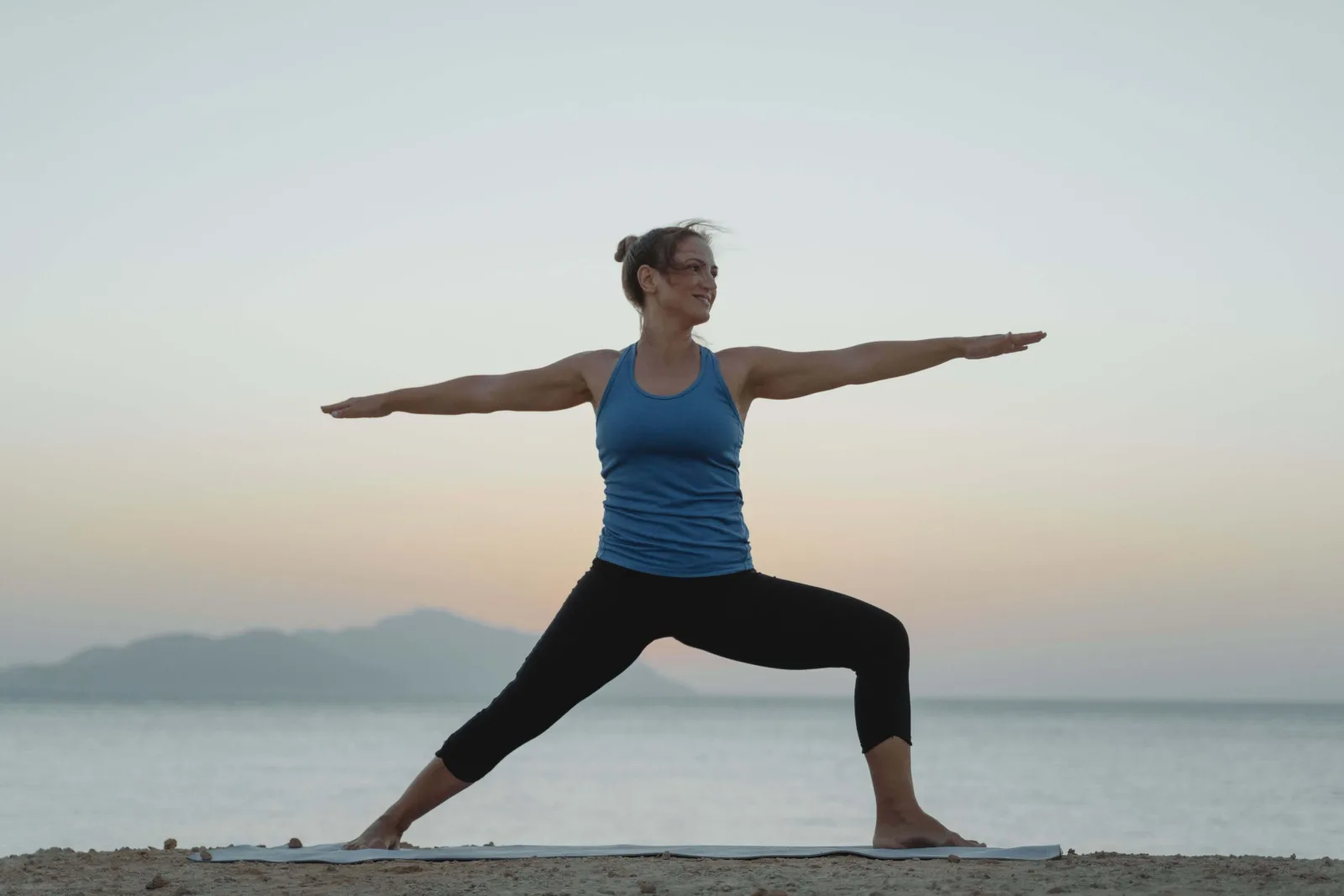
Step one foot back, bend the front knee over the ankle, arms overhead, chest lifted. Five breaths each side. The wide stance builds stamina while the lifted chest makes room for fuller breathing.
4. Adho Mukha Svanasana (Downward-Facing Dog) — the reset button
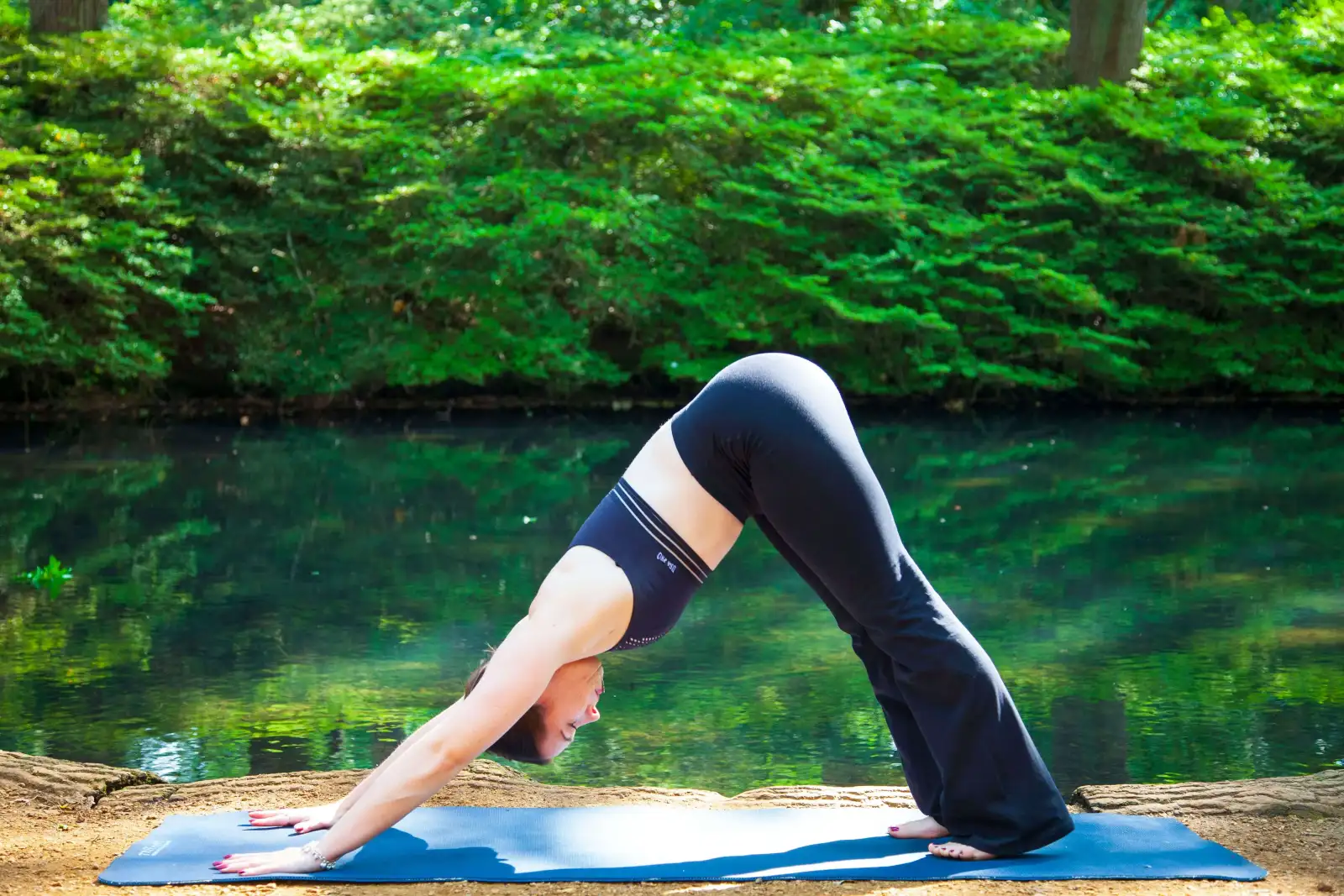
From hands and knees, lift the hips into an inverted V and take five to eight breaths. A mild inversion that stretches the whole back body and reliably clears morning fog. Bend the knees generously if the hamstrings protest.
5. Bhujangasana (Cobra Pose) — the gentle backbend

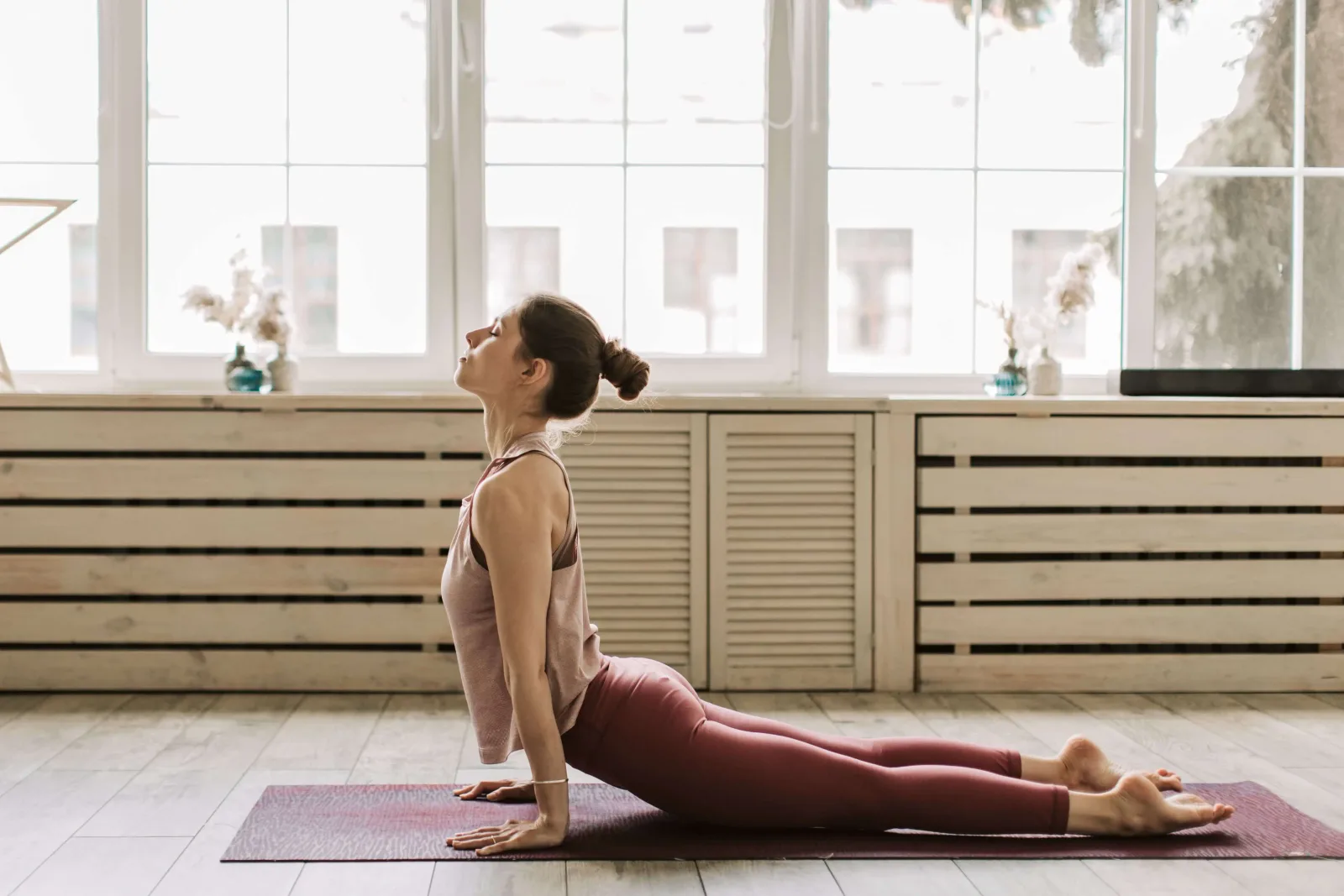
Lying face down, hands under shoulders, press the chest up with soft elbows for three to five breaths. Backbends are yoga's antidote to the desk slump: they open exactly what sitting closes. Keep it low and comfortable — a small lift done well beats a high arch done badly.
6. Trikonasana (Triangle Pose) — length and breath
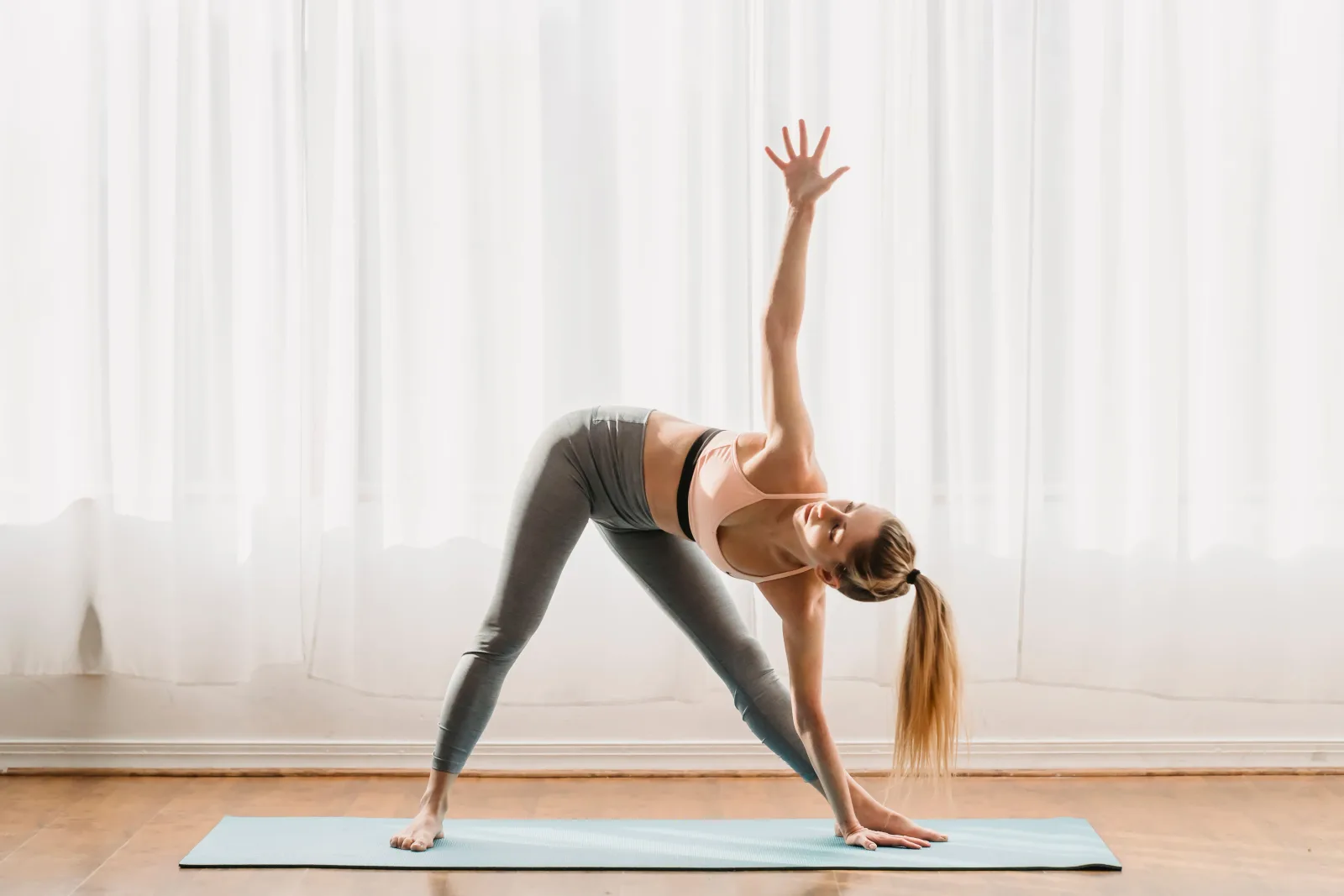
Wide stance, front foot turned out, hinge sideways to rest the lower hand on shin or ankle, top arm reaching up. Five breaths each side. The long side-body stretch opens the ribs, and fuller ribs mean fuller breath.
7. Navasana (Boat Pose) — stamina for the core
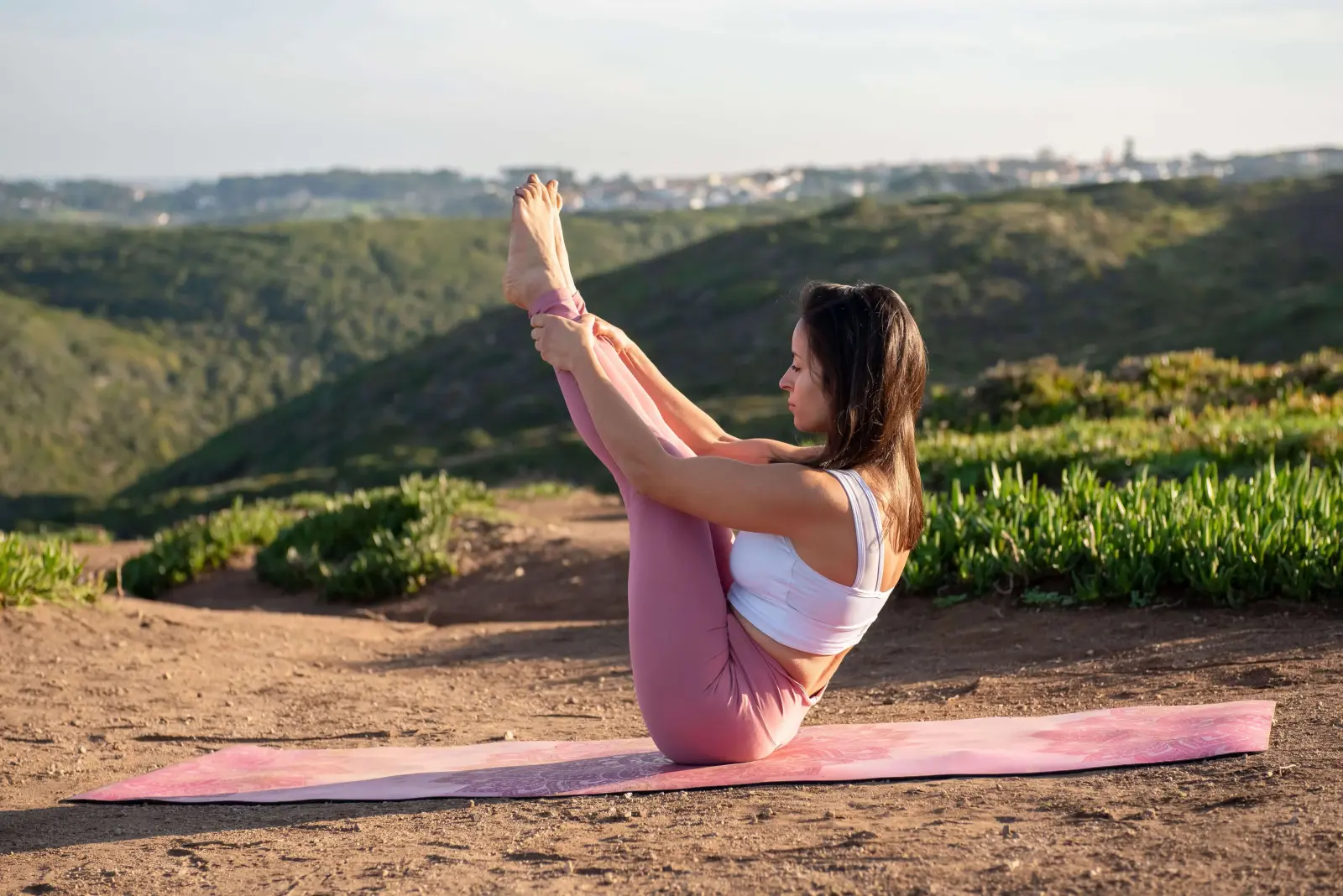
Balance on the sit bones, legs lifted, arms forward. Three rounds of five breaths. Core work is concentration work — this one wakes the mind as much as the body.
A tip from our teaching hall: when energy is low, shrink the practice, never the breath. Two slow sun salutations with full, unhurried breathing will lift you further than six rushed ones.
Too tired to move? The restorative reset
Some tiredness doesn't want stimulation — it wants permission to stop. On those days, strong poses backfire, and the restorative family is the wiser medicine:
Viparita Karani (Legs Up the Wall) — lie on your back with legs resting up a wall, five to ten minutes. Eases heavy legs, calms the nervous system, and stands alone as a complete practice on a drained day.
Balasana (Child's Pose) — knees wide, chest folded toward the floor, forehead resting. A few minutes of slow breathing here releases the back and neck tension that masquerades as exhaustion.
Uttanasana (Standing Forward Fold) — feet hip-width, knees soft, hang forward and let the head go. Half a minute of letting go, then roll up slowly.
The skill is choosing honestly: stimulating practice for sluggishness, restorative practice for depletion. Getting that choice right is most of what "yoga for energy" means.
The breath side: energizing pranayama
The yogic tradition treats breath as the primary lever on energy, and one technique is famous for it: bhastrika, the "bellows breath" — vigorous, active inhales and exhales that leave the body tingling and alert. We mention it here as a pointer rather than a tutorial, deliberately: rapid breathing techniques are not for unsupervised beginners, and are generally avoided with high blood pressure, heart conditions, or during pregnancy. Learn it properly — our pranayama guide covers safe foundations and contraindications, and ideally take your first rounds with a teacher. Until then, three minutes of slow, full belly breathing is a gentler lift available to everyone, no cautions required.
A 10-minute yoga routine for energy
For mornings, the mid-afternoon slump, or before an evening you actually want to enjoy:
Minute 0–1: stand tall, eyes soft, five slow full breaths.
Minutes 1–5: two to three unhurried rounds of surya namaskar.
Minutes 5–7: Warrior I, five breaths each side.
Minutes 7–8: Cobra, two gentle rounds.
Minutes 8–9: Downward dog, eight slow breaths.
Minutes 9–10: stand quietly, notice the difference, and carry it with you.
Practiced daily, this small routine compounds — many students find it gradually replaces the second coffee. If mornings suit you, our companion guide to morning yoga benefits and routine builds this into a fuller start-of-day practice.
Frequently asked questions
Which yoga is best for energy?
Dynamic, breath-led practice: sun salutations, standing poses, and gentle backbends. As styles go, vinyasa and other flowing classes are the natural fit for an energy lift, while restorative and yin styles serve the opposite (equally valid) need. Time of day matters less than matching the practice to your actual state — stimulate sluggishness, restore depletion.
Can yoga increase energy?
It can lift how energetic you feel — through better circulation, fuller breathing, upright posture, and lower background stress. The effect is real but honest-sized: a steady daily practice raises your baseline; a single session brightens a morning. It creates conditions for energy rather than injecting it.
Can yoga help with fatigue?
For everyday tiredness — desk stiffness, stress, poor breathing habits — yes, and often quickly. For persistent or unexplained exhaustion, yoga is a complement, not an answer: see a doctor to rule out medical causes, then let gentle practice support whatever treatment is needed. Be wary of anyone who promises yoga alone will fix chronic fatigue.
What is a good 10-minute yoga routine for energy?
The one above: a minute of standing breath, three rounds of surya namaskar, Warrior I on both sides, gentle cobra, downward dog, and a quiet closing minute. If ten minutes is too much on a given day, two slow sun salutations still count.
Is it better to do energizing yoga in the morning or evening?
Morning practice sets the day's tone and suits most people best, but the honest answer is: whenever you'll actually do it. Just keep strong stimulating practice — and bhastrika especially — away from the last hours before bed, where calming practice serves better.
When tiredness deserves more than ten minutes
Sometimes the tank isn't low — it's empty, and what's needed is not a routine but a genuine restoration. That's what our rejuvenation retreat in Rishikesh is built for: unhurried days of yoga, breathwork, rest, and nourishing food, starting on any date that suits you, with a doctor's consultation on arrival. If stress is the louder problem, the destress retreat takes the same gentle approach. Questions about which fits? Ask us on WhatsApp — a real person answers.
References
National Center for Complementary and Integrative Health (NCCIH) — Yoga: What You Need To Know.
NHS — Tiredness and fatigue: causes and when to see a GP.
Peer-reviewed literature on yoga, perceived fatigue, and stress (hedged summaries above; findings modest and mixed).
Author note (byline): Gangesha Adi (E-RYT 500) opens every training morning at Pure Soul Yoga School, Rishikesh with the practices in this guide — and has watched students of 50+ nationalities trade their second coffee for two rounds of surya namaskar.