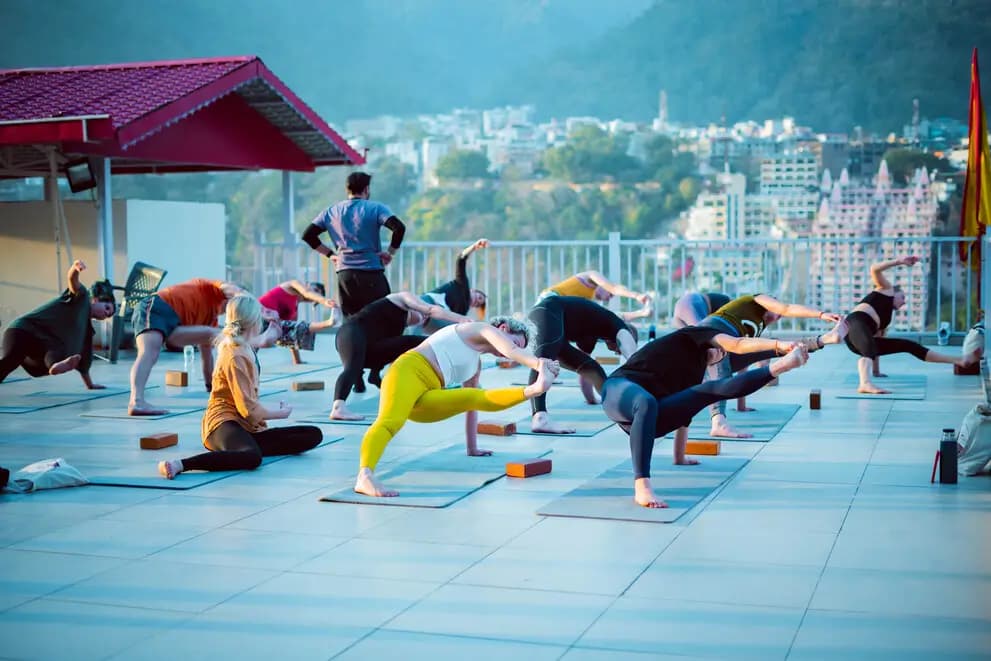
Morning Yoga Benefits: Why Practice Early + a 15-Minute Routine
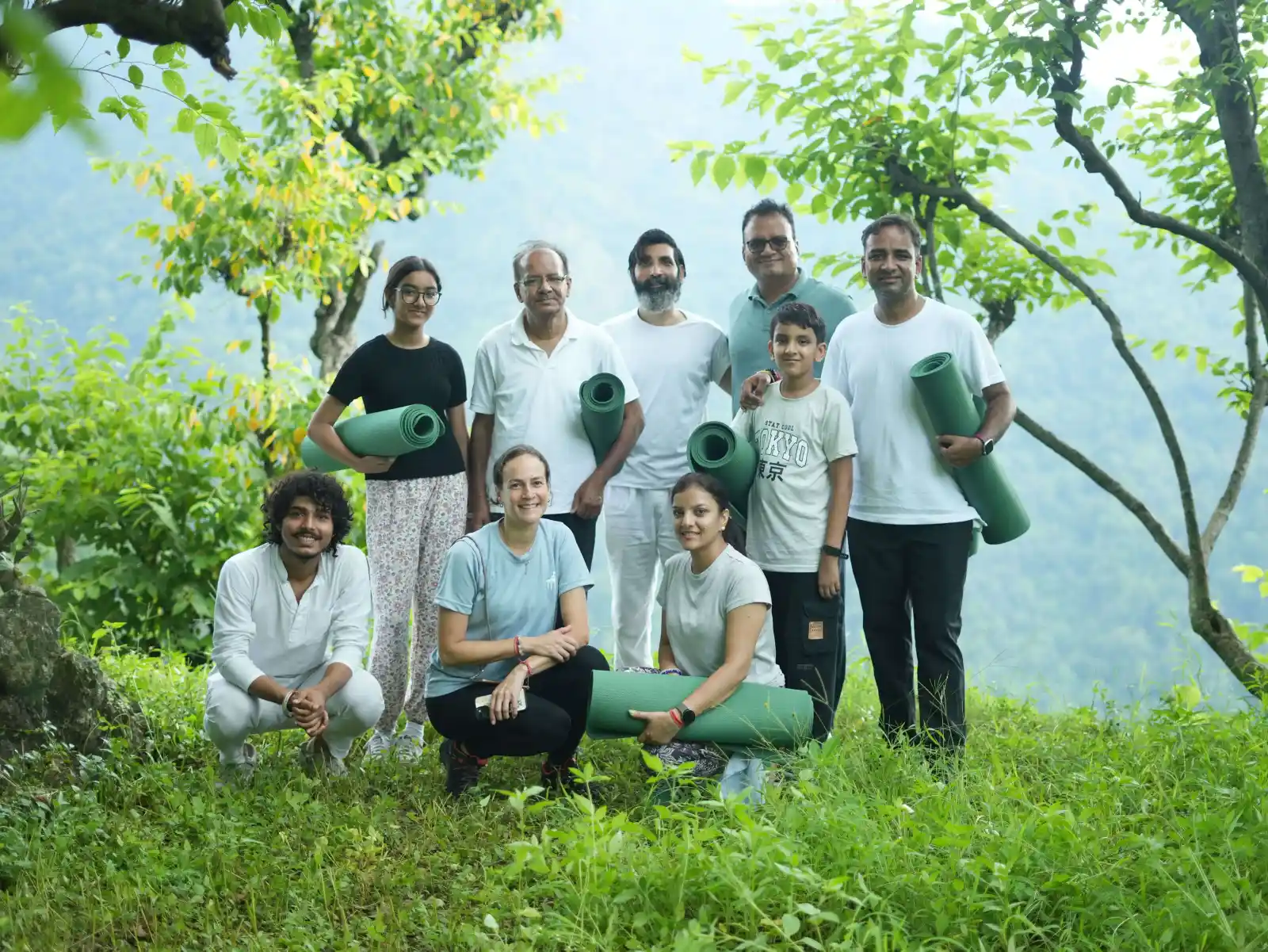
The real benefits of morning yoga are refreshingly practical: it eases the stiffness your body builds overnight, wakes you up without leaning on caffeine, settles the mind before the day starts making demands, and — maybe most importantly — mornings are simply when practice is most likely to actually happen, because nothing has yet arrived to cancel it. Research on yoga more broadly suggests it may improve flexibility, reduce stress and support better sleep; practising in the morning is less about magic hours and more about consistency, a calmer start, and a body that thanks you by mid-afternoon.
One honest note before anything else: you don't have to become a morning person to practise yoga. Evening practice is real practice. But if you've wondered whether the early mat is worth it, here is the fair case — and a 15-minute routine to test it with.
Why practise yoga in the morning?
A stiff body gets moving again
After hours of stillness, muscles and connective tissue feel tight — anyone who has hobbled to the kettle knows the sensation. Gentle morning movement takes the joints and spine through their range while tissues warm and loosen, which is why the first forward fold of the day feels so different from the same fold at noon. Practised regularly, this is where morning yoga earns its keep: less creaking, easier movement, and a day that starts in a body that feels lived-in rather than parked overnight.
Energy without the second coffee
Morning yoga raises circulation and gets the breath moving deeply and rhythmically, which most practitioners experience as a clean, alert energy — different in character from caffeine's spike. Flowing sequences and gentle backbends are particularly wakeful. We won't tell you to forget coffee (plenty of our own teachers drink chai); we will tell you that a short practice first changes how much you need it.
A clearer, calmer start
A few minutes of mindful movement and steady breathing before the phone comes out is a genuinely different way to enter a day. Research suggests yoga and slow breathing practices may reduce stress and lower markers of arousal like cortisol, and the traditional explanation — that breath-led practice settles the nervous system — matches what students report: the day's first stressor lands on a steadier person.
The consistency advantage — the quiet superpower
Here's the most under-rated benefit: mornings are the only part of the day that other people haven't scheduled yet. Evening practice competes with overruns, dinners, tiredness and everyone else's plans; morning practice competes with the snooze button, and that's a winnable fight. If your yoga keeps getting cancelled by your calendar, moving it to the morning is usually the single most effective fix.
Better nights, oddly enough
A consistent wake-and-practice time helps anchor your circadian rhythm — the internal clock that governs sleep — and practitioners who keep a steady morning routine often find they fall asleep more easily at night. Waking early to practise ends up improving the sleep it seemed to threaten.
The traditional view: Brahma Muhurta
Yoga tradition has always prized the pre-dawn hours — Brahma Muhurta, roughly the last portion of night before sunrise — as the most conducive time for practice: quiet, still, and free of the day's distractions. You don't need to rise at 4 a.m. to honour the principle behind it, which is simply this: practise before the world gets loud. At our school in Rishikesh the day begins with herbal tea at 6:25 and the first practice at 6:40 — you can see the whole rhythm in our day in the life at the school.
And if mornings genuinely aren't yours — evening is fine
Some bodies and schedules are built for evening practice, and forcing a miserable 5:30 alarm helps no one. Evening yoga stretches out the day's accumulated tension and can ease the transition to sleep (keep late practice gentle rather than vigorous). The best time to do yoga is, honestly, the time you'll actually keep. Everything in this article works after work too.
A 15-minute morning yoga routine
This is a complete, beginner-friendly routine — enough to change a day, short enough to survive a busy one. Move gently; the body is cold this early, so today's edge is closer than it will be by afternoon.
Arrive (1 minute). Sit comfortably on the mat, eyes closed. Take five slow breaths and, if you like, set one word as an intention for the day — steady, patient, kind.
Cat–Cow (2 minutes). On hands and knees, inhale to arch and look gently up; exhale to round and tuck the chin. Six to ten slow rounds, letting the whole spine wake up.
Downward-Facing Dog (1 minute). Tuck the toes, lift the hips, pedal the heels. Bent knees are welcome — the point is a long spine, not straight legs.
Surya Namaskar — Sun Salutations (6 minutes). Three to five slow rounds. This flowing sequence is the heart of the routine — a full-body warm-up, gentle strength work and breath training in one, traditionally practised facing the rising sun. New to it? Our step-by-step guide to Surya Namaskar breaks down every position.
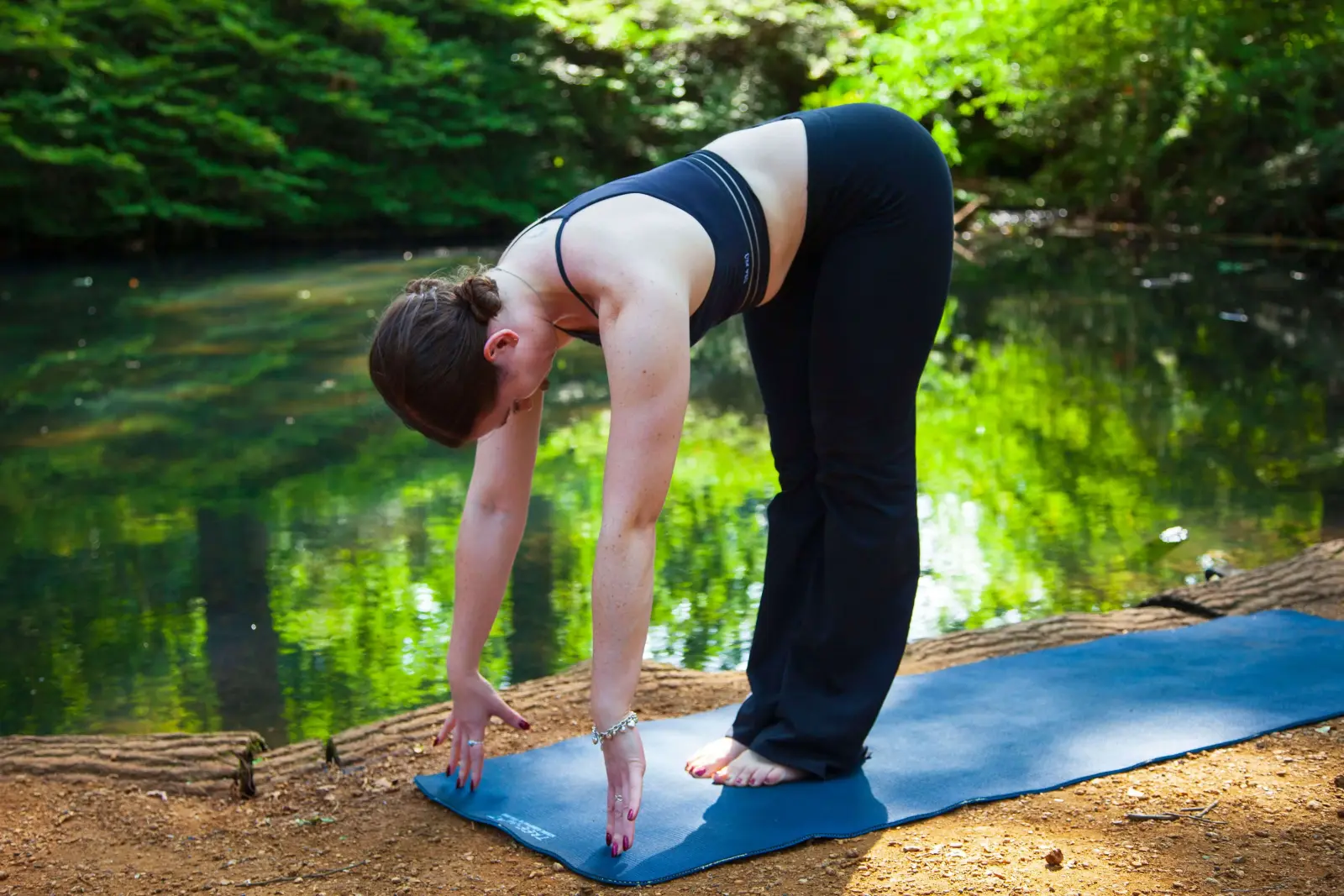
Standing Forward Bend (1 minute). Feet hip-width, soft knees, fold and hang. Let the head be heavy.
Seated twist (2 minutes). Sitting tall, inhale to lengthen, exhale to rotate gently — one minute each side. Twists are traditionally said to aid digestion; at minimum they feel wonderful on a waking spine.
Close (2 minutes). Sit quietly, breathe slowly through the nose. If you know a simple breathing practice, use it here — our pranayama guide has beginner-safe options.
That's it. On rushed days, do steps 1, 2 and 4 in seven minutes rather than skipping entirely — the habit matters more than the length.
Morning yoga stretches for a stiff body
If a full routine is more than you want, these five stretches are the core of morning mobility — each one chosen for what overnight stillness does to hamstrings, hips and spine. Hold each for five to ten slow breaths.
1. Cat–Cow (Marjaryasana–Bitilasana). The best all-round spinal wake-up there is: flexion and extension of the whole spine, synced to breath. If you do exactly one thing on a stiff morning, do this. (Sensitive wrists? Do it seated on a chair — same movement, arms free.)
2. Downward-Facing Dog (Adho Mukha Svanasana). One shape, whole posterior chain: calves, hamstrings, back and shoulders all lengthen at once. Press the floor away, keep the knees as bent as they need to be, and let the head hang relaxed.
3. Child's Pose (Balasana). Knees down, hips back to the heels, arms forward, forehead to the mat. A gentle stretch for the lower back and hips and a genuinely restful shape — breathe into the back of the ribs. A folded blanket under the knees or forehead makes it kinder still.
4. Standing Forward Bend (Uttanasana). Hinge from the hips with a long spine, then let everything hang. Tight morning hamstrings are normal — keep a real bend in the knees and the lower back will thank you. Sway gently side to side if that feels good.
5. Seated Forward Bend (Paschimottanasana). Legs extended, sit tall, hinge forward from the hips — hands wherever they reach, or a strap (or a towel) around the feet. Inhale to lengthen, exhale to soften deeper. A folded blanket under the sit bones makes the pose far more honest for tight hamstrings.
A tip from our teaching hall: in the morning, aim for the first sensation of stretch, not the deepest one you can find. The body opens noticeably within a few breaths — chasing the afternoon's flexibility at 6:30 a.m. is how mornings get associated with strain instead of ease.
How to actually make it a habit
Knowing the benefits changes nothing; the routine only pays if it happens. What works, from watching thousands of students build (and rebuild) the habit:
Start embarrassingly small. Ten minutes, even five. A habit that always happens beats an ambitious one that usually doesn't.
Prepare the night before. Mat unrolled, clothes out, water ready. You're removing every decision between bed and mat.
Anchor it to something you already do. Tea, then mat — it's exactly how our own school day works, and it works at home too. The kettle becomes the starting bell.
Same time, most days. Regularity trains the body clock; within a couple of weeks the early start stops feeling like a negotiation.
Keep a dedicated spot. A corner where the mat lives, even 2×1 metres, lowers the friction to zero.
Be patient with the wobble weeks. Most people take two to three weeks before a morning practice stops requiring willpower. Missing a day means nothing; missing a week means restart smaller, not harder.
Borrow accountability if it helps. A friend on the same routine, or simply ticking a calendar — chains of ticks defend themselves.
Frequently asked questions
How long should morning yoga be?
Ten to twenty minutes is plenty for a daily morning practice — the 15-minute routine above is a complete session. Longer practices are lovely when time allows, but consistency at 15 minutes beats an occasional 90.
Should you do yoga in the morning on an empty stomach?
Ideally yes, or close to it — yoga is traditionally practised on an empty stomach, and twists and folds are far more comfortable that way. Water or a small cup of tea beforehand is fine; if you genuinely need something, keep it tiny (half a banana) and give it a few minutes. Save breakfast for after practice.
Can yoga really change your body?
Practised regularly, yes — within honest limits. Research suggests yoga may improve flexibility, balance and strength, and many practitioners see steadier posture and easier movement within a couple of months. What it won't do is transform you in a week or replace all other exercise; think steady renovation, not overnight rebuild.
Is it okay to do yoga every morning?
For a gentle-to-moderate routine like the one above, yes — daily practice is fine for most healthy people, and tradition assumes it. Keep intensity honest (not every day needs to be strong), rest when ill or exhausted, and if you have a health condition or injury, check with a doctor or experienced teacher first.
Is morning yoga good for beginners?
Very — the body is stiffer, which actually makes mornings a safer teacher: you feel each stretch early and clearly. Start with the five stretches above, move slowly, and let the routine grow with you.
If the 6 a.m. rhythm calls to you
There's a version of this routine that runs six days a week beside the Ganga: herbal tea at 6:25, mats down at 6:40, pranayama while the streets are still quiet. Living that rhythm for a month — rather than assembling it alone at home — is a large part of what makes a residential training transformative, and it's how every day begins on our 200-Hour Yoga Teacher Training in Rishikesh. No pressure and no hurry: start with tomorrow's fifteen minutes, and if the practice keeps asking for more, you'll know where the mornings are.
Author note (byline): Gangesha Adi (E-RYT 500) has opened the 6:40 a.m. practice at Pure Soul Yoga School, Rishikesh, for over a decade, guiding morning sadhana for students from more than 50 nationalities.