Paschimottanasana Benefits: The Forward Bend That Takes Months
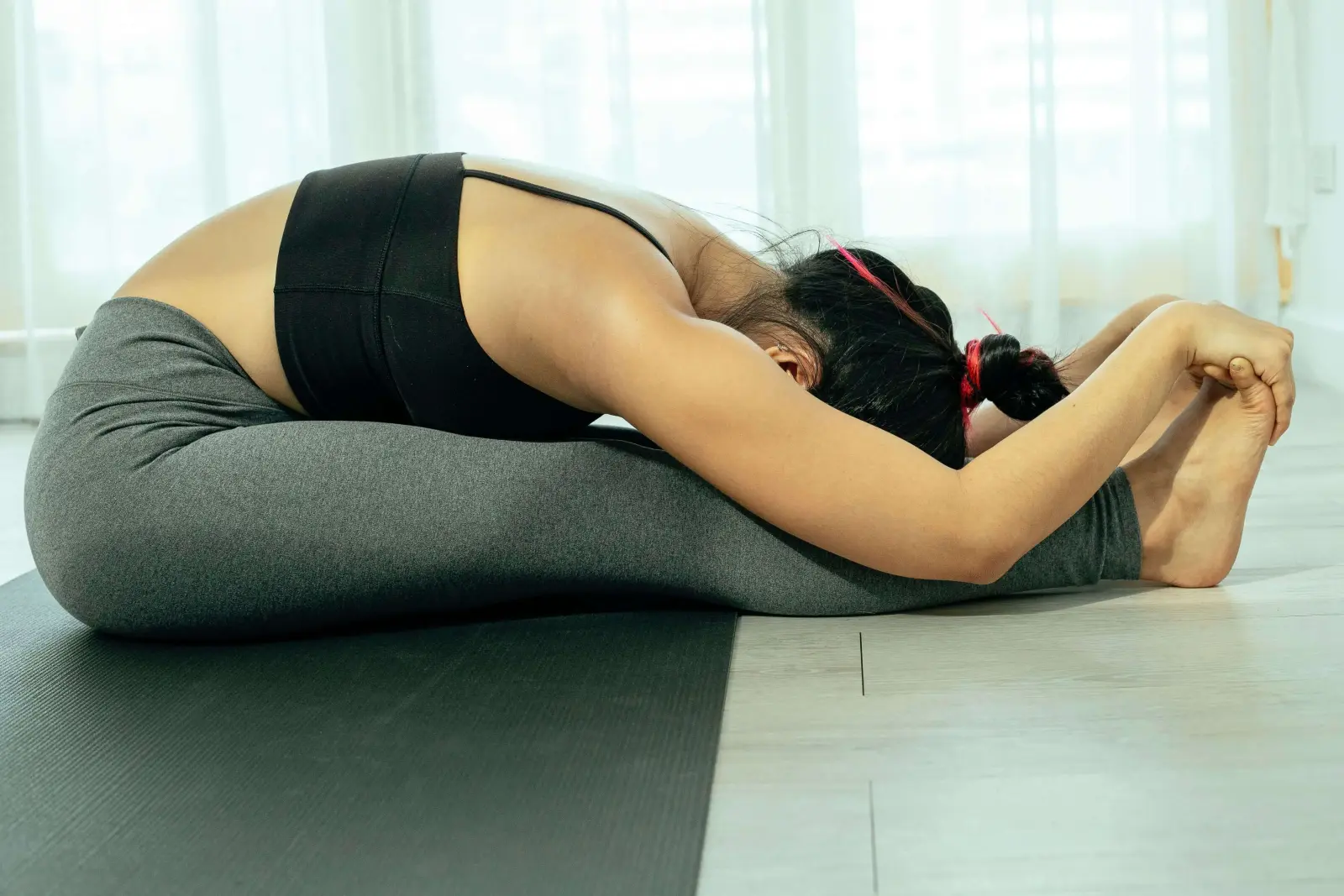
Let's answer the question you actually typed into the search bar: yes, you will probably be able to fold over your legs one day — and no, it will not happen in two weeks. Paschimottanasana, the seated forward bend, is the pose that has convinced more people they are "just not flexible" than any other, because it puts the distance between fingers and toes on public display. So before the benefits, the honest timeline: for most adults practicing consistently, hamstrings change noticeably over months — commonly three to six, sometimes more — not days. That is not a defect in you; it is the speed at which muscle and nervous system adapt. The good news is double: the pose's real benefits — a deep, gradual lengthening of the entire back body and one of the practice's most reliably quieting shapes — begin on day one, at whatever depth you fold today. Touching the toes is the souvenir, not the journey.
This article is for general education and is not medical advice. If you have back, disc, or sciatic conditions, please read the cautions below and consult a qualified healthcare professional about your individual situation.
What the name tells you
Paschima means west, uttana means intense stretch. In the tradition's imagery a practitioner faces east, toward the rising sun, so the "west side" is the whole back of the body — heels, calves, hamstrings, spine, all the way to the head. Paschimottanasana is literally the stretch of the west side: sitting with legs extended and folding the torso over them. Our asana library rates it beginner, which is true and slightly misleading — anyone can begin it safely, but very few beginners can finish it, and it has a standing cousin in Pada Hastasana where gravity does more of the work.
The honest hamstring timeline
Here is roughly what consistent practice — five minutes of folding, most days — looks like from the inside. Bodies differ; the order is what to trust, not the exact dates.
Weeks 1–2: nothing appears to change, but the fold starts feeling less alarming. That's the nervous system relaxing its guard — real progress, invisible on camera.
Weeks 3–6: you settle a little deeper on the exhale; the stretch migrates from behind the knees (a warning spot) into the belly of the hamstrings (the right spot).
Months 2–4: measurable change — hands reach further, the pelvis tips more freely, the fold begins at the hips instead of the waist.
Months 4–6 and beyond: many practitioners reach shins, ankles, or toes with a straight-ish spine. Some bodies get there sooner; some — especially long-legged, short-torsoed ones, or those starting after decades of sitting — take a year. Both are normal.
Two things sabotage this timeline: forcing (the body defends against pain by tightening — you literally fold less by trying harder) and inconsistency (three fierce sessions a month lose to five gentle minutes a day). Patience is not a nice-to-have in this pose; it is the technique.
Paschimottanasana benefits — what's real at every depth
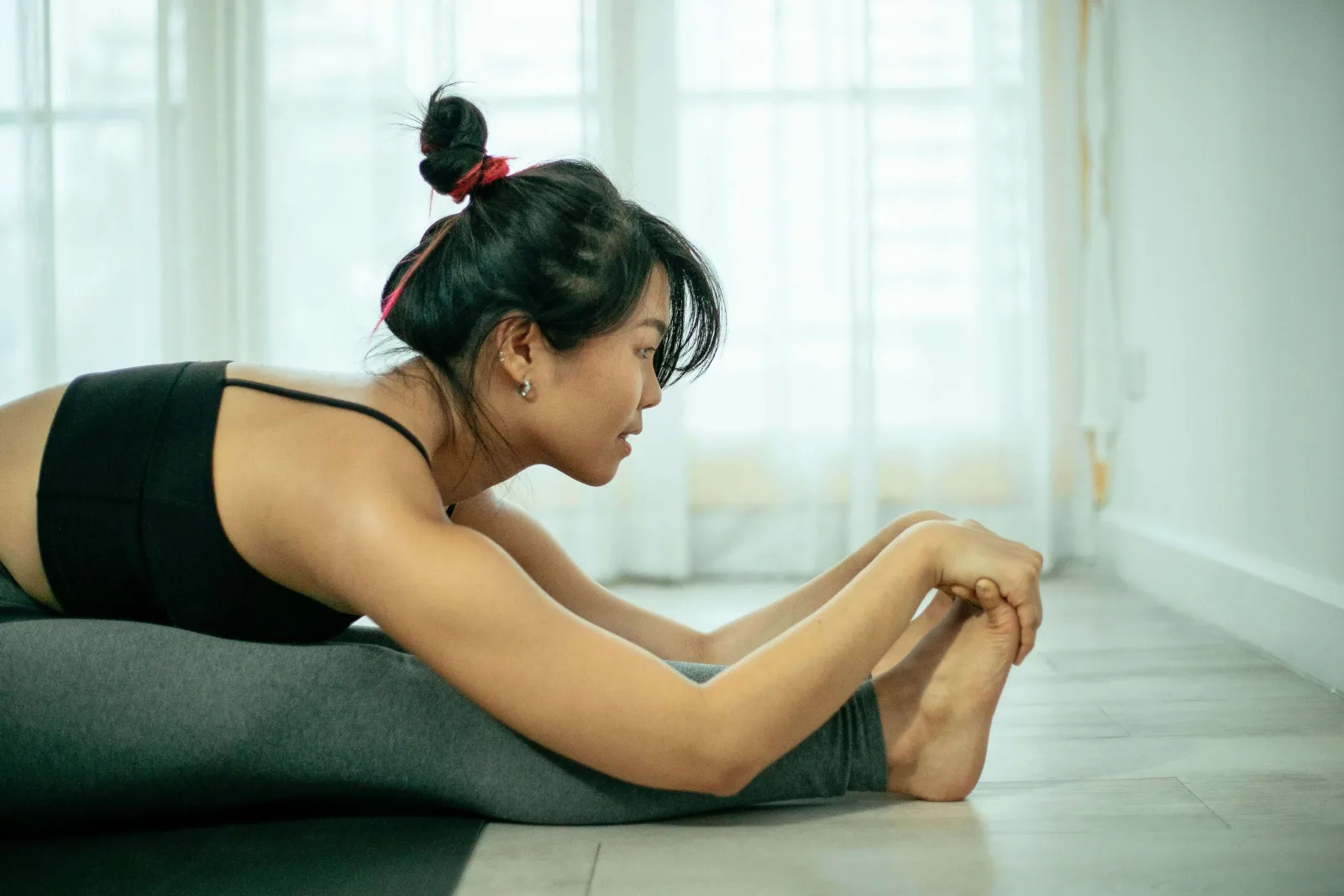
The back body, lengthened end to end. Hamstrings, calves, and the muscles along the spine all lengthen under one quiet, sustained load. Over months this may help ease the tightness that long sitting builds, and it keeps the hip hinge — the movement pattern behind safe lifting and bending — alive and available.
A genuinely calming shape. Folding inward, head below heart-height, breath slowed by the position — practitioners across traditions describe seated forward bends as settling, and classical teaching classifies this pose as pacifying. We report that as consistent experience and tradition; if it helps you downshift before sleep, that is a benefit worth having regardless of what a lab would say.
Mobility you use outside yoga. Tying shoes, reaching the floor, sitting long hours with less complaint — hamstring length is one of the most transferable flexibilities. This is the pose's quiet everyday dividend.
The traditional claims, labelled. Classical texts hold paschimottanasana in high regard — the Hatha Yoga Pradipika praises it for kindling the digestive fire and quieting the mind — and popular articles extend that to weight loss and disease claims. We pass on the tradition respectfully and label it: robust modern evidence for digestion or fat-loss effects is lacking, and the FAQ below says so plainly.
How to fold (the version that actually works)
Sit on the floor — on a folded blanket if your lower back rounds immediately, which lifts the pelvis and changes everything. Legs extended, feet together or hip-width.
Bend your knees. Generously, if needed. The pose's engine is the hip hinge, and bent knees let the pelvis tip forward instead of the spine collapsing.
Inhale, lengthen the spine tall; exhale, hinge forward from the hips, leading with the chest, and rest the belly toward the thighs.
Hold the shins, ankles, feet, or a strap looped around the soles — wherever your hands arrive without the back rounding into a C.
Stay and breathe — 30 seconds to a couple of minutes. On each exhale, allow (don't force) a millimetre more. The sensation belongs in the middle of the hamstrings: mild to moderate stretch, never sharp, never electric, never behind the knee.
Over the months, the legs straighten as the hamstrings allow. Straight legs are the last refinement, not the entry requirement.
Rise on an inhale with a long spine, hands walking up the legs.
A tip from our teaching hall: put a rolled blanket under your knees and forget about your toes for one month — fold belly-to-thighs instead of hands-to-feet. Students who chase the belly-to-thigh contact build a hinge; students who chase their toes build a hunch.
Who should be careful
Move gently or seek individual advice first if you have: disc problems or a history of sciatica — loaded forward flexion is exactly the direction irritated discs dislike, so keep knees well bent, spine long, and stop at the first hint of nerve sensation (tingling, electricity, pain down the leg); acute hamstring tears — stretching a fresh injury delays healing; or late pregnancy — fold with legs wide and torso upright-ish, guided by a qualified teacher. Simple tightness, even severe, is not a contraindication; it's the starting line.
Frequently asked questions
Can Paschimottanasana reduce belly fat?
No — and we'd rather lose the click than borrow the claim. No posture removes fat from a chosen spot; a held stretch burns very little energy. What the pose genuinely offers is flexibility, a calmer nervous system, and a healthier hinge. Weight change comes from overall activity and daily habits — our yoga for weight loss guide treats that honestly on its own page.
Does Paschimottanasana improve sleep?
Possibly, in the modest sense: many practitioners find slow forward folds settling, and a few quiet minutes of this pose in an evening wind-down may help you arrive at bed calmer. Treat it as a pleasant down-regulator, not a treatment for insomnia — persistent sleep problems deserve professional attention.
How long should you hold Paschimottanasana?
Thirty seconds to start, building toward one to three minutes as comfort grows — long, quiet holds serve this pose better than repetitions. In slow practice styles it may be held five minutes with support. The honest rule: hold as long as the breath stays easy and the sensation stays mild; the clock is secondary.
Is Paschimottanasana good for knee pain?
It neither treats knees nor threatens healthy ones — the knee is a passenger here. If straightening the leg pulls painfully at the back of the knee, bend it; stretch belongs in the mid-hamstring, never at the joint. For actual knee conditions, see our yoga for knee pain guide and, for anything persistent, a professional.
The pose that teaches the practice
We put new trainees in paschimottanasana early on the 200-hour yoga teacher training in Rishikesh precisely because it can't be rushed — a teacher who has patiently negotiated with their own hamstrings teaches every slow-cooking pose with more honesty. Where your fold is today is a fine place to begin; the rest of the forward-bend family waits in the asana library. Questions? We're on WhatsApp.
References
National Center for Complementary and Integrative Health (NCCIH) — Yoga: What You Need To Know (general evidence and safe-practice notes).
Peer-reviewed literature on stretch training and range-of-motion change over weeks-to-months (basis for the timeline framing; exact citations to be finalised at publish).
Hatha Yoga Pradipika on paschimottanasana (classical praise of the pose; digestive-fire claims presented as tradition, not clinical evidence).
Reviewed for health accuracy by Dr. Bhupinder Singh Arora (M.D. Ayurveda), consulting Ayurvedic physician at Pure Soul Yoga School. This article is educational and not a substitute for personal medical advice.
Author note (byline): Gangesha Adi (E-RYT 500) reached his toes at last after eight months of daily folding — and tells students at Pure Soul Yoga School, Rishikesh that the eight months turned out to be worth more than the toes.