Pada Hastasana: The Forward Bend with Hands Under Your Feet
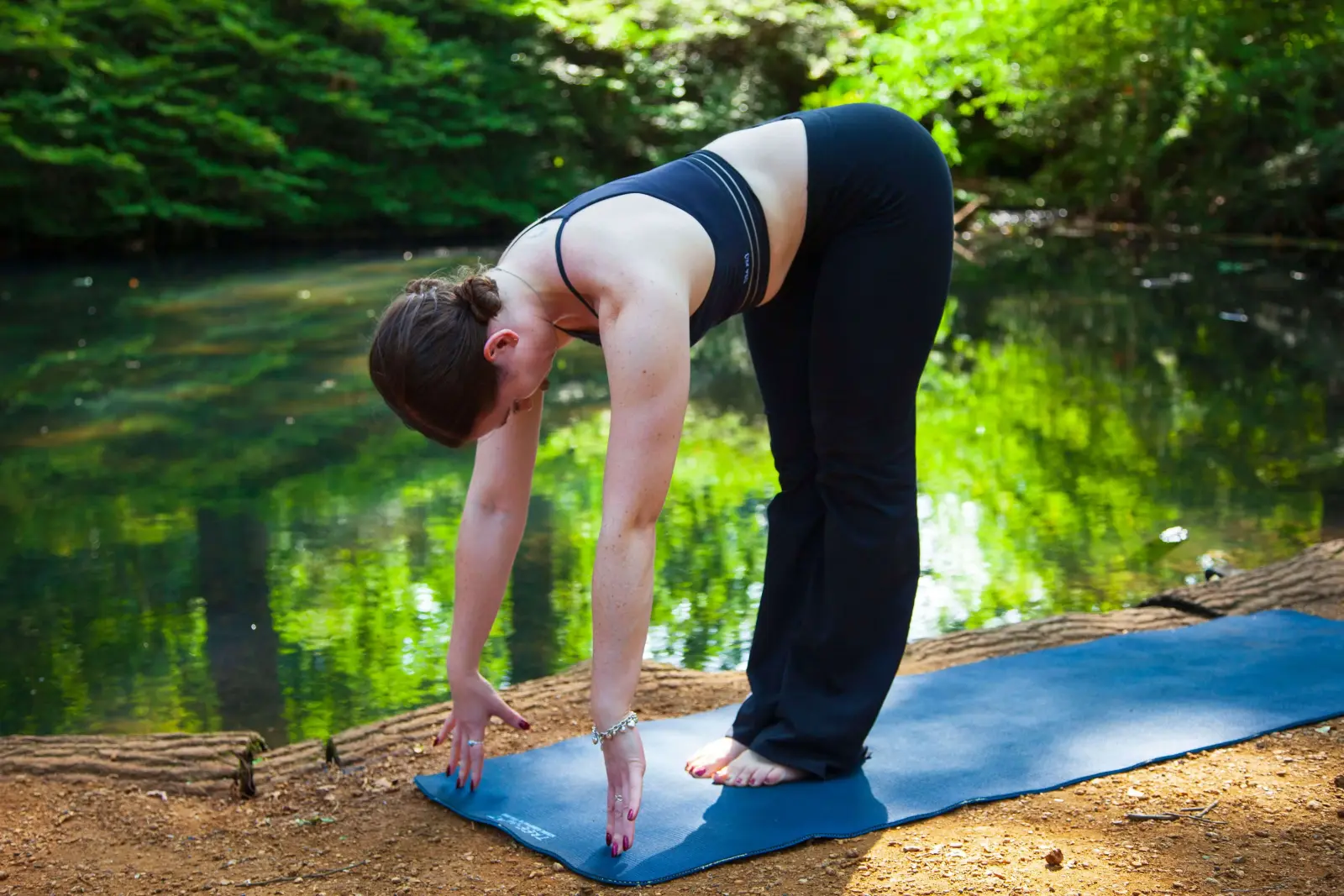
Sooner or later in a hatha class comes an instruction that sounds like a misunderstanding: "fold forward, lift your toes, and slide your palms underneath your feet — toes to the wrist creases." That is Pada Hastasana, literally the hand-to-foot pose: a standing forward bend with a built-in bind, and one most practitioners first meet without realising it, as a position inside the Sun Salutation. Its benefits are real and unusually specific — a deep lengthening of the hamstrings and the whole back body, a head-below-heart fold that many people find genuinely quieting, and a stretch for the wrists that desk workers privately rank above everything else the pose does. This guide covers how it differs from Uttanasana (the question searchers ask most), how to get into it in honest stages, and who should keep the fold gentle.
This article is for general education and is not medical advice. If you have blood-pressure, eye, or back conditions, please read the cautions below and consult a qualified healthcare professional about your individual situation.
One pose, three Sanskrit words
Pada means foot, hasta means hand, asana means posture — the name is simply a description: the posture where hands meet feet. The Sanskrit matters because searchers regularly ask about "Padasana" and "Hastasana" as if they were the same pose, and they aren't — those names describe different, simpler postures built from the same words (the FAQ below sorts them out). Pada hastasana itself sits in the forward-bend family of our asana library, and among the classical twelve basic asanas of traditional hatha schools — which tells you how central this humble fold is.
Are Padahastasana and Uttanasana the same?
Same family; not the same pose — and the difference lives entirely in the hands.
Both are standing forward folds: you hinge at the hips from a tall stand and release the trunk down over the legs. In Uttanasana ("intense stretch pose"), the hands rest on the floor beside the feet, on the shins, or hold opposite elbows — wherever your fold honestly reaches. In Pada Hastasana, the fold closes with a bind: the toes lift, the palms slide underneath the soles facing up, and the feet stand back down with the toes at the wrist creases.
That one change does three things. It anchors the fold — with hands trapped, the arms can draw gently and deepen the stretch in a controlled way. It stretches the wrists and palms in the opposite direction to typing, which no other beginner pose does so directly. And it sets a clear entry bar: you need enough hamstring length to reach the floor with soft knees before the bind is available at all.
One honest naming note: in many Indian schools the third position of Surya Namaskar is called pada hastasana even when the hands only reach toward the floor — lineages name the fold differently. If your hands are on your shins today, you are practicing uttanasana on the way to pada hastasana. That is a stage, not a failure.
How to fold into Pada Hastasana (step by step)
Stand tall, feet hip-width apart, weight even across both feet, spine long.
Inhale and lengthen — reach the arms overhead if you like, lifting out of the waist.
Exhale and hinge forward from the hips, chest staying long, knees generously bent to begin with.
Let the head and neck hang fully. Rest the hands wherever they honestly land — shins or floor.
When the fold allows, lift the toes, slide the palms underneath the feet facing up, and lower the toes onto the wrist creases.
Inhale to lengthen the spine a half-lift; exhale to settle deeper. Let the elbows bend outward and the arms draw gently — the bind, not force, deepens the fold. Shift a little weight toward the balls of the feet so the hips stack over the ankles.
Stay for three to six slow breaths. To exit, release the hands first, then rise slowly on an inhale with a long spine — head coming up last.
A tip from our teaching hall: bend the knees enough that the belly touches the thighs, and keep that contact as the legs slowly straighten over weeks. A supported fold from the hips opens the hamstrings faster — and far more safely — than a straight-legged fold forced from the waist ever will.
What the fold gives you — real benefits, labelled honestly
Length through the entire back body. Hamstrings, calves, and the long muscles beside the spine all lengthen in a sustained fold, and regular practice may ease the stiffness that long sitting builds into the backs of the legs. This is the pose's core, uncontroversial benefit — gradual, and earned over weeks.
The wrist counter-stretch nobody advertises. The toes pressing across the wrist creases and the palms stretching open under warm pressure is the exact opposite of a day at a keyboard. Students with desk jobs consistently name this the discovery of the pose.
A quieter head. With the skull below the heart and the neck released, many practitioners find forward folds settling — traditional teaching treats them as cooling, inward-turning poses. We pass that on as practice experience and tradition rather than laboratory proof.
An honest hip-hinge education. Folding with a long spine — rather than collapsing from the waist — is the same movement pattern as safe lifting and bending off the mat.
The traditional claims, labelled. Classical teaching credits the pose with kindling digestion (through the belly's compression against the thighs) and sending fresh blood flow to the head; popular articles extend that to skin and hair benefits. Take these as tradition respectfully reported — robust modern evidence for them is lacking, and the demonstrable benefits above don't need the embroidery.
Is Pada Hastasana good for beginners?
Yes — provided you treat flexibility as the outcome, not the entry fee. The staged ladder works for nearly everyone: a bent-knee fold with hands on shins, then fingertips to the floor, then palms flat, and only then the bind under the feet. Some students walk that ladder in a month; others take a season — hamstrings answer to consistency, not ambition. And because the fold appears twice in every round of the Sun Salutation, it improves quietly with practice you're already doing.
Who should keep the fold gentle
A full fold takes the head below the heart, and that is not neutral for everybody. With high blood pressure, heart conditions, or glaucoma and other eye-pressure conditions, keep to a half-height fold with hands on the shins and take individual medical advice before practicing deep versions. With vertigo or dizziness, rise slowly and stop if the head swims. With disc problems or sciatica, loaded forward flexion can aggravate symptoms — bend the knees well, avoid pulling with the arms, and treat any radiating leg pain as an immediate stop and a reason to seek professional guidance. Recent hamstring injuries ask for a shallow, patient fold; late pregnancy calls for a wide stance, a half fold, and a qualified prenatal teacher's guidance; and with osteoporosis, deep loaded flexion deserves a professional's individual advice first.
Frequently asked questions
Are Padahastasana and Uttanasana the same?
No — they are sibling standing forward folds distinguished by the hands: beside the feet (or on the legs) in uttanasana, underneath the soles with toes at the wrist creases in padahastasana. The full comparison, including why lineages name the Sun Salutation fold differently, is in the section above.
What are the benefits of Padasana?
Padasana ("foot pose") is a loosely used name, most often describing a simple upright standing posture — and many people who search it actually mean padahastasana. Where the name is used on its own, its benefits are those of attentive standing generally: steadier balance, even weight, and postural awareness, rather than anything the forward fold adds.
What are the benefits of hastasana?
Hastasana — usually Hasta Uttanasana, the raised-arms pose, position two of the Sun Salutation — stretches the whole front of the body: arms reach up and slightly back, the chest opens, and the inhale deepens noticeably. It is the natural counter-shape to the forward fold, which is exactly why the sequence pairs them back to back.
Is Padahastasana good for beginners?
Yes, through stages — bent knees and hands on shins count fully as the pose in training. The honest ladder and timeline are in the beginner section above; the bind under the feet is the finish line, not the entry requirement.
Fold it into something bigger
Pada hastasana rarely lives alone: it is a station in every Sun Salutation round and a member of the classical twelve in our asana library, which is where it makes the most sense — as the exhale between stronger shapes. And if you find yourself curious why a teacher says "hinge, don't hunch," and what it takes to see that difference in someone else's body, that skill is core curriculum at our 200-hour yoga teacher training in Rishikesh, where forward folds are taught, and taught to be taught, in week one. Questions? We're on WhatsApp.
References
National Center for Complementary and Integrative Health (NCCIH) — Yoga: What You Need To Know (general evidence on yoga, flexibility, and safe practice).
NIH resources on stretching and flexibility training (context for the hamstring and back-body benefits).
Traditional hatha yoga teaching on pada hastasana as one of the twelve basic asanas (classical Indian schools; digestion and circulation claims presented as tradition, not clinical evidence).
Reviewed for health accuracy by Dr. Bhupinder Singh Arora (M.D. Ayurveda), consulting Ayurvedic physician at Pure Soul Yoga School. This article is educational and not a substitute for personal medical advice.
Author note (byline): Gangesha Adi (E-RYT 500) has spent years watching new students at Pure Soul Yoga School, Rishikesh try to touch their toes on day one — and maintains that the ones who bend their knees first always get there sooner.