Yoga Poses for Sciatica: 6 That May Help and 5 to Avoid
Gentle yoga may help ease sciatica symptoms for many people — particularly poses that release the deep hip muscles around the sciatic nerve and mobilize the lower back without loading it. Just as important, and rarely said clearly: some popular yoga poses tend to make sciatica worse, and knowing the avoid-list matters as much as knowing the stretches. This guide covers both, along with the warning signs that mean yoga should wait until a professional has seen you.
One honest sentence before any pose: sciatica is a symptom, not a diagnosis. The right movement depends on what is irritating the nerve in your particular back, so please treat this page as general education and get an individual assessment from a doctor or physiotherapist — especially if the pain is new, severe, or not settling.
This article is for general education and is not medical advice. Please consult a qualified healthcare professional about your individual situation before starting these practices.
What is sciatica — and why the cause matters
Sciatica describes pain radiating along the path of the sciatic nerve — from the lower back or buttock down the back of the leg, sometimes with tingling, numbness or weakness, usually on one side. It is a symptom with several possible causes, most commonly a herniated (slipped) disc pressing on a nerve root, spinal stenosis (narrowing of the spinal canal, more common with age), or irritation from the piriformis muscle, a deep hip rotator lying directly over the sciatic nerve.
Why does the cause matter for yoga? Because the helpful movements differ. Disc-related sciatica often prefers gentle back extension and dislikes deep forward folds; piriformis-related symptoms often respond to exactly the hip stretches below. That is why "get a diagnosis first" is practical advice here, not a legal formality — it tells you which half of this article is yours. Most sciatica improves over weeks with conservative care, and gentle movement is widely recommended over bed rest; research suggests yoga may help reduce low-back pain and improve function for some people, though studies vary and yoga complements professional care rather than replacing it.
When NOT to practice: red flags first
Stop practicing and seek medical care promptly if sciatica comes with any of the following:
Loss of bladder or bowel control, or numbness in the groin/saddle area — emergency care, same day
Progressive leg weakness, or a foot that drags or slaps
Pain following an accident or fall
Fever, unexplained weight loss, or a history of cancer
Severe pain that is worsening week on week despite rest and care
And one everyday rule for every pose below: if a position sends pain, tingling or numbness further down the leg, come out of it. Symptoms moving down the leg during a movement are a signal to back off; easing or retreating up toward the spine is generally a friendlier sign. When in doubt, do less.
1. Reclining Figure-Four — the piriformis stretch
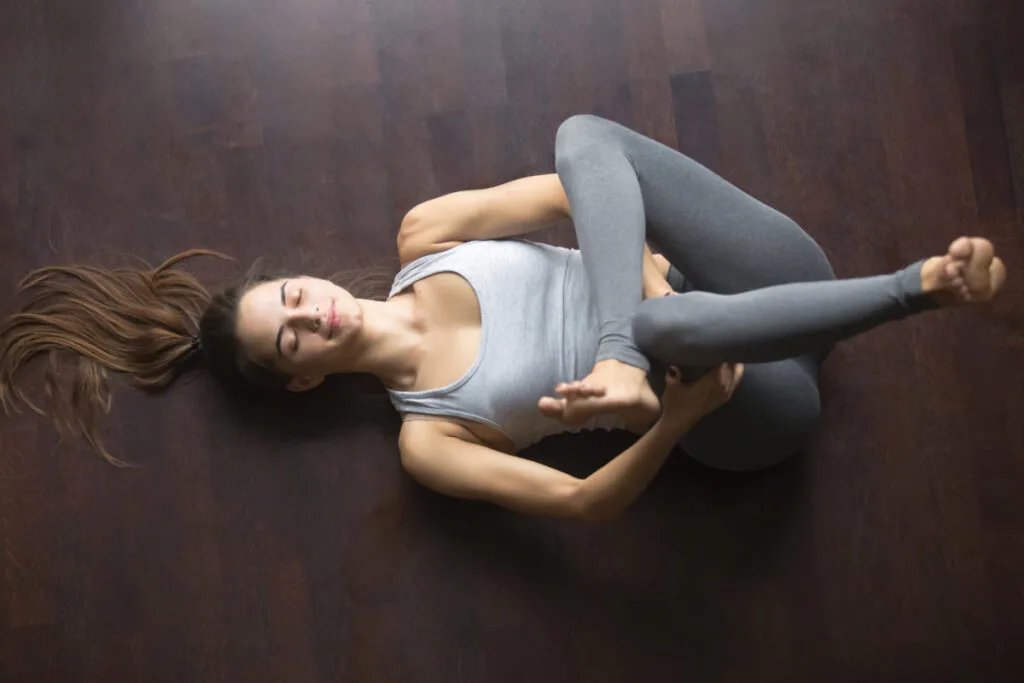
The most widely recommended yoga stretch for sciatic-type pain, because it targets the piriformis and deep hip rotators while the spine rests safely on the floor. Lie on your back, knees bent, and cross the right ankle over the left knee, flexing the right foot. Stay there — or, for more, draw the left thigh gently toward your chest and hold behind it. Keep the intensity mild. Five to ten slow breaths per side, gentler on the painful side.
A note on pigeon pose: classic front-facing pigeon stretches the same muscles and is often suggested for sciatica, but it is deeper and less controllable, and can aggravate symptoms in an irritated phase. The figure-four is pigeon's safer sibling — same target, adjustable intensity, spine supported. Start here; save floor pigeon for settled symptoms and, ideally, a teacher's supervision.
2. Supine Hamstring Stretch — with a strap, knee soft
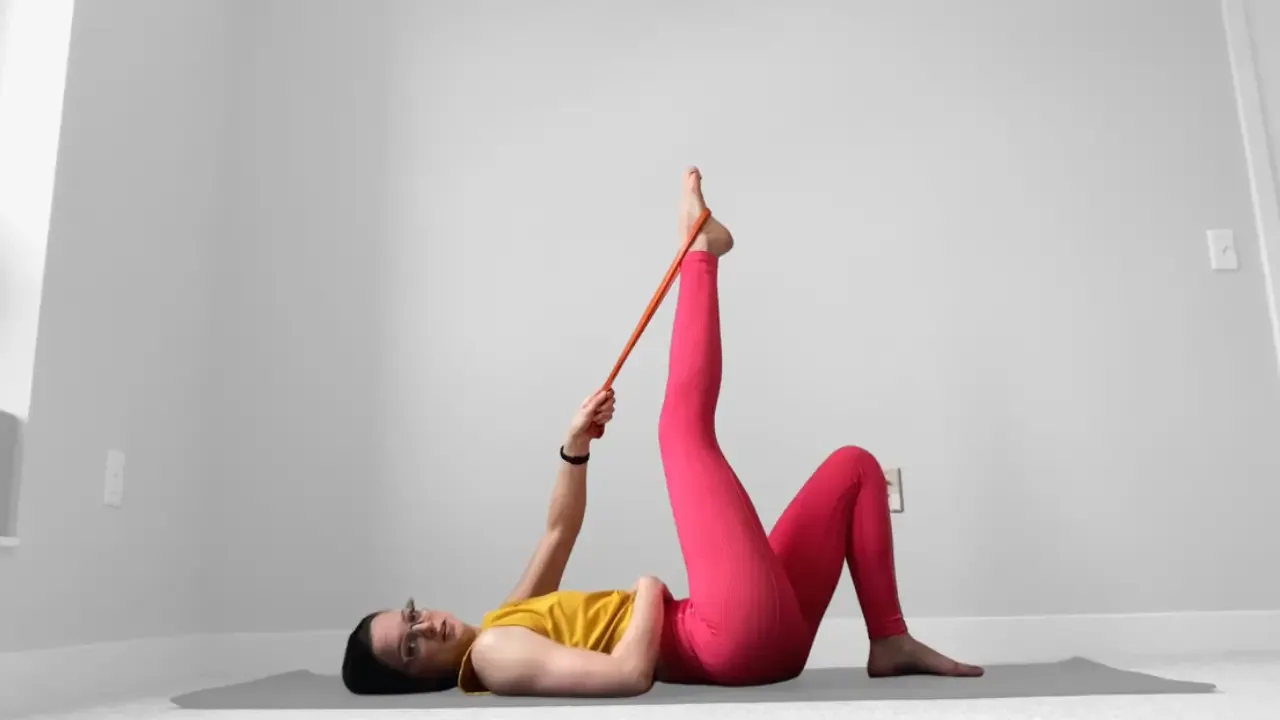
Tight hamstrings pull on the pelvis and can add to lower-back strain. Lie on your back, loop a strap (or belt, or towel) around the right foot, and extend the leg toward the ceiling only as far as comfortable — a bent knee is completely fine: the goal is a mild stretch in the back of the thigh, never a pulling sensation down the nerve line. Keep the other leg bent, foot on the floor, lower back resting down. Five to eight breaths per side. (Yoga formalizes this stretch as Supta Padangusthasana; the strap version is the sciatica-appropriate one.)
3. Cat–Cow — gentle motion for a guarded back
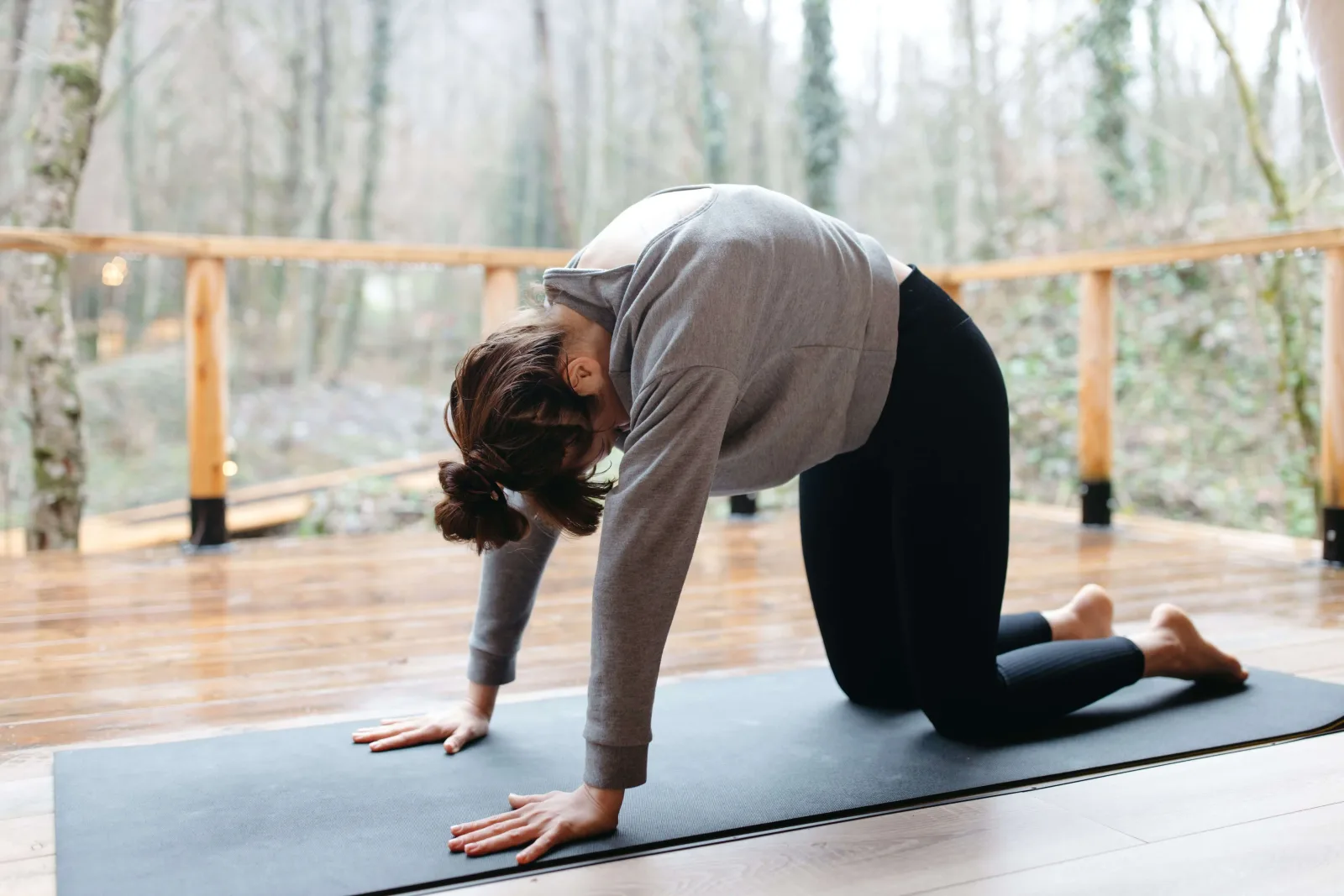
On hands and knees, inhale to lift the chest and tailbone (Cow), exhale to round the spine and tuck the chin (Cat), moving slowly with the breath for one to two minutes. Keep the range small and comfortable — this is oil for a stiff, guarded lower back, not a stretch to push. Many people with sciatica find rhythmic, small movement more relieving than any held position.
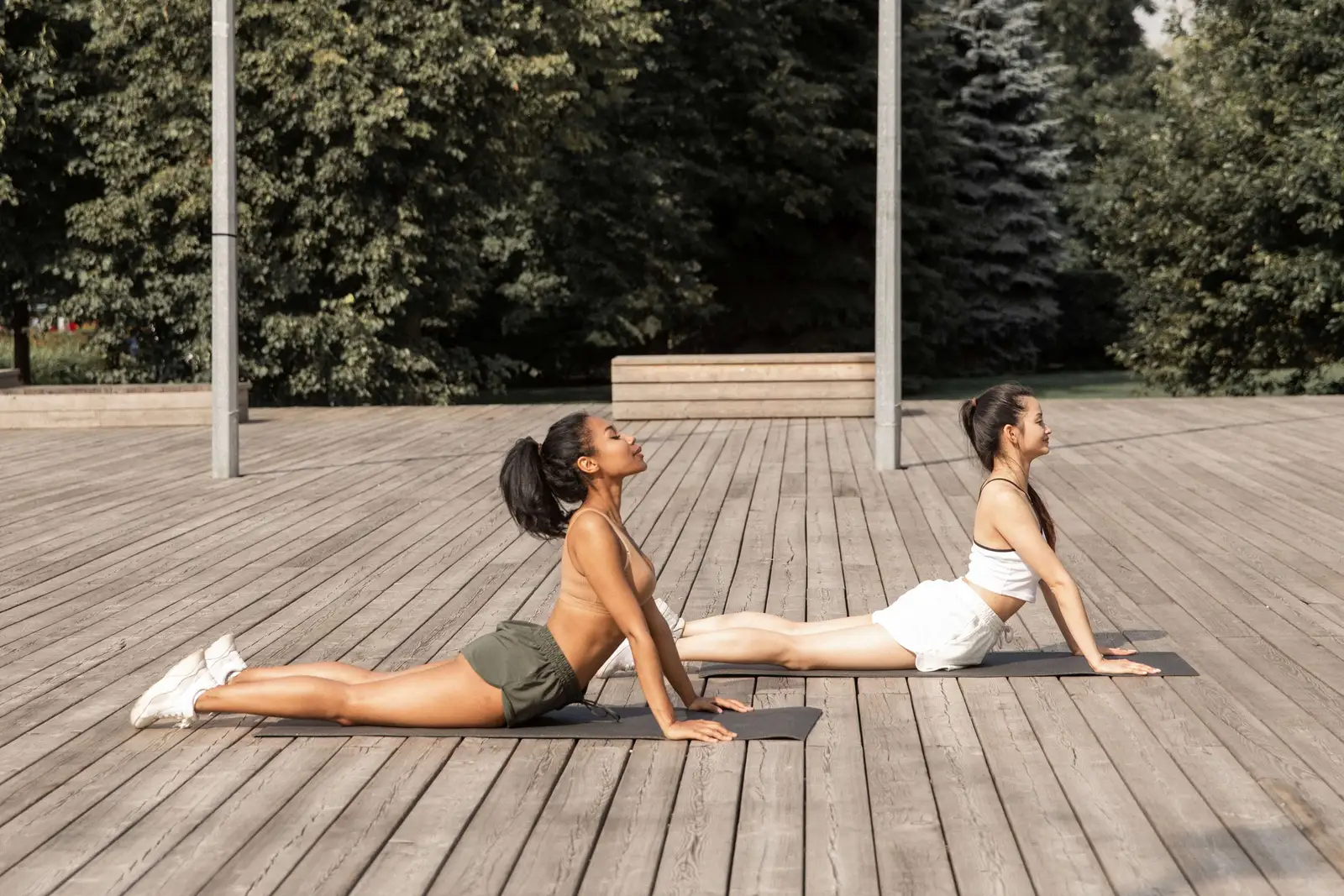
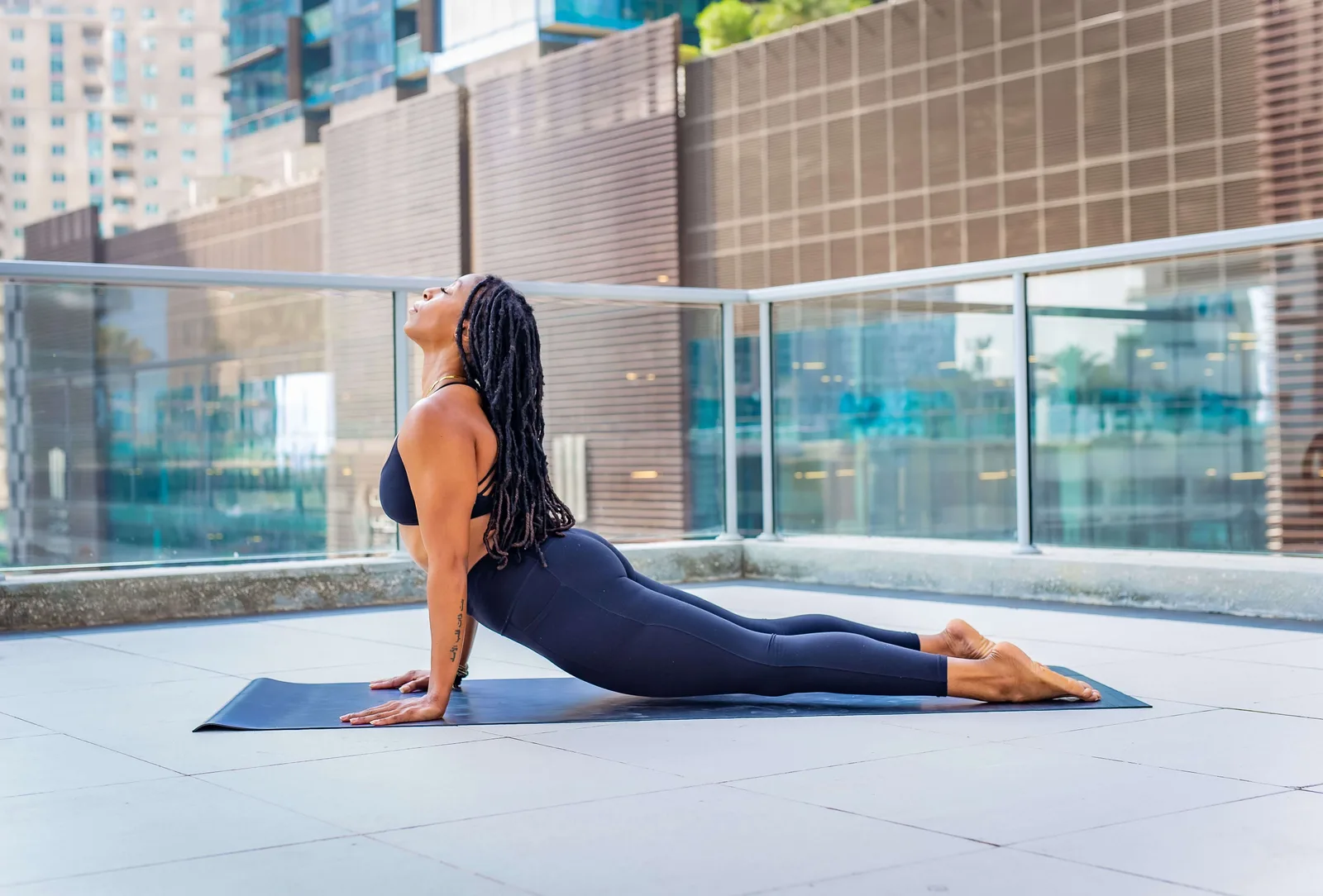
4. Sphinx Pose — easy extension, disc-friendly for many
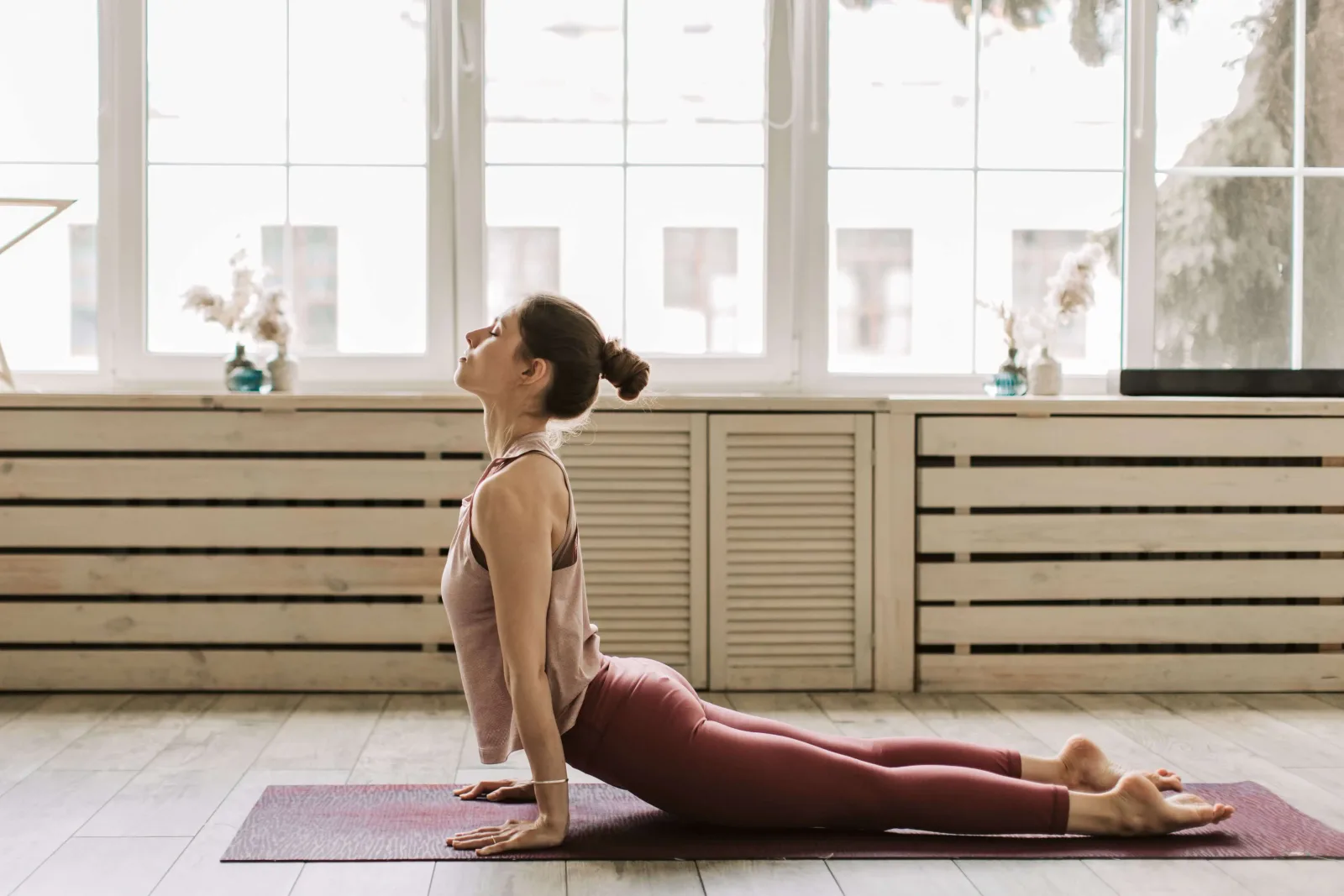
Lie on your belly, prop yourself on your forearms with elbows under shoulders, and let the lower back settle — a gentle, supported backbend. For many people with disc-related sciatica, mild extension feels distinctly relieving and may help symptoms retreat up out of the leg; for others (notably some with stenosis), extension is unpleasant. Let your body vote: if sphinx eases the leg, stay five to ten breaths and repeat daily; if it worsens anything, skip it without negotiation. Keep the effort minimal — this should feel like resting, not lifting.
5. Child's Pose — knees together variant
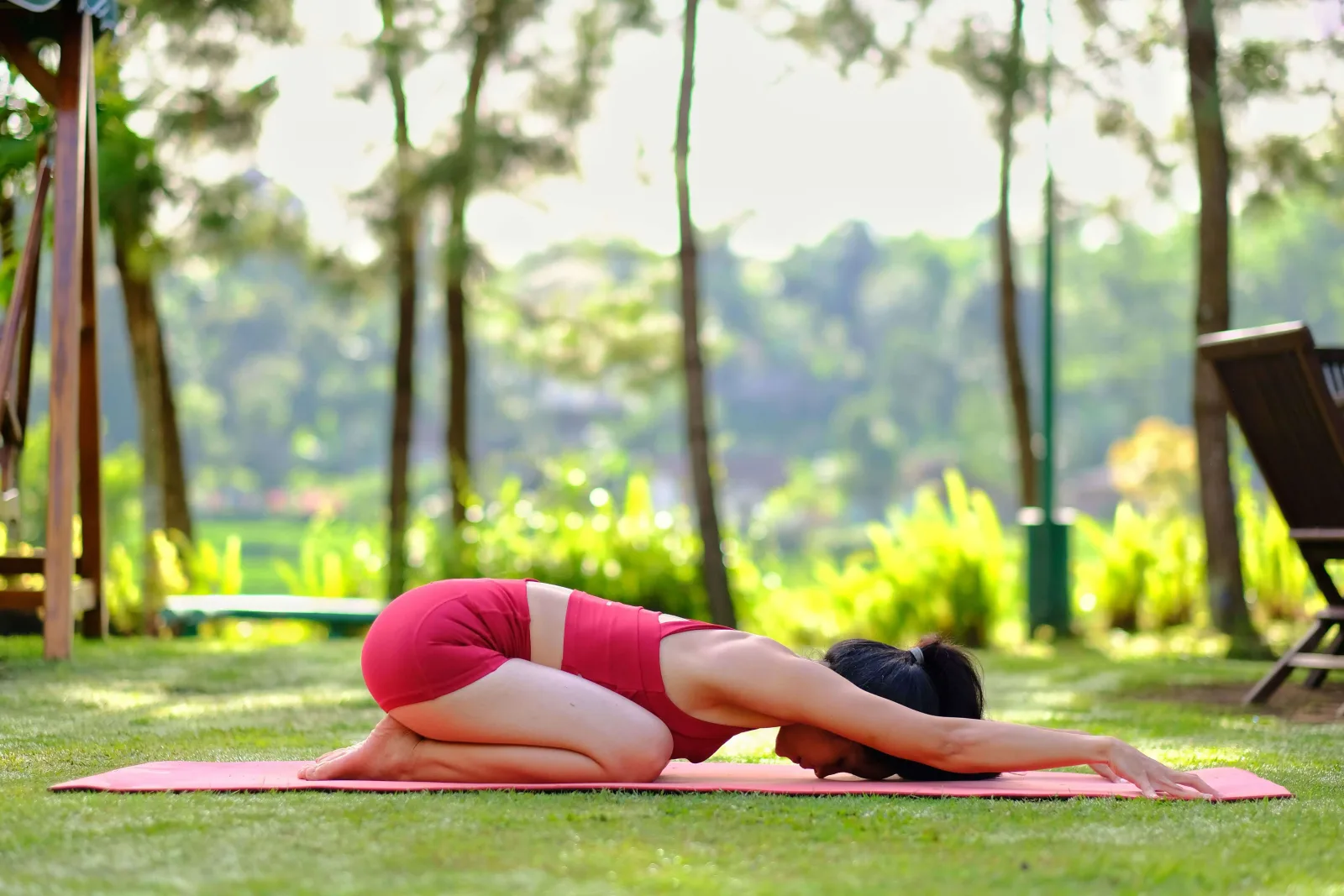
From hands and knees, sit back toward the heels with the knees together (the knees-wide version deepens hip flexion more than an irritated back may want), resting the torso on the thighs and the forehead down — on a cushion if the floor is far. This gently lengthens the lower back and calms the nervous system, which matters more in pain conditions than we tend to credit. One to three minutes of slow breathing. If flexion aggravates your leg symptoms, keep it brief or skip it.
6. Bridge Pose — strength for the recovery phase
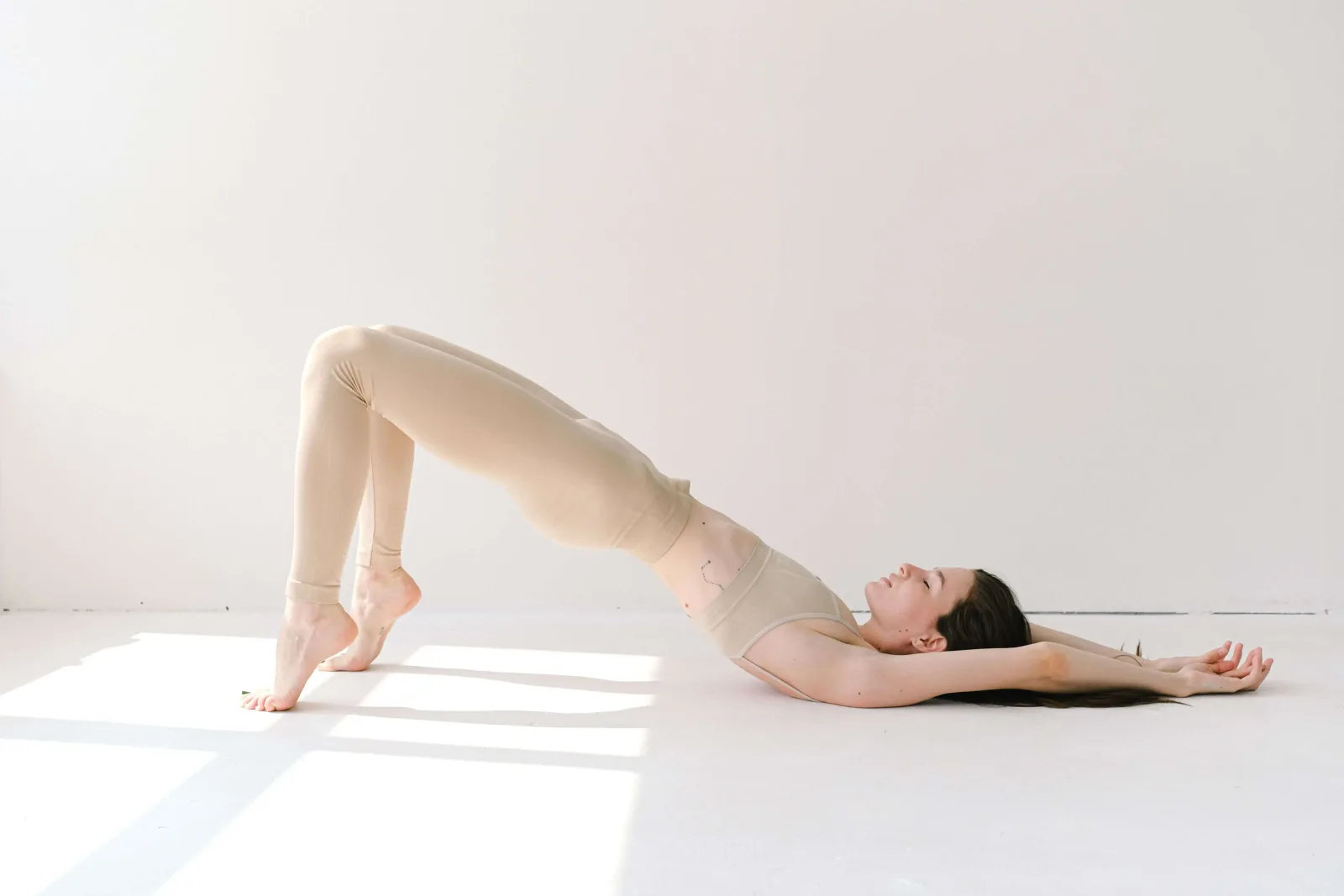
Relief stretches are half the story; lasting improvement usually needs the glutes and core carrying load again. Lie on your back, knees bent, feet hip-width and close to the hips. Press through the feet to lift the hips a comfortable height — no need for maximum — hold a breath or two, lower slowly. Six to ten repetitions. Skip during an acute flare; add it as symptoms settle. This is the pose that helps the others last.
A tip from our teaching hall: students with sciatic pain almost always ask for the deepest stretch we know. We teach them the opposite skill — the mildest version that still does something, done every day. Irritated nerves are persuaded, never forced; two gentle minutes daily outperform one heroic session that flares you for a week.
5 yoga poses to avoid with sciatica
These aren't "bad poses" — they are poses that commonly aggravate an irritated sciatic nerve, especially disc-related cases, and are best set aside until symptoms resolve:
Deep seated forward folds (Paschimottanasana and family) — folding long over straight legs combines spinal flexion with maximum nerve tension, the exact combination an irritated nerve resents.
Standing forward folds with straight knees — same mechanics, plus load. If you fold at all, bend the knees generously and keep it brief.
Full pigeon pose — see above: right muscles, wrong dose while symptoms are active. Use the reclining figure-four instead.
Deep seated twists (Ardha Matsyendrasana and similar) — strong rotation with a flexed, loaded spine can provoke disc-related symptoms. Gentle reclining twists may be fine later; deep seated versions can wait.
Boat pose and strong seated core work — high compressive load on the lumbar spine in exactly the position it is least happy about during a flare.
The pattern behind all five: deep flexion, forced nerve tension, loaded twisting. When symptoms have fully settled, these poses can return gradually — ideally with a teacher who knows your history.
How to practice: gently, briefly, daily
Frequency beats intensity: poses 1–5 once or twice daily takes about ten minutes. Add bridge as things calm.
Track the right thing: the goal in week one is leg symptoms gradually retreating toward the spine over days, not depth. Centralizing symptoms are encouraging; spreading ones mean scale back and check in with your clinician.
Pair with the boring essentials: short frequent walks and fewer marathon sitting sessions help more than any single stretch.
Zoom out to the whole back: sciatica rarely travels alone. Our guide to yoga poses for back pain covers the wider low-back toolkit; if getting to the floor is itself the barrier, the seated practices in our chair yoga guide include a chair-based figure-four.
Frequently asked questions
Can you fix sciatica with yoga?
"Fix" is too strong, and anyone promising it is overselling. Most sciatica improves over weeks with conservative care, and gentle yoga may support that recovery — research suggests it can help reduce low-back pain and improve function for some people. Outcomes depend on the underlying cause, and yoga works best alongside professional assessment, not instead of it.
What is the miracle stretch for sciatica?
There is no miracle, but the stretch that earns the reputation is the reclining figure-four — it targets the deep hip muscle lying directly over the sciatic nerve, with the spine safely supported. Done gently every day, it's the closest thing this condition has to a first-choice stretch. If it worsens your symptoms, that itself is useful information to bring to your clinician.
What are the top 3 exercises for sciatica?
From this sequence: the reclining figure-four, the strap-assisted hamstring stretch, and sphinx pose if extension eases your leg symptoms (swap in cat-cow if it doesn't). Different causes favor different movements — which is why a professional's individual assessment beats any universal top three.
What yoga poses should you avoid with sciatica?
Deep seated forward folds, straight-leg standing folds, full pigeon, deep seated twists, and boat-style core work — in general, anything combining deep spinal flexion, strong nerve tension or loaded twisting while symptoms are active. And any pose, however gentle, that sends symptoms further down your leg.
How long until yoga helps sciatica?
If gentle practice suits your case, many people notice symptoms beginning to ease within one to three weeks of short daily sessions, in step with the condition's natural recovery. No improvement after two to three weeks — or any worsening — is a signal to stop guessing and see a professional.
Is walking or yoga better for sciatica?
Both, honestly — they do different jobs. Short frequent walks keep the back moving and circulation up; the stretches address the hip and hamstring tension that walking doesn't reach. The combination, plus less continuous sitting, is stronger than either alone.
When self-care needs more support
If sciatic pain keeps returning no matter how faithfully you stretch, structured help is a reasonable next step, not a failure. Our Pain Management Yoga Retreat in Rishikesh is built consultation-first: you begin with an assessment with Dr. Bhupinder Singh Arora (M.D. Ayurveda), and any therapies are doctor-prescribed to your case rather than sold from a menu — with gentle, individually adapted yoga and unhurried days around it. Unsure whether a retreat is appropriate for your back? Ask us on WhatsApp and we'll tell you honestly — including when the right answer is "see your doctor at home first."
References
National Institute of Neurological Disorders and Stroke (NINDS) — Sciatica information page.
NHS — Sciatica: symptoms, self-care and when to seek help.
American College of Physicians — clinical guideline on noninvasive treatments for low back pain (yoga listed among recommended nonpharmacologic options).
National Center for Complementary and Integrative Health (NCCIH) — Yoga for pain: what the science says.
Reviewed for health accuracy by Dr. Bhupinder Singh Arora (M.D. Ayurveda), consulting physician at Pure Soul Yoga School. This article is educational and not a substitute for personal medical advice — please consult a qualified healthcare professional about your individual situation.
Author note (byline): Gangesha Adi (E-RYT 500, RCYT, RPYT), founder of Pure Soul Yoga School in Rishikesh, has adapted practice for students with back and nerve complaints across a decade of teaching — and has talked more students out of deep stretches than into them.