9 Yoga Poses for Back Pain: Gentle Relief for Your Spine
If your back aches after long hours of sitting, gentle yoga is one of the most widely recommended ways to find relief at home. Slow stretching and light strengthening may ease muscle tension, restore spinal mobility and — practiced consistently — help keep everyday back pain from returning. Clinical guidelines for chronic low-back pain now list yoga among the recommended non-drug approaches, which is about as strong an endorsement as gentle exercise gets.
Below you'll find nine poses in a deliberate order — release first, strengthen second, lengthen last — with plain instructions, the reason each pose earns its place, and honest answers about when back pain needs a professional rather than a mat.
This article is for general education and is not medical advice. If you have severe, persistent or worsening back pain, a diagnosed spine condition, or recent injury or surgery, please consult a qualified healthcare professional before practicing.
First, the red flags: when not to stretch
Most back pain is "non-specific" — muscles and joints protesting habits like prolonged sitting — and responds well to gentle movement. But see a doctor promptly, before any yoga, if your back pain comes with any of these: pain radiating down a leg with numbness or tingling, weakness in a leg or foot, fever, unexplained weight loss, loss of bladder or bowel control, or pain following a fall or accident. Those signs can point to problems that stretching won't fix and could aggravate.
For everyday stiffness and mild recurring pain, the rules are simpler:
Move into stretch, never into pain. A mild pulling sensation is fine; sharp, electric or radiating pain means come out of the pose.
Slow beats deep. Every pose below works at half your maximum range.
Bend your knees generously in forward folds — the goal is a happy spine, not straight legs.
If you have a disc problem or osteoporosis, keep twists small and skip deep forward rounding; ask your doctor or physiotherapist which movements suit your spine.
The 9 poses, in a sensible order
Release
1. Child's Pose (Balasana)
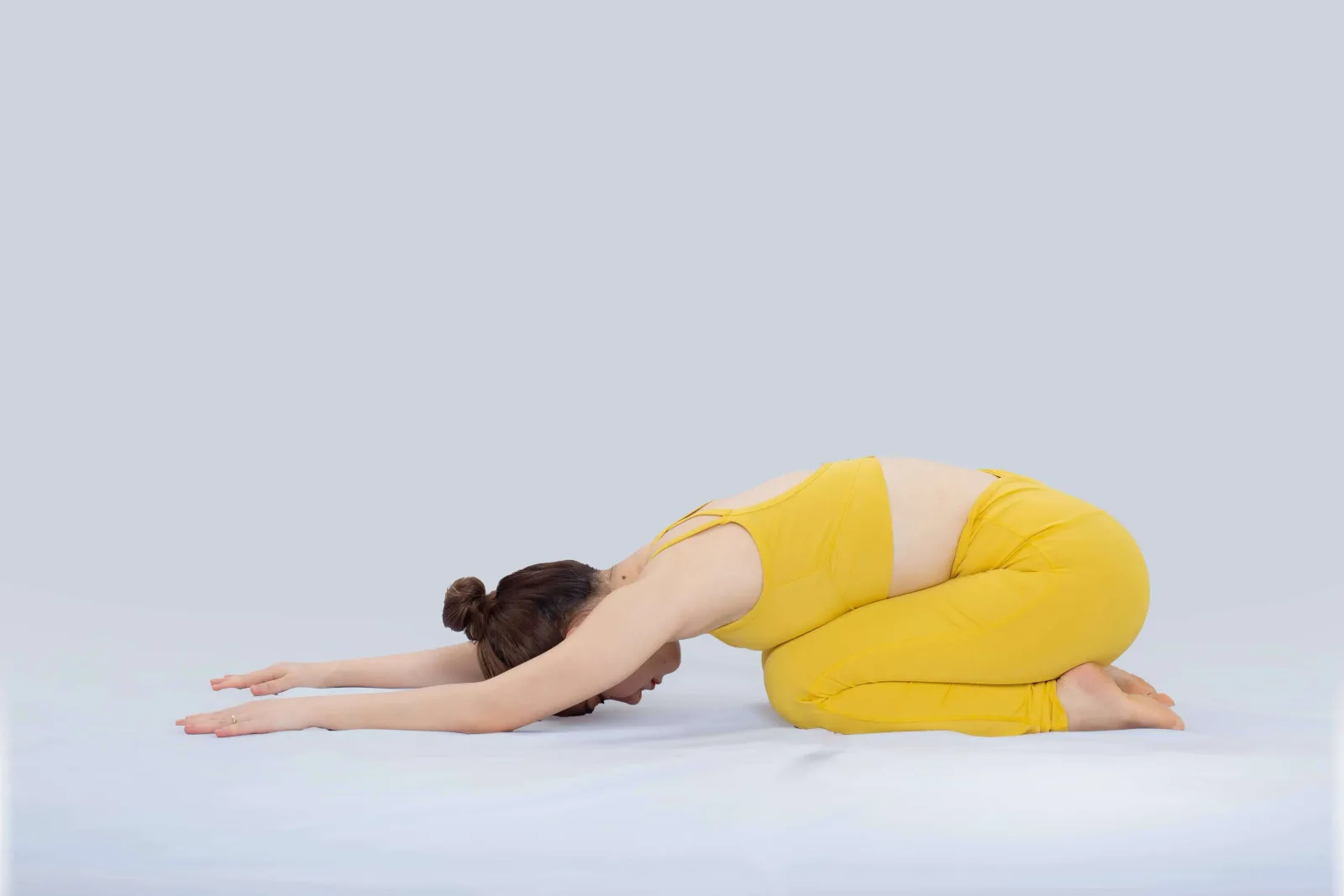
Kneel with your big toes together and knees wide, sit back toward your heels, and fold forward until your forehead rests on the mat or a cushion. Arms extended in front or resting alongside the body. Breathe into the back of the ribs for 30 seconds to a minute.
Why it earns its place: this is the gentlest traction your lower back can get — the spine lengthens under almost no load, and most people feel the low back let go within a few breaths. It's also your "reset" pose: return here anytime the practice feels like too much.
2. Cat–Cow (Marjaryasana–Bitilasana)
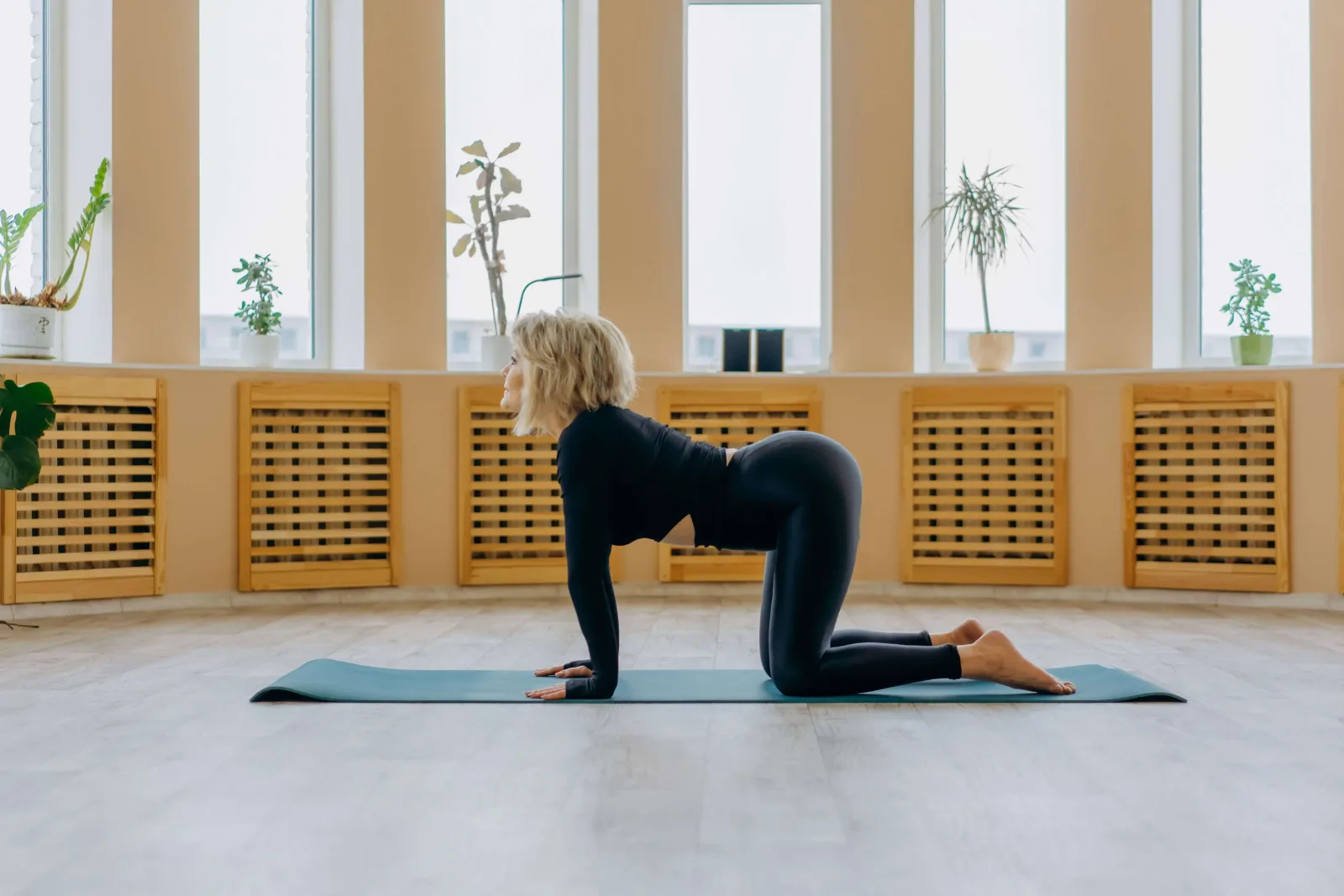
On hands and knees, wrists under shoulders and knees under hips. Inhale, lift the chest and tailbone and let the belly soften down (Cow). Exhale, round the spine and tuck the chin (Cat). Flow between the two for 5–10 slow rounds, letting the breath set the pace.
Why it earns its place: stiff backs crave movement more than stretch. Cat–Cow takes the spine through gentle flexion and extension segment by segment, warming the back muscles and easing the morning-concrete feeling. If you do only one thing on busy days, do this.
3. Cobra Pose (Bhujangasana), kept low
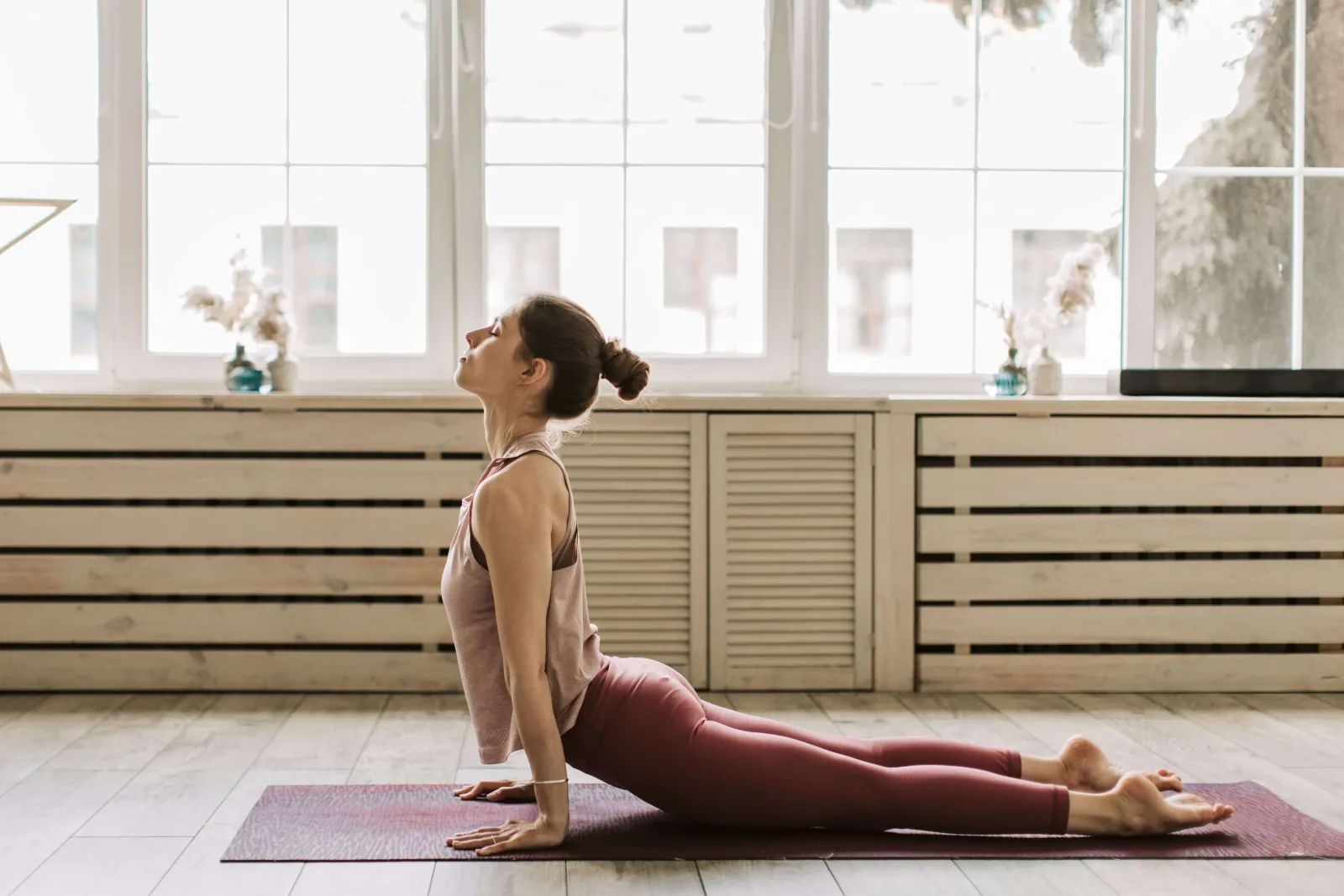
Lie face down, palms under the shoulders, legs extended. Inhale and press gently through the hands to lift the chest, elbows bent and close to the ribs, shoulders drawing back. Lift only as high as feels easy — a low cobra is the therapeutic one. Hold 15–30 seconds, lower slowly, repeat 2–3 times.
Why it earns its place: hours of sitting hold the spine in flexion; cobra offers the opposite direction. Gentle, repeated extension often feels genuinely relieving for sitting-related low-back ache. Keep it small and pain-free — if extension sharpens your pain, skip this one and tell your doctor or physio.
Strengthen
4. Locust Pose (Salabhasana)
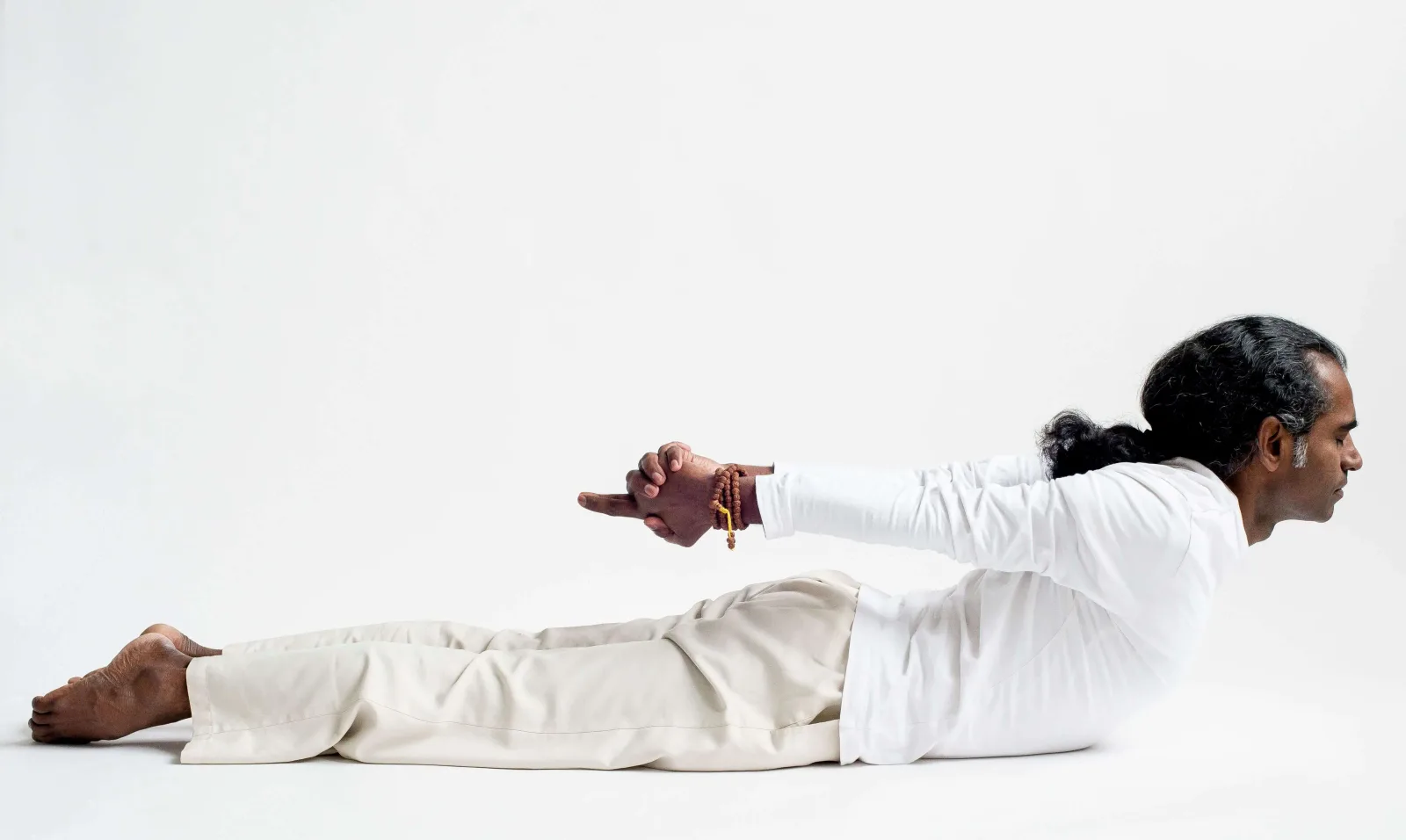
Lie face down, arms alongside the body, palms up. On an inhale, lift the chest, arms and legs a few centimetres off the floor, gaze down and slightly forward so the neck stays long. Hold 15–30 seconds, breathing steadily, then lower. Repeat 2–3 times. Lifting chest only (legs down) is a perfectly good starting version.
Why it earns its place: lasting relief usually comes from stronger backs, not just looser ones. Locust strengthens the muscles along the spine and the glutes — the support system that protects your back during all the sitting and lifting a day contains.
5. Downward-Facing Dog (Adho Mukha Svanasana), with bent knees
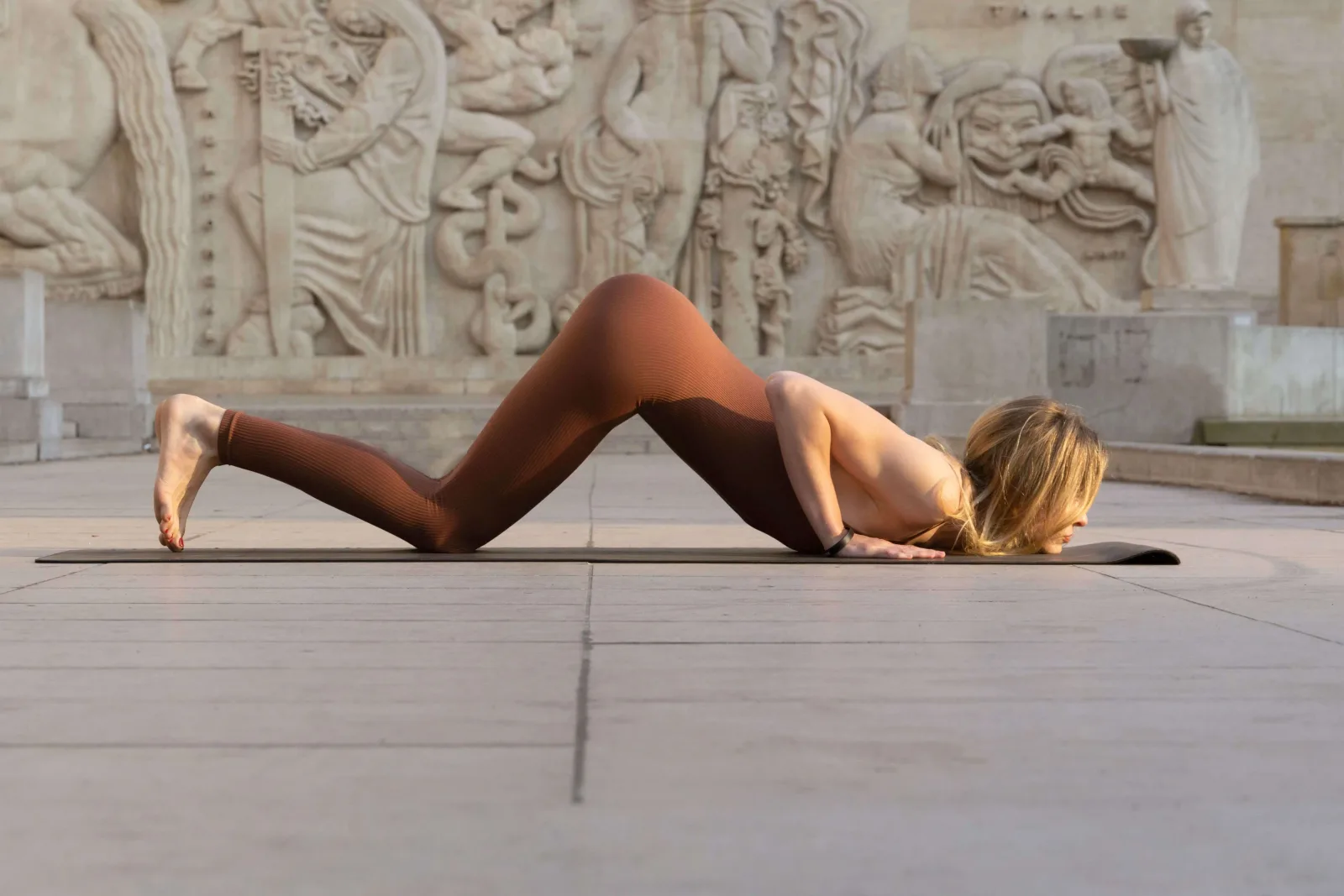
From hands and knees, tuck the toes and lift the hips up and back into an inverted V. Keep the knees generously bent and press the chest gently toward the thighs — a long spine matters far more than straight legs or heels on the floor. Hold 30 seconds to a minute, then rest back to hands and knees.
Why it earns its place: it decompresses and lengthens the entire back body while quietly building shoulder and arm support. The bent-knee version turns a strong pose into a therapeutic one; hamstring flexibility can come later or never — your back won't mind.
Lengthen
6. Standing Forward Bend (Uttanasana), soft version
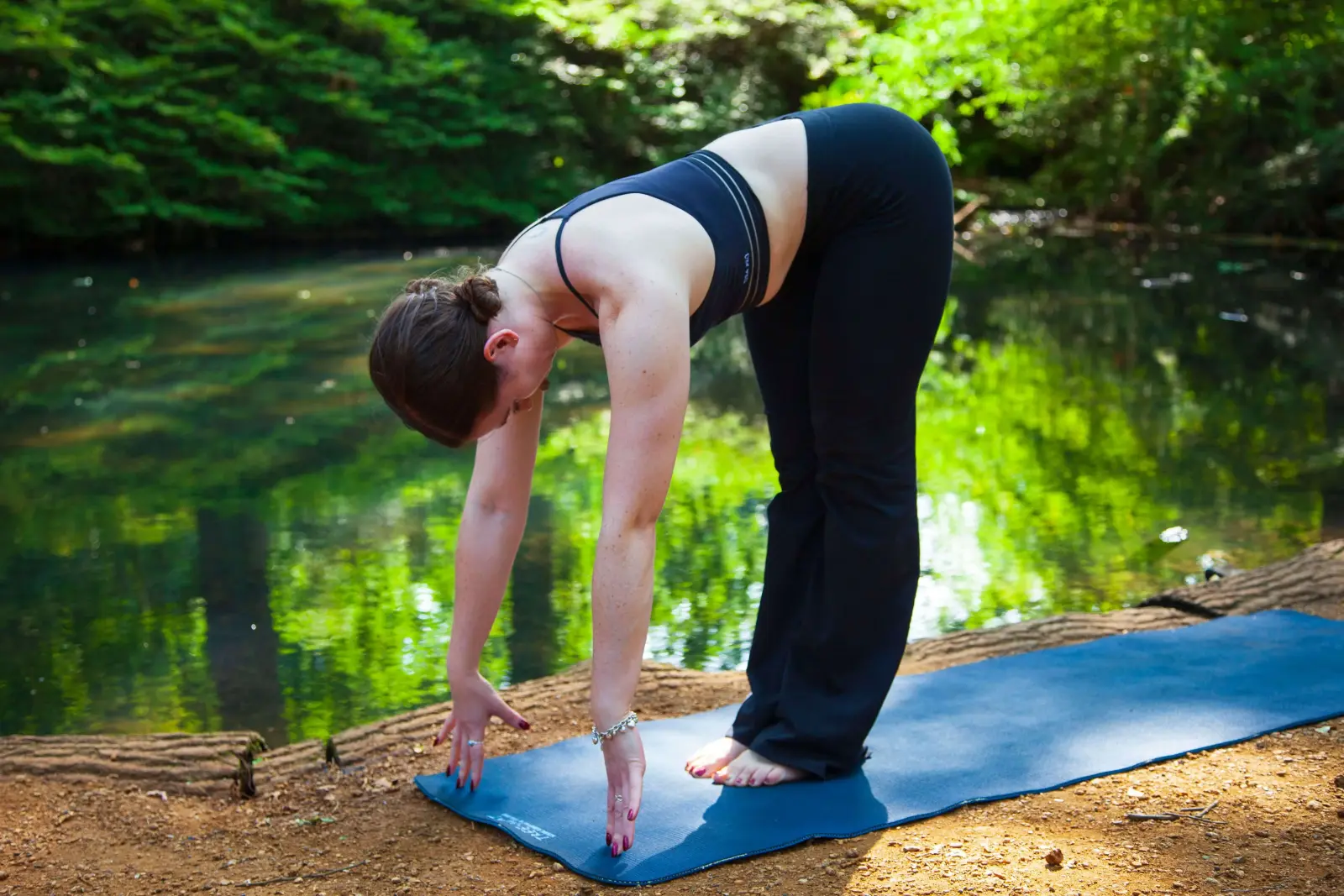
Stand with feet hip-width apart and knees noticeably bent. Inhale to lengthen the spine, exhale and fold forward from the hips, letting the head and arms hang heavy — hold opposite elbows if that feels pleasant. Stay 30 seconds to a minute, then rise slowly, rolling up through the spine.
Why it earns its place: with knees bent, this becomes a release for the whole back chain rather than a hamstring contest. The heaviness of the hanging head gives the neck and upper back a rare moment of traction. Rise slowly to avoid light-headedness.
7. Seated Side Stretch
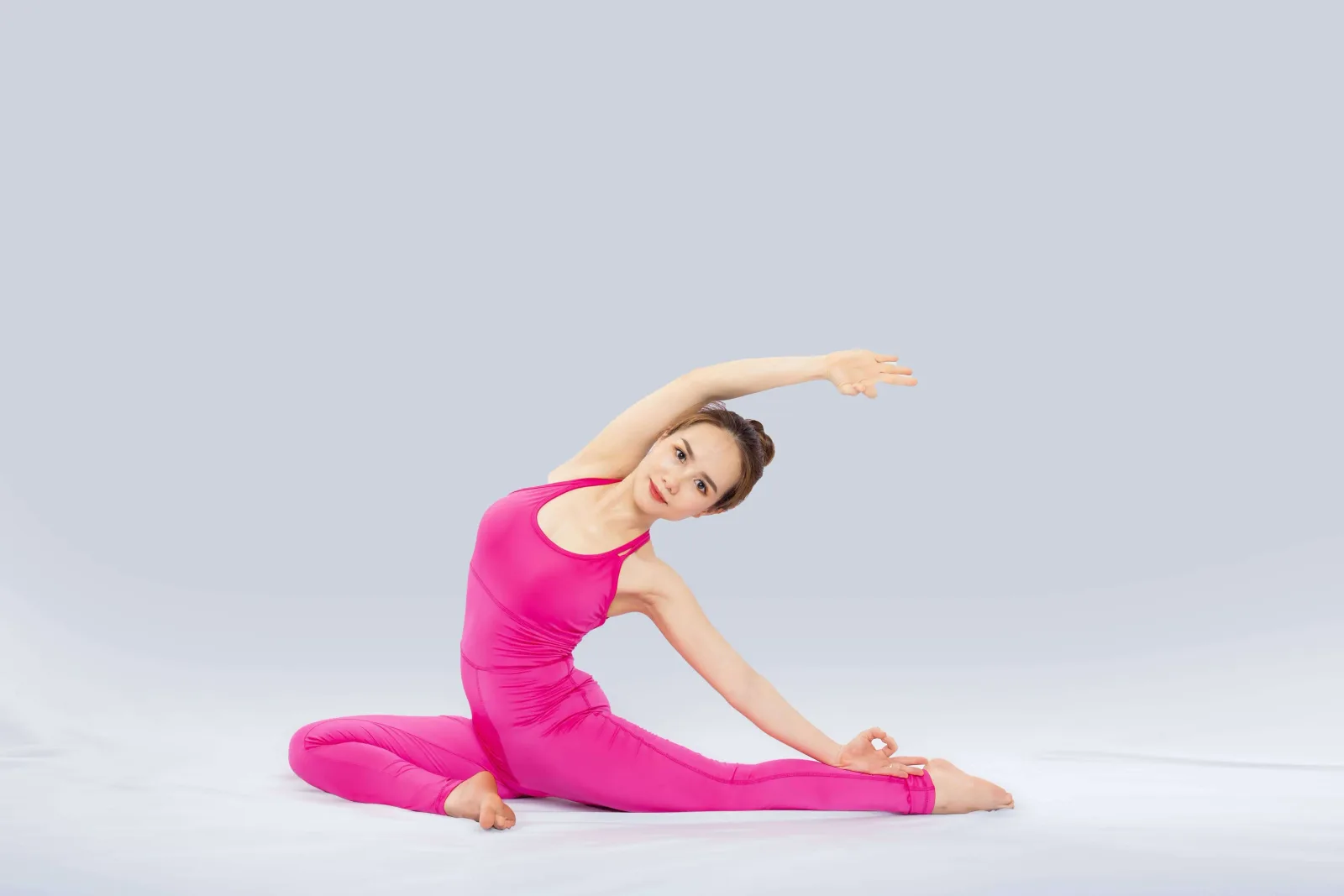
Sit cross-legged (or on a chair — see our chair yoga guide for a fully seated practice). Inhale and reach the right arm up; exhale and lean to the left, left hand on the floor for support, hips staying grounded. Three to five breaths each side.
Why it earns its place: the side waist muscles quietly shorten during long sitting and pull on the lower back. Stretching them often relieves back tension from an angle people never think to stretch.
8. Half Lord of the Fishes (Ardha Matsyendrasana), gentle version
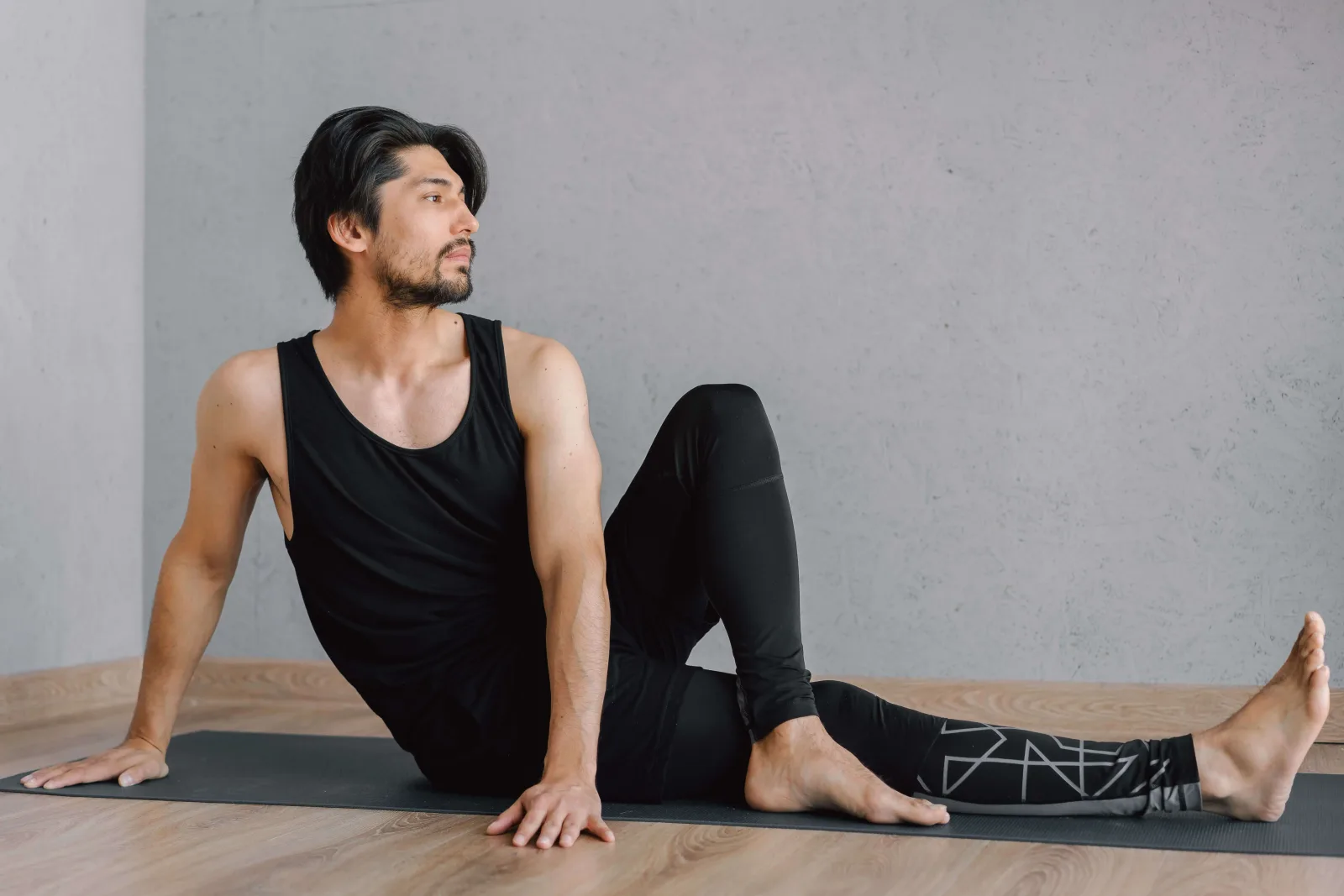
Sit with legs extended. Bend the right knee and place the right foot outside the left thigh. Inhale to sit tall; exhale and rotate gently to the right, left arm hugging the right knee, right hand on the floor behind you. Keep the twist comfortable and in the mid-back — this is mobility, not wringing. Three to five breaths, then switch sides.
Why it earns its place: rotation is the direction desk life removes from a spine. A gentle seated twist restores it and many people feel an immediate easing across the back. Keep it small or skip it with disc issues or osteoporosis.
9. Triangle Pose (Trikonasana)
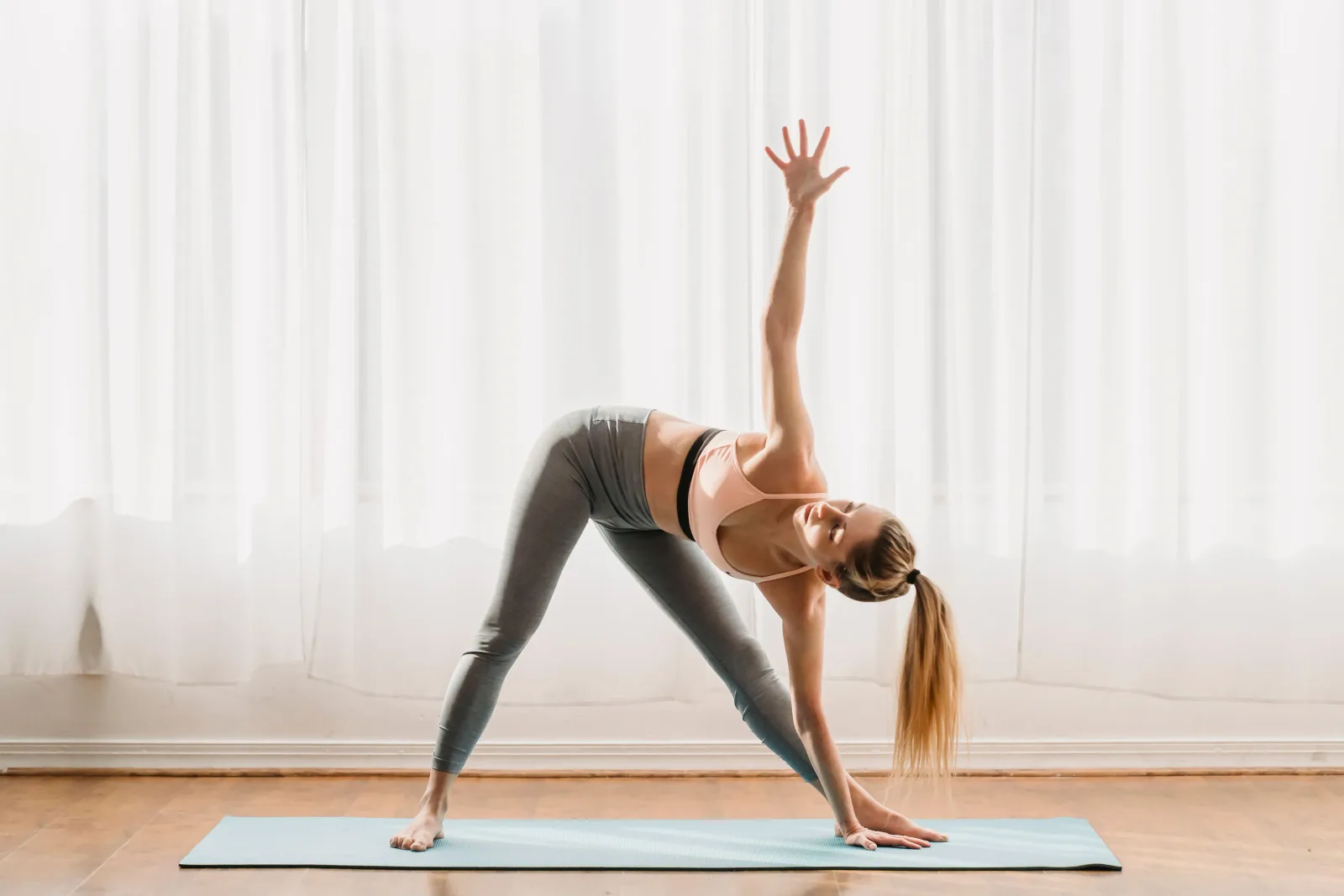
Stand with feet wide, right toes forward, left toes slightly in. Extend the arms, then hinge sideways at the right hip, resting the right hand on your shin or a block and reaching the left arm skyward. Chest stays open, both sides of the waist long. Five breaths, then switch sides.
Why it earns its place: triangle strengthens the legs while lengthening the whole side body and encouraging tall, even posture — a standing summary of everything the previous eight poses practiced. It finishes the sequence upright, which is how your back has to face the rest of the day.
A tip from our teaching hall: end with two or three minutes lying on your back, knees bent, feet flat, letting the lower back settle into the floor. Students who close their practice with this rest consistently report the relief lasts longer than when they leap straight back to their desks.
How often should you practice?
Ten to fifteen minutes daily beats a long weekly session — backs respond to frequency more than intensity. A realistic rhythm: poses 1–3 every morning, the full nine three or four times a week, and Child's Pose whenever the day compresses you. Expect gradual change: many people feel looser immediately, but steadier improvement typically takes a few weeks of consistency. In our teacher training classes at the Tapovan campus, sitting-related back stiffness is one of the most common things new students arrive with — and consistent, gentle daily practice, not heroic stretching, is what resolves it.
Frequently asked questions
What type of yoga is best for back pain?
Slow, alignment-aware styles — Hatha, gentle/therapeutic classes, Iyengar (which uses props generously) and restorative yoga. Fast-flowing or hot classes ask a sore back to move quickly, which is the opposite of what it needs while irritated. Our guide to the types of yoga explains the differences.
What are the "big 3" exercises for lower back pain?
That phrase comes from spine research outside yoga: the curl-up, side plank (side bridge) and bird-dog — three exercises chosen to build core endurance without bending a sensitive spine. They complement yoga well; bird-dog in particular is essentially a yoga balance drill from tabletop. If a clinician has prescribed you the big 3, keep them and use the poses here as your mobility work alongside.
What yoga poses are good for back pain from sitting?
The sitting-specific antidotes are Cat–Cow, low Cobra and the Seated Side Stretch — they reverse the rounded, compressed shape a chair holds you in. A practical desk-day habit: one minute of Cat–Cow and a side stretch every couple of hours does more than a single long session after work.
Should I do yoga if my lower back hurts?
For everyday, non-specific ache — usually yes, gently: research suggests yoga may reduce chronic low-back pain and improve function, and movement generally beats bed rest. But if the pain is severe, follows an injury, or comes with any of the red flags listed above, see a doctor first. And within any practice, pain is information: sharp or radiating sensations mean stop, not push through.
Can yoga cure back pain permanently?
No honest teacher will promise that. What regular practice may do is reduce pain, rebuild strength and mobility, and make flare-ups less frequent and less dramatic. For many people with ordinary sitting-related pain, that adds up to a back they rarely think about — which is the realistic version of "cured".
When back pain deserves more than a home routine
If your back pain is chronic, complicated or simply exhausting to manage alone, structured support helps more than another list of stretches. Our Pain Management Yoga Retreat in Rishikesh is built consultation-first: you begin with a doctor's assessment, and gentle, therapeutic practice — along with any prescribed therapies — is tuned to your body rather than sold as a package. Private rooms, flexible start dates, and teachers who spend their days adapting poses to real spines. For related joint-friendly guidance at home, our yoga for arthritis guide takes the same honest approach.
References
National Center for Complementary and Integrative Health (NCCIH) — Yoga: Effectiveness and Safety (low-back pain research summary).
American College of Physicians — clinical practice guideline on noninvasive treatments for low back pain (yoga listed among recommended nonpharmacologic options).
Harvard Health Publishing — The safe way to do yoga for back pain.
NHS — Back pain: symptoms, self-care and when to get medical help (red-flag symptoms).
Reviewed for health accuracy by Dr. Bhupinder Singh Arora (M.D. Ayurveda), consulting Ayurvedic physician at Pure Soul Yoga School. This article is educational and not a substitute for personal medical advice.
Author note (byline): Gangesha Adi (E-RYT 500) leads the teaching team at Pure Soul Yoga School in Rishikesh, where adapting practice for stiff, desk-worn backs is a daily part of teaching students of 50+ nationalities.