
Yoga for Weight Loss: What It Really Does (and 5 Practices)

Can yoga help you lose weight? Yes — modestly, and mostly indirectly. A dynamic practice burns some energy, but yoga's real contribution to weight loss runs through quieter channels: it builds a movement habit you actually keep, may reduce the stress that drives comfort eating, tends to improve sleep, and trains the mindful attention that changes how you eat. Anyone promising that yoga alone will melt fat is overselling; anyone dismissing it as "just stretching" is underselling. The honest position sits in the middle, and it's genuinely useful.
This guide covers what yoga does and doesn't do for weight, which styles work harder, five practices to start with, and realistic expectations — because those are what keep people practicing long enough to see results.
This article is for general education and is not medical advice. Weight is influenced by many factors, including medical conditions and medication. Please consult a qualified healthcare professional about your individual situation, especially before making significant changes to exercise or diet.
Does yoga actually help with weight loss?
Weight change ultimately comes down to energy balance over months, and no yoga pose overrides that. But research on yoga and weight suggests regular practitioners tend to gain less weight over time, and reviews of studies report that yoga interventions may produce modest reductions in weight and waist circumference — with the strongest effects when yoga is part of a broader lifestyle change rather than the only change.
Where yoga genuinely earns its place is in the four mechanisms that make everything else work:
1. A movement habit you keep. The best exercise for weight loss is the one still happening in six months. Yoga is low-barrier — a mat, twenty minutes, no gym — and people tend to stick with practices they enjoy. Consistency beats intensity over a year, every time.
2. Less stress-driven eating. Stress hormones and comfort eating are close companions; many people eat past hunger when wound up. Yoga's slow breathing and deliberate rest may calm the stress response, and students often notice the evening-snacking urge softens when they practice regularly. If stress is your main trigger, our guide to yoga for stress relief goes deeper.
3. Better sleep. Short sleep is consistently linked with weight gain — it disturbs appetite hormones and erodes the willpower that food decisions lean on. Gentle evening practice and relaxation techniques may improve sleep quality, which quietly supports every other effort.
4. Mindful eating. This may be yoga's most underrated contribution. The attention you train on the mat — noticing sensation, staying present — transfers to the table: eating slower, noticing fullness, tasting food instead of clearing plates on autopilot. Research on mindful-eating approaches suggests they may help reduce overeating. No pose does this; the practice of attention does.
Which yoga is best for weight loss?
Styles differ enormously in physical demand. As a rule: the more continuously you move, the more energy you use.
Style | Effort level | Weight-loss role |
|---|---|---|
Dynamic Vinyasa / Power | High — continuous flowing movement | The closest yoga gets to cardio; builds strength too |
Ashtanga | High — vigorous set sequence | Demanding, structured; suits people who like routine |
Surya Namaskar rounds | Scales with pace and repetitions | The classic dynamic practice — see below |
Hatha | Moderate — held poses, slower pace | Builds strength and habit; modest energy use |
Yin / Restorative | Low — long, supported holds | Not for burning energy; valuable for stress and sleep |
Honest note: even a strong vinyasa class typically uses less energy than running or cycling for the same duration. If maximum burn per minute is the goal, cardio wins — that's the "yoga vs cardio" answer in one line. Yoga's advantage is everything around the burn: strength, stress, sleep, and staying power. Many people do best combining both. Our types of yoga guide helps you pick a style you'll actually enjoy.
5 practices to build around
These five come from the dynamic side of practice — chosen for large muscle groups, continuous effort and honest usefulness. Move with your breath, rest when needed, and let quality beat quantity.
1. Sun Salutations (Surya Namaskar)

The backbone of dynamic practice: a flowing sequence of about twelve positions — forward folds, plank, a gentle backbend, downward dog — linked by breath. Start with 5 slow rounds, build gradually toward 10–12, and treat the last rounds as slow and precise rather than rushed.
Why it works: it's continuous, full-body movement that scales with you — slower and softer as a warm-up, brisker as genuine exercise that raises the heart rate. Practiced most mornings, it is the single most efficient habit on this list. Full sequence, variations and pacing are in our Surya Namaskar guide.
2. Warrior II (Virabhadrasana II)
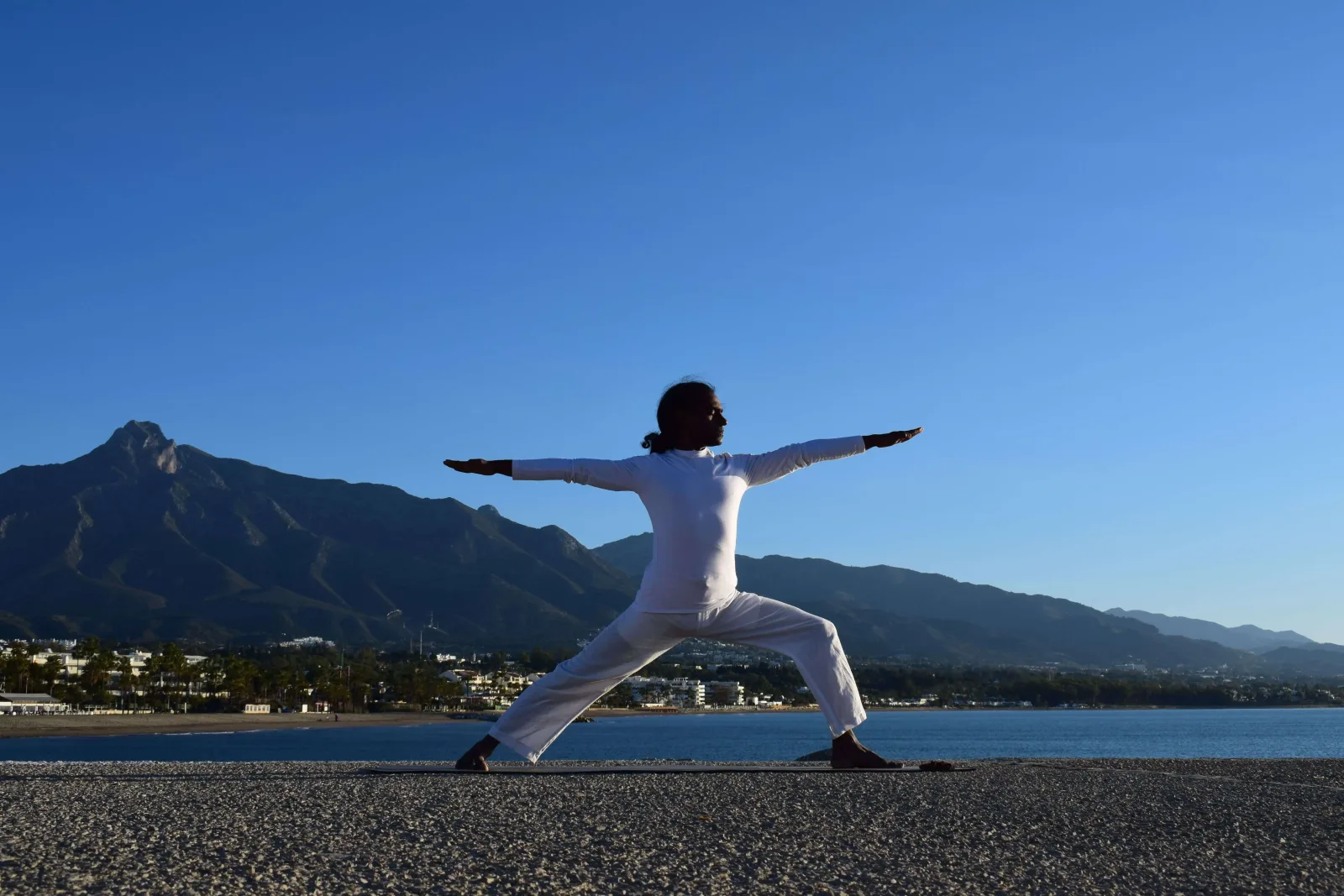
Feet wide, right foot turned out, right knee bent over the ankle, arms extended, gaze over the front hand. Hold for 30 seconds to a minute of steady breathing, then switch sides.
Why it works: long holds in bent-knee standing poses make the biggest muscles in your body — thighs and glutes — work continuously. Muscle is metabolically useful tissue, and strong legs make every other activity (including the walking that should accompany any weight-loss effort) easier.
3. Boat Pose (Navasana)

Sit, lean back slightly, and lift the feet until the shins are parallel to the floor, arms reaching forward, spine long. Hold 20–30 seconds, rest, repeat two or three times. Hands under the thighs if the full version rounds your back.
Why it works: a strong core supports every dynamic practice and protects the lower back as your activity level rises. Be wary of any claim that core poses "burn belly fat" specifically — they strengthen what's underneath, but spot reduction isn't how bodies work (more on that in the FAQs).
4. Chair Pose (Utkatasana)
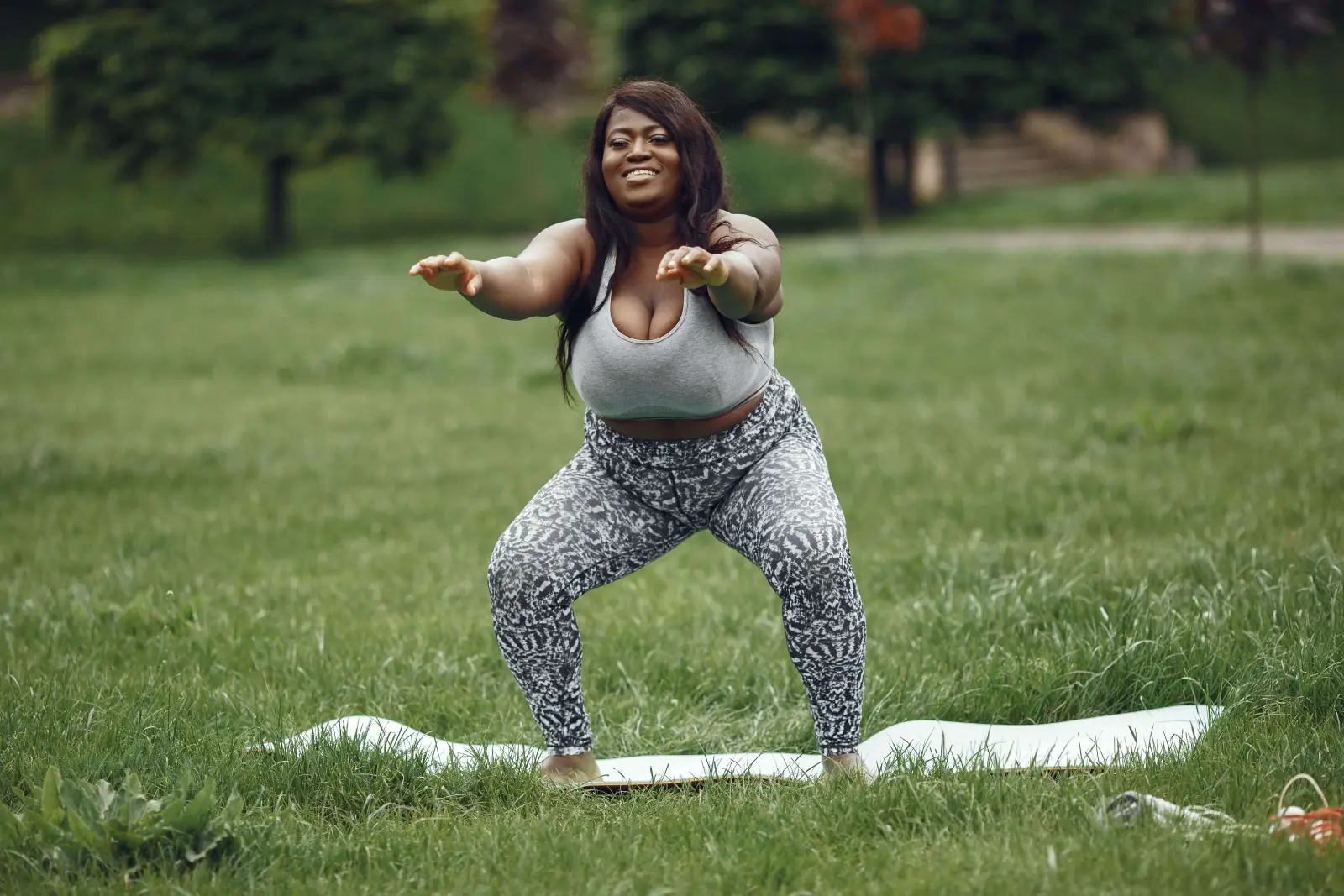
From standing, bend the knees and sink the hips back as if sitting into an invisible chair, arms overhead, chest lifted. Hold 30 seconds to a minute, breathing steadily.
Why it works: it's a sustained squat — legs, glutes and back working together hard enough that most people's breath deepens within seconds. Excellent inserted between Sun Salutation rounds to keep effort continuous.
5. Bridge Pose (Setu Bandhasana)
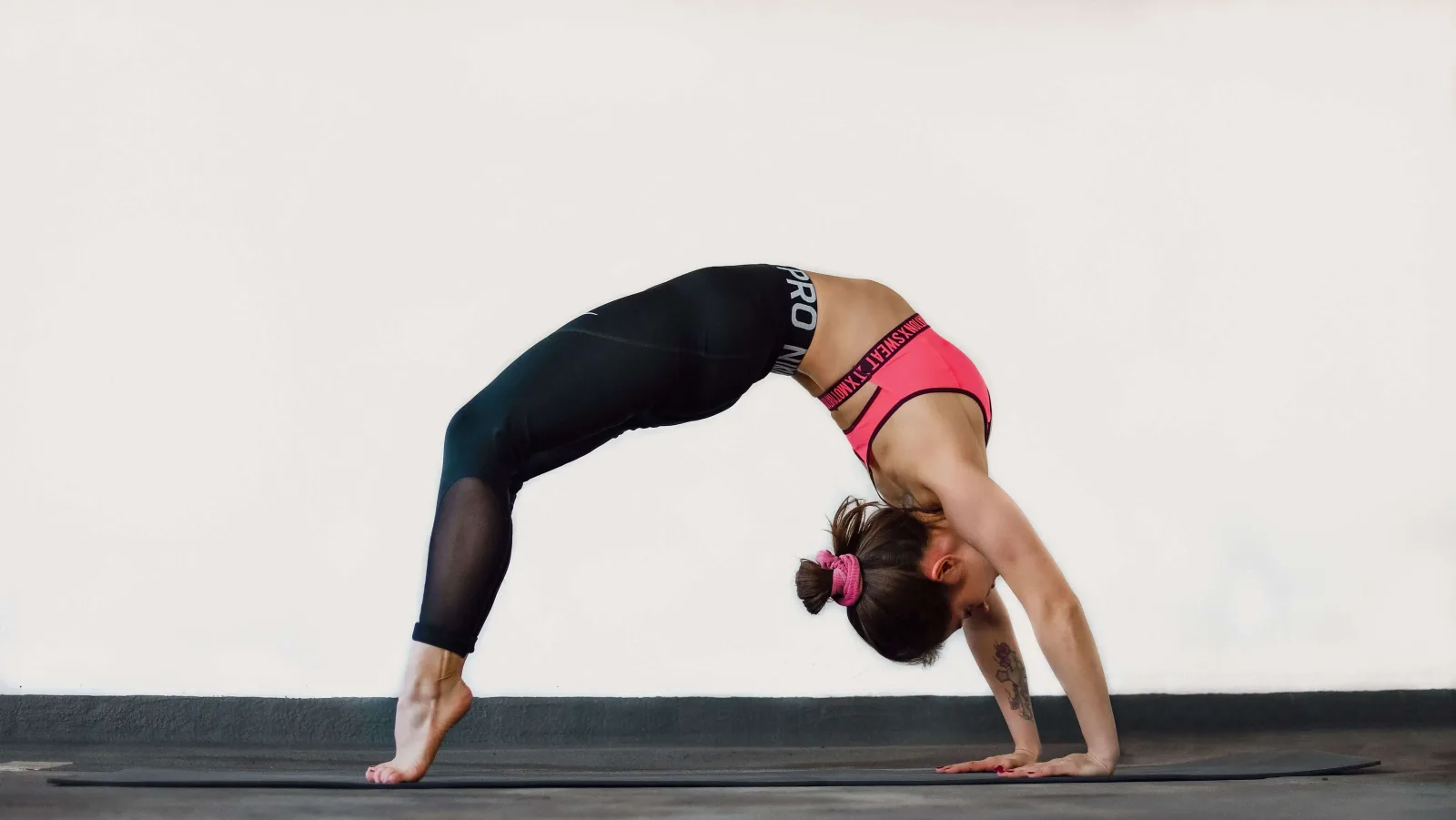
Lie on your back, knees bent, feet flat and hip-width. Press through the feet to lift the hips, hold for 30 seconds with glutes engaged, then lower with control. Two or three rounds.
Why it works: it strengthens the posterior chain — glutes, hamstrings, back — that sitting weakens, and doubles as a gentle chest-opening counterpose after core work. (You may read that bridge "stimulates the thyroid and boosts metabolism" — that's a traditional claim without solid modern evidence, and we won't lean on it. The strength work is reason enough.)
A tip from our teaching hall: finish every session — even the sweaty ones — with a few minutes of rest in Savasana. Students who skip rest treat practice as punishment and quietly quit by week three; students who keep it look forward to practicing. For weight loss, the practice you look forward to is the only one that matters.
Realistic expectations: the section most articles skip
Pace: with regular dynamic practice plus sensible eating, sustainable loss is gradual — think months, not weeks. Rapid-loss promises are how people end up heavier a year later.
The scale will wobble. Water, hormones and digestion move daily weight more than fat change does. Judge by weekly trends, how clothes fit, and strength gains.
Yoga won't out-practice a poor diet. No exercise reliably does. Yoga's mindful-eating effect helps precisely here — it changes the eating, not just the burning. Traditional yogic food wisdom (the sattvic approach: fresh, simple, unprocessed meals eaten calmly) points the same direction as modern advice.
Non-scale wins arrive first. Better sleep, calmer evenings, easier stairs, a steadier mood — usually within a few weeks. These are not consolation prizes; they're the foundation the weight change stands on.
Frequently asked questions
Can you lose weight by practicing yoga?
Yes, modestly — most reliably when a dynamic practice is regular (four or more sessions a week) and paired with sensible eating. Studies suggest yoga practitioners gain less weight over time and that yoga programs may produce moderate loss. What yoga adds beyond the burn is behaviour change: better stress management, sleep and eating awareness, which is where lasting weight change actually lives.
What is the 30/30/30 rule for weight loss?
It's a social-media trend, not a yoga teaching: eat 30 grams of protein within 30 minutes of waking, then do 30 minutes of low-intensity exercise. The components are individually sensible — protein at breakfast is satiating, morning movement is a fine habit — but the precise formula has no strong evidence behind it. A morning Surya Namaskar practice followed by an unhurried, protein-inclusive breakfast captures the same spirit without the numerology.
Which type of yoga is best for weight loss?
Dynamic styles — Vinyasa, Power, Ashtanga — and brisk rounds of Surya Namaskar, because continuous movement uses the most energy. But the best style long-term is the one you'll still be doing in six months, and a restorative evening practice that fixes your sleep and stress-eating can contribute more than an intense class you abandon. Many students alternate: dynamic in the morning, gentle in the evening.
Does yoga reduce belly fat?
Not specifically — no exercise can target fat loss from one area; the body draws on fat stores in its own genetically-decided order. Core poses strengthen and tone the muscles beneath, and overall practice supports the gradual whole-body fat loss that eventually includes the belly. Any pose or program promising "belly-fat burning" is marketing, not physiology. One indirect exception worth knowing: chronically elevated stress is associated with abdominal fat storage, so yoga's stress-lowering effect may help at the margins — slowly, and only as part of the whole picture.
How often should I practice yoga to lose weight?
Aim for most days: three or four dynamic sessions of 30–45 minutes weekly, with shorter gentle practice on the days between. Ten minutes daily beats one heroic weekend session — for energy use, habit-building and the mindfulness effects alike.
If you want a full reset, not just a routine
Some people make their real start away from the kitchen, the desk and the routine that shaped their habits. Our Rejuvenation Yoga Retreat in Rishikesh is built for exactly that: days structured around dynamic morning practice, breathing, rest and fresh sattvic meals, opening with a doctor's consultation so the program fits your body rather than a template. Private rooms, flexible any-day start, and honest expectations — it's a strong beginning and a set of habits to carry home, not a transformation package. Real humans answer questions on WhatsApp.
References
National Center for Complementary and Integrative Health (NCCIH) — Yoga: What You Need To Know.
Harvard Health Publishing — Yoga for weight loss: benefits beyond burning calories.
Lauche R. et al. — systematic review and meta-analysis of yoga for weight-related outcomes in overweight and obese adults.
CDC — Healthy Weight: physical activity and losing weight (sustainable-pace guidance).
Reviewed for health accuracy by Dr. Bhupinder Singh Arora (M.D. Ayurveda), consulting Ayurvedic physician at Pure Soul Yoga School. This article is educational and not a substitute for personal medical advice.
Author note (byline): Gangesha Adi (E-RYT 500) leads the teaching team at Pure Soul Yoga School in Rishikesh, where morning Surya Namaskar practice opens the teaching day for students of 50+ nationalities — many of whom arrive asking exactly the questions this article answers.