Yoga for Knee Pain: 7 Gentle Poses, Props & Modifications
Yoga can be a genuinely helpful practice for many kinds of knee pain — the nagging, non-injury kind that comes from stiff, weak or overworked legs. Research suggests that gentle exercise which strengthens the muscles around the knee and improves flexibility may reduce pain and improve function, and yoga, practised carefully, does exactly that. The two words that matter are practised carefully: the same poses that support a knee can aggravate one when done deep, fast or unsupported. This guide gives you seven knee-friendly poses with the modifications and props built in, plus the honest list of what to avoid.
One boundary first, because it matters more than any pose: if your knee pain comes from an injury — a fall, a twist, a pop — or involves swelling, instability, locking, or pain that wakes you at night, see a doctor or physiotherapist before you practise anything. Yoga supports recovery; it doesn't diagnose or replace it.
This article is for general education and is not medical advice. Please consult a qualified healthcare professional about your individual situation, especially before exercising with an existing injury or condition.
Should you do yoga if you have knee pain?
For most people with mild, chronic, non-acute knee discomfort — yes, gently. The muscles around the knee (quadriceps, hamstrings, calves, glutes) act as the joint's suspension system; when they're weak or tight, the joint takes more load. Yoga strengthens and lengthens those muscles while teaching you to notice alignment habits — a knee that caves inward, weight dumped into one leg — that quietly feed the problem. The National Center for Complementary and Integrative Health notes that yoga is generally safe for healthy people when practised appropriately, while also cautioning that knee injuries can happen in yoga itself — which is why every pose below comes with a modification.
Common causes of the kind of knee pain that gentle yoga may help include osteoarthritis (cartilage wear), patellofemoral pain (around the kneecap), tendinitis and simple overuse or deconditioning. If arthritis is your specific situation, our companion guide to yoga for arthritis covers joint care across the whole body.
Before you start: 5 rules for practising with sensitive knees
Keep a micro-bend. Never "lock" the knees straight, and never force them deep. Both extremes strain the joint.
Pad and prop generously. A folded blanket under kneeling knees, blocks under hands, a strap for leg stretches, a wall or chair for balance. Props are intelligence, not weakness.
Learn the pain rule. A mild stretching or working sensation around the thigh and hip: fine. Sharp, pinching, or pain inside the knee joint: come out, every time.
Warm up first. A few minutes of easy walking or gentle movement before deeper poses; cold joints complain loudest.
Respect flare days. On a bad day, shrink every pose — shallower bends, shorter holds — or practise seated. Our chair yoga guide is a complete knee-sparing session for exactly those days.
The 7 poses
1. Warrior 2 (Virabhadrasana II) — strength with the knee protected
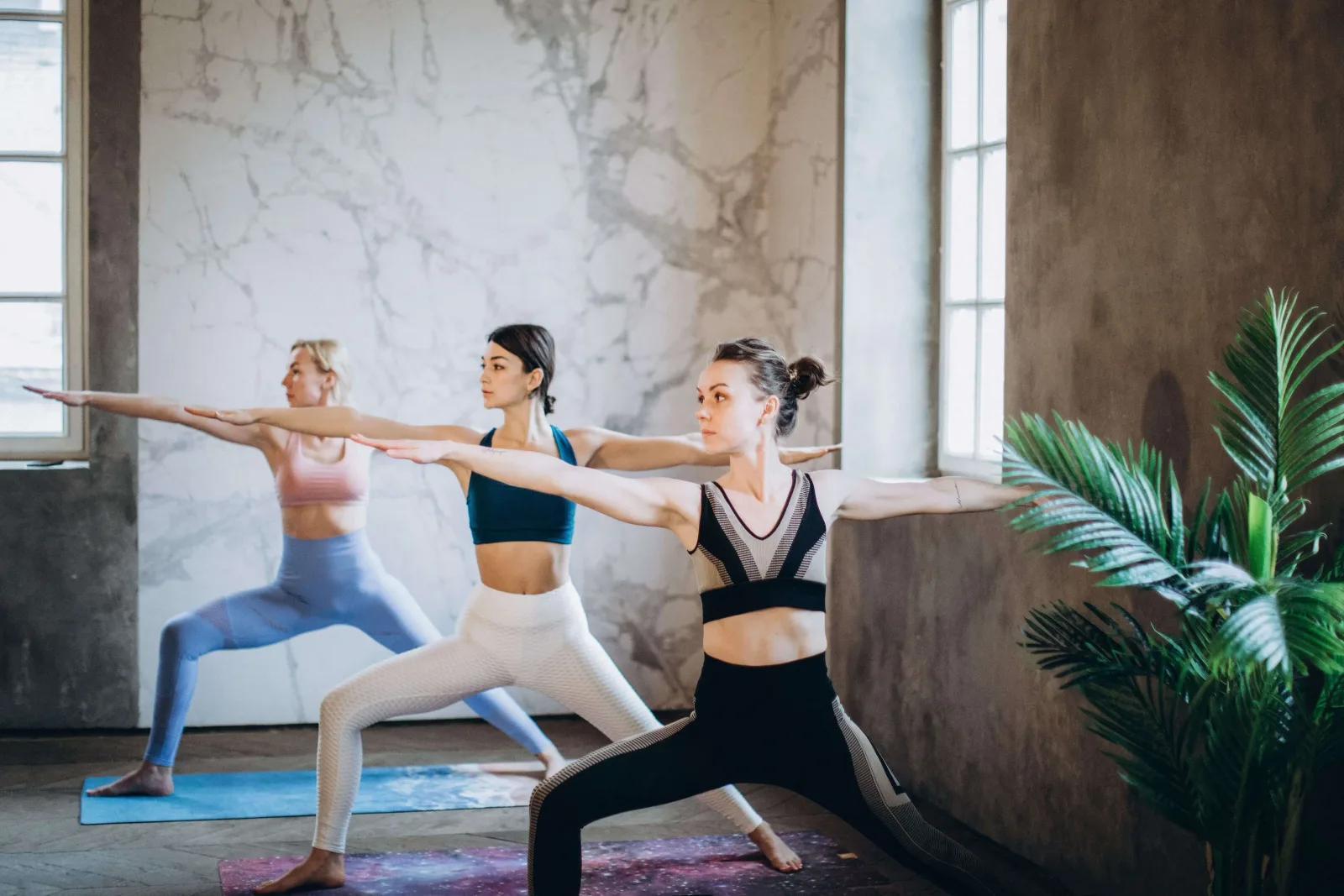
Stand with feet wide, right foot turned out, left toes angled slightly in. Bend the right knee toward a right angle — but only as deep as it stays stacked over the ankle and tracking toward the middle toes, never caving inward. Arms extend at shoulder height. Hold five slow breaths per side. Knee-friendly modification: shorten the stance and bend the front knee only halfway. Depth adds nothing if alignment goes; a shallow, well-tracked Warrior 2 strengthens the quadriceps and hips exactly where the knee needs support.
2. Chair Pose (Utkatasana) — the quiet quadriceps builder
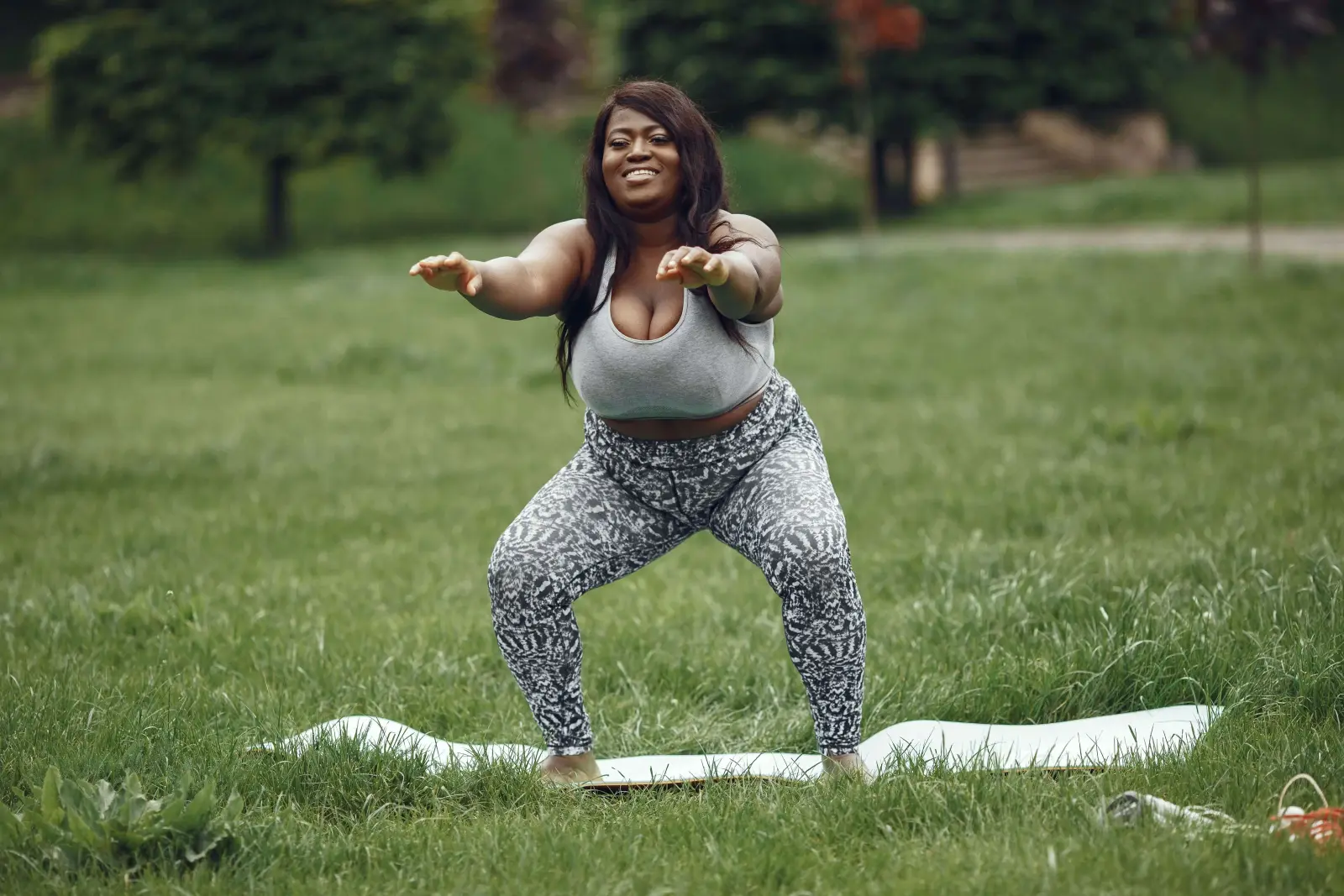
Feet hip-width, arms forward or overhead, sit the hips back as if toward a chair — a shallow "sitting back," not a deep squat. Knees stay behind the toes, weight in the heels. Hold three to five breaths, rise, repeat two or three times. Knee-friendly modification: practise with your back against a wall, or actually hover just above a real chair seat and touch down between rounds. Strong quadriceps are among the best-documented protectors of an aching knee, and this pose builds them without impact.
3. Reclining Hand-to-Big-Toe Pose (Supta Padangusthasana) — the strap stretch
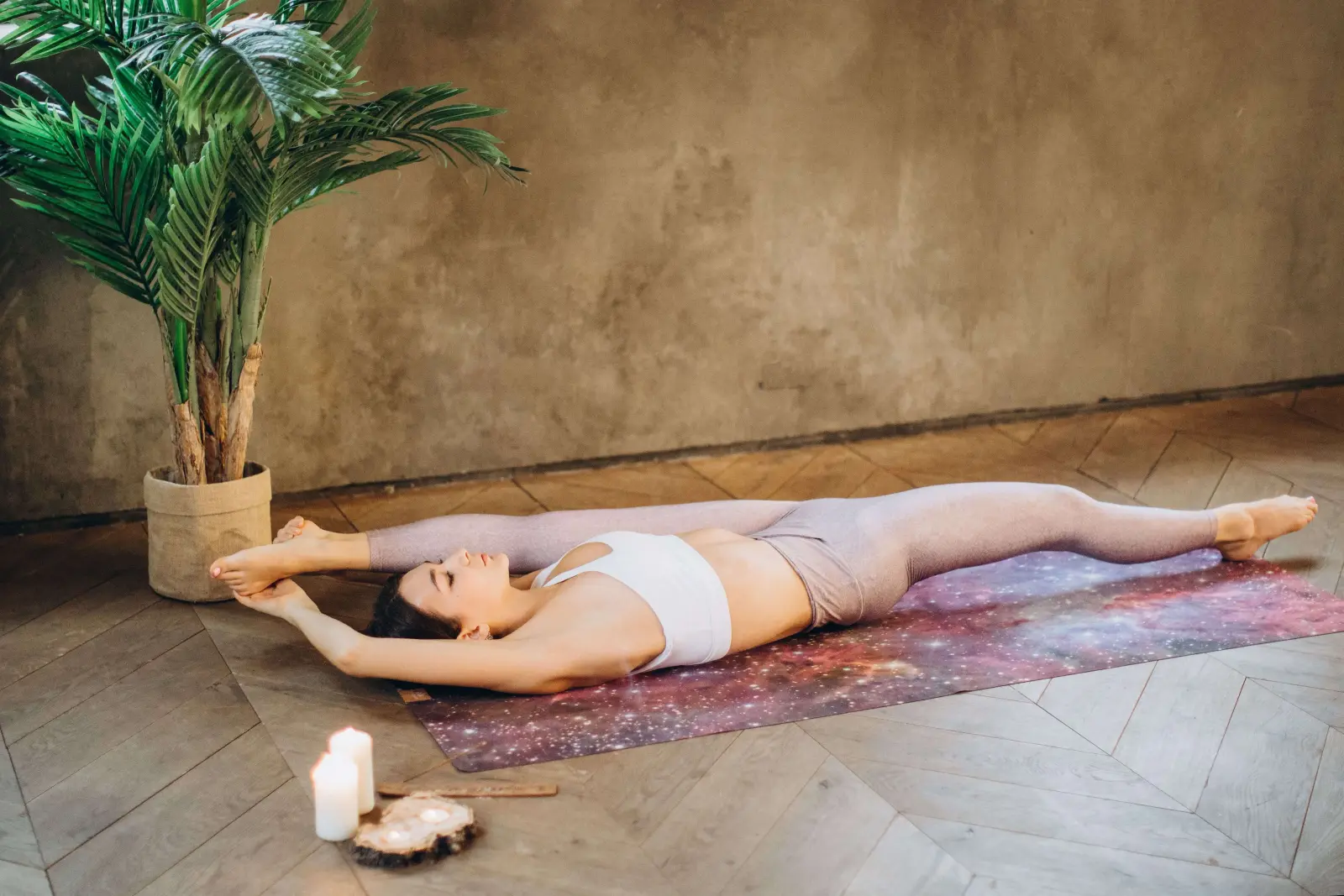
Lie on your back, loop a strap (or a belt or scarf) around the ball of one foot, and extend that leg toward the ceiling, keeping a soft bend in the knee. The other leg rests bent or extended on the floor. Three to five breaths per side. Knee-friendly modification: bend the raised knee generously — the target is the hamstring and calf, not a straight leg. Tight hamstrings pull on the back of the knee all day; this releases them with the joint fully supported by the floor.
4. Goddess Pose (Utkata Konasana) — inner-thigh strength, shallow by design
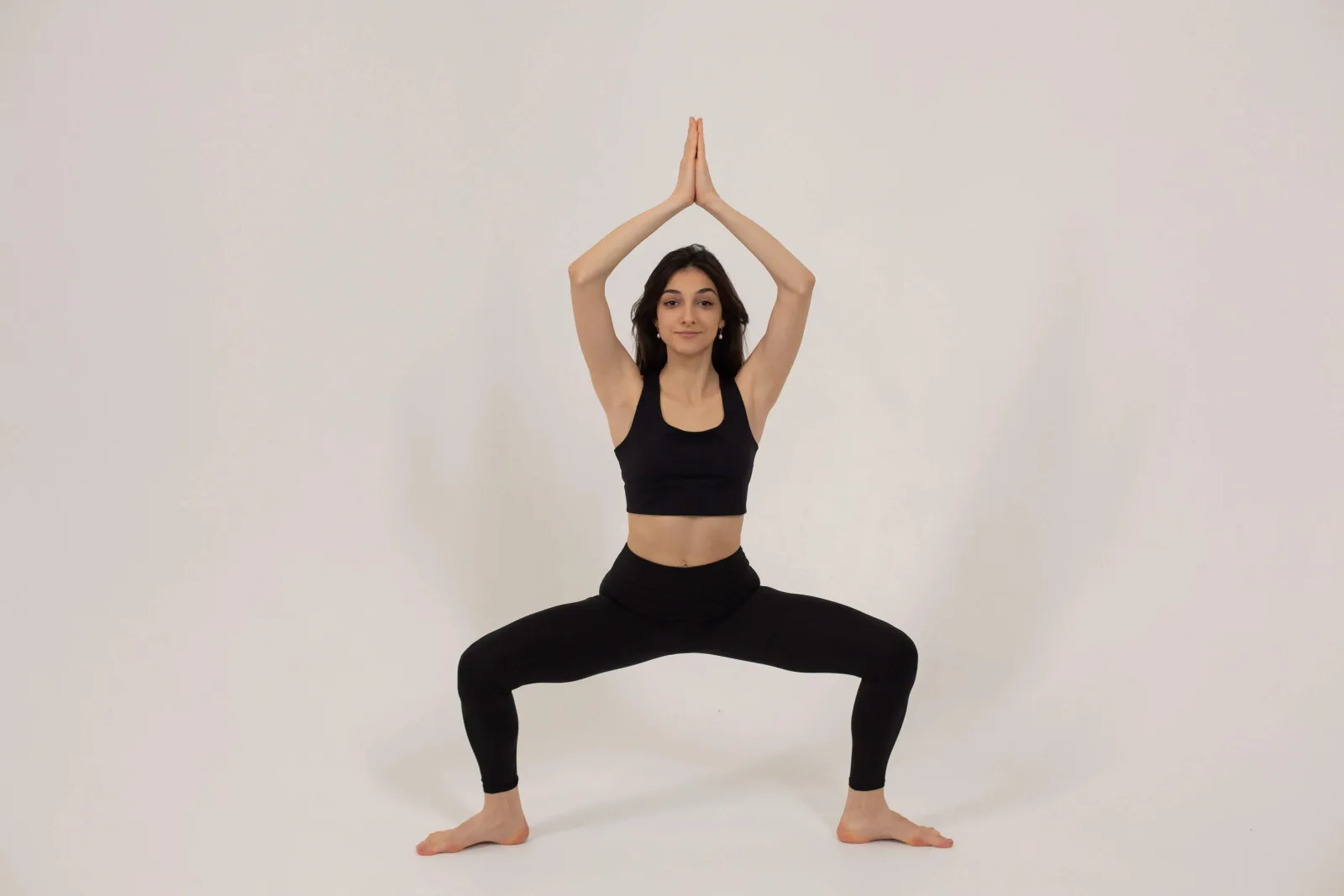
Step wide, turn the toes out about 45 degrees, and bend the knees a comfortable amount, tracking each knee over its toes. Chest lifted, hands at the heart or arms at shoulder height. Hold three to five breaths. Knee-friendly modification: stay high — a quarter-bend is plenty — and hold a chair back or countertop for balance. This strengthens the inner thighs and glutes that help the kneecap track well.
5. Bridge Pose (Setu Bandhasana) — the back line, floor-supported
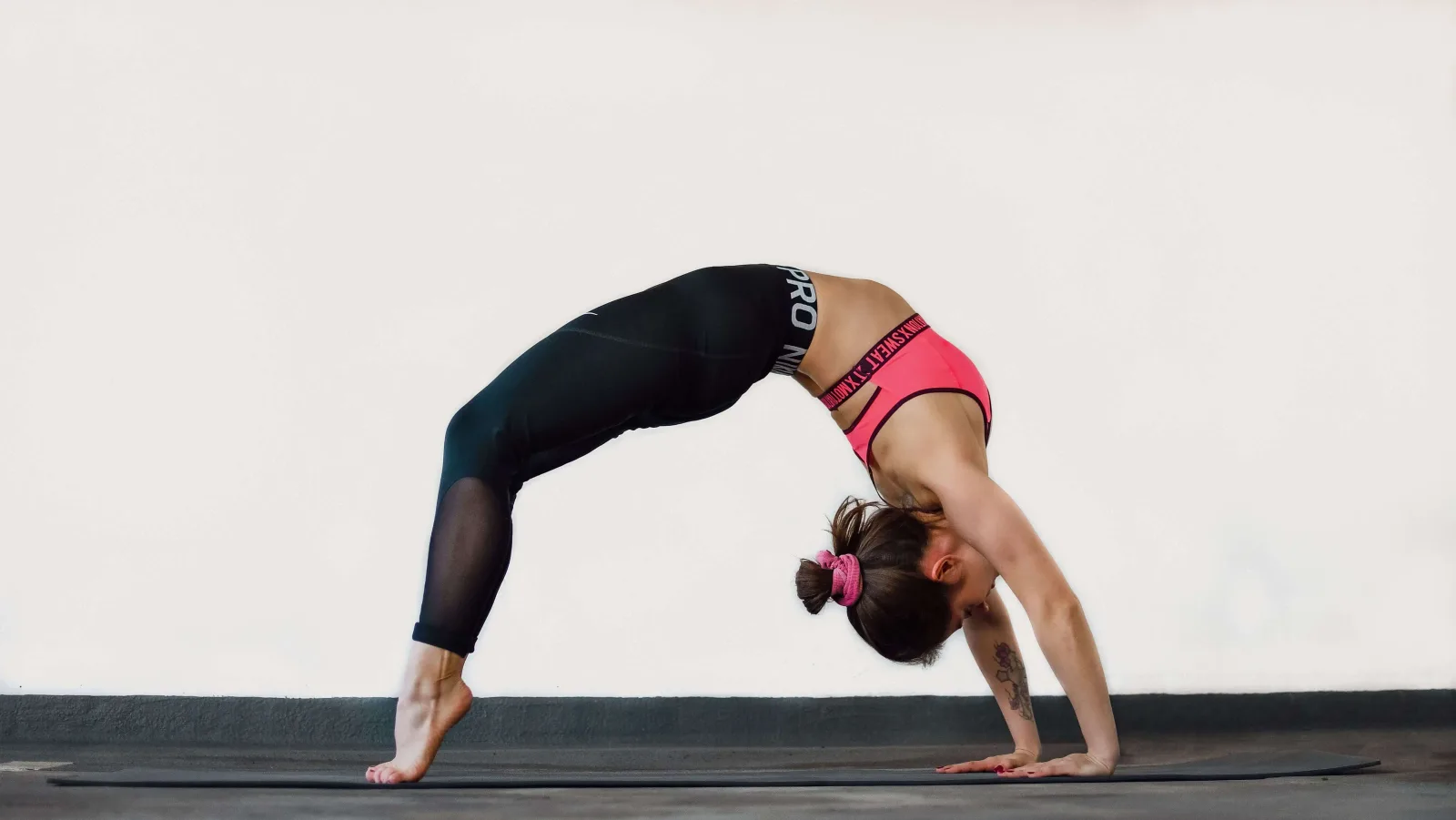
Lie on your back, knees bent, feet flat and hip-width, heels near the fingertips. Press through the feet and lift the hips, keeping knees pointing straight ahead. Three to five breaths, lower slowly, repeat. Knee-friendly modification: squeeze a folded blanket or block lightly between the thighs to keep the knees from splaying. Bridge strengthens the glutes and hamstrings — muscles that unload the knee with every step you take.
6. Triangle Pose (Trikonasana) — length without locking
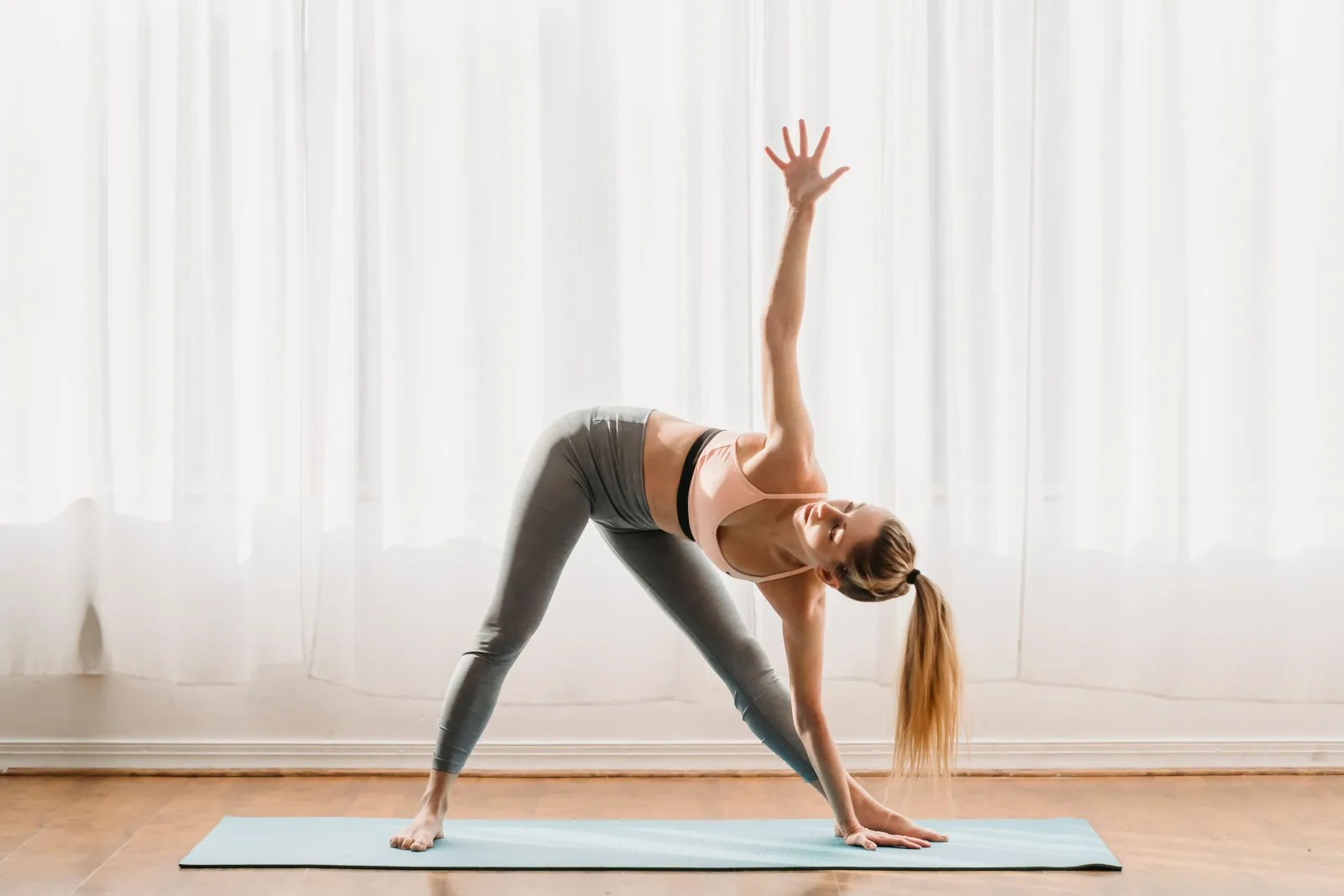
Feet wide, right foot out, legs engaged. Hinge at the right hip and take the right hand to the shin or a block, left arm rising, chest open. Three to five breaths per side. Knee-friendly modification: keep a visible micro-bend in the front knee — a hard-locked, hyperextended knee is the classic Triangle mistake — and place the hand high on a block so the legs, not the joint, carry the pose. Our step-by-step trikonasana guide covers the full alignment.
7. Reverse Tabletop (Ardha Purvottanasana) — gentle, bent-knee strength
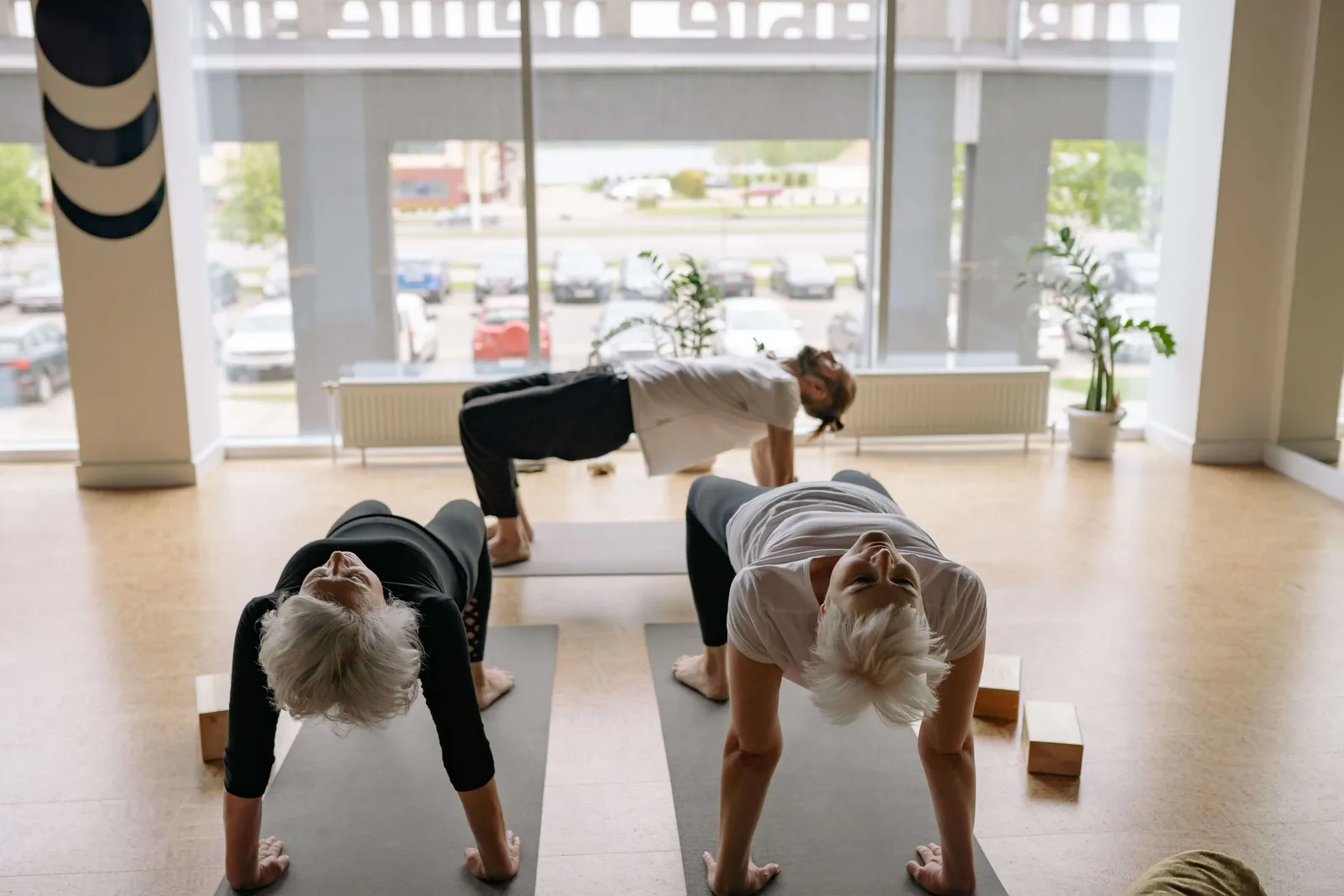
Sit with knees bent, feet flat, hands behind you with fingers pointing toward the feet. Press down through hands and feet and lift the hips until the torso and thighs approach a tabletop line. Hold two to three breaths, lower, repeat. Knee-friendly modification: lift the hips only a little — even a few centimetres works the legs and opens the front body. Because the knees stay bent at a right angle, this strengthens around the joint without deep flexion.
A tip from our teaching hall: whenever a pose kneels, fold your blanket thicker than you think you need — and if a bent-knee pose pinches, place a rolled washcloth behind the knee crease before you fold. Comfort at the joint isn't cheating; it's what lets you practise tomorrow too.
What should you avoid with knee pain?
Honesty about what to skip matters as much as the pose list:
Deep knee flexion — full squats, Lotus, Hero Pose (Virasana), and unsupported deep kneeling compress a sensitive joint. If you love kneeling poses, sit on a block.
Jumping transitions — step between poses instead; impact is the aggravator.
Locked-straight knees — hyperextension in standing poses strains the joint's rear structures. Micro-bend, always.
Pushing through joint pain — muscle effort is productive; joint pain is information. Stop and modify.
The other extreme: total rest. Perhaps the most common mistake with an aching knee is stopping all movement. Unless a professional has told you to immobilise it, a knee generally does better with regular gentle motion than with the sofa — deconditioned legs protect the joint less, not more.
The same movement principles apply up the chain: hip and hamstring health influence both the knees and the lower back, which is why our yoga poses for back pain guide pairs naturally with this one.
How often should you practise?
Little and often. Ten to twenty minutes, four or five days a week, beats one ambitious weekend session — and gives you honest feedback about which poses your knees like. Many people notice easier stairs and less stiffness within a few weeks of consistent gentle practice, though timelines vary and nobody can promise them. Keep a simple rule of thumb: the knee should feel the same or better two hours after practice than before it. If it reliably feels worse, that's your signal to shrink the practice and speak to a professional.
Frequently asked questions
Which yoga is best for knee pain?
Slow, alignment-focused, prop-friendly styles — gentle hatha, restorative, chair-based practice — suit sensitive knees far better than fast vinyasa or hot classes, where fatigue erodes alignment. More than the style name, look for a teacher who welcomes modifications and never pushes depth.
What exercises should be avoided with knee pain?
In yoga: deep squats, Lotus and Hero without props, jumping transitions and locked-straight standing legs (the full list is above). Outside yoga, high-impact and deep-bend loading — jump-heavy training, deep weighted squats, downhill running — are the usual aggravators. A physiotherapist can tailor this to your specific knee, which no article can.
What is the #1 mistake for bad knees?
The extremes. Some people push through sharp joint pain ("no pain no gain" has ruined many knees); many more stop moving entirely, which weakens the very muscles the joint depends on. The middle path — regular, gentle, well-aligned movement below the pain threshold — is what rehabilitation professionals consistently recommend.
Should you do yoga if you have knee pain?
Usually yes, gently and with modifications — unless the pain comes from an unassessed injury or involves swelling, instability or locking, in which case see a doctor or physiotherapist first and bring their advice to the mat. The full answer, including who should wait, is at the top of this article.
When your knees deserve more than a routine
Home practice is where most knee care happens. But if pain has been shaping your days for months, sometimes what helps most is stepping out of your routine entirely and putting your body in experienced hands for a while. Our Pain Management Yoga Retreat in Rishikesh is built consultation-first: every stay begins with a doctor's consultation, and any therapies are prescribed to your situation rather than sold from a menu — with gentle, prop-supported yoga, rest and unprocessed food doing the quiet daily work. If you're wondering whether a retreat makes sense for your knees, ask us on WhatsApp; we'll tell you honestly, including if the answer is "see your doctor first."
References
National Center for Complementary and Integrative Health (NCCIH) — Yoga: What You Need To Know (safety notes, including knee-injury caution).
National Institute of Arthritis and Musculoskeletal and Skin Diseases (NIAMS) — Osteoarthritis overview (exercise and muscle-strengthening guidance).
NHS — Knee pain: causes and self-care guidance.
Centers for Disease Control and Prevention (CDC) — Physical activity and arthritis (benefits of low-impact exercise for joint pain).
Reviewed for health accuracy by Dr. Bhupinder Singh Arora (M.D. Ayurveda), consulting Ayurvedic physician at Pure Soul Yoga School. This article is educational and not a substitute for personal medical advice.
Author note (byline): Gangesha Adi (E-RYT 500) has spent a decade teaching gentle and therapeutic yoga to students of more than 50 nationalities at Pure Soul Yoga School, Rishikesh — including many practitioners who arrived certain their knees ruled yoga out, and left knowing otherwise.