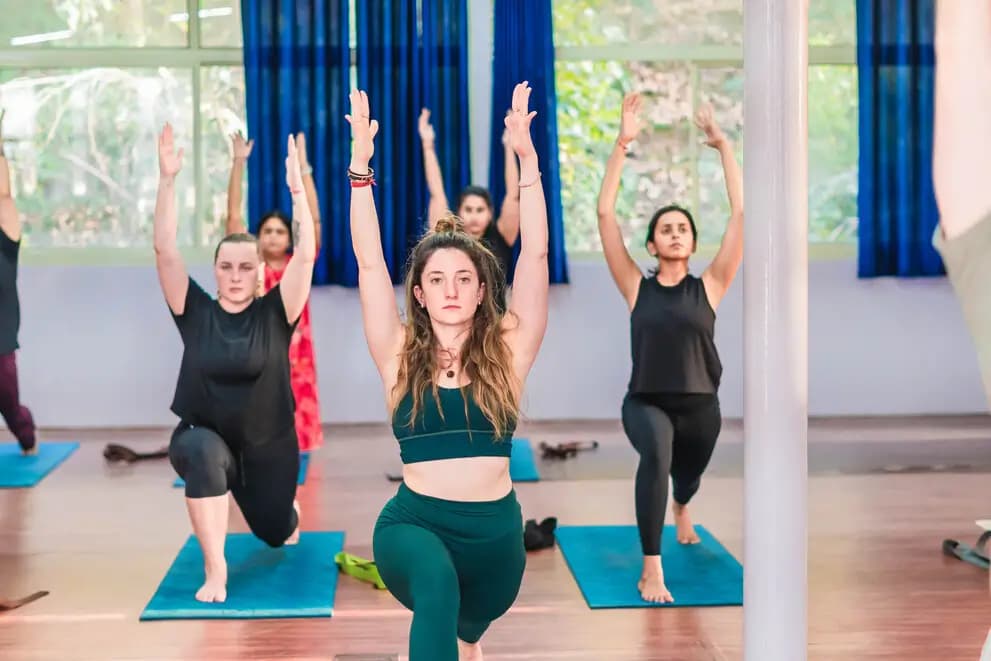
Yoga for Arthritis: 7 Gentle Poses for Stiff, Painful Joints
Let's begin with the honest version, because arthritis content is full of the other kind: yoga does not cure arthritis, and nothing you read here will make it disappear. What gentle yoga offers is something more modest and more real — regular, low-impact movement that keeps joints mobile, muscles supportive and breath steady. Gentle range-of-motion exercise is one of the most widely recommended self-care approaches for arthritis, and research on yoga specifically suggests it may help reduce pain and stiffness and support day-to-day function in people with both osteoarthritis and rheumatoid arthritis.
Below: the safety rules that matter, seven joint-friendly poses with modifications, and straight answers to the questions people with arthritis actually ask.
This article is for general education and is not medical advice. Arthritis is a medical condition with many forms — please consult your doctor or rheumatologist before starting yoga, especially if you have rheumatoid arthritis, severe joint damage, or a joint replacement.
Is yoga good or bad for arthritis?
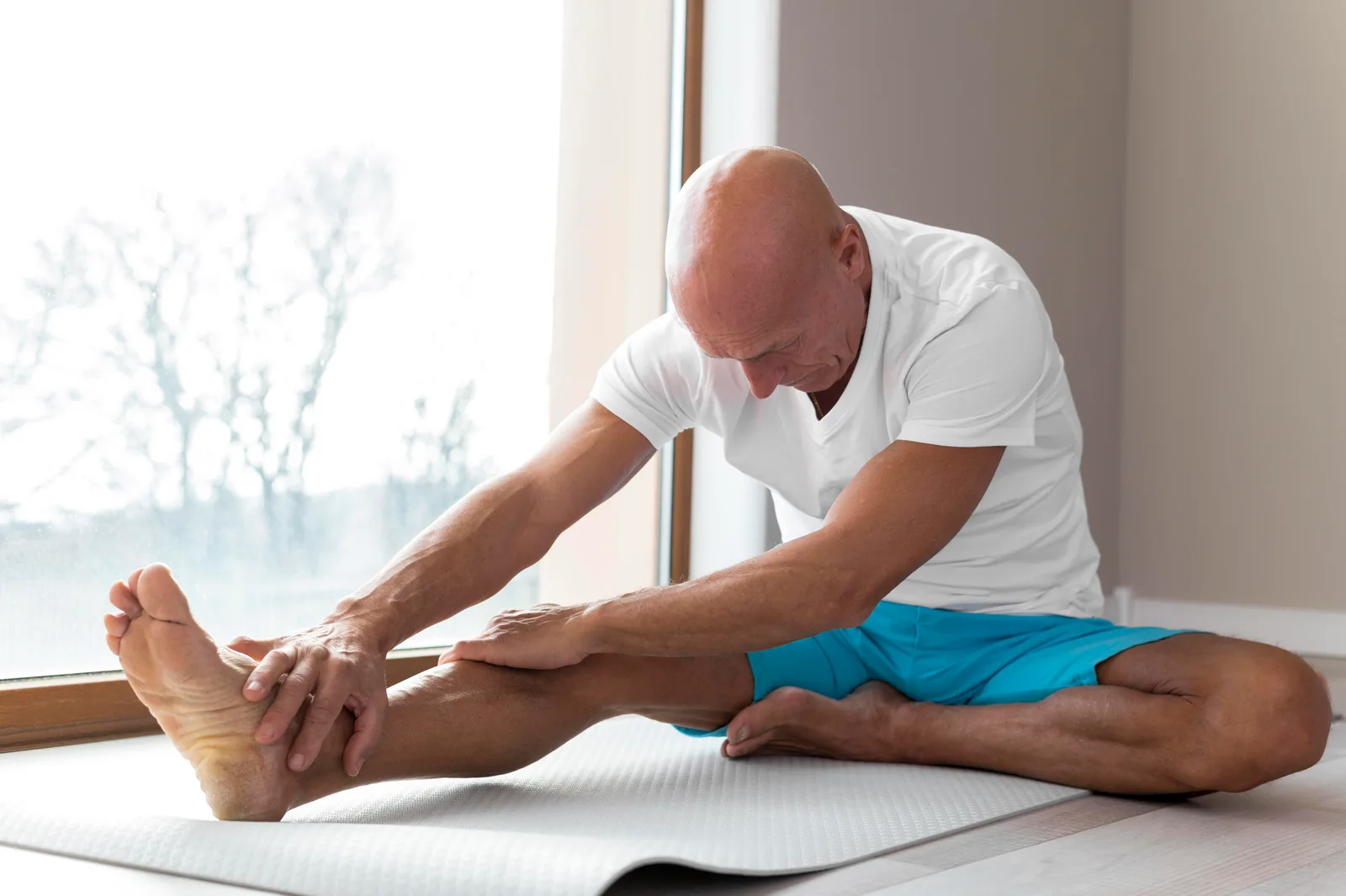
Both answers exist, and the difference is entirely in how it's practiced.
Good: gentle, adapted yoga moves joints through their comfortable range, strengthens the muscles that stabilise them, and calms the nervous system that amplifies pain. Studies of yoga in people with knee osteoarthritis and rheumatoid arthritis suggest it may improve pain, stiffness, function and mood — which is why arthritis organisations generally list adapted yoga among suitable low-impact activities alongside walking and swimming.
Bad: forceful yoga that pushes swollen joints into deep ranges, loads damaged knees and wrists aggressively, or treats pain as something to push through. An intense flow class built for young, healthy joints can genuinely make things worse.
One distinction worth knowing: osteoarthritis (OA) is wear-related and usually improves with gentle movement that lubricates the joint; rheumatoid arthritis (RA) is inflammatory and comes in flares — during an active flare, hot swollen joints need rest and medical guidance, not stretching. Everything below assumes the gentle, adapted approach, and your doctor's blessing.
Before you start: 5 safety rules
Get the green light first. Especially with RA, joint replacements, or severe joint damage — ask your doctor which movements to avoid. This single step is worth more than any pose list.
Warm up warm. Stiff joints move better after a warm shower or a few minutes of easy walking. Morning stiffness usually eases with gentle motion — start smaller than you think you need.
The pain rule. Mild stretching sensation and mild effort: fine. Sharp pain, pinching, or pain that swells or lingers for hours afterwards: too much. Arthritic joints whisper before they shout — listen early.
Use props without apology. Blankets under knees, blocks under hands, a chair for balance, a strap instead of reaching. Props aren't the beginner's version; they're the intelligent version.
Respect flare days. On days a joint is hot, swollen or unusually painful, skip poses that load it. Breathe, rest, or do only the poses that feel soothing. Consistency over months matters; heroics on a bad day don't.
The 7 Gentle Yoga poses for Arthritis
1. Seated Mountain Pose (Tadasana) with slow breathing
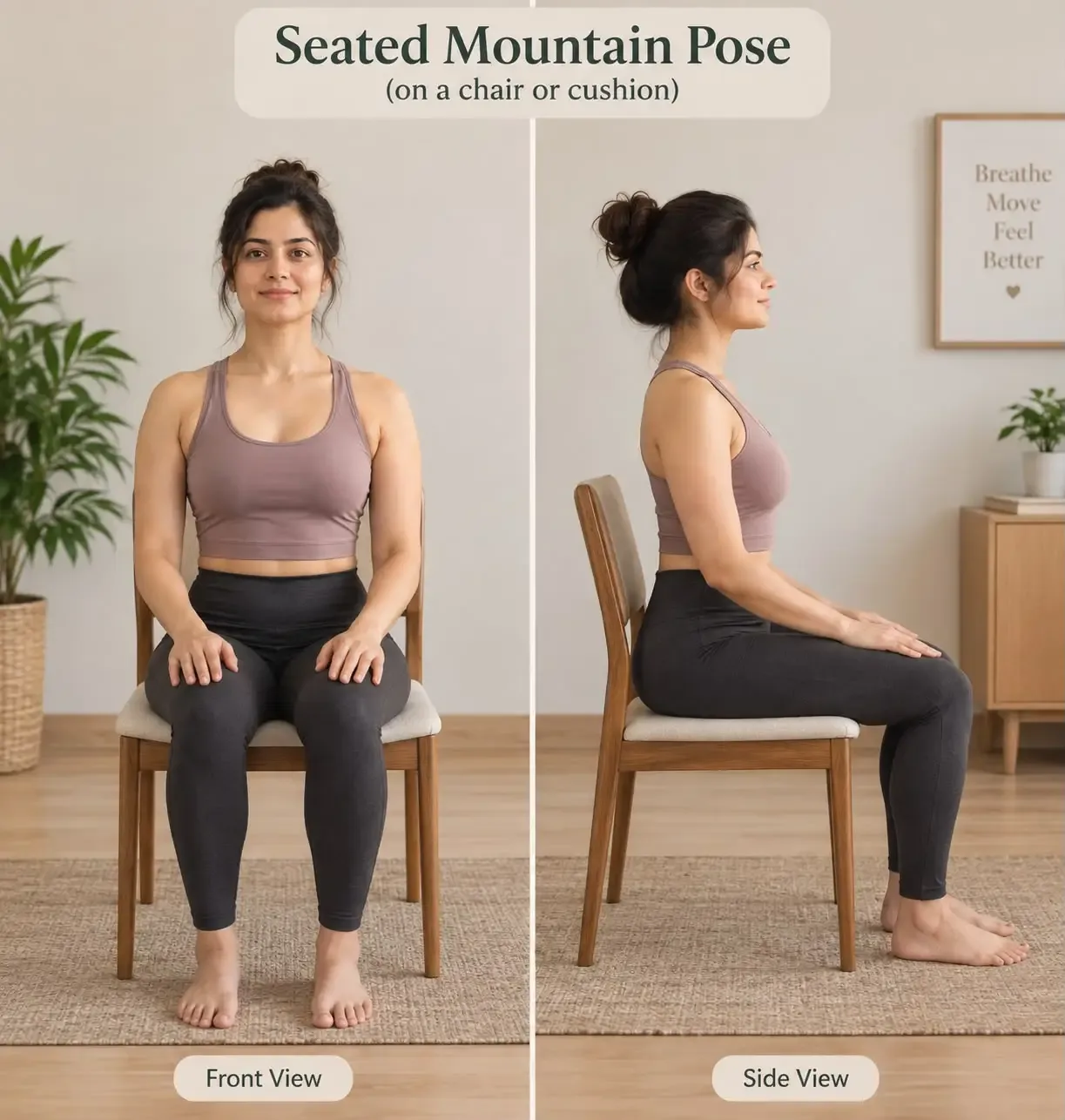
Sit tall on a sturdy chair or cushion, feet grounded, hands on thighs. Lengthen the spine, soften the shoulders, and take ten slow breaths, letting the exhale be long. This is where every arthritis-friendly practice begins: posture without joint load, plus the calm breathing that research suggests may help quiet pain's volume knob.
2. Cat–Cow (Marjaryasana–Bitilasana) — the spine's oil change
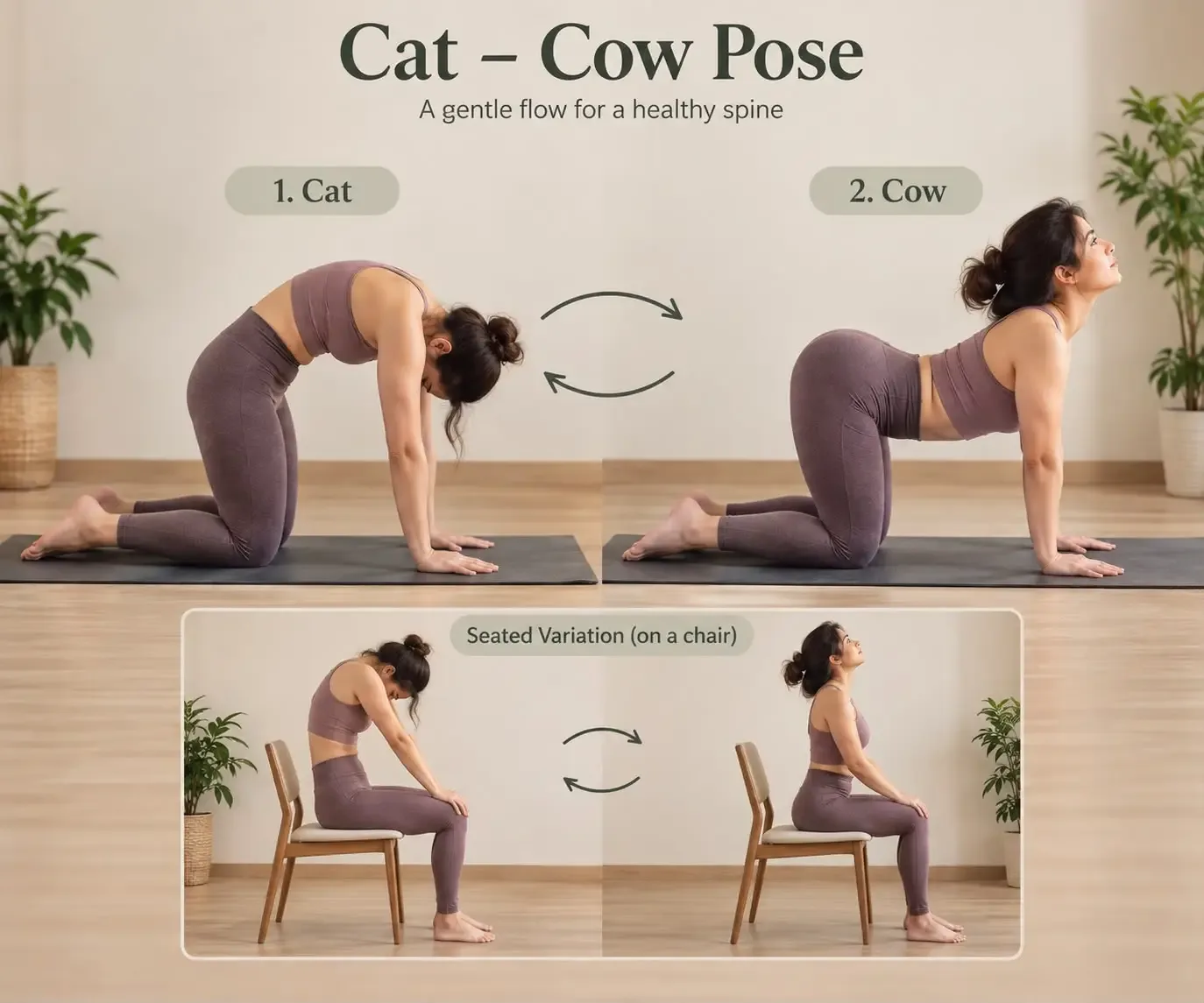
On hands and knees — with a folded blanket under the knees, and fists or forearms instead of flat palms if wrists complain. Inhale: lift chest and tailbone (Cow). Exhale: round the back, tuck the chin (Cat). Six to eight unhurried rounds. This gentle wave takes the spine, shoulders and hips through their range without holding any position long — exactly what stiff joints like. (Wrist or knee arthritis? Do the same movement seated on a chair, hands on knees.)
3. Supported Child's Pose (Balasana) — rest that stretches
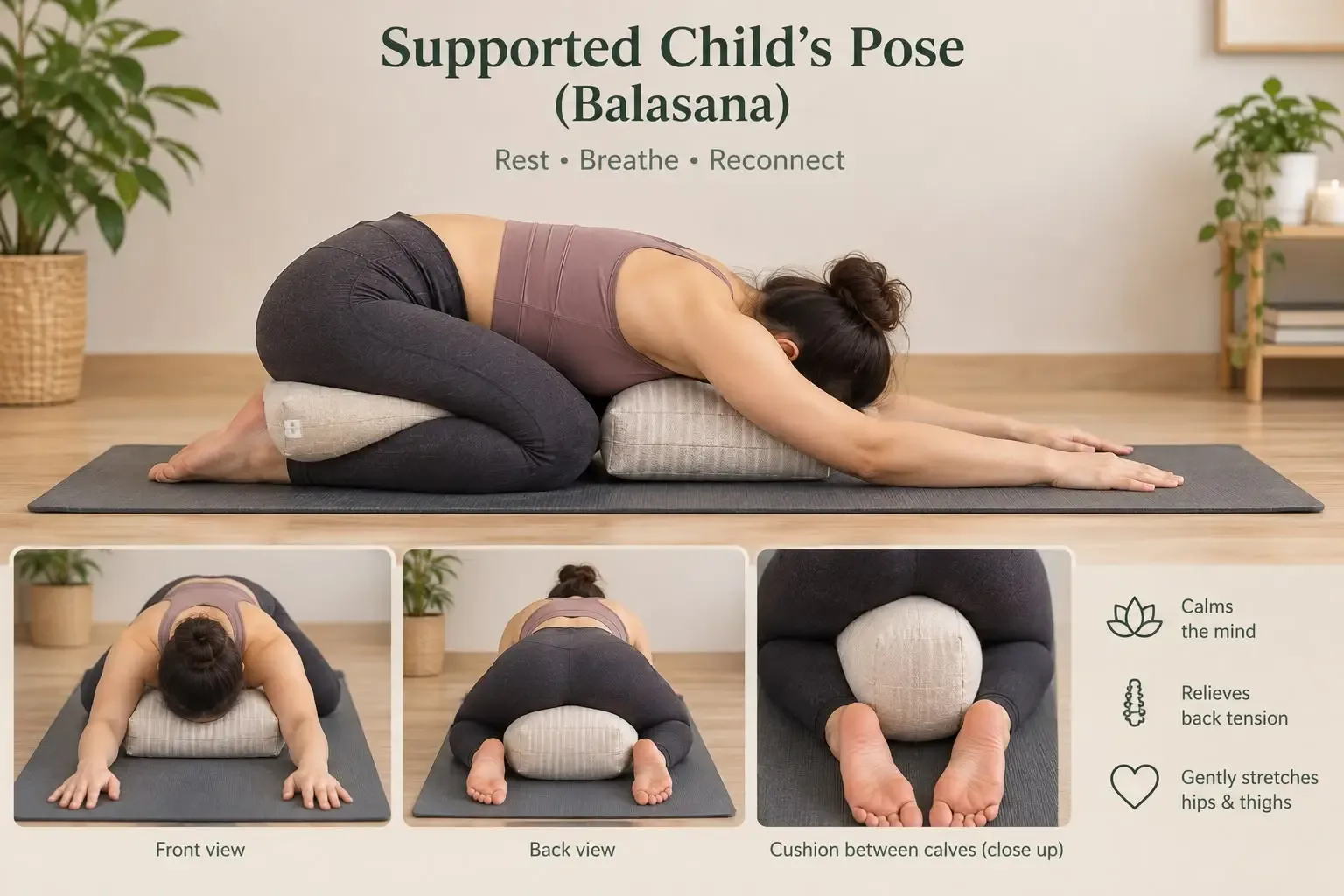
From kneeling, sit back toward your heels — with a cushion between calves and thighs if knees protest — and fold forward onto a bolster or stacked pillows, arms relaxed. Stay one to three minutes, breathing into the back. It gently eases hips and lower back while asking nothing of the joints. Skip or modify after knee replacement, and come out the moment knees object; a seated forward lean over a table gives the same rest.
4. Bridge Pose (Setu Bandhasana) — strength for the back line
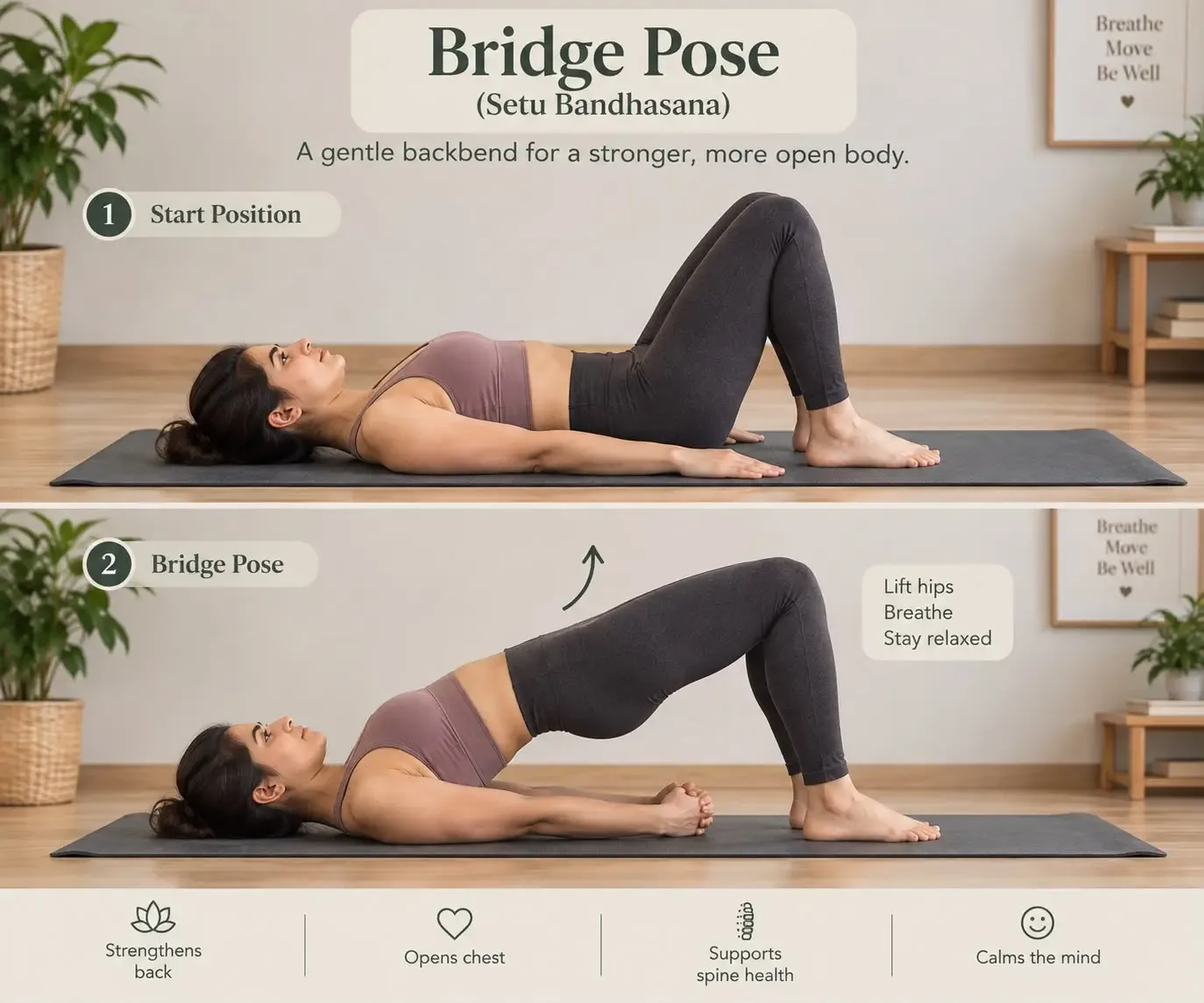
Lie on your back, knees bent, feet hip-width and close to the hips. Press through the feet and peel the hips up a comfortable few inches — height is irrelevant, the gentle work of the back, glutes and thighs is the point. Hold three to five breaths, lower slowly, repeat two or three times. Strong hips and glutes take daily load off knees and lower back, which is why this earns its place. Keep it small with neck issues; skip during an RA flare affecting hips or spine.
5. Warrior II (Virabhadrasana II), shortened — muscles guarding joints
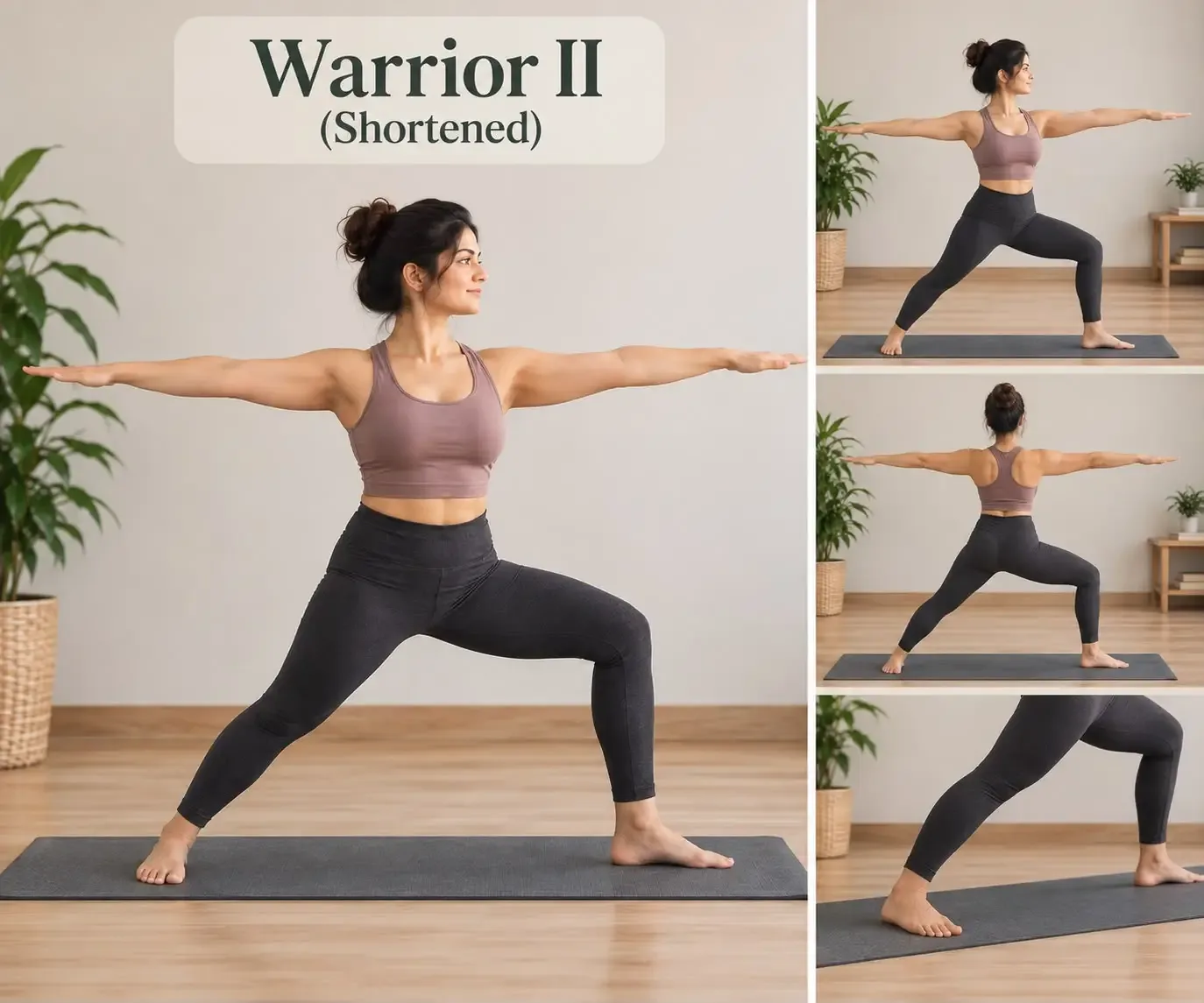
Stand with feet a modest stride apart (shorter than classic warrior), right foot turned out. Bend the right knee slightly — over the ankle, never past it — arms out at shoulder height, gaze over the front hand. Three to five breaths, then switch. Building thigh and hip strength is one of the most recommended strategies for knee osteoarthritis, and a shortened, shallow warrior delivers it without deep knee load. Hold a chair back with the front hand if balance is uncertain. More knee-specific guidance: yoga for knee pain.
6. Supported Tree Pose (Vrksasana) — balance insurance
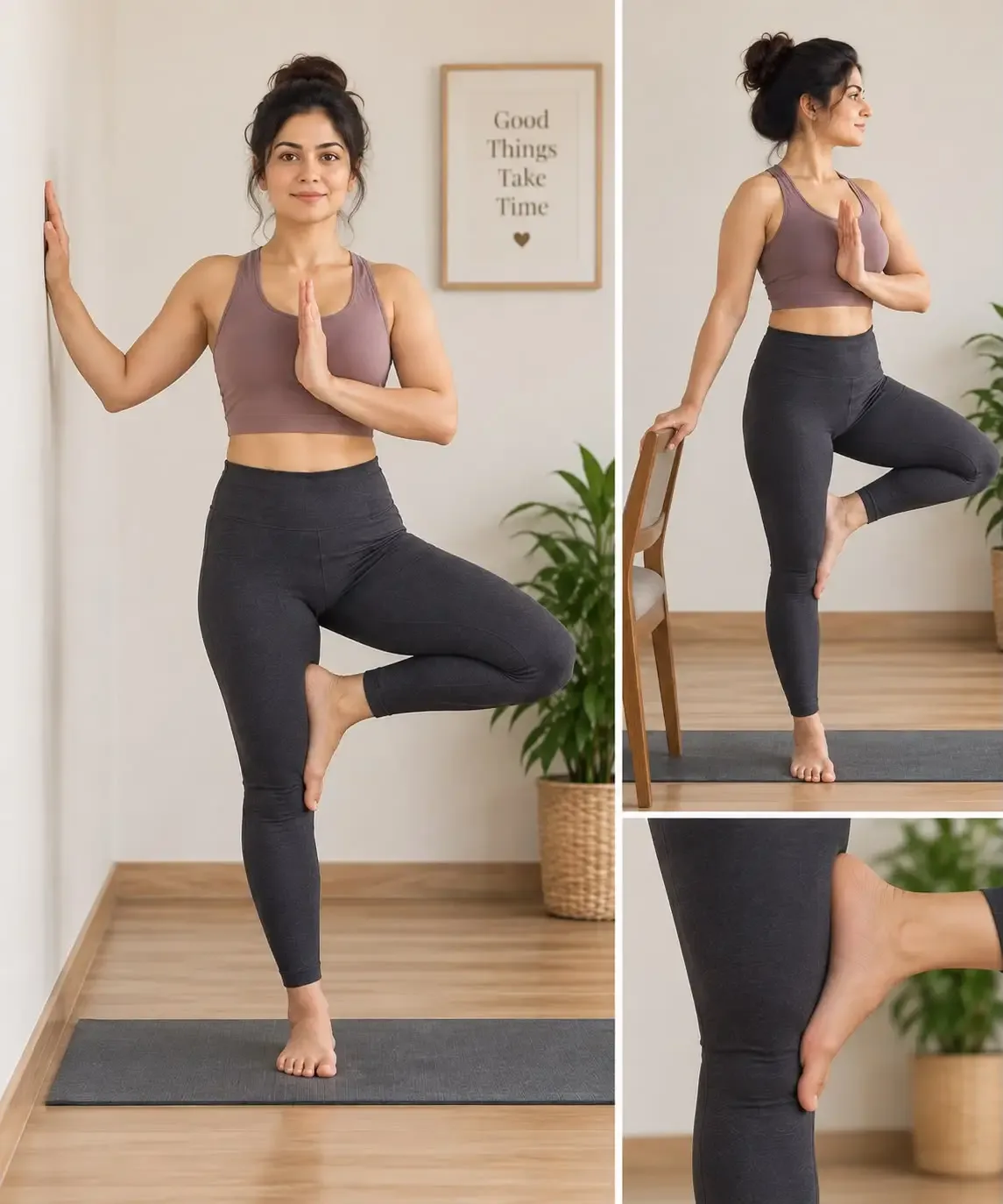
Stand beside a wall or chair, one hand resting on it. Place the sole of one foot on the opposite ankle or calf — never on the knee — and stand tall for three to five breaths, then switch. Arthritis quietly erodes balance confidence; this rebuilds it in a completely safe setup. Even toes-on-floor "kickstand" versions count fully.
7. Legs-Up-the-Wall (Viparita Karani) — the kindest pose in yoga
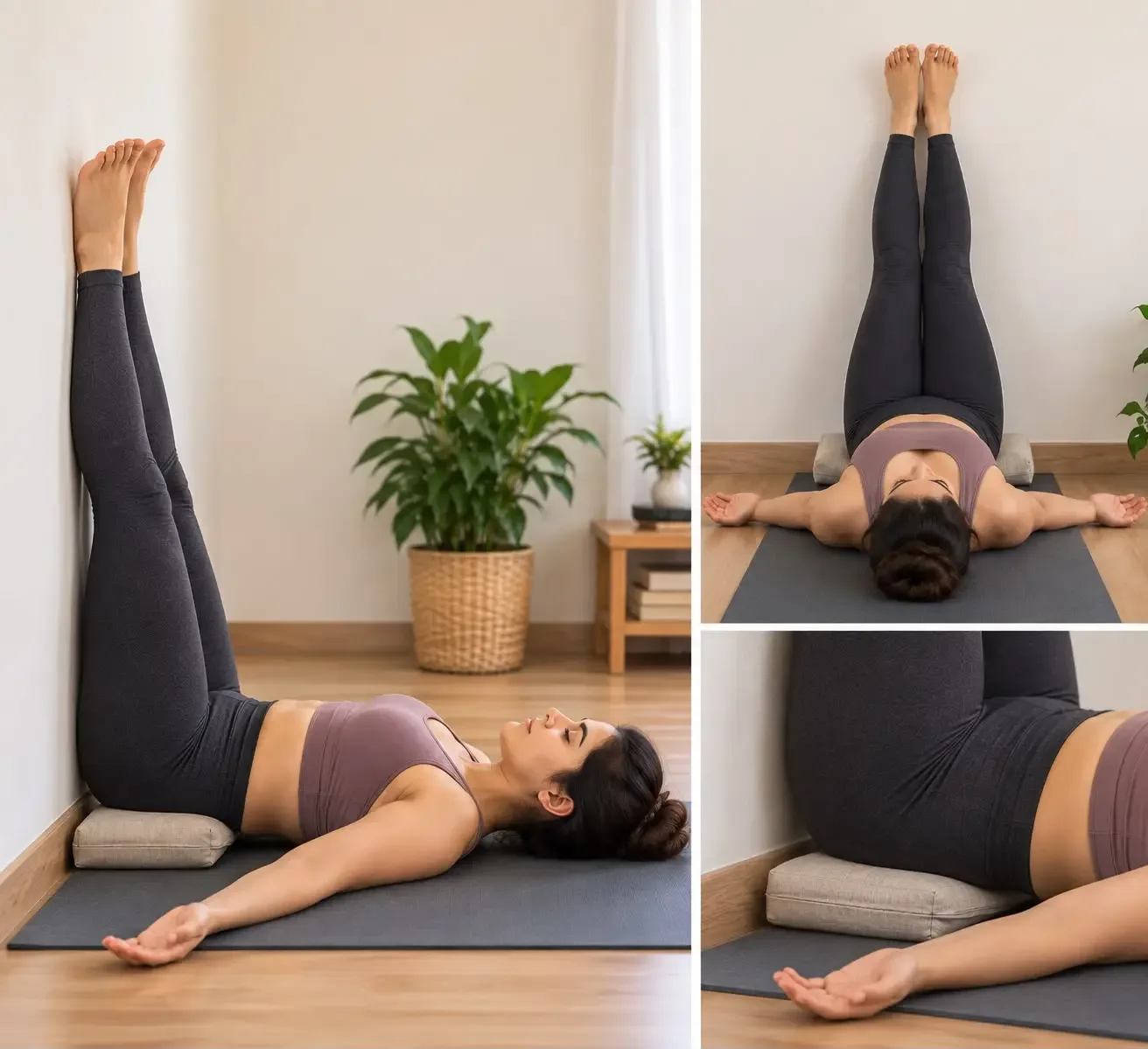
Sit sideways next to a wall, then swivel to rest your legs up it, hips on the floor or a flat cushion, arms relaxed. Stay five to ten minutes, breathing slowly. Zero joint load, gentle drainage for tired legs, and deep nervous-system rest — many students with painful joints call this the pose that makes the others possible. Come out slowly.
How often, and how much?
Little and often wins. Ten to twenty minutes most days — poses 1–3 every morning to ease stiffness, the full seven three or four times a week — beats a long weekly session that leaves joints sore. Track how joints feel four hours after practice, not just during: that delayed response is the honest report card, and the practice should leave you looser, not payback-sore.
If getting to the floor is the barrier rather than the poses themselves, our chair yoga guide adapts a full practice to sitting — and much of it is arthritis-friendly by design. For back-dominant pain, see yoga poses for back pain.
A tip from our teaching hall: students with arthritis often apologise for their modifications, as if the propped version were a lesser practice. It's the opposite — matching the pose to today's joints is the most advanced skill in the room.
Frequently asked questions
What type of yoga is best for arthritis?
Gentle, slow styles: hatha at a beginner pace, restorative yoga, chair yoga, and prop-supported alignment-focused classes. Avoid heated, fast-flowing or power styles unless your doctor and an experienced teacher agree you're ready. The best single marker of a suitable class is a teacher who offers modifications without being asked.
Is yoga good or bad for arthritis?
Adapted gentle yoga is generally considered good: research suggests it may reduce pain and stiffness and improve function. Aggressive practice on damaged or flaring joints is bad. The style, pace and teacher make the difference — see the safety rules above.
What are the 5 best exercises for arthritis?
Most arthritis guidance recommends a mix of: gentle range-of-motion work, muscle strengthening, low-impact aerobic activity (walking, swimming, cycling), balance training, and stretching. A gentle yoga practice like the one on this page conveniently touches four of the five — add a daily walk and you've covered the set.
What is the best remedy for arthritis pain?
There is no single best remedy — anyone selling one is overselling. Arthritis pain is usually best managed by combining your doctor's medical care with regular gentle movement, weight management where relevant, heat and cold, good sleep, and stress reduction. Yoga may be a useful piece of that combination; it is not the whole answer, and it never replaces medical treatment.
Can yoga replace my arthritis medication?
No. Never adjust or stop arthritis medication — especially RA disease-modifying drugs — without your doctor. Yoga sits alongside treatment, not in place of it.
If your joints need more than a home routine
For some people, ten minutes at home is enough. Others reach a point where they want their movement, rest and recovery guided by professionals for a while. If that's you, our Pain Management Yoga Retreat in Rishikesh is built consultation-first: your stay begins with an assessment by our Ayurvedic doctor, who designs a personal plan of therapeutic yoga, breathwork and only the Ayurvedic treatments your body actually needs — prescribed individually, never sold as a package. One full-body massage is included, rooms are private, and you can start on any date. If you have diagnosed arthritis, bring your medical records and your doctor's advice — that's exactly the information a good personal plan is built on. Questions first? Message us on WhatsApp; a real person answers.
This article is for general education and is not medical advice. Please consult a qualified healthcare professional about your individual situation.
References
National Center for Complementary and Integrative Health (NCCIH) — Yoga: Effectiveness and Safety. (verify exact URL at publish)
Arthritis Foundation — guidance on yoga and low-impact exercise for arthritis. (verify exact URL at publish)
Johns Hopkins Arthritis Center — research program on yoga for people with arthritis (studies in OA and RA). (verify exact citation at publish — no statistics quoted in this article)
NHS — Exercise advice for arthritis / musculoskeletal conditions. (verify exact URL at publish)
Reviewed for health accuracy by Dr. Bhupinder Singh Arora (M.D. Ayurveda), consulting Ayurvedic physician at Pure Soul Yoga School. This article is educational and not a substitute for personal medical advice.
Author note (byline): Gangesha Adi has taught gentle and therapeutic yoga for over a decade at Pure Soul Yoga School in Rishikesh, where adapted practice for stiff and painful joints is part of the healthy-aging and pain-management programs he leads with Dr. Arora's team.