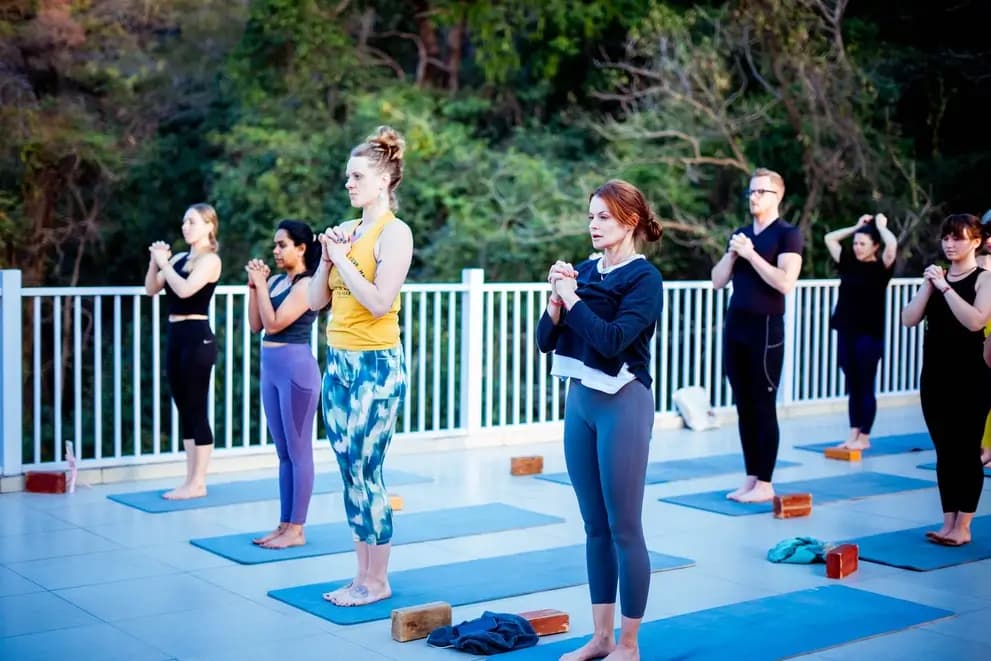
Yoga for Depression: A Gentle Companion to Professional Care
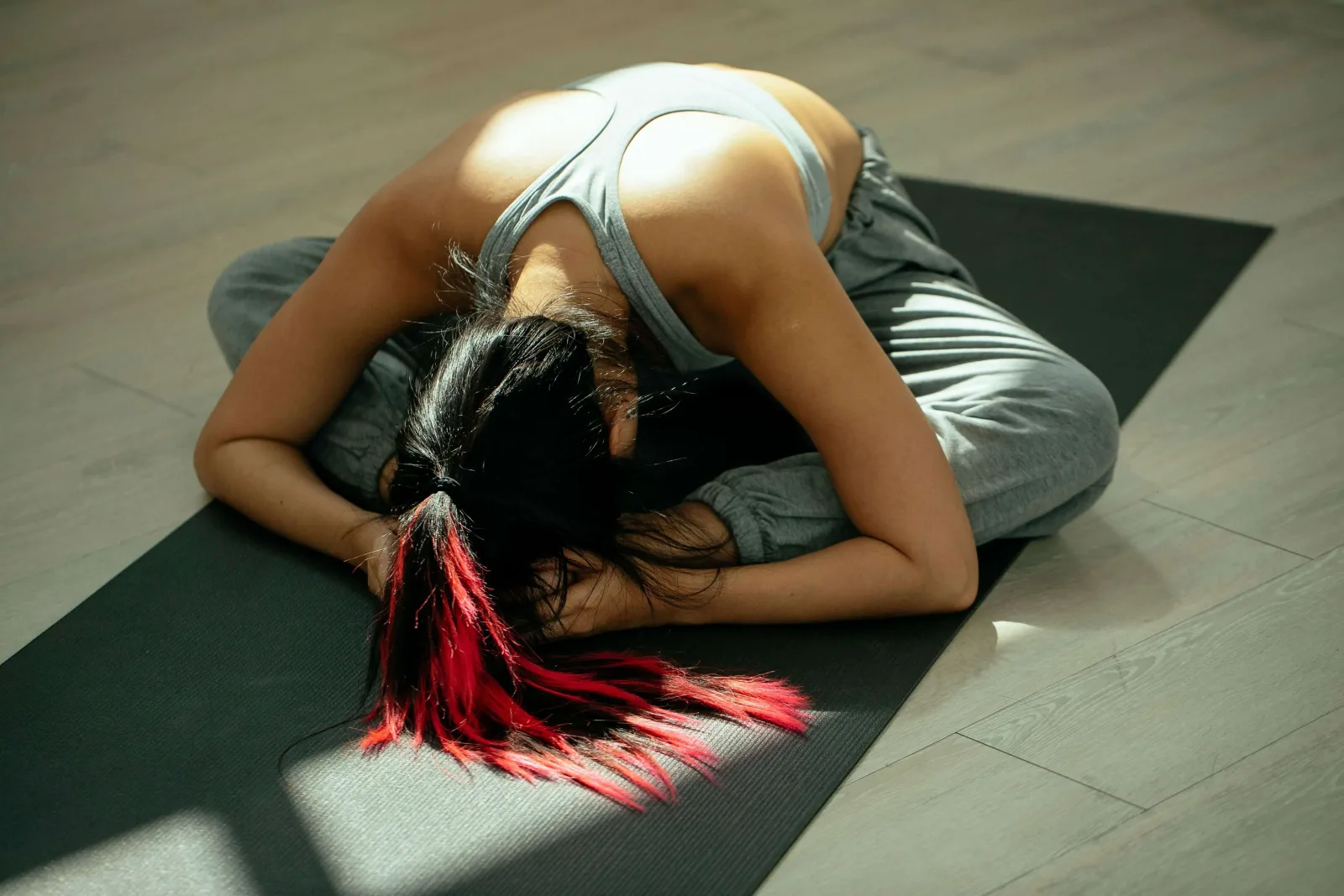
Can yoga help with depression? Research suggests it may — as a complement. Studies of people with depression report that adding gentle yoga to their care was associated with reduced symptoms, and mental-health bodies increasingly recognise movement-based practices as useful supportive tools. But let us say the most important thing first: yoga belongs alongside, never instead of, professional care. Depression is a real medical condition, and therapy and medication remain the treatments with the strongest evidence. If you take one sentence from this page, take that one.
If you are having thoughts of harming yourself, please treat that as an emergency, not a yoga question. In the US, call or text 988 (Suicide & Crisis Lifeline). Outside the US, contact your local crisis line or emergency number. This article can wait — support comes first.
With that said plainly, here is what we can honestly offer: why gentle movement seems to help low mood, six practices built for days when energy is scarce, and clear guidance on when to seek help.
This article is for general education and is not medical advice. Please consult a qualified healthcare professional about your individual situation — especially before adding yoga alongside any existing treatment, and never change or stop prescribed medication without your doctor.
How might yoga help with depression?
Depression often shows up in the body as a system running under-powered: heavy limbs, flattened energy, disturbed sleep, a mind looping on the same dark thoughts. Where anxiety usually calls for calming an over-activated system, depression more often calls for the opposite — gently, kindly re-activating an under-activated one. That difference shapes everything on this page.
Researchers point to a few plausible, still-being-studied mechanisms. Movement itself is the best-established: physical activity is consistently associated with reduced depressive symptoms, and yoga is a form of movement gentle enough to be possible on hard days — which matters, because "possible" beats "optimal" when energy is gone. Yoga may also improve sleep, and sleep and mood lean on each other heavily. And practice interrupts rumination: attention anchored in breath and sensation gives the looping mind somewhere else to stand, even briefly.
Behaviour scientists would add one more: what therapists call behavioral activation — doing one small structured thing even when motivation is absent, because action tends to precede motivation in depression, not follow it. A short daily yoga practice is behavioral activation with a mat under it.
The honest summary of the evidence: reviews and meta-analyses suggest yoga may meaningfully reduce depressive symptoms, particularly as an add-on to standard care — but studies are mixed in quality, effects are moderate, and no reputable body recommends yoga as a stand-alone treatment. A companion, not a cure.
One important note before the practices: if what you're feeling is more racing worry than heaviness, our yoga for anxiety guide is built for that over-activated state; if it's deadline overload and tension rather than persistent low mood, start with yoga for stress relief. The three conditions overlap in life but call for different practices, so we keep the three guides distinct.
6 gentle practices for low-energy days
Designed around depression's real obstacles: no energy, no motivation, and a harsh inner critic. Every practice below has a "smallest possible version" — on the hardest days, the smallest version counts fully.
1. The two-minute start
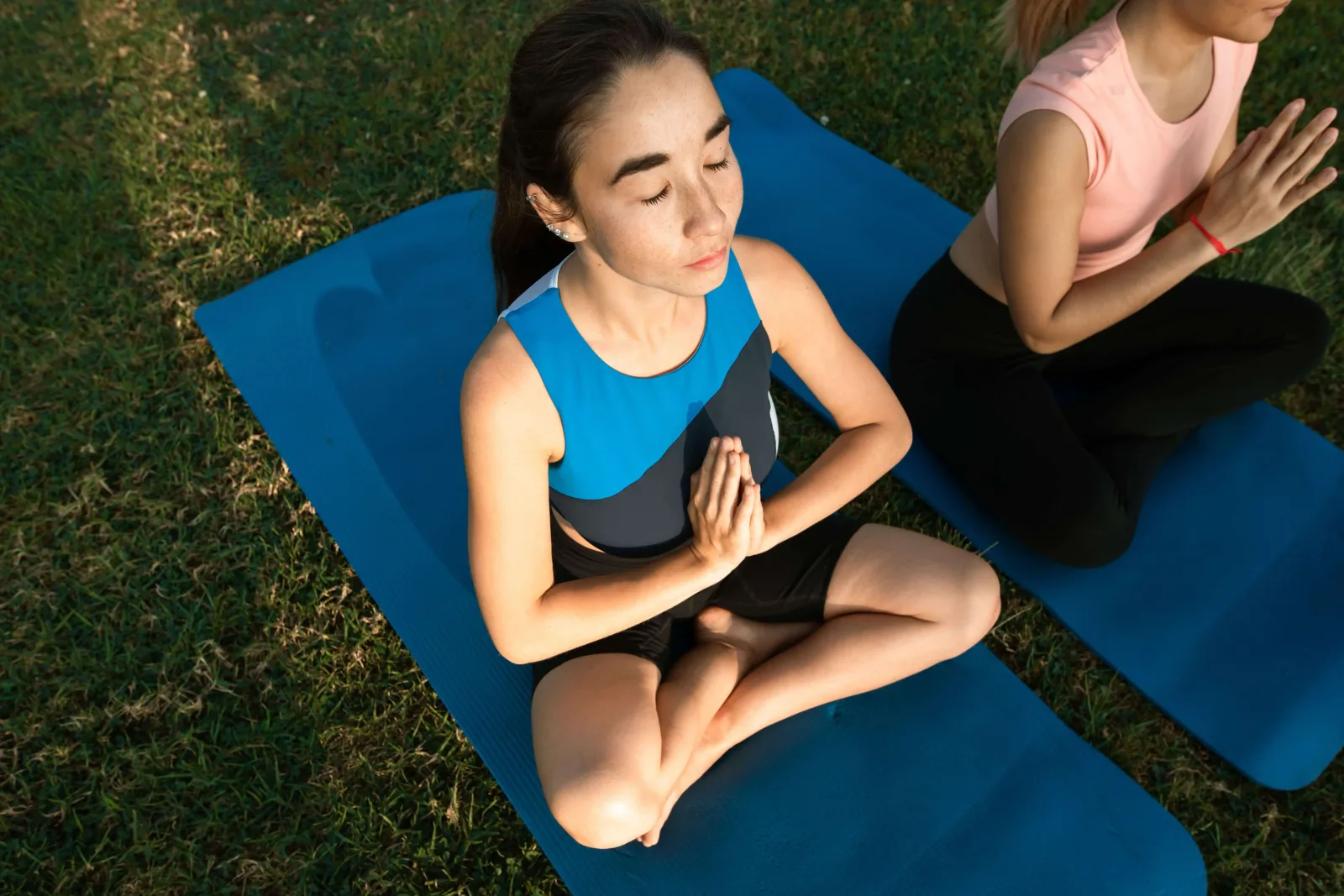
Unroll your mat. Sit or lie on it for two minutes, breathing naturally. That's the whole practice, and it is allowed to be the whole practice.
Why it earns its place: with depression, the hardest pose is arriving. A two-minute commitment is small enough to keep on the worst days, and it protects the habit — which research on behaviour change suggests matters more than any single session. Most days, once you're on the mat, a little more happens by itself. When it doesn't, two minutes was still a kept promise to yourself.
2. Cat–Cow (Marjaryasana–Bitilasana)
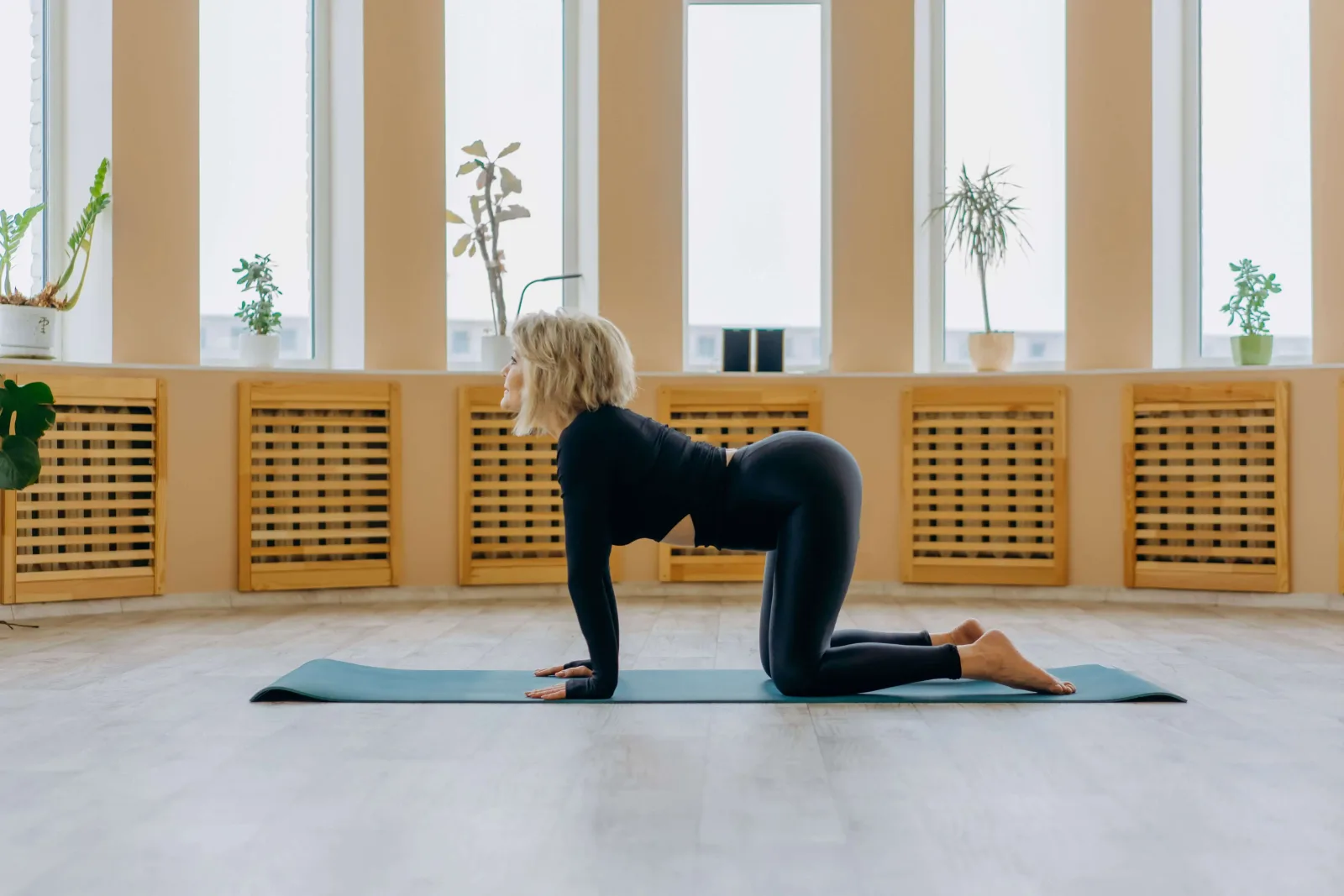
On hands and knees, inhale to lift the chest and tailbone; exhale to round the spine and tuck the chin. Six to eight slow rounds, breath setting the pace. Smallest version: do it seated on the edge of the bed, hands on knees.
Why it earns its place: it asks almost nothing and gives the body its first gentle movement of the day — spine waking, breath deepening. For heavy-limbed mornings, this is the kindest possible door into motion.
3. Half-pace Sun Salutations
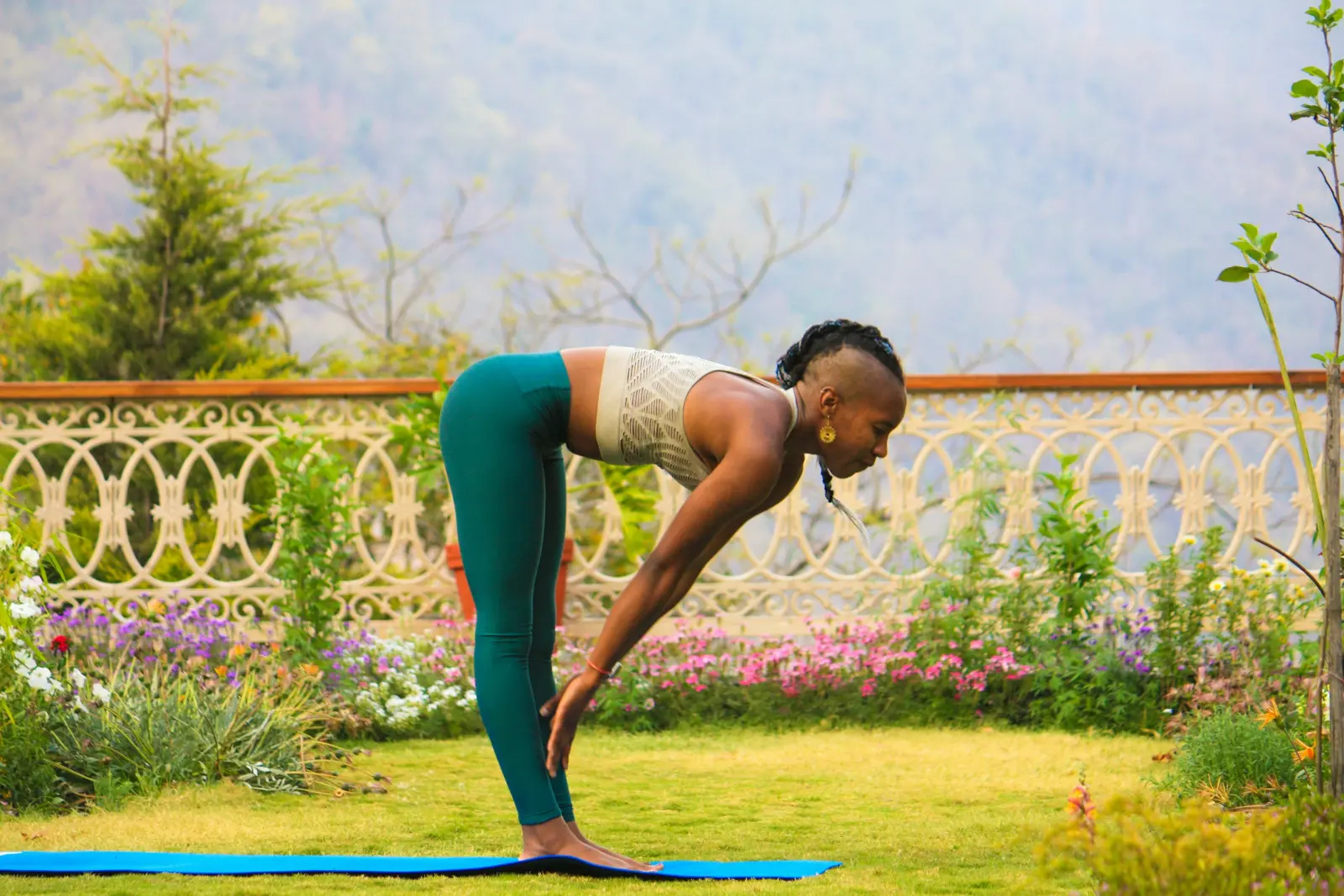
Two or three rounds of the classic sequence at half your normal speed, stepping (never jumping) between positions, resting in a forward fold whenever you like. Smallest version: just the arm-sweep — inhale arms overhead, exhale hands to heart, five times, standing by a window with daylight on your face.
Why it earns its place: depression's inertia responds to rhythmic, repetitive, slightly-warming movement — enough to lift heart rate and energy a notch without demanding what you don't have. Morning practice near natural light stacks two mood supports at once. The full sequence lives in our Surya Namaskar guide.
4. Supported Bridge (Setu Bandhasana, with a cushion)
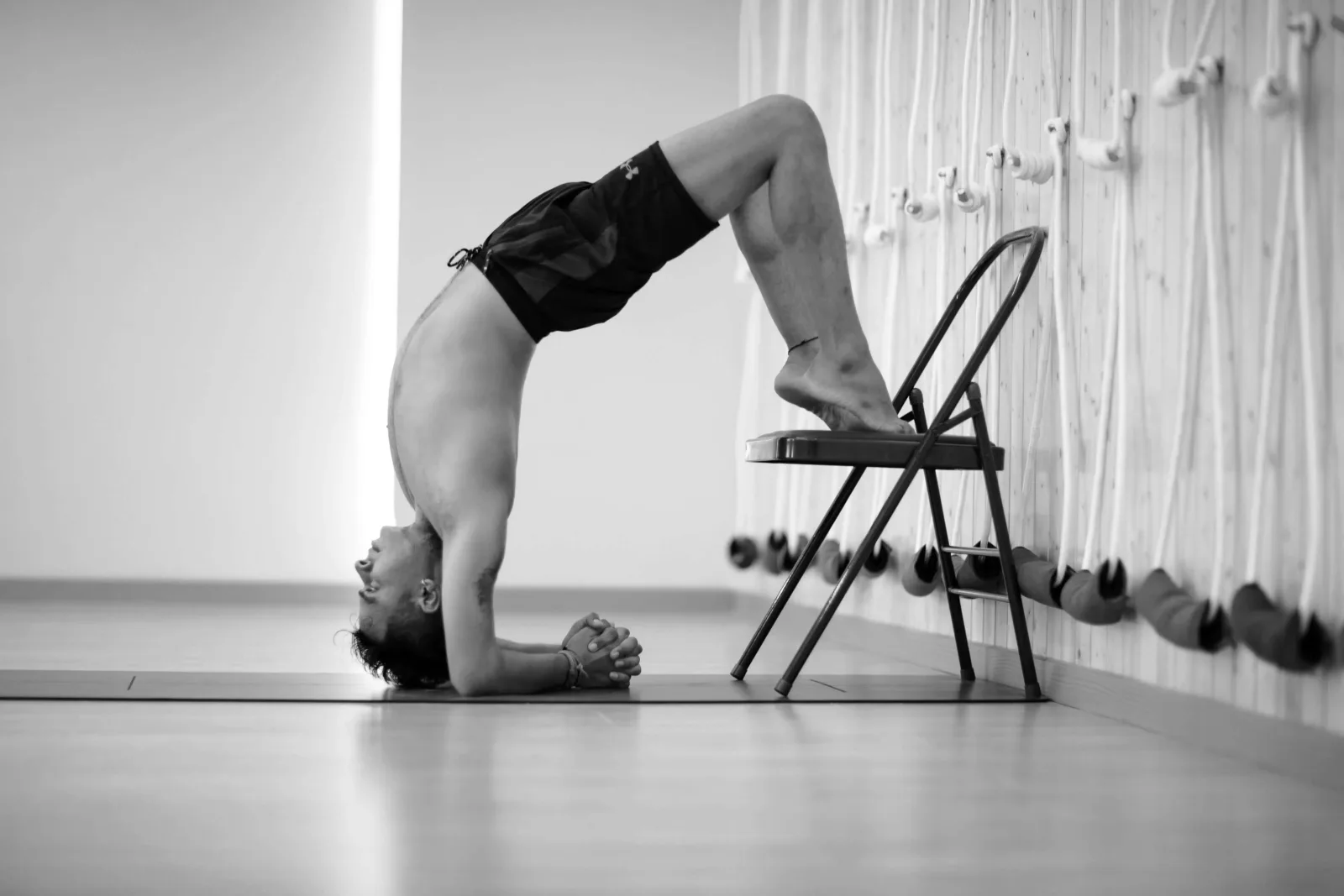
Lie on your back, knees bent, feet flat. Lift the hips and slide a firm cushion or block under the pelvis, then rest there — supported, effortless — for one to two minutes, chest open, breath easy.
Why it earns its place: depression tends to fold posture inward — shoulders curled, chest closed. Traditional teaching holds that heart-opening postures lift mood; the modern, hedged version is that gently reversing a collapsed posture often shifts how people report feeling, and the supported version delivers it without effort. Either way, it feels like the opposite of the day's slump, which is sometimes exactly enough.
5. Legs-Up-the-Wall (Viparita Karani)
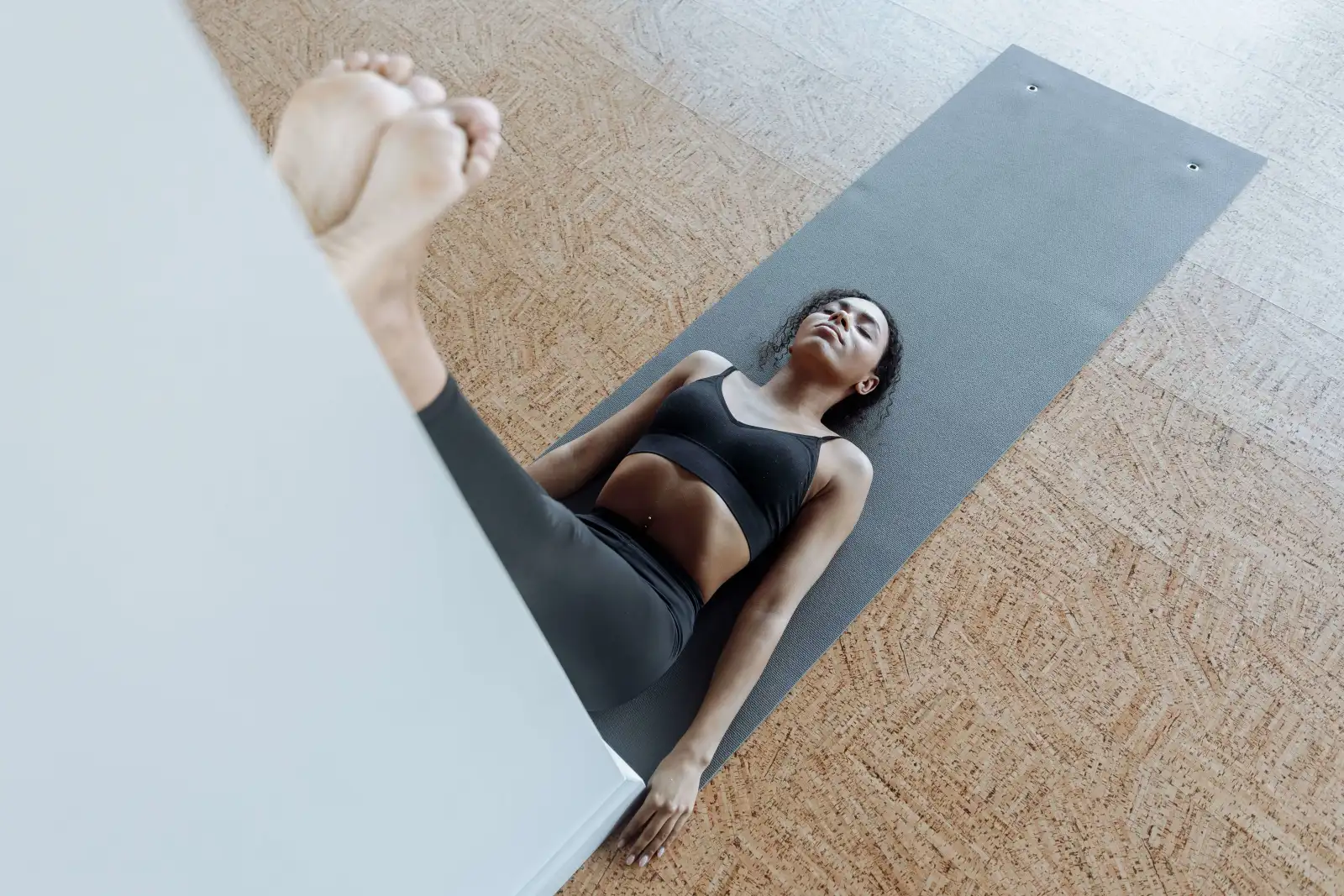
Lie on your back with your legs resting up a wall, arms open, for three to five minutes in the evening. Smallest version: calves on the sofa seat instead of a wall.
Why it earns its place: disturbed sleep and depression feed each other, and this pose is the most effortless wind-down in yoga — no strength, no flexibility, no decisions. Practiced before bed, it may help the body shift toward rest, protecting the sleep your mood depends on.
6. Guided rest: Yoga Nidra, or supported Savasana
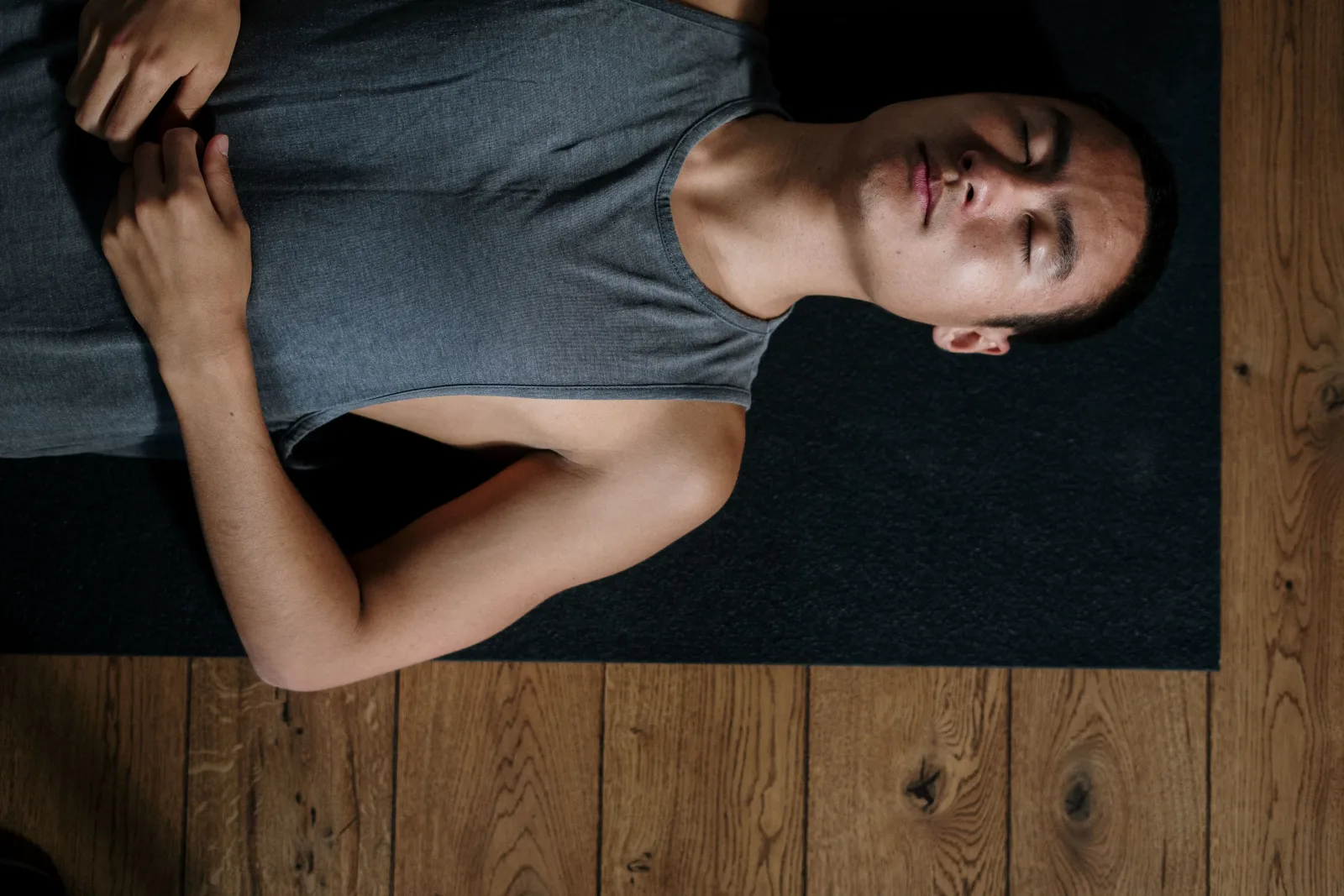
Lie down, cover yourself with a blanket, and follow a guided Yoga Nidra recording — a systematic, voice-led relaxation — or simply rest for five minutes. If silent stillness invites rumination, choose the guided version: the voice gives the mind a handrail.
Why it earns its place: deliberate, structured rest is different from the exhausted collapse depression already knows — one restores, the other numbs. Guided practice matters here: with a ruminative mind, unguided silence can turn into a rehearsal of dark thoughts, which is also why we suggest starting meditation with short, guided forms — our meditation techniques for beginners guide explains how.
A tip from our teaching hall: if you can, practice with other people sometimes — a gentle local class, a friend on the next mat. Depression isolates, and a class is a small, structured reason to be around humans with no pressure to talk. Students often tell us the room mattered as much as the poses.
When to seek help — please read this section
Yoga is a companion. These signs mean it's time for professional care, alongside whatever you practice:
Low mood, emptiness or loss of interest in things you used to enjoy, lasting more than two weeks
Changes in sleep, appetite or energy that persist
Difficulty functioning at work, in study, or in relationships
Withdrawing from people you're usually close to
Feelings of worthlessness or excessive guilt
Using alcohol or other substances to cope
Any thoughts of death, self-harm or suicide — seek help immediately: in the US, call or text 988; elsewhere, contact your local crisis line or emergency number. If you are in immediate danger, call your local emergency services.
Depression is common and treatable, and seeking help is an act of strength, not a failure of practice. Start with a doctor or a mental-health professional; effective treatments include talking therapies and medication, and most people find a combination that works. If you're already in treatment, tell your clinician you're adding yoga — it is almost always welcomed as a complement, and they can flag anything to adapt.
Frequently asked questions
How do you get out of a major depressive episode?
With professional support — a major depressive episode is a medical situation, and the evidence-based paths out run through a doctor or mental-health professional: therapy, medication, or both, tailored to you. Self-care practices like gentle yoga, daylight, small routines and contact with people can genuinely support that treatment, but they are the scaffolding around it, not the treatment itself. If you're in an episode now, the single most useful step is booking the appointment.
What is the best therapy for depression?
There's no universal "best" — but cognitive behavioural therapy (CBT) has the largest evidence base, and other approaches such as interpersonal therapy and behavioural activation are also well supported. Medication helps many people, particularly with moderate to severe depression. The right combination is genuinely individual, which is why this question deserves a clinician's answer rather than an article's.
Is yoga better than antidepressants?
No — and please be wary of anything that claims so. Yoga and antidepressants aren't competitors: medication is an evidence-based medical treatment; yoga is a supportive practice studied mainly as an add-on to care. The research does not support replacing prescribed treatment with yoga, and stopping antidepressants without medical guidance can be harmful. If you have concerns about your medication, that conversation belongs with your doctor — never with a yoga article.
How do you get out of a depression slump?
For an everyday slump — low, flat, stuck, but still functioning — small activating steps help most: get up at a consistent time, get daylight early, move gently (practices 1–3 above are built for exactly this), eat something real, and make contact with one person. Action before motivation, tiny and repeatable. If the slump stretches past two weeks, or deepens, treat it as the section above: time to talk to a professional.
Can yoga help with depression at all, then?
Yes — honestly, modestly, and in company. Research suggests regular gentle practice may reduce depressive symptoms, support sleep and rebuild a sense of daily structure, especially alongside standard treatment. What it can't do is substitute for care. The most truthful sentence we can offer: yoga helps many people feel more able to do the things that help.
A protected place to rest and rebuild
Some people, once they're supported and steady, want a stretch of time given wholly to gentle practice and rest. Our Healing Retreat in Rishikesh is a quiet, consultation-first program — you begin with a doctor's consultation, days move gently between practice, rest and nourishing food, and nothing is pushed. We want to be direct: it is not a treatment for depression, and we will never present it as one. If you are currently in treatment, please involve your clinician in any decision about travel or retreats. For some people, at the right moment and with the right support in place, a protected pause is a meaningful part of rebuilding — and questions are always welcome, with a real human answering, on WhatsApp.
References
National Center for Complementary and Integrative Health (NCCIH) — Yoga: What You Need To Know (mental-health research summary).
Cramer H. et al. — systematic review and meta-analysis of yoga for depression.
American Psychological Association (APA) — reporting on yoga as an adjunctive approach for depressive symptoms.
National Institute of Mental Health (NIMH) — Depression: signs, symptoms, and treatment.
988 Suicide & Crisis Lifeline (US) — crisis support by call or text.
Reviewed for health accuracy by Dr. Bhupinder Singh Arora (M.D. Ayurveda), consulting Ayurvedic physician at Pure Soul Yoga School. This article is educational and not a substitute for personal medical or mental-health advice. If you are in crisis, please contact 988 (US) or your local crisis line now.
Author note (byline): Gangesha Adi (E-RYT 500) leads the teaching team at Pure Soul Yoga School in Rishikesh, where gentle practice and evening Yoga Nidra close the day for students of 50+ nationalities — including many who first came to the mat during a difficult season of life.