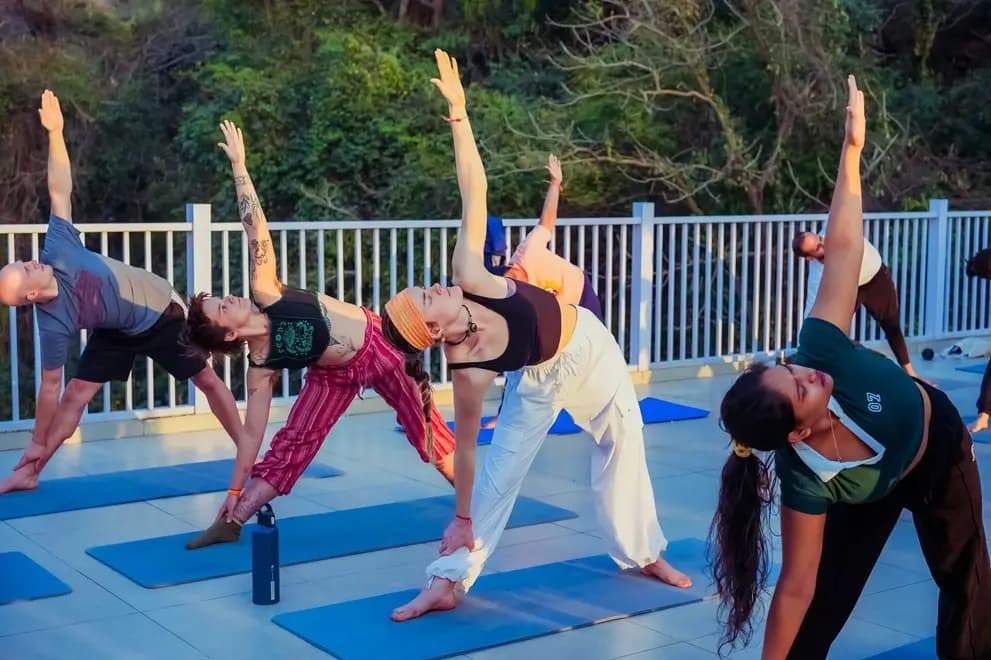
To become a certified yoga teacher, you complete a teacher training course, almost always a 200-hour program, at a yoga school, and the school awards you a certificate. If that school is a Registered Yoga School (RYS) with Yoga Alliance, you can then register yourself as an RYT 200 (Registered Yoga Teacher), the credential most studios worldwide recognise. The whole path typically takes a few months to a year: building a steady personal practice, choosing a style, completing the 200 hours, registering, and teaching your first classes.
That's the short answer. The longer answer, the one we give students who write to us every week asking "where do I even start?", is below: seven honest steps, what each one really involves, what it costs, and the parts most articles gloss over.
What "Certified Yoga Teacher" Actually Means?
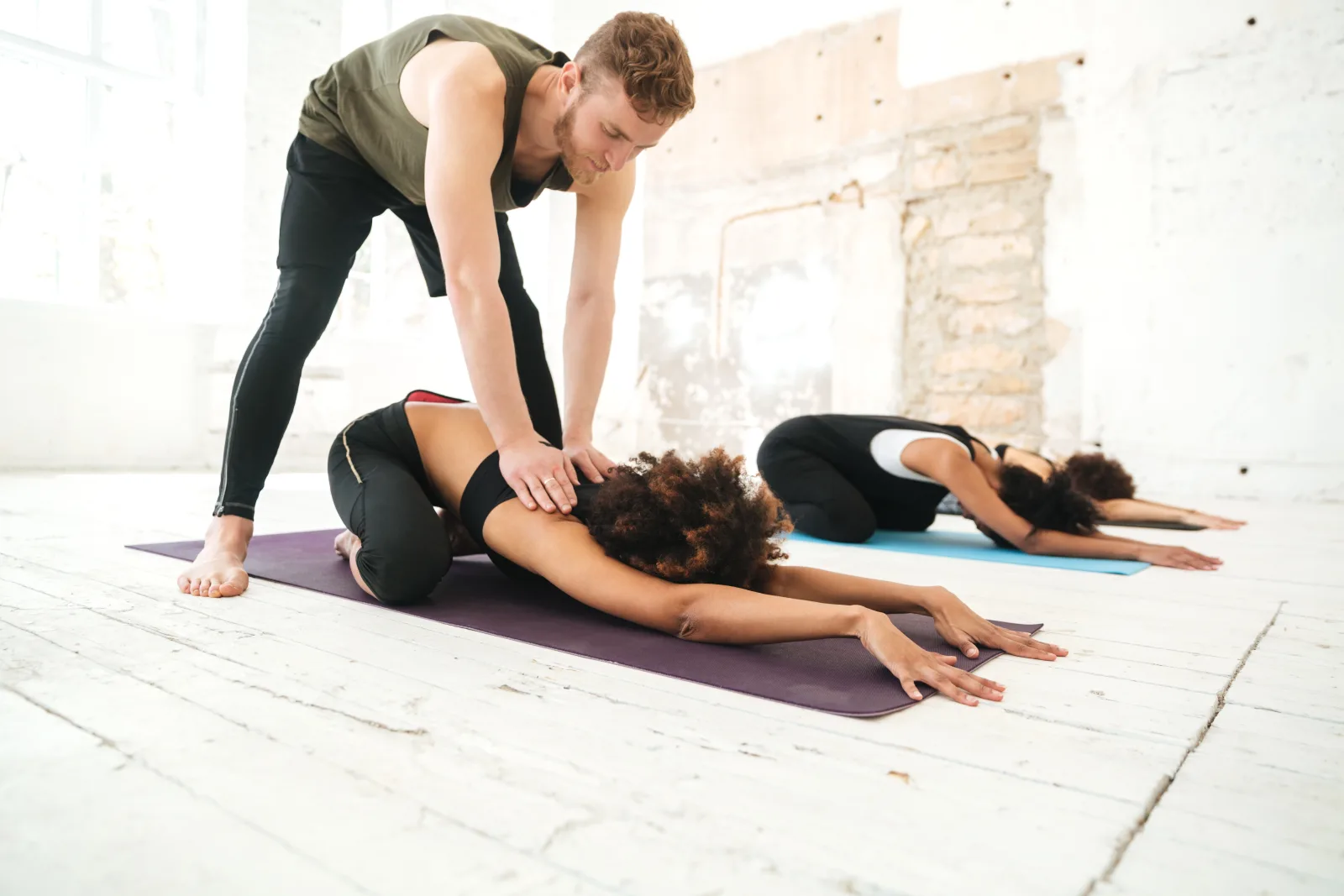
Before the steps, one piece of clarity that will save you confusion for the rest of your research, because the yoga world uses two words loosely that mean different things.
Certification comes from a school. When you complete a teacher training, the school that trained you issues your certificate. That certificate is what makes you a "certified yoga teacher." No government body certifies yoga teachers in most countries; the yoga school does.
Registration comes from Yoga Alliance. Yoga Alliance is a nonprofit registry, not a certifying body; it never certifies anyone, and a school that tells you otherwise is being careless with the facts. What Yoga Alliance does is register schools whose curriculum meets its standards (those schools are called RYS — Registered Yoga Schools) and register individuals who have completed a training at an RYS (those teachers are called RYT — Registered Yoga Teachers).
So the sequence is: an RYS trains and certifies you → you then apply to Yoga Alliance to register as an RYT. When people search for "Yoga Alliance certification," what they actually want is this: a certificate from an RYS, followed by RYT registration. The distinction sounds pedantic until you're comparing schools — then it becomes the single most useful filter you have, because any school can print a certificate, but only a registered school can make you eligible for the credential studios look for.
Is registration legally required to teach? No — in most of the world, anyone can legally teach yoga. But many studios, gyms and insurers ask for RYT status or an equivalent recognised certificate, and if you ever want to teach internationally or online to a global audience, the RYT credential is the closest thing yoga has to a common language.
Now, the path.
Step 1: Build a Steady Personal Practice
Every list like this says "practice yoga first." Here's what that actually needs to mean, and what it doesn't.
It does not mean you need years on the mat, a pretzel-flexible body, or a handstand. We say this from experience: some of the most natural teachers who train with us arrive with modest flexibility and less than two years of practice. Teaching is about seeing bodies, holding a room and communicating clearly, none of which live in your hamstrings.
It does mean a consistent, honest relationship with practice, ideally several sessions a week for six months or more before your training. Not because a school will test you at the door, but because 200 hours of training assumes you already know what a practice feels like from the inside. You'll be studying why poses work, how to sequence them, how to cue them; that lands far deeper when the poses themselves are familiar territory.
A useful self-check before you commit: can you practice attentively for an hour without checking the time? Do you notice your breath change in difficult poses? Are you curious about what's happening beyond the physical shapes? If yes, you're readier than most.
A tip from our teaching hall: Students often ask us, "Am I good enough at yoga to train as a teacher?" The question is understandable and almost always the wrong one. The better question is: "Am I curious enough to study yoga seriously for a month?" Flexibility develops on the course. Curiosity has to arrive with you.
Step 2: Choose the Style You Want To Teach
Your 200-hour certificate will be shaped by the style it's taught in, so it's worth deciding — at least loosely — what you want to stand in front of a class and teach.
The broad strokes: Hatha is the slower, foundational style and the most versatile base for a new teacher. Ashtanga is a set, athletic sequence with strong discipline built in. Vinyasa is flowing, breath-linked and dominant in Western studios. Yin is long-held, floor-based and quiet. There are many more; our guide to types of yoga styles walks through them properly.
Two honest pieces of advice here:
A multi-style foundation serves most new teachers best. Trainings that teach Hatha and Ashtanga together (as ours does) give you a traditional base you can later specialise from — toward vinyasa, yin, prenatal, or therapeutic work. Choosing a narrow specialty for your very first training closes doors it's too early to close.
Choose the style you actually practice, not the one that markets best. If your body and temperament love slow, deep work, a fast-flow training will make for a long month — and an unconvincing teaching voice afterwards.
Step 3: Choose a 200 Hour Training at a Registered School
This is the decision that shapes everything, so let's slow down here.
The 200-hour teacher training course (often written TTC or YTT) is the internationally recognised entry point into teaching. Formats vary, from residential intensives of three to four weeks, or part-time programs spread over weekends for several months, but the substance should cover asana technique, teaching methodology, anatomy and physiology, yoga philosophy and ethics, and supervised teaching practice.
Here's the checklist we'd give our own family members shopping for a training, including things to verify about us:
Before you pay a deposit, verify:
RYS status — check the directory yourself. Don't take a logo on a website as proof. Search the school's name in Yoga Alliance's public school directory. If you intend to register as an RYT afterwards, the school must appear there as an RYS. (Pure Soul Yoga School is registered as an RYS 200, RYS 300, and RYS 500, and yes, please look us up rather than taking this article's word for it.)
Named teachers with visible credentials. Who exactly will teach you, and what is their training and experience? Vague "our expert faculty" pages are a caution flag.
A real syllabus, hour by hour. You should be able to see how the 200 hours divide across practice, methodology, anatomy, philosophy, and practicum, not just a poetic paragraph about transformation.
Batch size. Twenty students or fewer means the teachers learn your body and can correct you personally. Fifty means you're watching from the back row. (We cap batches at 20 for exactly this reason.)
Reviews you can trace. Read recent reviews on independent platforms, not just the school's own site — and read the critical ones first; how a school shows up in its imperfect moments tells you more than its highlight reel.
What the fee includes. Residential trainings should be explicit about accommodation, meals, materials and certification. Surprise costs sour a sacred month.
A human you can talk to. Before enrolling anywhere, you should be able to ask questions and get answers from a real person — about food, safety, visas, the daily schedule. If pre-sale communication is poor, mid-course support will be worse.
One thing you can safely ignore: glossy Instagram feeds. Some excellent traditional schools photograph badly, and some hollow ones photograph beautifully.
Step 4: Complete Your Training
However good your research, the training itself will be different from what you imagined, usually harder in the ways you didn't expect and easier in the ways you feared.
What a residential 200-hour daily routine actually looks like: early mornings (herbal tea before sunrise, first practice by 6:40 at our school), a full day that moves between physical practice, philosophy, anatomy, teaching methodology and meditation, and lights-off early enough that the next 6 a.m. start is survivable. We've written an unvarnished hour-by-hour account of a day in the life at our school — read it, because a timetable tells you more truth than any brochure.
The genuinely demanding parts, in our students' own experience: the first week's adjustment (jet lag, early starts, physical volume), the vulnerability of teaching in front of peers for the first time, and the way a month of practice and philosophy quietly loosens things you had packed away. The parts people fear that turn out fine: not being flexible enough (nobody cares, least of all the teachers), not knowing Sanskrit (you'll learn what you need), being older than the others (see the FAQ below).
You'll finish with a practicum, teaching a class under observation, and, on completing all requirements, your school issues your certificate. That paper is your certification. If you're preparing for a training now, our guide on how to prepare for yoga teacher training covers the physical, mental, and practical groundwork.
Step 5: Register as an RYT 200 with Yoga Alliance
With a certificate from an RYS in hand, registration is straightforward:
Create an account on Yoga Alliance's website.
Apply as an RYT 200, selecting the school and the specific training you completed from the RYS directory.
Your school confirms your completion — Yoga Alliance verifies your training with the school, which is why the school's RYS status matters so much.
Pay the registration fee (there's an application fee plus an annual renewal — check Yoga Alliance's site for current rates, as they change).
You're an RYT 200 — you can use the designation, appear in the public teacher directory, and access member resources.
Should you register at all? Honest answer: it depends on where and how you want to teach. If you plan to teach at studios and gyms in North America, much of Europe, Australia, or online internationally, RYT status is frequently expected and simplifies insurance. If you plan to teach privately in a community where nobody asks — some teachers reasonably skip the annual fee. Our suggestion: register in your first year while doors are still opening, and reassess at renewal. Keeping the credential is easier than explaining its absence.
Step 6: Get Insured and Teach Your First Classes
Two practical moves, in this order.
Insurance first. Liability insurance for yoga teachers is inexpensive relative to what it protects you from, and many venues won't let you teach without it. Look for a policy that covers general liability and professional liability (sometimes both come bundled for teachers), and check whether it covers online teaching if that's part of your plan. We deliberately recommend no specific provider — the right policy depends entirely on your country — but do this before your first public class, not after.
Then start small and real. Your first classes will not be at a famous studio, and that's healthy. Community centres, donation-based classes, a weekly session for friends and colleagues, a free class in the park, online sessions for a handful of people — this is where certificates turn into teachers. The gap between "certified" and "confident" closes only one way: hours in front of real students.
We've written a full first-year roadmap on what to do after yoga teacher training — registration details, insurance, finding your niche, and how to build slowly without burning out.
Step 7: Keep Growing — The 300-Hour and RYT 500 Path
The 200-hour certificate is a beginning, and the honest schools say so plainly. After six months to a couple of years of teaching, many teachers reach the same point: the foundation is solid, the questions have gotten deeper, and the next level of study calls.
That next level is the 300-hour advanced training, taken at an RYS 300. Completing a 200-hour and a 300-hour training makes you eligible to apply for RYT 500 registration with Yoga Alliance — the senior teacher credential. (Yoga Alliance's application has its own requirements beyond the training hours, so check their current standards when you apply.) Some schools also run the two stages together as a combined 500-hour program.
There's no deadline on this. Some graduates return for their 300 hours within a year; some teach happily for years first. Our comparison of 100, 200, 300 and 500-hour trainings lays out who each level is for and what it changes.
How Long Does It Take To Become a Certified Yoga Teacher?
Realistic timelines, assuming you're starting from a modest but real practice:
The training itself: a residential intensive takes about a month (our 200-hour course runs 23 days); part-time weekend formats typically take three to six months.
The full path — building practice, researching schools, saving, training, registering: most people go from "decided" to "certified RYT 200" in six months to a year. Some compress it to three months; there's no prize for speed.
From certified to confident: budget a further six to twelve months of regular teaching before you feel at home in front of a class. Every teacher we know says the real training starts after the certificate.
Training in India vs Your Home Country
We run trainings in Rishikesh, so read this section knowing where we stand — and notice that we'll still tell you when home is the better choice.
Residential training in India | Part-time training at home | |
|---|---|---|
Format | Immersive: live, practice, study and eat at the school for ~1 month | Weekends/evenings over 3–6 months, alongside normal life |
Immersion | Total — daily rhythm, philosophy and practice reinforce each other without interruption | Interrupted by work and routine, but learning integrates into your real daily life as you go |
Cost picture | Typically lower overall; residential fees usually include room and meals (our 200-hour course is $1,200 shared / $1,350 private room including 23 days' accommodation, three vegetarian meals daily, materials and certification) — plus your flight and visa | Tuition varies widely by city and studio; accommodation and meals don't apply since you live at home, but tuition alone often exceeds an all-inclusive residential fee |
Context | Yoga studied in its birthplace, with philosophy and tradition treated as the core, not a garnish | Training in the studio culture you'll likely teach in, with local networking built in |
Requires | A month away from work and family; comfort with travel, Indian food, and simpler living | Discipline to sustain momentum across months; a good local school within reach |
Choose it if | You can take the month, want depth and tradition, and the total budget matters | You can't leave home for a month, or your goal is to teach at specific local studios where the training school's network helps |
The honest summary: neither is universally better. A month in Rishikesh gives depth, tradition and — for most international students — a lower total cost; a home-country training gives continuity and a local network. What matters far more than the country is everything in Step 3: registered school, real teachers, real syllabus, small batches.
One India-specific reassurance, since it's the question behind the question: yes, it's normal to feel nervous about a month in India. Food safety, visas, arrival logistics — these are solvable, well-trodden concerns (we brief every student on all of them before arrival), and students from more than 50 nationalities have made this exact leap with us.
What the Whole Path Costs
Budgets vary too much by country to give you one honest number, but the components are the same everywhere. Plan for all of them, not just tuition:
Training tuition — the largest item. Residential programs usually bundle room and board (our 200-hour fee, for example, includes 23 days' accommodation, all meals, materials and certification); studio-based programs usually don't, because you live at home. Always compare total cost, not headline tuition.
Travel — flights and a visa if you train abroad; months of commuting if you train locally. People forget to count the second one.
Yoga Alliance registration — an application fee plus an annual renewal if you choose to register. Current rates are on their site.
Insurance — a modest annual premium once you start teaching publicly.
A small first-year cushion — props, music licensing if you use it, a simple website, the odd workshop. Nothing here is large, but arriving at your first teaching year with nothing left for it is a common and avoidable squeeze.
Two things worth saying plainly. First, be suspicious at both ends of the price range — a training dramatically cheaper than everything comparable is cutting something you'll miss, and an expensive one isn't automatically deeper. Second, most schools, ours included, take a deposit to reserve a seat (20% with us) with the balance closer to the course — so you don't need the full amount on the day you decide.
Five Mistakes To Avoid On This Path
After watching many hundreds of students walk this road, the same few missteps come up often enough to name:
Choosing a school by price or photos alone. The checklist in Step 3 exists because the prettiest feed and the cheapest fee are the two worst reasons to hand someone a month of your life.
Waiting to be "good enough." Flexibility is trained on the course; readiness is mostly a decision. We meet students every month who admit they postponed training for years waiting for a handstand nobody would ever ask them for.
Skipping the RYS check. Discovering after graduation that your school wasn't registered — and your RYT application can't proceed — is a heartbreak we've heard from transfer students more than once. Verify in the directory before paying anything.
Treating the certificate as the finish line. The training makes you certified; the first year of teaching makes you a teacher. Plan for both from the start — it changes how you study.
Going silent after graduation. The cohort, the teachers, the school — these relationships are professional infrastructure. Graduates who stay connected find covers, referrals, and mentorship flowing to them; graduates who vanish start from zero.
Frequently Asked Questions
Q1. How long does it take to be a certified yoga teacher?
Ans. The 200-hour training itself takes about a month full-time (residential) or three to six months part-time. Including preparation and registration, most people complete the full path within six months to a year of deciding.
Q2. What qualifications do I need to be a yoga teacher?
Ans. Formally, none before training — there's no degree or license requirement in most countries. You need a genuine personal practice, the ability to complete a 200-hour course, and (for the recognised credential) a certificate from a Registered Yoga School followed by RYT 200 registration with Yoga Alliance. Schools set their own admission standards; ours asks for sincere commitment, not advanced asana.
Q3. Is 40 too old to become a yoga teacher?
Ans. No — and neither is 50 or 60. There is no age limit on teaching yoga, and maturity is a genuine teaching asset: students trust teachers who understand real bodies, real schedules and real stress. Teaching yoga is about clarity, presence and care, none of which have an expiry date.
Q4. What is the difference between a certified and registered yoga teacher?
Ans. A certified yoga teacher holds a certificate issued by the school that trained them. A registered yoga teacher (RYT) has taken the additional step of registering that training with Yoga Alliance, which is possible only if the school is a Registered Yoga School (RYS). Certification comes from schools; registration comes from Yoga Alliance — Yoga Alliance itself never certifies teachers.
Q5. Can I teach anywhere in the world with an RYT 200?
Ans. Broadly, yes — RYT 200 is the most widely recognised entry credential in studios internationally. Individual employers set their own requirements, and a few countries have local frameworks, so check locally if you have a specific destination in mind.
Q6. Do I need to be able to do advanced poses to start teacher training?
Ans. No. Teacher training teaches you to understand and communicate poses, not to perform their deepest versions. Beginners' bodies in a training are an advantage in one respect: you learn cueing from the inside of the struggle, which is where your future students will live.
Q7. Do I need a visa to do yoga teacher training in India?
Ans. International students need a visa to enter India — most of our students use an e-Tourist visa, which suits a month-long course. Requirements vary by nationality and do change, so confirm with your local Indian embassy or the official e-visa portal, and ask us if you're unsure; we help every enrolled student with arrival logistics.
Where To Begin
If this path feels like yours, begin at Step 1 tonight: get on the mat. When you're ready for Step 3, you're welcome to look at our 200 Hour Yoga Teacher Training in Rishikesh — Yoga Alliance–registered (RYS 200, 300 & 500), maximum 20 students per batch, taught in Tapovan above the Ganga, or browse all our courses to compare levels and styles. And if you simply have questions — about readiness, food, visas, or whether this is really for you- message us on WhatsApp. Real teachers answer, and "I'm not sure I'm ready" is a conversation we have gladly every week.
Author note (byline): Gangesha Adi (E-RYT 500, RCYT, RPYT, YACEP) founded Pure Soul Yoga School and has guided students from more than 50 nationalities through this exact path — from first practice to registered teacher — at the school's Rishikesh campus.