
Gayatri Mantra Meaning: The Words, Their Origin & How It Is Chanted
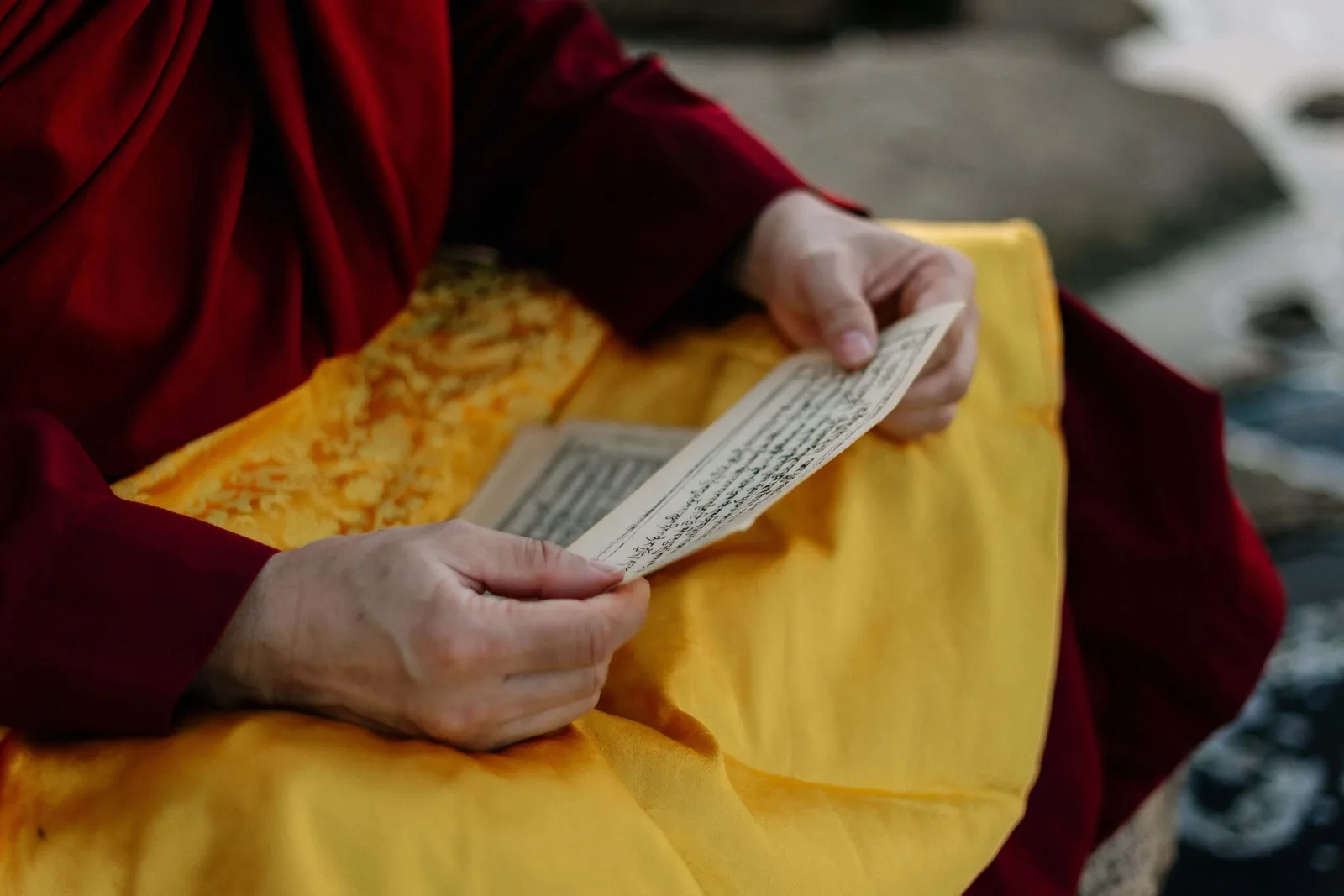
The Gayatri Mantra is a Vedic verse addressed to Savitṛ, the divine power of the sun as the giver of life and illumination, and its meaning — rendered plainly — is: "We meditate on the adorable radiance of the divine Savitṛ; may he inspire our understanding." It is a prayer for the illumination of the intellect: not a request for wealth, health or success, but for clearer seeing. The verse comes from the Rig Veda, one of humanity's oldest bodies of sacred literature, and it has been chanted at dawn and dusk, generation after generation, longer than almost any words still in daily use anywhere on earth.
This guide gives you the mantra accurately and respectfully: the full text in Devanagari and Roman transliteration, the meaning of every word, where the verse comes from, what it signifies in the tradition that carries it, and how it is traditionally chanted. One promise before we begin, because this is sacred literature and not content: where scholars and lineages differ, we will say so, and we will not decorate the mantra with claims the tradition does not make.
In this guide: - The mantra text and translation - Word-by-word meaning - Where the mantra comes from - What the mantra signifies - How it is traditionally chanted - The mantra in our school day - FAQs
The Gayatri Mantra: text and translation
In Devanagari script, as it is most commonly recited today:
ॐ भूर्भुवः स्वःतत्सवितुर्वरेण्यंभर्गो देवस्य धीमहिधियो यो नः प्रचोदयात्
In IAST transliteration (the scholarly Roman spelling, with pronunciation marks):
oṃ bhūr bhuvaḥ svaḥtat savitur vareṇyaṃbhargo devasya dhīmahidhiyo yo naḥ pracodayāt
A faithful English rendering:
Oṃ. Earth, mid-air, heaven.We meditate on that most excellent radianceof the divine Savitṛ —may he inspire our thoughts.
Two structural notes worth knowing from the start. First, the core mantra is the three lines beginning tat savitur — that is the Rig Vedic verse itself. The opening oṃ bhūr bhuvaḥ svaḥ is a liturgical prefix: the sacred syllable oṃ followed by the three vyāhṛtis, or "great utterances," which the ritual tradition placed before the verse. Second, translations vary in wording — radiance or glory for bhargaḥ, inspire, impel or illuminate for pracodayāt — because Vedic Sanskrit is compact and ancient; the renderings differ in flavour, not in substance.
The Gayatri Mantra, word by word
Word (IAST) | Devanagari | Meaning |
|---|---|---|
oṃ | ॐ | The sacred syllable, chanted before Vedic recitation |
bhūḥ | भूः | The earth; the physical plane |
bhuvaḥ | भुवः | The mid-region; the atmosphere between earth and sky |
svaḥ | स्वः | The heavens; the celestial realm |
tat | तत् | That |
savituḥ | सवितुः | Of Savitṛ — the divine sun as vivifier, "the one who sets in motion" |
vareṇyam | वरेण्यं | Most excellent; supremely desirable; worthy of reverence |
bhargaḥ | भर्गः | Radiance; effulgence; splendour |
devasya | देवस्य | Of the divine; of the shining one |
dhīmahi | धीमहि | We meditate upon; we hold in contemplation |
dhiyaḥ | धियः | Thoughts; understanding; the faculties of insight |
yaḥ | यः | Who |
naḥ | नः | Our |
pracodayāt | प्रचोदयात् | May he inspire, impel, set in motion |
Read as a sentence: tat vareṇyam bhargaḥ devasya savituḥ dhīmahi — "we meditate on that most excellent radiance of the divine Savitṛ" — yaḥ naḥ dhiyaḥ pracodayāt — "who may inspire our thoughts." (In the recited text the word endings change slightly — savitur, bhargo, dhiyo yo naḥ — through sandhi, the sound-joining rules of Sanskrit.)
The heart of the mantra is the relationship between two words from the same root: dhīmahi (we meditate) and dhiyaḥ (thoughts, insight) — both from dhī, the Vedic word for the visionary faculty of mind. The chanter meditates on the light with the very faculty they are asking to have illuminated. That circle — attention offered, understanding returned — is the mantra's engine, and it is why the tradition calls it a prayer of the intellect rather than a petition for things.
Where does the Gayatri Mantra come from?
The mantra is verse 3.62.10 of the Rig Veda, the oldest of the four Vedas. Within the Rig Veda's own organisational scheme, the hymns of the third maṇḍala (book) are associated with the sage Viśvāmitra and his family line, so tradition honours Viśvāmitra as the seer (ṛṣi) of this verse. Precise dating of the Rig Veda is a matter of ongoing scholarship — estimates commonly place its composition in the second millennium BCE — so we will say "among the oldest continuously recited texts on earth" and leave the century to the scholars.
Strictly speaking, the verse is a Sāvitrī — a verse addressed to Savitṛ — and older layers of the tradition often call it exactly that: the Sāvitrī mantra. The name Gāyatrī comes from its poetic meter. Vedic verses are classified by chandas (meter), and gāyatrī is the meter of three lines of eight syllables — twenty-four syllables in all. This verse became so beloved that the name of its meter became its name; it is, so to speak, the Gāyatrī. (A small detail that delights Sanskrit students: as received, the verse's second line runs a syllable short, and reciters traditionally restore the full count by sounding vareṇyaṃ as vareṇiyaṃ — a reminder that this is chanted poetry, older than its own spelling conventions.)
Later scripture holds the verse in singular esteem. The Bhagavad Gita has Krishna declare, among the meters, "I am the Gāyatrī" — the verse standing for the whole category. In later devotional tradition, the mantra was also personified as the goddess Gāyatrī, revered as the mother of the Vedas — a development worth understanding clearly, and we return to it in the FAQs.
What does the Gayatri Mantra signify in the tradition?
A prayer for illumination, not acquisition. Most prayer, in most traditions, asks for something — protection, prosperity, forgiveness. The Gayatri asks that the mind itself be kindled. The tradition regards this as the highest kind of asking: illuminate my understanding, and every other good follows rightly.
The sun as teacher. Savitṛ is not simply the visible sun but the sun's power of setting-in-motion: the force that wakes the world, opens flowers, and stirs beings to action. Meditating on that radiance at dawn, the chanter aligns the day's beginning with the source of all beginnings. The three vyāhṛtis — earth, mid-air, heaven — open the mantra by naming the whole of the visible world, so the prayer is uttered, as it were, with all three worlds in view.
A daily discipline. Classically, the mantra sits at the heart of sandhyāvandana — the observance performed at the junctions (sandhyā) of the day, especially dawn and dusk. In many families, receiving this mantra from a teacher at the upanayana ceremony marked the formal beginning of a young person's study of sacred knowledge — the mantra was, quite literally, the first lesson. That is why it is often described in the tradition as the seed of the Vedas: the essential prayer from which a lifetime of learning unfolds.
A shared inheritance. Because of that history, the mantra carries deep associations of initiation, lineage and discipline. Many modern teachers chant it openly and teach it widely; some orthodox lineages continue to treat it as an initiated practice. Both attitudes come from reverence — a student meeting the mantra today does well to know it arrives carrying both.
How is the Gayatri Mantra traditionally chanted?
What follows is traditional guidance, offered as tradition — a description of how the practice has been carried, not rules we impose on you.
At the junctions of the day. Dawn is the classical hour — facing the rising sun, before the day's business begins — with dusk as its mirror. The logic is built into the mantra itself: it addresses the illuminating power the chanter is watching arrive.
In steady repetition (japa). The mantra is commonly repeated a fixed number of times — often 108, counted on a mālā of 108 beads — either aloud, whispered, or silently. Tradition regards the quieter forms as the more inward practice.
With unhurried, correct pronunciation. Vedic chanting treats sound itself as sacred, so the tradition emphasises learning the mantra from a teacher who can model the syllables and the meter — twenty-four syllables, three measured lines — rather than rushing an approximation. Recordings help; a teacher's voice, correcting yours kindly, helps more.
With the meaning held in mind. The mantra is a meditation, not an incantation. Teachers in every generation have said the same thing: let dhīmahi be true while you say it — actually meditate on light while asking for illumination.
With clean beginnings. Traditionally the practice is done after bathing, seated, facing east at dawn — details less about rule-keeping than about marking the recitation as set apart from ordinary speech.
If you are new to mantra practice and want the wider context — what japa is, how chanting works alongside breath and meditation — we cover that ground in our companion guide to mantras in yoga, and the philosophical frame that holds all of this lives in our guide to the eight limbs of yoga, where mantra sits naturally within the limbs of discipline and meditation.
The mantra in our school day
At Pure Soul Yoga School, mantra is not an ornament on the timetable — it is a daily class. Every teaching day of our 200-hour training in Rishikesh, students gather at 15:00 for the mantra class, and the Gayatri is among the chants they learn there: first the syllables slowly, then the meter, then — usually somewhere in the second week — the moment when twenty voices lock into one rhythm and the room goes quiet inside the sound. Many students arrive finding chanting awkward; most leave counting that hour among the ones they miss. You can see where the class sits in the whole rhythm of training in a day in the life at our school.
A tip from our teaching hall: when learning the Gayatri, learn the meaning before the melody. Students who can silently translate each phrase as they chant it stop performing the mantra and start meaning it — and you can hear the difference in a room within days.
Frequently asked questions
Who should not chant the Gayatri Mantra?
The honest, respectful answer has two layers. Traditionally, the mantra was an initiated practice — received from a teacher at the upanayana ceremony, and in orthodox settings restricted to those so initiated. In recent generations, many respected teachers and movements have taught it openly to everyone, women and men, of any background, holding that a prayer for illumination excludes no one. Both positions live within the tradition today. Our guidance: if you belong to a lineage or family tradition, honour its counsel; if you are approaching the mantra fresh, approach it as the tradition asks — with correct pronunciation, understanding of its meaning, and sincerity. What the tradition consistently discourages is not any category of person, but careless chanting — treating a sacred text as a soundtrack.
What is the real meaning of "Om bhur bhuva swaha"?
It is oṃ followed by the three vyāhṛtis — bhūḥ, bhuvaḥ, svaḥ — naming the three worlds of Vedic cosmology: earth, the mid-region (atmosphere), and the heavens. Reciting them before the verse sets the prayer against the backdrop of the whole cosmos. One clarification worth making, because the spelling "swaha" causes real confusion: the word here is svaḥ (heaven), not svāhā — a different ritual word entirely, the exclamation made when offering oblations into fire. The Gayatri's opening line names the worlds; it is not a fire-offering formula.
Which god is the Gayatri Mantra addressed to?
To Savitṛ, the Vedic deity of the sun in its life-giving, motion-setting aspect — which is why the verse is classically called the Sāvitrī. In later tradition the mantra itself was personified as the goddess Gāyatrī, honoured as the mother of the Vedas, and much devotional art and worship addresses her. These are two lenses on one verse: the Vedic hymn addresses the solar divine; the later tradition reveres the mantra itself as divine. Neither cancels the other — the tradition holds both.
Which Gayatri Mantra is the most powerful?
When people say "the Gayatri Mantra," they mean the Rig Vedic verse explained on this page — Rig Veda 3.62.10. You will also encounter many later mantras called "gāyatrīs" of particular deities, composed on the same three-part pattern (vidmahe… dhīmahi… pracodayāt). Those belong to later devotional literature, and each is treasured within its own tradition. We won't rank sacred texts against each other — the tradition itself doesn't ask "which is strongest?" but "which is yours, and do you chant it with understanding?" The Vedic Sāvitrī is the archetype from which the pattern comes.
What does chanting the Gayatri Mantra do?
The tradition's own answer is contained in the mantra: it asks for the purification and inspiration of the understanding — dhiyo yo naḥ pracodayāt. Practitioners across generations describe the fruits of steady japa as clarity, steadiness of attention and a quieted mind, and the tradition frames daily recitation as a discipline that shapes character slowly, the way a river shapes stone. We present those as the tradition's teachings, held within its own worldview — the mantra is a prayer and a meditation, and it is best approached as such rather than as a technique promising outcomes.
Can I chant the Gayatri Mantra without being Hindu?
The mantra arises from the Vedic tradition at the root of Hinduism, and that origin deserves respectful acknowledgment — this is a living sacred text, not a wellness asset. That said, many teachers, including ours, welcome sincere students of any faith or none to learn it, on the tradition's terms: accurate pronunciation, knowledge of the meaning, and reverence for what you are holding. What your own tradition says about joining in another's prayer is a question we'd never answer for you. What we can say is how we teach it: as it was taught to us, whole and unhurried.
Carrying the mantra further
Sit with the words before you chant them: three worlds named, one radiance meditated upon, one request — that understanding itself be lit. If the practice draws you, learn it from a voice, not a page; the meter lives in sound. Mantra study — the Gayatri included — is part of the daily rhythm of our trainings, and it sits at the heart of our Meditation Yoga Teacher Training in Rishikesh, where chanting, japa and meditation are taught together in their classical home. Questions about the mantra, the class, or where to begin? Ask us on WhatsApp — real humans answer, usually within hours.
References
Rig Veda 3.62.10 — the Sāvitrī (Gāyatrī) verse; third maṇḍala, traditionally associated with the seer Viśvāmitra.
Bhagavad Gita 10.35 — "of meters I am the Gāyatrī," Krishna's naming of the verse's meter among his glories.
Taittirīya-tradition liturgical usage — the prefixing of oṃ and the vyāhṛtis (bhūḥ, bhuvaḥ, svaḥ) to the verse in daily recitation (sandhyāvandana).
Jamison, S. & Brereton, J., The Rigveda: The Earliest Religious Poetry of India (Oxford University Press) — scholarly translation and notes, including the metrical restoration vareṇiyaṃ.
Author note (byline): Gangesha Adi (E-RYT 500) teaches yoga philosophy and mantra at Pure Soul Yoga School, Rishikesh, where the Gayatri Mantra is taught in the daily 15:00 mantra class to students of 50+ nationalities.