Halasana Benefits: Plough Pose — Read the Neck Section First
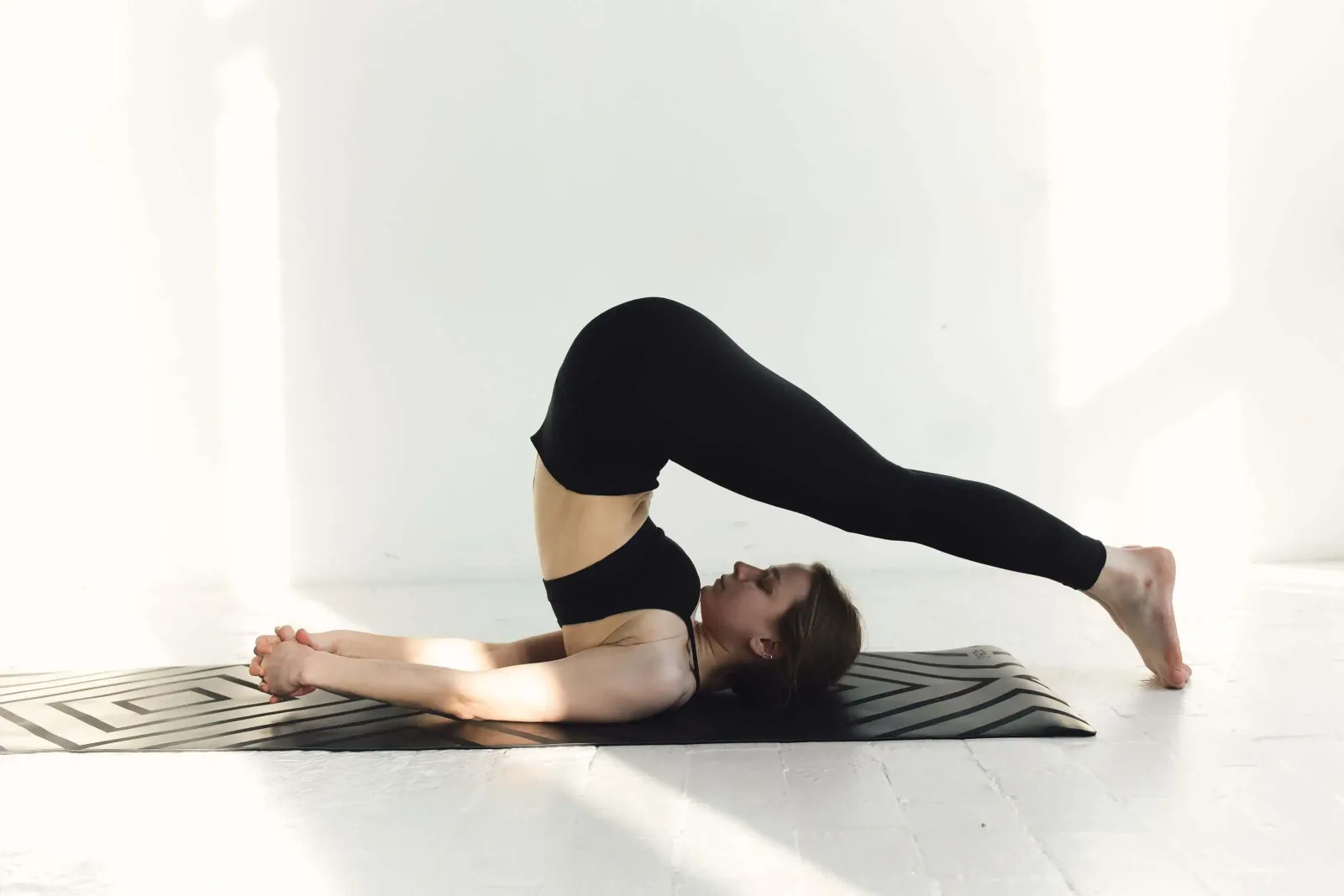
Halasana is unusual among famous poses: it is less a destination than a continuation. Hala is Sanskrit for plough — the shape recalls the wooden plough of Indian fields — and in traditional sequencing you do not simply drop into it. Plough is where shoulderstand goes: from Sarvangasana, the legs continue over the head until the toes rest on the floor behind you, folding the body around its most delicate hinge — the neck. That lineage is not trivia; it is the safety architecture. Shoulderstand builds the supported shoulder base, the blanket setup, and the neck discipline that plough then borrows and intensifies. Practiced that way, halasana offers a genuinely deep stretch for the entire spine and shoulders and a strongly quieting finish to practice. Practiced as a cold party trick from a video, it concentrates more load on the cervical spine than almost anything else a beginner might attempt — so this article puts the neck section before the benefits, on purpose.
This article is for general education and is not medical advice. This pose is unsuitable for a significant number of people — please read the contraindications below carefully and consult a qualified healthcare professional before attempting it.
The neck, first: who must not do Halasana
In plough, the neck is folded toward its end range of forward flexion while carrying a share of the body's weight. A healthy, prepared, blanket-supported neck tolerates this well. The following do not — skip the pose entirely, or get explicit individual clearance first, if any of these apply:
Any cervical spine condition — neck injuries, disc problems, cervical spondylosis or arthritis, past whiplash. This is the primary contraindication, and it is absolute rather than negotiable: the pose loads precisely the structures that are compromised.
High blood pressure, heart disease, or history of stroke — plough is a full inversion; pressure in the head and face rises. Medical clearance first, gentler alternatives likely better permanently.
Glaucoma, raised eye pressure, or recent eye surgery — inversions measurably raise intraocular pressure; ask your eye specialist, and expect the answer to be no.
Pregnancy — the compressed, folded, inverted position is not the place for it; a qualified prenatal teacher can offer substitutes.
Osteoporosis — the loaded, flexed spine position is a poor match for fragile vertebrae.
Disc problems anywhere in the spine, sciatica, or recent surgery — the deep forward fold under load needs a professional's individual yes.
Menstruation — traditional schools advise resting from inversions during periods; modern opinion varies. We present the tradition and leave the choice with the practitioner.
And one rule for everyone who does practice it: never turn your head in the pose. Eyes to the ceiling, chin centred, from entry to exit.
If the list above rules plough out, you lose less than you think: legs-up-the-wall pose delivers the quieting, inverted-rest quality with almost none of the demands, and a supported seated forward fold covers the spinal stretch.
Earning the pose: shoulderstand is the doorway
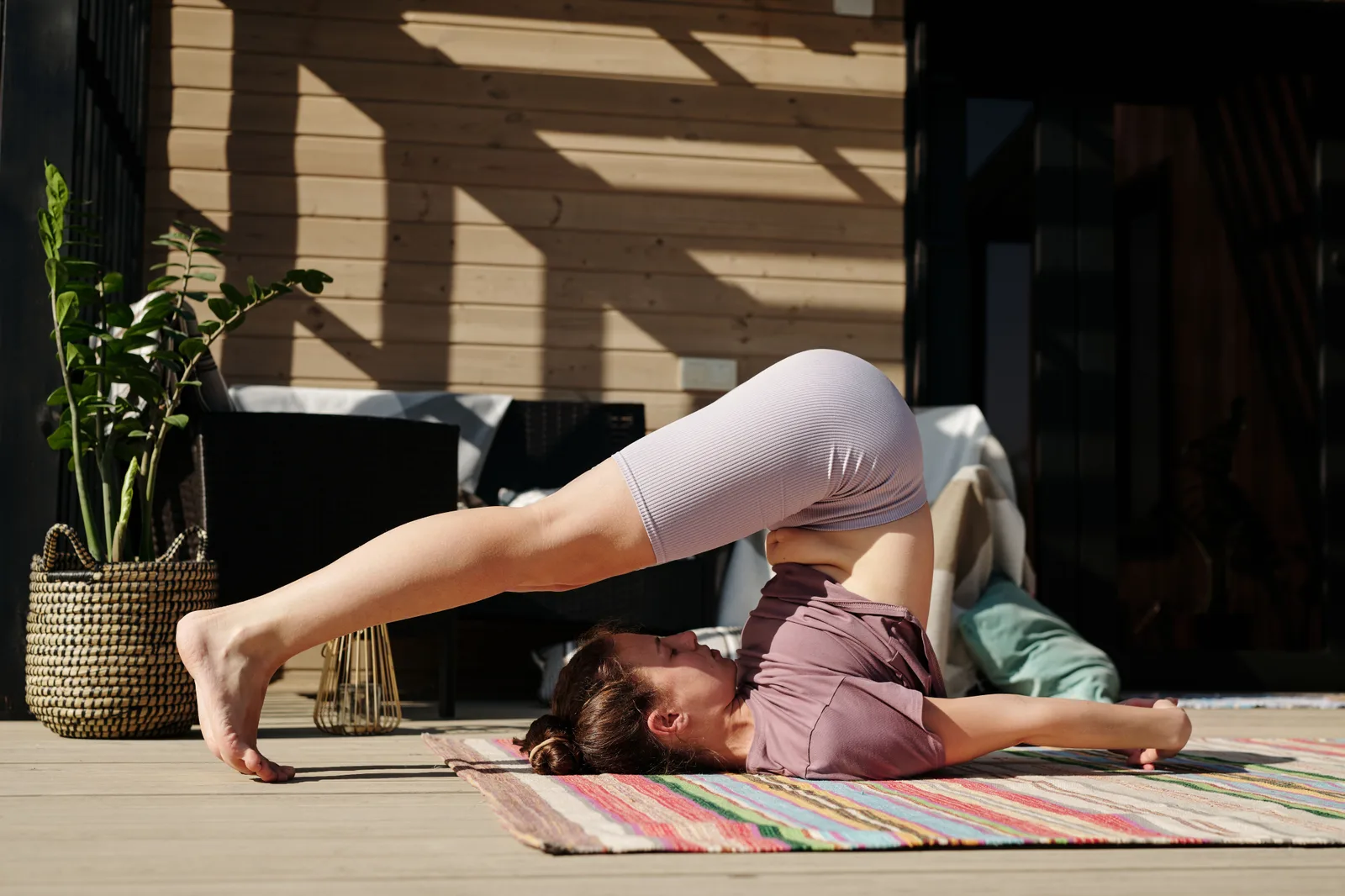
We teach halasana only to students who already own a stable, blanket-supported shoulderstand — that pose's guide covers the setup in detail, and our asana library rates both poses intermediate for the same reason. The short version of the entry:
Set up exactly as for sarvangasana: two or three firm folded blankets under the shoulders, head resting on the floor beyond the edge, so the neck curves into free space instead of flattening under load.
Establish shoulderstand — legs vertical, hands bracing the back, weight on shoulders and upper arms, face soft.
On an exhale, hinge at the hips and lower the legs slowly overhead, together and controlled. No dropping — the descent is the pose.
If the toes reach the floor comfortably, rest them there and (only then, if stable) extend the arms along the floor behind the back, fingers interlaced. If the toes don't reach, keep the hands bracing the back and let the legs hover, or rest the feet on a chair placed behind the head — a complete, honest version.
Breathe evenly, 15–30 seconds to begin. The throat stays soft; the weight stays on the shoulders, not the neck.
Exit in reverse and in control: hands to the back, legs return to shoulderstand or roll down vertebra by vertebra with the head staying on the floor. Rest flat before rising.
Tradition follows the shoulderstand–plough family with a chest-opening counter-pose — classically the fish pose, matsyasana, which reverses the throat position — and we keep that pairing in every class.
A tip from our teaching hall: the chair variation is not the beginner's consolation — it is where we start everyone. Feet on a chair seat, the spine gets nearly the full stretch while the neck keeps a wide margin of safety, and students learn the pose's quietness before they meet its depth.
Halasana benefits — worth the care it demands
The spine's deepest common stretch. From the base of the skull to the tailbone, the entire back body lengthens under the legs' weight — a stretch few other postures reach. Practiced progressively, this may help maintain spinal flexibility, and many practitioners report a distinct sense of release through the upper back and shoulders afterwards.
A powerful down-shift. Like its parent shoulderstand, plough is classically placed near the end of practice because of its markedly quieting character — folded, inverted, breath slowed. Students consistently describe it as one of the most settling shapes in the practice; we report that as experience and tradition rather than laboratory fact.
Shoulder and neck-line release — for prepared bodies. The pose stretches exactly the region desk work stiffens. The irony is deliberate: the same area it can injure in careless practice is the area it may relieve in careful practice. The blankets, the slow descent, and the entry via shoulderstand are what put you on the right side of that line.
The traditional claims, labelled. Classical teaching credits halasana with stimulating the thyroid, toning the abdominal organs, and improving digestion; popular articles add weight loss and more. We pass these on clearly labelled as tradition — robust modern evidence is lacking, and the demonstrable benefits above stand on their own.
Frequently asked questions
How many times should we do Halasana?
Once per session is the traditional and sensible answer — plough is a held, quieting pose near the end of practice, not a repetition exercise. Begin with 15–30 seconds and build gradually toward a minute or two over months. Daily practice is fine for a prepared, contraindication-free practitioner; more repetitions per day add nothing.
Can Halasana reduce belly fat?
No. A held stretch burns trivial energy, and no pose takes fat from a chosen region. Plough's real offer is spinal mobility and deep quiet. If weight is the goal, sustained overall activity and daily habits are the honest levers — our yoga for weight loss guide covers that properly.
Is Halasana good for hair growth?
There is no reliable evidence that any inverted pose improves hair growth — the "blood flow to the scalp" logic is a marketing extension, not a demonstrated effect. Hair concerns have real causes (nutrition, hormones, genetics, stress) that deserve real answers. We'd rather tell you that than borrow the claim.
Who cannot do Halasana?
The full list is at the top of this article — deliberately first. In one line: anyone with neck or spine conditions, uncontrolled blood pressure or heart disease, glaucoma, osteoporosis, or a pregnancy should not practice plough, and everyone else should learn it via shoulderstand with blanket support rather than cold from the floor.
Learn the pair, not the pose
Plough makes no sense alone — it is one movement of a family: shoulderstand into plough, fish pose to counter, blankets under it all. That kind of sequencing judgement — what follows what, who should be steered to the chair, whose neck says no — is exactly what we train teachers to carry on the 200-hour yoga teacher training in Rishikesh, where batches of maximum 20 mean no one inverts unwatched. The wider family lives in the asana library. Questions? We're on WhatsApp.
References
National Center for Complementary and Integrative Health (NCCIH) — Yoga: What You Need To Know (yoga safety and injury notes).
Peer-reviewed literature on intraocular pressure changes in inverted yoga postures (basis of the glaucoma caution; exact citation to be finalised at publish).
Traditional hatha yoga teaching on halasana and its sequencing after sarvangasana (classical Indian schools; thyroid and organ claims presented as tradition, not clinical evidence).
Reviewed for health accuracy by Dr. Bhupinder Singh Arora (M.D. Ayurveda), consulting Ayurvedic physician at Pure Soul Yoga School. This article is educational and not a substitute for personal medical advice.
Author note (byline): Gangesha Adi (E-RYT 500) has never once regretted moving a student from full plough back to the chair variation at Pure Soul Yoga School, Rishikesh — and has met several necks that regretted the reverse.