Sarvangasana Benefits: Shoulderstand, Practiced Safely
If headstand is the tradition's king of asanas, Sarvangasana — shoulderstand — is its queen: the cooler, quieter inversion, classically placed near the end of practice to settle everything the session stirred up. The name promises a lot; sarva-anga means "all limbs," the whole-body pose. What it reliably delivers is more specific: a deeply quieting finish to practice, a strong stretch for the neck and upper back, lighter-feeling legs after long days, and the tradition's most famous claim — thyroid stimulation — examined honestly below. Like every inversion, it concentrates real risk in one place: the neck. So this guide is equally about the blanket under your shoulders and the list of people who should choose a different pose.
This article is for general education and is not medical advice. Inversions are unsuitable for some medical conditions — read the contraindications below and consult a qualified healthcare professional before practicing.
What is Sarvangasana?
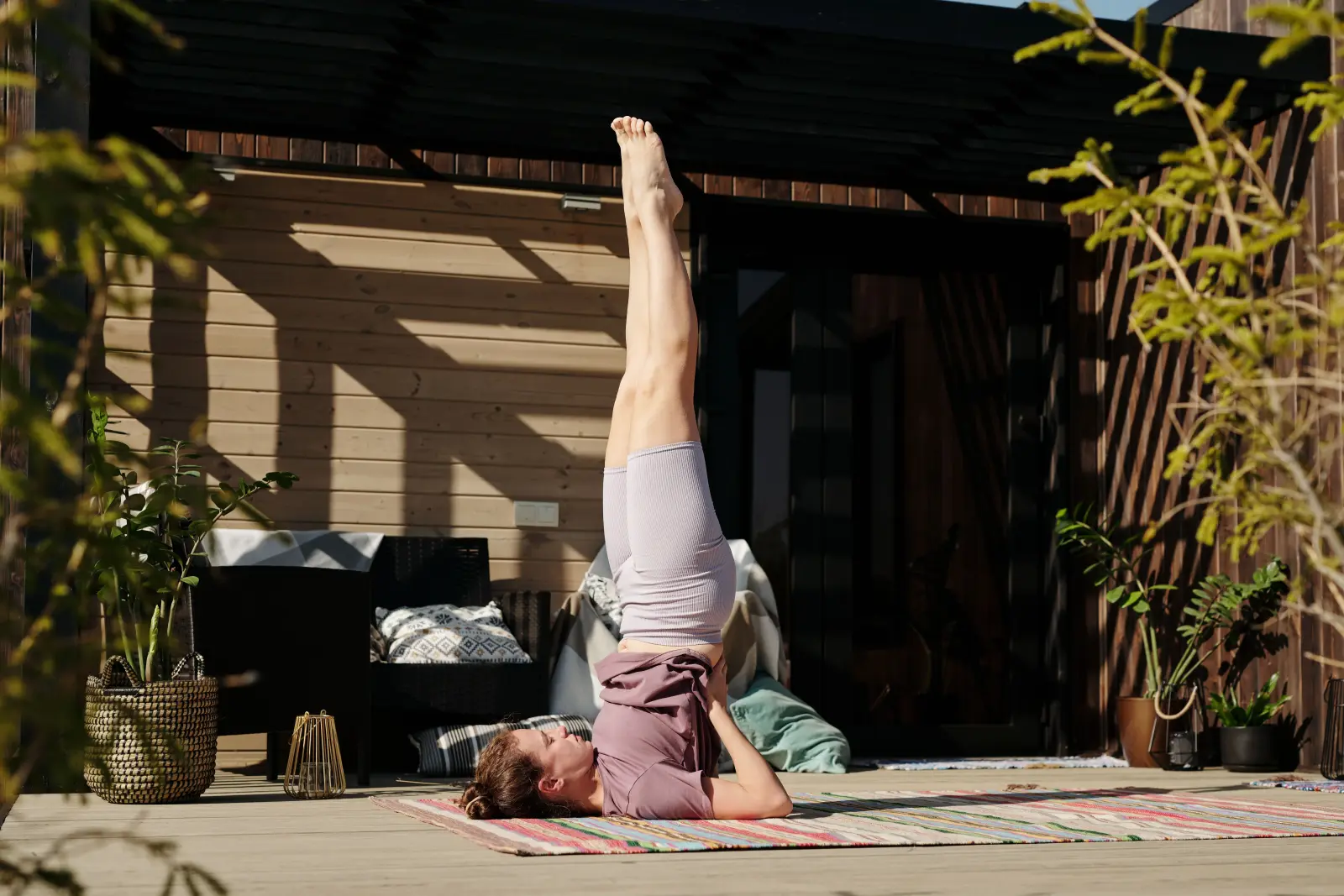
The full name of the standard form is Salamba Sarvangasana — supported shoulderstand. Lying on the back, you raise the legs and torso vertical, resting the body's weight on the shoulders and upper arms while the hands brace the back. The chin settles toward the notch of the throat — a natural form of jalandhara bandha, the throat lock, which classical teaching considers central to the pose's effects. The head and neck bear as little weight as possible; that single sentence is most of shoulderstand's safety doctrine. In the asana library it sits among the inversions, rated intermediate — approachable earlier than headstand, never casually.
How to do Sarvangasana (step by step, ideally learned in class)
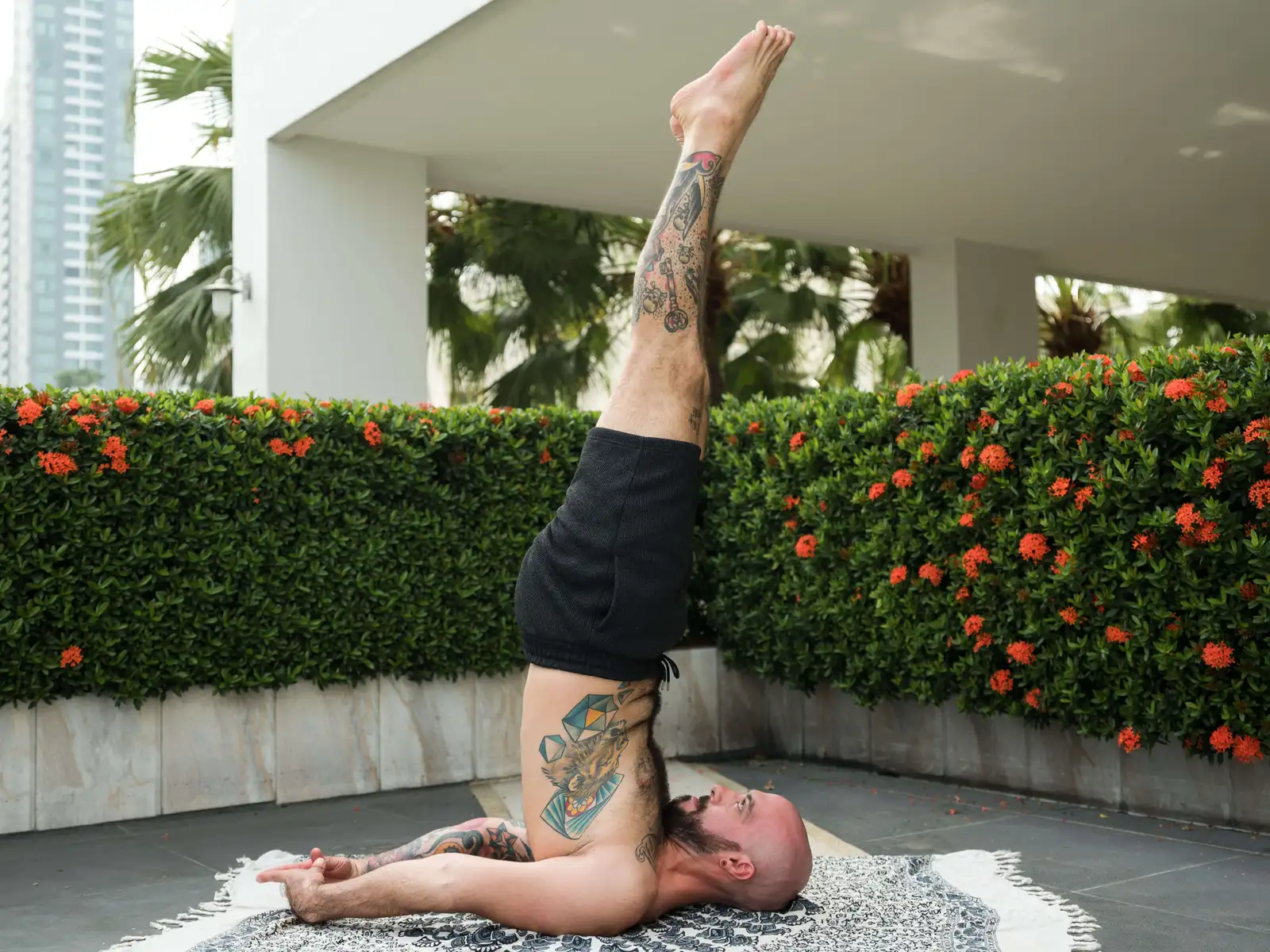
The blanket setup in step 1 is not optional decoration — it is what keeps the neck's natural curve safe. Learn this pose in a class before practicing it alone.
Stack two or three firm blankets, folded smooth, and lie back so the shoulders rest on the stack while the head rests on the floor beyond its edge. This drops the neck into free space instead of flattening it.
Arms alongside the body, palms down. Bend the knees, feet on the floor.
Exhale and swing the knees over the chest, then the hips off the floor, rolling weight onto the shoulders.
Immediately bring the hands to the back, fingers pointing up toward the hips, elbows drawn toward shoulder-width.
Raise the legs vertical, in stages if you like — knees bent first, then extended.
Press the upper arms down; lift through the back ribs so the chest approaches the chin — the chin does not chase the chest.
Breathe evenly for 30 seconds to begin with. The face, jaw and throat stay soft.
To exit: fold at the hips, support the back, and roll down one vertebra at a time — no dropping. Rest flat for a few breaths.
Tradition follows shoulderstand with a counter-pose — classically matsyasana, the fish pose, which reverses the throat position — and our teachers keep that pairing. One rule stands above all others while inverted: never turn your head. If something needs looking at, come down first.
Sarvangasana benefits — with the evidence dial shown
A down-shift you can feel. Shoulderstand's best-attested quality is experiential: held quietly with slow breathing, it settles the nervous system toward rest — which is exactly why sequences place it at the end. Slow breathing in stillness is associated with relaxation responses in research on yoga broadly; students who practice for stress relief often name this pose their anchor.
Relief for standing-weary legs. Inverting drains the pooled feeling from legs and feet after long upright days. The lightness afterwards is immediate and uncontroversial — enjoy it without needing grander claims.
Neck, shoulder and upper-back stretch. The pose flexes the cervical spine and stretches the upper-back tissue deeply — which is precisely why the load must stay on the shoulders, not the neck itself.
Strength through the trunk. Getting up with control, staying vertical, and rolling down slowly all demand core and back work. Modest, honest, cumulative.
The thyroid tradition, examined. Classical teaching holds that the chin lock compresses and bathes the throat region, stimulating the thyroid gland — the answer tradition gives when asked which organ the queen of asanas serves. Modern evidence does not establish that shoulderstand changes thyroid function, and nobody should practice it as thyroid treatment or delay medical care on its account. We keep the teaching, labelled as teaching: a revered traditional claim, unproven by modern methods.
Common mistakes
No blanket support. Practicing flat on the floor flattens the neck's curve under load — the most consequential shortcut in this pose. Shoulders on the stack, head beyond it, every time.
Weight resting on the neck. If you feel pressure in the throat or cervical spine, the chest hasn't lifted enough; press the arms down and raise the back ribs, or come down and rebuild.
Elbows splaying wide. The base leaks sideways and the back sags into the hands. Keep elbows near shoulder-width — a belt looped above the elbows is a classic fix.
The banana body. Hips drifting one way, legs the other. Stack hips over shoulders first; vertical legs are the last story of the building, not the first.
Turning the head to check something. Repeated because it matters: rotation under load is the pose's sharpest edge.
Cold entries and marathon holds. Warm the neck and shoulders first; grow duration in small steps.
Who should not practice shoulderstand (contraindications)
The neck carries this list's weight, and it overlaps deliberately with headstand's — the two poses share their risk anatomy.
Neck or cervical spine conditions — disc problems, arthritis, past whiplash or neck surgery: the flexed, loaded neck position is exactly wrong for these. Choose the alternatives below instead.
High blood pressure, heart conditions, or stroke history — inversion shifts pressure toward the head and chest; medical clearance is required, and gentler substitutes may be the permanent right answer.
Glaucoma or raised eye pressure, recent eye surgery, or serious ear/sinus conditions — inverted postures raise pressure in the head; ask your specialist, and expect the answer to be no for full inversions.
Pregnancy — full shoulderstand is generally set aside; a qualified prenatal teacher can offer supported substitutes.
Osteoporosis, significant overweight, or recent surgery — each alters what the neck and chest can safely bear; take individual advice.
Menstruation — the traditional schools counsel resting from inversions during menstruation. Views differ today; we present the guidance as tradition and respect each practitioner's informed choice.
The near-universal alternative: Viparita Karani — legs up the wall — reproduces shoulderstand's leg-draining, mind-quieting character with almost none of its neck demand. It is not a lesser pose; it is the right pose for many people, permanently.
Variations and props
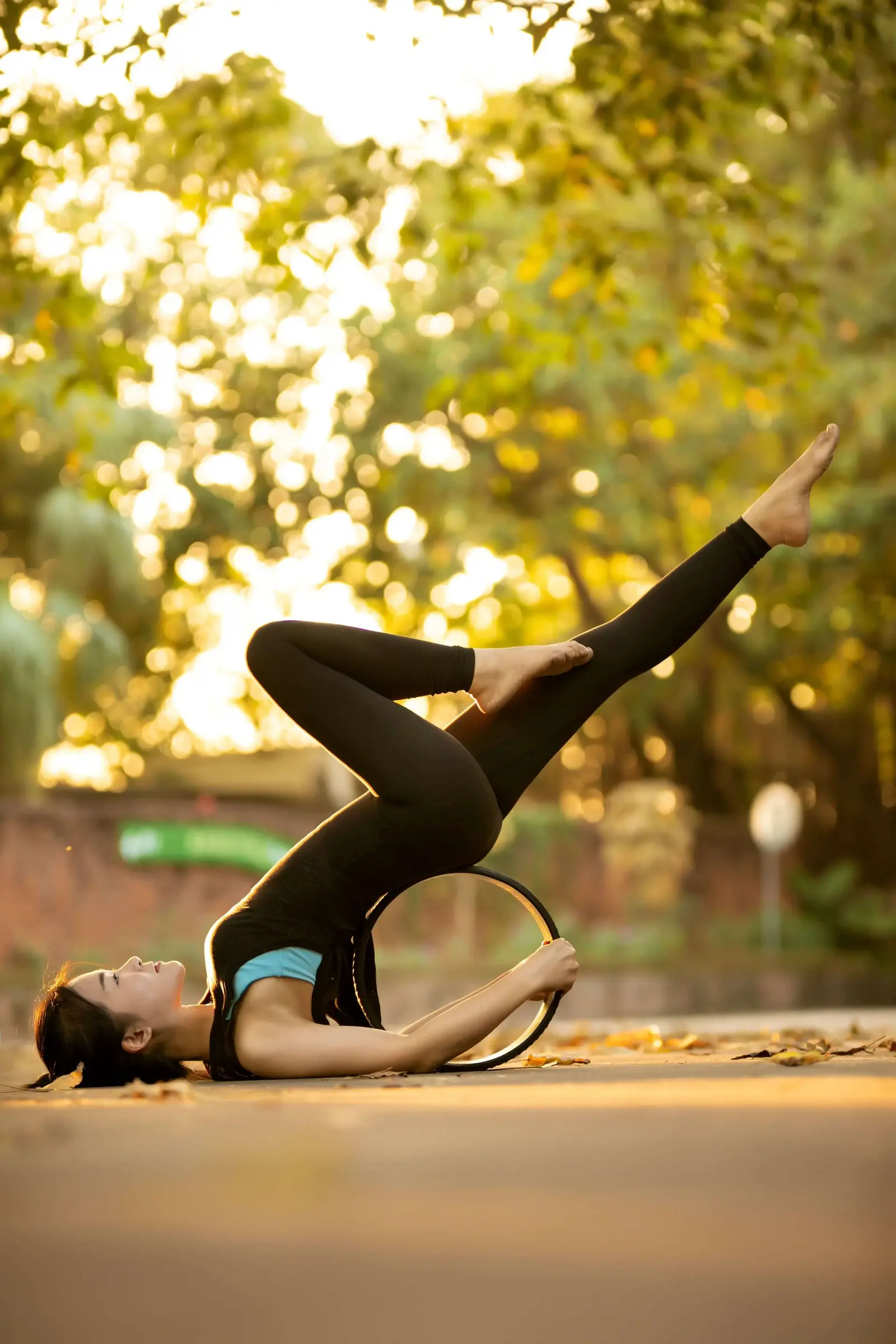
Blanket-supported shoulderstand — the standard form, described above. The stack is the pose's seatbelt.
Half shoulderstand (Ardha Sarvangasana) — hips supported by the hands, legs angled over the face rather than vertical; far less neck flexion, most of the quieting effect.
Wall-assisted entry — feet walk up a wall to lift the hips; removes the momentum problem for learners.
Belt above the elbows — keeps the base from splaying; a teacher-favourite prop.
Halasana (plough pose) — the classical companion in which the feet lower beyond the head; deepens the neck stretch considerably, so it belongs after shoulderstand is secure, under guidance.
Frequently asked questions
Which organ benefits in Sarvangasana?
Tradition answers: the thyroid, through the chin-lock's pressure on the throat — this is the pose's most famous classical claim. Modern research has not confirmed an effect on thyroid function, so treat the teaching as tradition, never as a substitute for thyroid care from a doctor.
How long should you do Sarvangasana for?
Start at 30 seconds and build gradually toward 2–3 minutes as the setup and exit become second nature. Come down the moment the neck, head or eyes register pressure — duration is the least important variable in this pose.
What are the disadvantages of Sarvangasana?
Its risks concentrate in the neck: strain or injury from unsupported setups, head-turning, or overloading — plus raised head and eye pressure that makes it unsuitable for people with high blood pressure, glaucoma and related conditions. With blankets, instruction and screening, most of these disadvantages are designed out; without them, they are the pose.
Does Sarvangasana reduce hair fall?
No reliable evidence supports the popular claim that inversions reduce hair fall or regrow hair — the "blood flow to the scalp" theory hasn't translated into demonstrated results. Practice shoulderstand for calm, not for hair; for hair loss, a dermatologist beats a blanket stack.
Take the queen seriously — and learn her properly
A pose this rewarding, with an edge this sharp, is best transmitted the old way: teacher to student, blanket by blanket. Inversion setup, spotting and screening are taught unhurried in our 200-hour yoga teacher training in Rishikesh — batches capped at 20, so every neck gets watched. To place shoulderstand among its relatives first, wander the complete asana library; for anything else, our WhatsApp is open.
References
National Center for Complementary and Integrative Health (NCCIH) — Yoga: What You Need To Know (evidence context on yoga, relaxation and injury awareness).
Peer-reviewed literature on intraocular and blood-pressure responses to inverted postures (basis of the eye/BP cautions; exact citations to be finalised at publish).
Traditional hatha yoga teaching on sarvangasana as the "queen of asanas", jalandhara bandha and the matsyasana counter-pose (classical Indian schools; presented as tradition, not clinical evidence).
Reviewed for health accuracy by Dr. Bhupinder Singh Arora (M.D. Ayurveda), consulting Ayurvedic physician at Pure Soul Yoga School. This article is educational and not a substitute for personal medical advice.
Author note (byline): Gangesha Adi (E-RYT 500) ends evening asana classes at Pure Soul Yoga School, Rishikesh with the shoulderstand-to-fish pairing — and starts every shoulderstand lesson with the blankets, not the legs.