How to Prepare for Yoga Teacher Training: The Honest Checklist

Here is the answer most schools won't lead with: you are probably more ready for yoga teacher training than you think. Preparing for yoga teacher training is less about achieving advanced yoga postures and more about three quieter things — building a consistent (not impressive) physical yoga practice, taking an honest look at your expectations, and handling the practical details of yoga teacher training early so they don't crowd your mind later. Do those three, and you'll arrive prepared, grounded, and able to receive what the yoga teacher training offers.
This guide is built from what our graduates tell us they wish they'd known before day one — the things scattered across forum threads, gathered here by the people who watch new trainees arrive every month. It's written with a residential yoga teacher training in India in mind, but almost all of it applies anywhere. If you're wondering how to prepare for yoga teacher training, what to do before yoga teacher training, or whether you are ready for YTT, this checklist covers the essentials.
In this guide: - Physical preparation: consistency beats intensity - Mental preparation: the part nobody talks about enough - Practical preparation: documents, flights, money - What to read before you arrive - What the first days actually feel like - Readiness FAQ
Physical preparation: consistency beats intensity
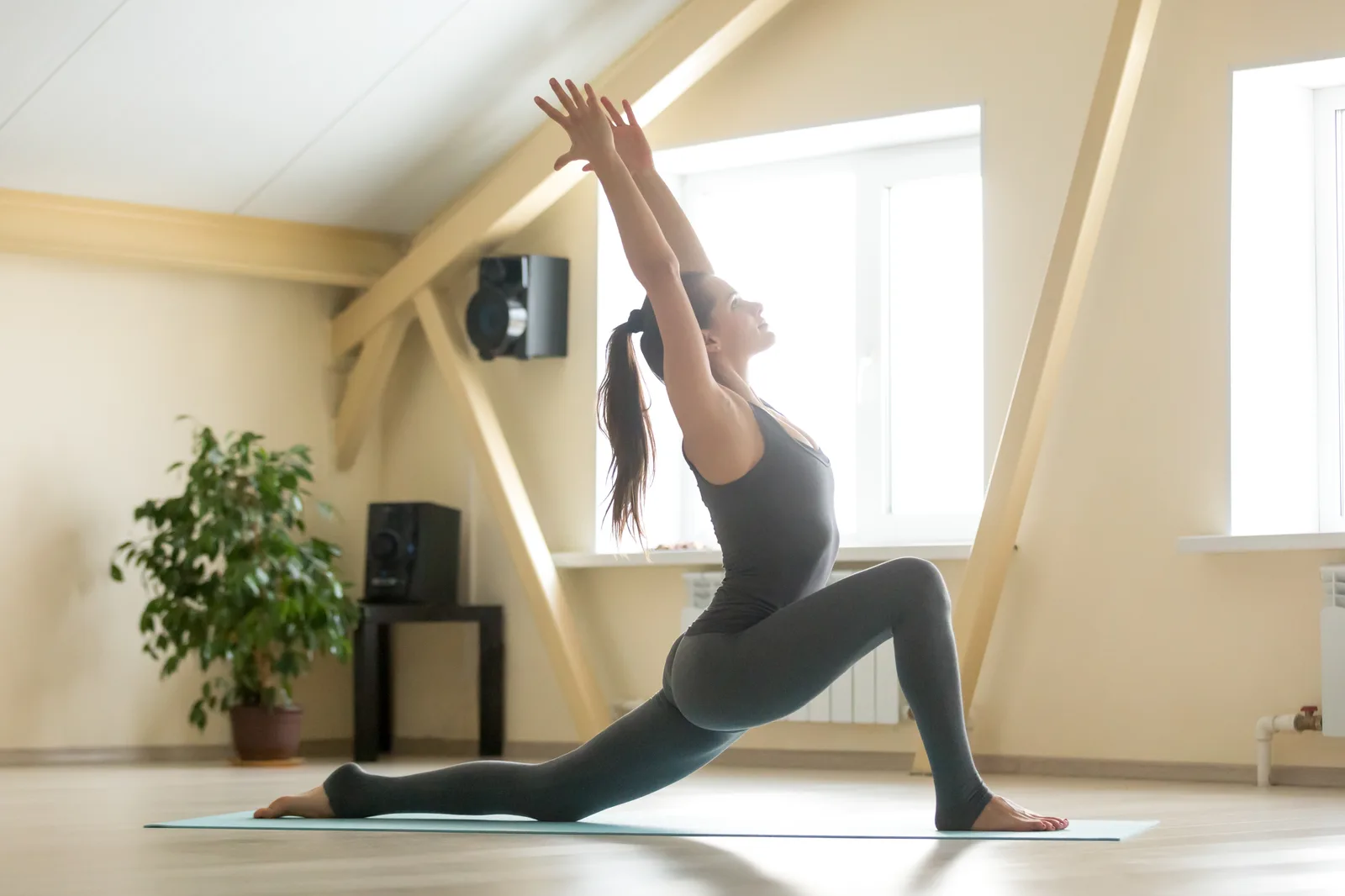
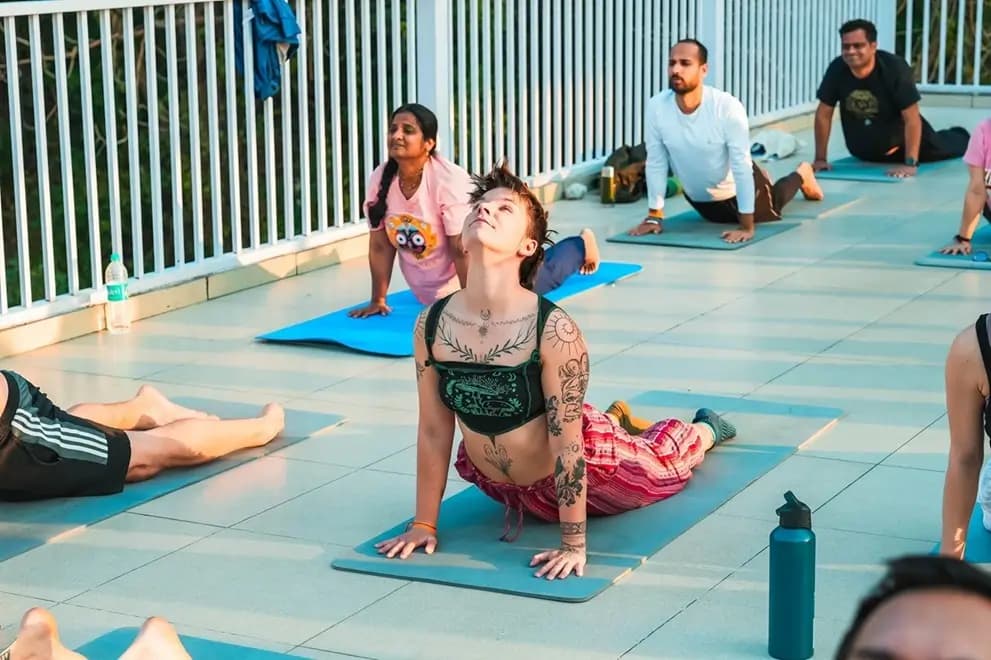
Let's clear the biggest fear first: you do not need an advanced practice to start a 200-hour training. You don't need a headstand. You don't need to touch your toes. Every month we welcome students who have practiced for years alongside students who have practiced for months, and by the end of the course the difference matters far less than anyone expected — because teacher training teaches you how postures work, not how deep you go in them.
What actually helps, in the eight or so weeks before you travel:
Practice regularly, not heroically. Three to four sessions a week of whatever practice you already do beats a sudden daily two-hour regime. Your goal is a body that's familiar with moving and breathing on a mat, not a peak you have to maintain.
Build a little endurance for sitting. Trainees are often surprised that the hardest physical demand isn't asana — it's sitting on the floor for philosophy and pranayama classes. Sit cross-legged on a cushion for ten minutes a day and your future hips will thank you.
Wake up earlier, gradually. If your training starts practice around sunrise (ours begins with herbal tea at 6:25), shifting your alarm fifteen minutes earlier each week beforehand is the gentlest gift you can give yourself.
Walk. Training days are long, and Rishikesh is a town of stairs and riverside paths. A daily walk builds exactly the kind of unglamorous stamina a residential month asks for.
Don't arrive injured. The weeks before training are for maintenance, not breakthroughs — the wrong moment to chase a deep backbend. If something already hurts, see a professional before you fly, and tell your teachers on day one; with a maximum of 20 students per batch here, they can actually work around it.
A tip from our teaching hall: the students who struggle physically in week one are almost never the "least advanced" — they're the ones who crash-trained for a month and arrived tired. Come rested. The training itself will build your practice; that's its job.
Mental preparation: the part nobody talks about enough
Ask graduates what the hardest part of teacher training was, and very few say the postures. Most talk about something quieter: being away from home, having your habits and assumptions gently taken apart, and feeling more emotion than expected — sometimes in the middle of a perfectly ordinary afternoon class.
None of this is a malfunction. Yoga teacher training compresses a lot of self-inquiry into a few weeks, and things surface. Here's what helps:
Expect an adjustment window. The first three or four days of a residential training are the wobbly ones — new time zone, food, schedule, people. Almost everyone finds their rhythm within a week. Knowing this in advance turns "something is wrong with me" into "ah, this is the part they mentioned."
Loosen your grip on the outcome. Some students arrive certain they'll teach professionally and leave choosing a different path; others come "just for themselves" and discover a teacher inside. Both are successes. Hold your reasons lightly.
Start a journal now, not on day one. Write down why you're doing this training — honestly, doubts included. On a hard day mid-course, that entry becomes an anchor, and journalling is good rehearsal for the evening self-study hour most trainings (including ours) build in.
Prepare the people at home. Tell family and friends you'll be less reachable, and mean it. A residential training works partly because you step out of your usual loops; the students who try to keep working remotely through a 200-hour course are the ones we watch struggle.
Practice five minutes of stillness daily. Not a feat of meditation — just sitting, breathing, noticing. Pranayama and meditation are daily classes in training, and a small taste beforehand makes them feel like friends rather than exams.
Practical preparation: documents, flights, money

Handle the logistics early and they stop taking up mental space. For a training in India, your checklist looks like this:
Passport and visa. Check that your passport is valid for at least six months beyond your travel dates, then apply for your Indian visa well ahead of time. If you train with us, we provide a visa invitation letter on request to support your application — just ask once your seat is confirmed.
Flights. For Rishikesh, the nearest airport is Dehradun (Jolly Grant), about a 40-minute drive from our school in Tapovan; most international students connect through Delhi. Aim to arrive a day or two before the course starts — it softens jet lag enormously, and airport pickup can be arranged (at extra cost) when you book.
Money. Our courses (like most in Rishikesh) reserve your seat with a 20% deposit, with the balance payable on arrival, and the fee includes your room and three vegetarian meals a day — so day-to-day costs on the ground stay small: cafés, laundry, souvenirs, the occasional rickshaw.
Insurance and health basics. Travel insurance covering your dates is sensible anywhere. For India, talk to your doctor or a travel clinic about recommended vaccinations, and bring enough of any prescriptions for the full stay, in original packaging.
Packing. The short version: comfortable practice clothes you can layer, modest everyday wear, a refillable water bottle, and a few personal comforts. A full packing guide is coming — until then, pack light; Rishikesh's shops have been outfitting yoga students for decades.
If you're still deciding which training to book, read our plain-language guide to 100, 200, 300 and 500 hour yoga teacher trainings first — the preparation below applies to all of them, but the right starting point matters more than any packing list.
What to read before you arrive
You don't need to arrive learned — the philosophy classes assume nothing. But graduates consistently say that having met the classical texts beforehand made those classes land deeper. Two are enough:
The Yoga Sutras of Patanjali. The foundational text of yoga philosophy and the backbone of most 200-hour syllabi. Any faithful translation with commentary will serve; read slowly, a few sutras at a time, and don't worry about "getting it" — that's what the classes are for.
The Bhagavad Gita. Read it as a story first: a conversation about duty, action and devotion that your teachers will return to often.
If you do only one thing here, skim the first two chapters of the Sutras and underline whatever confuses or moves you. Those underlines become your best questions in class — and good questions are worth more in a philosophy room than good answers.
What the first days actually feel like
Here's the honest picture. You'll arrive tired. The first morning bell will feel early because it is — at our school the day opens with herbal tea at 6:25 and Ashtanga practice at 6:40, and lights are off by 10 p.m. because the schedule only works if you sleep. Days are full: asana, pranayama, philosophy, anatomy and alignment, mantra, meditation. Sundays are free, and by the first one you'll understand why rest is written into the training rather than left to chance.
Around day three or four, something settles. The routine stops feeling imposed and starts feeling like a container. Strangers from a dozen countries become the people you drink tea with in comfortable silence. This is the rhythm doing its work.
We've written the full hour-by-hour honest version — including the jet-lag week and the food question — in a day in the life at our school in Rishikesh. If you read one more thing before enrolling anywhere, read a school's real daily schedule. It tells you more than any brochure.
Readiness FAQ
What is the hardest part of yoga teacher training?
Rarely the postures. Graduates most often name the early mornings in week one, sitting on the floor for long classes, and the emotional intensity of a month of self-inquiry. All three respond to the same medicine: arrive rested, expect the adjustment window, and use the rest that's built into the schedule.
Is yoga teacher training difficult?
Full, yes — most residential days run from early morning to evening with breaks built in. Brutal, no. A well-run training alternates effort and rest deliberately, and teachers meet you at your level. The students who find it hardest are usually fighting the schedule (or their phone), not the yoga.
How long does it take to complete a 200-hour yoga teacher training?
As a residential intensive, typically around three to four weeks — our 200-hour training in Rishikesh runs 23 days, from the 7th to the 30th of the month, with Sundays off. If you can't take that much leave at once, a split pathway exists: complete a 100-hour first and return later for the remaining hours.
How long does it take to train to be a yoga teacher?
The internationally recognised starting credential is the 200-hour training, completed in under a month as an intensive. Many teachers later add a 300-hour advanced training, which together with the 200-hour makes them eligible to register as an RYT 500 with Yoga Alliance. The full picture is in our guide to training levels.
Do I need to be able to do advanced poses before I start?
No. You need a sincere practice and a willingness to learn — trainings teach you how postures work from the ground up, and small groups (ours are capped at 20) mean your teachers adapt to your body, not the other way around.
Should I change my diet or quit coffee before training?
Nothing dramatic. Meals at most Indian schools, including ours, are fresh vegetarian food — if that's new to you, a few vegetarian weeks at home make the transition seamless. Heavy caffeine drinkers do better tapering gently beforehand than quitting cold in week one.
Ready when you are
Preparation matters, but it has a limit: at some point the training itself becomes the preparation — for the teacher you're becoming. If the honest picture in this guide sounds like something you want rather than something you fear, you're ready enough. Explore the 200-Hour Yoga Teacher Training in Rishikesh — dates, fees, curriculum, and a 20% deposit to hold your seat — or message us on WhatsApp with the question you're carrying. Real humans answer, and "I'm nervous I'm not ready" is one we hear, and gladly answer, every single week.
Author note (byline): Gangesha Adi (E-RYT 500) has welcomed new trainees to Pure Soul Yoga School's Rishikesh campus month after month for over a decade — and still opens every batch by telling the nervous ones the same thing this article does.