Matsyasana Benefits: Fish Pose, the Answer to Shoulderstand
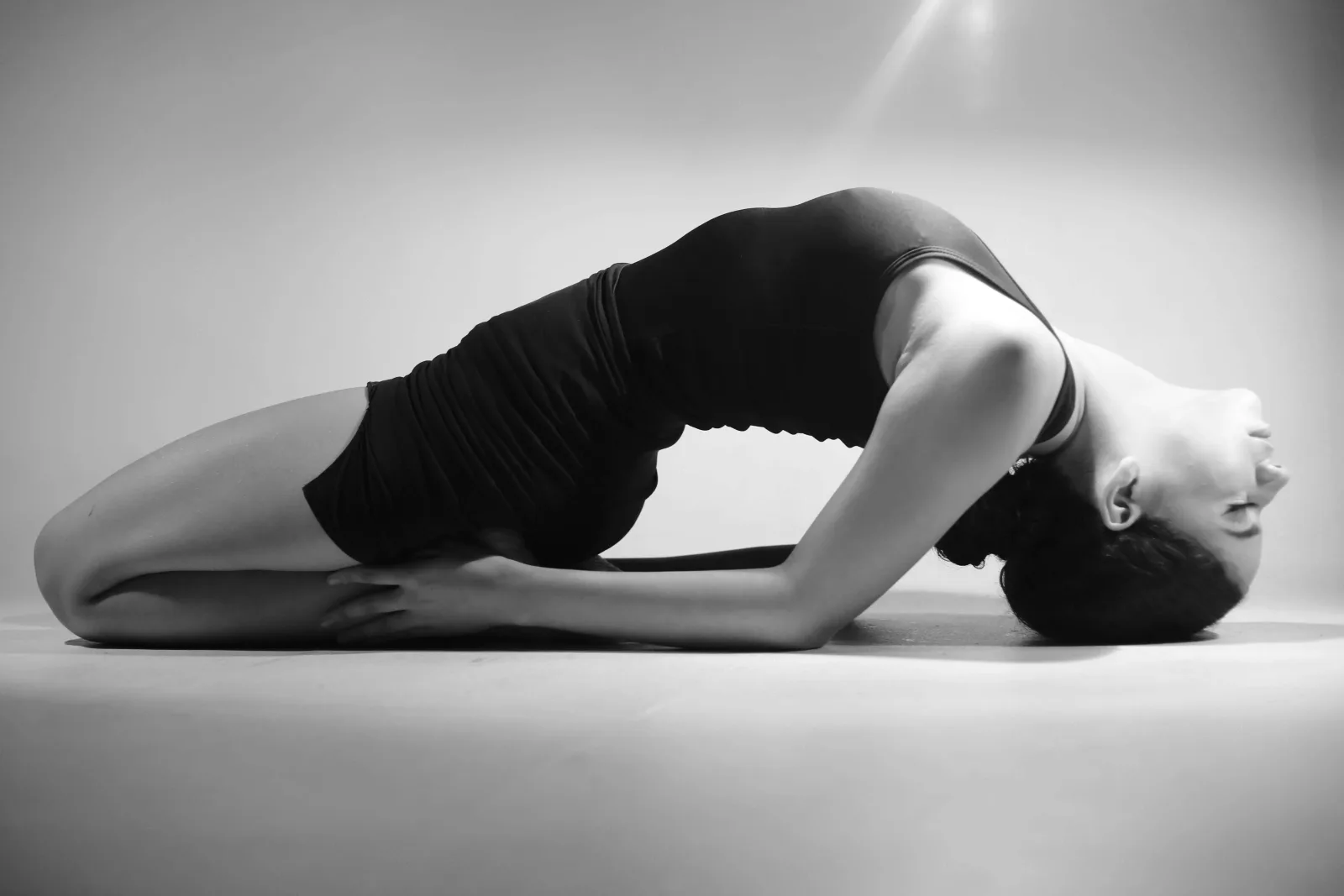
Some poses stand alone; matsyasana exists in conversation. For every minute the neck spends folded forward in shoulderstand — chin pressed toward chest, throat closed — tradition prescribes a reply: recline, arch the upper back, let the throat open and the head tip back until the crown rests lightly on the floor. That reply is Matsyasana, the fish pose, and "counter-pose to shoulderstand" is not a footnote to its identity — it is its identity in classical sequencing. Understood that way, its benefits come into focus honestly: fish pose reverses sustained forward-neck positions (shoulderstand's, and your phone's), opens the chest and the front of the throat, frees the breath into the upper ribs, and rounds off inverted practice so the neck ends the session in balance. This guide covers the pairing, the name — including a mix-up we've corrected in our own archive — the supported versions most people should actually practice, and who should skip it.
This article is for general education and is not medical advice. Neck-extension poses are unsuitable for some conditions — please read the cautions below and consult a qualified healthcare professional about your individual situation.
First, the name — and a correction
Matsya is Sanskrit for fish; matsyasana is the fish pose, traditionally linked to Matsya and to the fish that became the sage Matsyendra in yogic lore. One housekeeping note we owe our long-time readers: an earlier version of our old blog library once mislabelled this posture "Swan Pose." That was simply an error — the swan (hamsasana) is a different posture altogether, and everything in this guide is about the fish: matsyasana, the reclining chest-opener, exactly as listed in our asana library among the classical twelve basic postures of traditional hatha schools.
One more disambiguation, because a common search suggestion invites it: the full classical matsyasana is performed with the legs folded in padmasana (lotus). The version taught in most modern classes — legs extended, or soles together — keeps the pose's upper-body essence while dropping the lotus prerequisite. Both are matsyasana; the FAQ below sorts out where padmasana's own benefits begin and end.
Why counter-poses matter (the logic of the pairing)
Shoulderstand and plough hold the neck in deep forward flexion — valuable, and one-sided. A practice that repeatedly folds a joint one way and never the other trains an imbalance; the counter-pose is tradition's answer, moving the same region gently through the opposite range before the session ends. Fish extends what shoulderstand flexed, opens what it closed, and — practitioners consistently report — dissolves the sense of compression that can linger after inversions. Modern movement thinking arrives at the same place by another road: joints like their full range, and balanced sessions use it. If you practice sarvangasana, matsyasana is not optional garnish; it is the other half of the sentence.
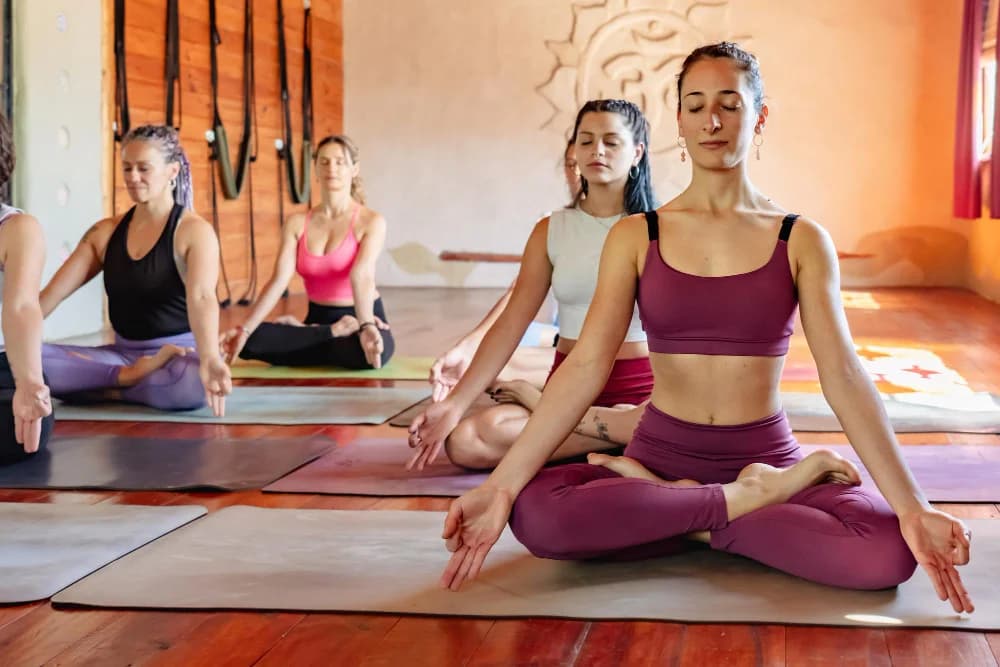
It also earns a life of its own outside that pairing. Hours of screens hold nearly everyone in a mild shoulderstand-neck all day — chin down, chest closed. A supported fish over a bolster is one of the simplest counters to a scrolling posture that exists.
Matsyasana benefits, honestly weighed
The neck's missing direction. Gentle, supported neck extension takes the cervical spine the way modern life almost never does. Practiced with care, this may help ease the stiff, compressed feeling of forward-head days — and it is the specific reason fish follows shoulderstand.
A chest that remembers how to open. The arch stretches the pectorals, the front shoulders, and the throat line, and lifts the ribcage away from its habitual slump. Many students feel the breath drop noticeably deeper immediately afterwards — the upper ribs finally have room.
Freer breathing, experienced if not proven. With the chest held open, breath moves visibly into the upper lungs. Whether that changes anything measurable long-term is unproven; that it feels expansive is about as consistently reported as anything in the practice. We label the claim accordingly.
A quiet lift in mood. Gentle backbends, fish included, are widely experienced as brightening — tradition frames the pose as heart-opening. Teaching-hall observation, offered as such.
The gland and disease claims, labelled. Tradition credits the throat stretch with stimulating the thyroid, and popular articles extend fish pose to curing thyroid disorders and diabetes. We pass the thyroid association on strictly as tradition — reliable evidence of a treatment effect is lacking — and the diabetes claim gets a plain no in the FAQ. The pose's demonstrable gifts don't need borrowed ones.
How to practice fish pose
Lie on your back, legs extended, feet together. Slide the hands, palms down, under the hips — thumbs roughly touching beneath you. This wedge protects the lower back and gives the arms their job.
Press the forearms and elbows into the floor and, on an inhale, lift the chest — think of a string drawing the breastbone toward the ceiling.
Let the head tip back gently until the crown rests lightly on the floor. Lightly is the entire technique: the elbows and forearms keep carrying most of the weight; the head is a kickstand, not a pillar.
Legs stay active, pressing through the heels. Breathe steadily into the open chest for 15–30 seconds.
To exit — and this order matters — press the elbows down, lift the head slightly, tuck the chin, and lower the back of the head to the floor. Never drag the head across the floor or sit up with it hanging back.
Rest a few breaths, then hug the knees gently to the chest.
A tip from our teaching hall: if you can't slide a friend's fingers out from under your skull in fish pose, you're pressing too hard. We test exactly that in class — the head should rest so lightly that it could be lifted at any moment by the strength of the arms alone.
Supported variations (the honest default)
Bolster fish — a bolster or two stacked cushions lengthwise under the spine from mid-back to head, arms open wide. All of the chest opening, none of the neck load; can be held for minutes. This is the version we suggest most readers make their daily one.
Rolled-blanket fish — a firm roll across the upper back at the shoulder-blade tips, head supported on a cushion. Excellent desk-day counter.
Legs-folded variants — soles together (supta baddha konasana-style) or the full padmasana legs for practitioners who already sit comfortably in lotus. The legs change the hip demand, not the pose's essence.
Who should be careful or skip it
Avoid the unsupported pose — or take individual advice first — if you have neck injuries or cervical spine conditions (the head-back position loads exactly that region; bolster fish with the head supported is usually the safer relative), uncontrolled blood pressure or heart conditions, migraine-prone days (head-back positions can trigger them), or a recent back or abdominal surgery. In mid-to-late pregnancy, flat-on-the-back poses need modifying anyway — an inclined supported version under a qualified teacher's eye replaces it well. Dizziness in the pose is the signal to tuck the chin and come out; fish should feel open, never precarious.
Frequently asked questions
How long should I hold Matsyasana?
Unsupported: 15–30 seconds to begin, building toward a minute — after shoulderstand, even a few breaths completes the counter-pose job. Supported on a bolster: comfortably several minutes. Ease of breath, not the clock, sets the limit.
Who should not do fish pose?
The list above: significant neck conditions, uncontrolled blood pressure or heart disease, migraine days, recent surgery — and pregnancy needs the modified incline. Most of these still have access to the bolster version with the head fully supported, which keeps the chest opening and drops the neck extension.
What about Padmasana — the classical legs?
The search engines pair these poses for a reason: classical matsyasana is done in lotus. Padmasana's own traditional benefits — a steady, grounded seat for breathing and meditation — belong to sitting practice and require open hips built patiently over months. If lotus isn't available (for most modern practitioners it isn't yet), extended-leg fish loses none of the chest-and-throat essence. Never force the legs for the sake of the classical picture; knees pay for forced lotus.
Is Matsyasana good for diabetes?
No pose treats diabetes, and we won't repeat the claim. Regular overall activity may support general metabolic health alongside proper medical care — that is the honest, hedged extent of it. Please manage diabetes with your doctor; enjoy fish pose for what it demonstrably is.
Finish your practice in balance
If shoulderstand is part of your practice, give its counter-pose the two minutes it asks — your neck keeps the accounts either way. Sequencing logic like this pairing is a core thread of the 200-hour yoga teacher training in Rishikesh, where trainees learn not just poses but the grammar that orders them. The full family — inversions, counter-poses, and the classical twelve — lives in the asana library. Questions? We're on WhatsApp.
References
National Center for Complementary and Integrative Health (NCCIH) — Yoga: What You Need To Know (general evidence and safety notes).
NIH resources on neck pain and posture (context for the forward-head counter framing).
Traditional hatha yoga teaching on matsyasana as counter-pose to sarvangasana, and its classical padmasana form (classical Indian schools; thyroid claims presented as tradition, not clinical evidence).
Reviewed for health accuracy by Dr. Bhupinder Singh Arora (M.D. Ayurveda), consulting Ayurvedic physician at Pure Soul Yoga School. This article is educational and not a substitute for personal medical advice.
Author note (byline): Gangesha Adi (E-RYT 500) ends every inversion class at Pure Soul Yoga School, Rishikesh with the same sentence — "and now, answer your shoulderstand" — because a practice, like a conversation, shouldn't end mid-reply.