Ustrasana Benefits: Camel Pose and the Backbend Nobody Warns You About
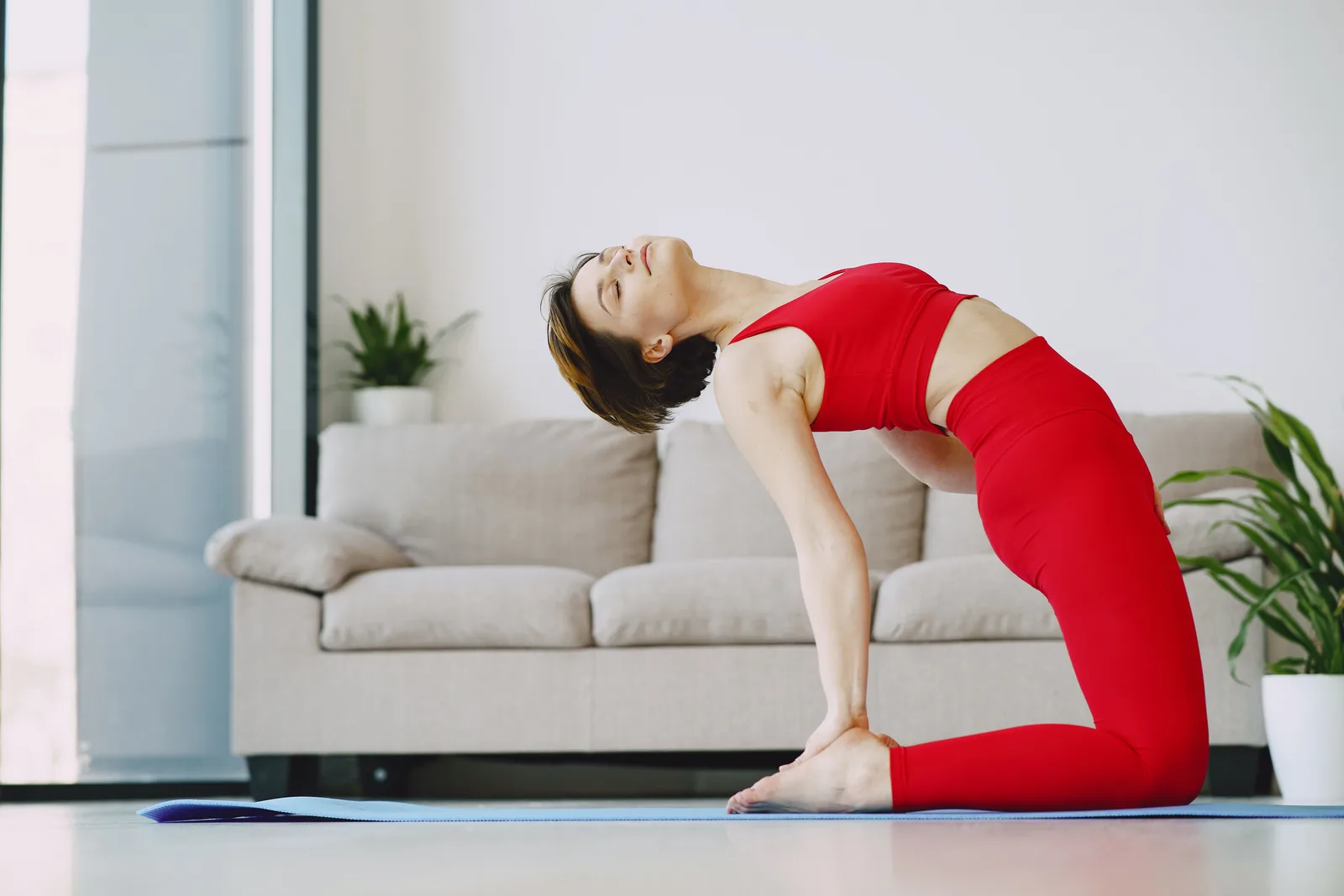
Teachers know something about Ustrasana that first-time students don't: camel pose has feelings. A student who moved calmly through an hour of practice kneels back into this chest-opening arch and suddenly reports dizziness, a racing heart, an inexplicable wave of unease — sometimes even tears. None of that means the pose is wrong for them. Ustra is Sanskrit for camel, and ustrasana — kneeling upright, arching back, hands reaching for the heels — is one of the most direct chest and front-body openers in the practice. Its benefits are real: it stretches everything a desk-bound day shortens, builds backbending capacity on a much friendlier platform than the full wheel, and may help ease the rounded-shoulder stiffness most of us carry. But because it is also the pose where backbend fear and the "what do I do with my head?" question show up most reliably, this guide gives those two topics the space other articles skip.
This article is for general education and is not medical advice. Backbends are unsuitable for some conditions — please read the cautions below and consult a qualified healthcare professional about your individual situation.
What is Ustrasana?
Kneel with the thighs vertical and hip-width apart, place the hands on the lower back or heels, lift the chest toward the ceiling, and let the spine curve evenly backward — that is camel pose. In our asana library it sits in the backbend family, rated intermediate: deeper than cobra pose, far more accessible than wheel, and unusual among strong backbends because the arms don't bear weight. That makes it a teaching pose — the place where students learn what a backbend should feel like (long, evenly distributed, breathing) before the deeper shapes raise the stakes.
Why backbends can feel frightening — and why that's normal
If camel makes you dizzy, breathless, or strangely emotional, you are in large company, and there are unmysterious reasons for most of it. Taking the head back changes the inner ear's sense of where "up" is, which can produce brief dizziness; the arched position stretches the front of the ribcage, which can make the breath feel restricted until you learn to breathe into the back of the body; and leaning backward into space you cannot see asks for a kind of trust that forward folds never demand. Yoga tradition adds its own layer — backbends are described as heart-opening and emotionally stirring — and many practitioners' experience matches that description, though we offer it as tradition and teaching-hall observation, not clinical fact.
The practical response is simple: go slower than you want to, keep the eyes open at first, keep the breath moving, and come out the moment panic (as opposed to effort) appears. Fear that is respected shrinks with familiarity. Fear that is bulldozed tends to grow.
The head and neck: back, or not?
This is the question hands go up for, so here is the honest answer: dropping the head back is optional, and for beginners it is usually the wrong choice. The neck is the smallest, most mobile part of the chain, and if the chest and upper back haven't yet learned to arch, the neck will volunteer to do their work — which is exactly how camel ends up hurting.
Our working rule: keep the chin gently tucked toward the throat, gaze forward or slightly up, until the day the chest is so open that letting the head go back feels like a small, comfortable continuation rather than a plunge. When you do release it, the neck should lengthen back as part of the whole curve — never hang like a dropped weight. Anyone with cervical spine problems, previous whiplash, or vertigo should keep the chin tucked permanently; the pose loses almost nothing.
Ustrasana benefits, honestly weighed
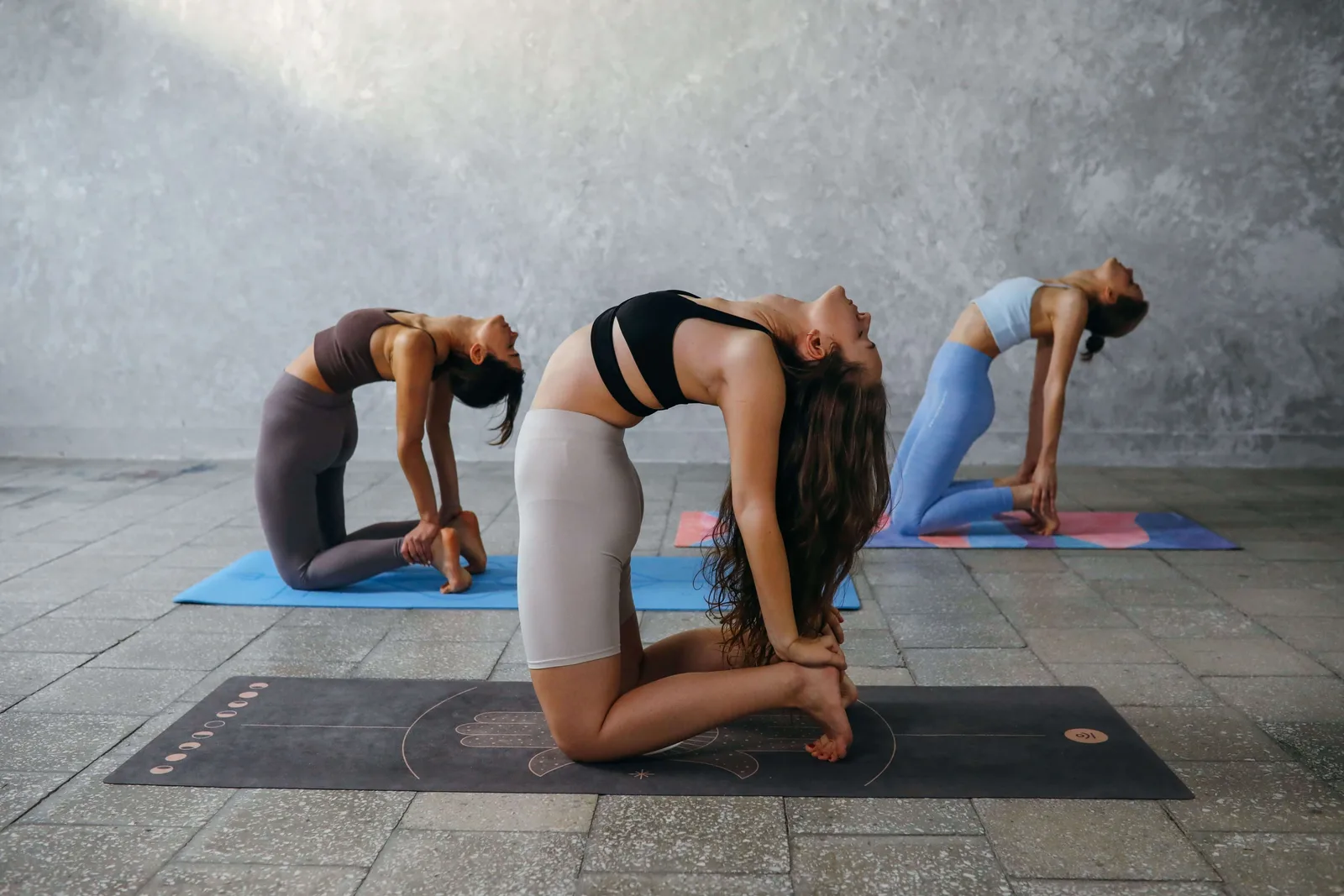
A full front-body stretch without loading the wrists.
Camel opens the chest, the front of the shoulders, the abdomen, and — via the vertical thighs — the hip flexors, all at once. For people who sit most of the day, this may help counter the accumulated forward-fold of chairs, and it does so without asking the wrists to carry anything.
Strength where backbends need it.
The muscles along the spine, the glutes, and the thighs all work to support the arch. The muscles being stretched are the pectorals, abdominals, hip flexors and throat line — which answers the "what muscles does ustrasana work" question in both directions: back-body working, front-body lengthening.
A trainable backbend that transfers.
Because the shape is close to wheel's upper-body demand with a fraction of the risk, time spent in camel is the most efficient preparation for deeper backbends — and for many practitioners, camel depth is simply enough, permanently.
Posture support, hedged.
Regularly reversing the rounded-shoulder position may help with the stiffness and heaviness of desk posture. Better posture still has to be practiced upright; camel raises awareness rather than granting it.
The thyroid claim, labelled.
Traditional teaching credits ustrasana with stimulating the throat and thyroid region, and popular articles repeat this confidently. We pass it on as tradition: the pose certainly stretches the front of the throat, but reliable evidence that it changes thyroid function is lacking. Anyone with a thyroid condition should follow their doctor's treatment and treat camel as a nice chest opener, not a therapy.
How to practice it: the staged camel
Kneel tall. Knees hip-width, thighs vertical, tops of the feet down (toes can be tucked to raise the heels — an honest beginner's modification). Hands on the lower back, fingers down, elbows drawing toward each other.
Lift before you lean. Inhale, grow the spine long, lift the breastbone. The arch begins in the upper back — think of curving over a large ball behind you, not folding at the waist.
Stay here if this is today's pose. Hands-on-lower-back camel is a complete backbend. Five even breaths, chin softly in.
Reach for the heels only if the chest keeps lifting. One hand at a time, or both together. If reaching the heels collapses the chest or pinches the lower back, come back to stage 3 — heels with tucked toes are nearer and perfectly legitimate.
Head: forward or gently back, per the section above. Hips stay pressing forward over the knees the whole time.
Exit the way you came — hands to the lower back, chin toward chest, lift up on an inhale using the thighs. Never spiral out sideways.
Counter gently. Sit back toward the heels in child's pose for a few breaths before anything else.
A tip from our teaching hall: press the shins and the tops of the feet down firmly before you arch. Students who ground the legs first find the backbend rises out of support instead of falling into the lower back — the whole pose changes character from that one instruction.
Who should avoid Ustrasana?
Skip the pose — or take individual professional advice first — if any of these apply: neck or cervical spine injuries (or keep the chin permanently tucked, as above); significant lower-back conditions such as disc problems, where deep extension needs a professional's yes; uncontrolled high or low blood pressure, or a tendency to vertigo and migraine, since the head-back position can provoke dizziness; recent abdominal surgery or hernia; and knee problems that make kneeling painful — although padding under the knees solves the milder cases. During pregnancy, deep backbends are generally set aside in favour of gentler chest openers chosen with a qualified teacher. And nobody should practice camel cold: it belongs in the second half of a warmed-up session.
Frequently asked questions
Who should avoid Ustrasana?
The list above in full — most importantly people with neck injuries who take the head back anyway, and anyone with disc-level back problems practicing without individual guidance. If kneeling hurts, padding fixes some knees and not others; pain is the deciding vote.
Is Ustrasana good for the thyroid?
Tradition says the throat stretch stimulates the thyroid; modern evidence doesn't confirm a treatment effect, and we won't claim one. Enjoy the pose for its demonstrable gifts and manage thyroid conditions with your doctor.
What muscles does Ustrasana work?
Working: spinal extensors, glutes, thighs, and the muscles between the shoulder blades. Lengthening: chest, front shoulders, abdominals, hip flexors, and the front of the neck when the head goes back. It is a strength pose and a stretch at once.
Is Ushtrasana good for back pain?
Sometimes — gentle, supported backbending may help stiffness-type upper-back and postural discomfort, and some backs love extension. Other backs, particularly with disc involvement, react badly to it. If you have actual back pain rather than tightness, get individual advice before adding camel; an article cannot examine you.
Fear is part of the curriculum
A pose that stirs the nervous system is a pose worth learning properly. On the 200-hour yoga teacher training in Rishikesh camel is where our trainees first practice teaching people rather than shapes — reading when a student needs encouragement and when they need permission to stop. The rest of the backbend family, and everything that prepares it, lives in the asana library. Questions? We're on WhatsApp.
References
National Center for Complementary and Integrative Health (NCCIH) — Yoga: What You Need To Know (general evidence, yoga safety and injury notes).
NIH resources on flexibility and safe exercise progression (context for the staged approach).
Traditional hatha yoga teaching on ustrasana (classical Indian schools; thyroid and emotional-release claims presented as tradition, not clinical evidence).
Reviewed for health accuracy by Dr. Bhupinder Singh Arora (M.D. Ayurveda), consulting Ayurvedic physician at Pure Soul Yoga School. This article is educational and not a substitute for personal medical advice.
Author note (byline): Gangesha Adi (E-RYT 500) keeps a box of tissues near the mat during backbend week at Pure Soul Yoga School, Rishikesh — not because camel pose hurts, but because it occasionally tells students the truth.