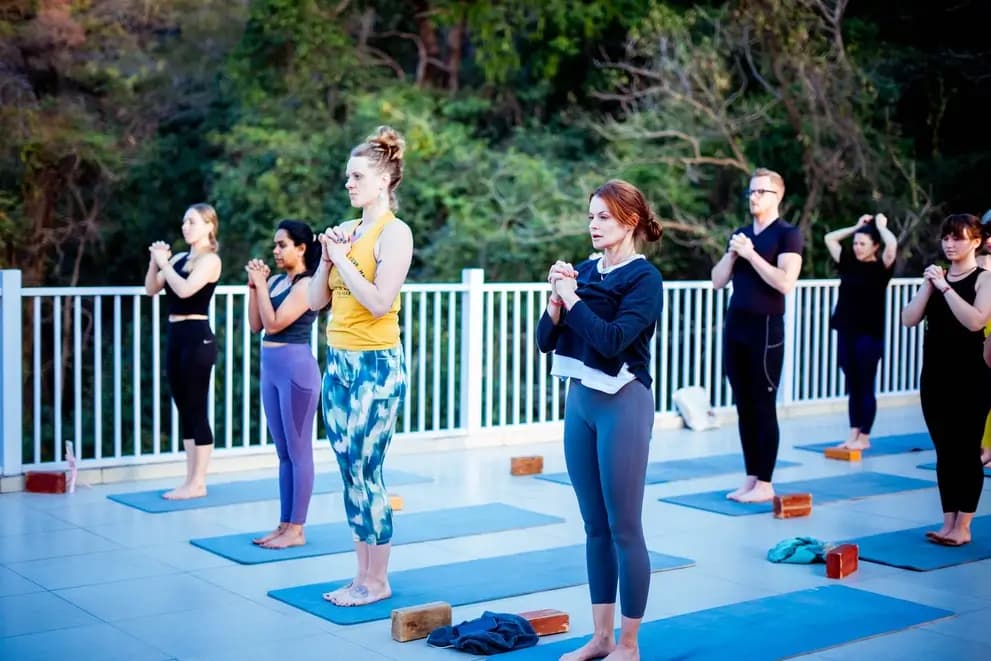
Yoga Teacher Certification: Every Path, Explained Honestly
Yoga teacher certification is a certificate issued by a yoga school when you complete a teacher training program — most commonly a 200-hour course. That's the whole legal machinery in most of the world: no government license, no state exam, and no single global authority that certifies yoga teachers. Instead, a landscape of overlapping systems exists — the Yoga Alliance registry most international studios recognise, national yoga associations in some countries, college and university programs, and trainings delivered online or in person — and the right one for you depends entirely on where and how you plan to teach.
Most articles quietly assume one of those systems is the only one. This guide maps all of them, honestly, so you can see the whole board before you put money on any square — including ours.
What yoga teacher certification actually means
Strip away the marketing and one clean fact remains: your certificate comes from the school that trains you. Complete a teacher training, meet its requirements, and the school issues your certificate — that document is what makes you a certified yoga teacher. In most countries, teaching yoga requires no license, so the school's certificate is the credential; nothing above it hands out permission slips.
The confusion lives around that certificate. Registries like Yoga Alliance don't certify anyone—they register schools and teachers whose training meets published standards, a different thing (our guide to Yoga Alliance certification decodes the distinction fully). National associations in some countries maintain their own standards. Colleges award credit. But in every case, the certifying act itself belongs to the training provider.
If you're really asking, "how do I get from here to teaching my first class?", that's a different article — our pillar guide on how to become a certified yoga teacher walks the whole seven-step path. This page answers the question that comes just before it: which certification, from which system?
One certificate, several systems
Because no government owns yoga certification, several recognition systems have grown up side by side. Here is the landscape at a glance:
Path | Who recognises it | Best for | Watch for |
|---|---|---|---|
Training at a Yoga Alliance–registered school (RYS) | Studios, gyms and insurers internationally — the closest thing to a global default | Teaching at studios in North America, Europe, Australia, or online to an international audience | Verify the school in the public directory yourself, before any deposit |
National association or vocational framework | Employers and insurers within that specific country | Teaching long-term in a country that uses such a framework | Exists only in some countries; standards and recognition vary widely |
College or university program | Academic institutions; some local employers | Academic credit alongside a degree, or a formal classroom structure at home | Credit hours and yoga-registry eligibility are separate questions — check both |
Independent school certificate (no registry) | The school's own reputation | Studying with a specific lineage or teacher whose name carries weight | Recognition travels only as far as the school's reputation does |
Three of these deserve a closer look.
Path 1: The Yoga Alliance route (the international default)
The most widely recognised path runs through Yoga Alliance, a US-based nonprofit that maintains the largest international registry of yoga schools and teachers. The sequence: you train at a Registered Yoga School (RYS) — a school whose curriculum meets the registry's published standards — the school certifies you, and you can then register yourself as an RYT 200 (Registered Yoga Teacher). One point of honesty the industry is chronically loose about: Yoga Alliance registers teachers; it never certifies them. The certificate is your school's; the listing is Yoga Alliance's.
Why this became the default is practical: studios and gyms across North America, much of Europe and Australia ask for RYT status by name, insurers recognise it, and it's the one credential an employer on another continent can verify in two minutes.
The full decode — RYS vs RYT, E-RYT, speciality marks, what registration genuinely gets you and what it doesn't — lives in our Yoga Alliance certification guide. The short version for choosing a path: a school's registration status is a checkable public record, and you should check it in the directory before paying anyone anything. (Ours is checkable too: Pure Soul Yoga School is registered as an RYS 200, RYS 300 and RYS 500, with RCYS and RPYS speciality registrations — and we'd rather you confirm that than take this paragraph's word for it.)
Path 2: National systems and associations
In some countries, national yoga associations, federations or vocational-education frameworks maintain their own teaching standards, registries or qualification levels — sometimes with longer minimum training hours than the international default, sometimes with formal ties to national fitness or vocational bodies. Where these systems exist, local employers and insurers may know them better than any international registry.
We won't pretend to referee these systems; honest advice here is mostly a checklist:
Find out whether your country has one. Search for a national yoga association or teaching framework where you plan to teach, and ask working teachers there what employers actually request.
Ask what local studios and insurers accept. In many countries, an internationally recognised 200-hour certificate is sufficient; in a few, the national qualification opens doors the international one doesn't—particularly in health-adjacent or publicly funded settings.
Check whether foreign training transfers. Some national systems recognise training completed abroad, sometimes with a top-up requirement. If you're planning to train in India and teach at home, ask that question before you book.
For most readers of this page — aspiring teachers in the US, UK and most of Europe planning to teach in studios — the school-certificate-plus-registry path is the operative one. But "check your own country's landscape" is ten minutes of research that occasionally saves a real headache.
Path 3: College and university programs
In the United States especially, some community colleges and universities offer yoga teacher training as for-credit or continuing-education programs — a legitimate option with a distinct trade-off profile.
What they offer: academic structure, semester pacing, campus resources, sometimes transferable credit toward a degree. Some are also registered with Yoga Alliance, which brings them into Path 1's recognition system.
What to check: whether the program's certificate makes you eligible for the registry your future employers use (a college credential and registry eligibility are separate questions — a program can offer both, either, or neither), how many hours are yoga contact hours versus general coursework, and who the teachers are. A university's name doesn't carry much weight in the yoga world; studios care more about the training's substance and registry status.
This path fits someone already in higher education, or someone who wants academic scaffolding and local pacing more than immersion. If that's not specifically you, the trade-off usually runs the other way.
Online or in person: the format question
Every path above also comes in formats: residential immersions, part-time in-person programs, hybrids, and fully online trainings. That choice deserves its own honest treatment — including what online formats genuinely do well and where a screen cannot substitute for a room with bodies in it — and we've given it one in online vs residential yoga teacher training.
For the certification question specifically, know this much: recognition can differ by format. Some registries and employers treat online-only trainings differently from in-person ones, and policies have shifted over time. If you're considering an online program, confirm — with the registry and the kind of employer you want — how that certificate will be received before you enrol, not after you graduate.
Certification levels: 200, 300 and 500 hours
Whatever path you choose, the international convention measures certification in training hours:
200 hours — the standard entry certification, and the one studios worldwide mean when they say "certified." Almost everyone starts here.
300 hours — advanced training taken after the 200, deepening philosophy, anatomy, and teaching skills. Completing 200 + 300 hours at registered schools makes a teacher eligible for RYT 500 registration.
500 hours — the two stages combined, either sequentially or as a single program.
Shorter 100-hour foundation courses exist as a first step or a deep personal-practice immersion — genuinely useful, but not a teaching certification on their own.
Our 100 vs 200 vs 300 vs 500-hour comparison maps which level to start with, what each one actually contains, and who each is for — including real course structures and fees. The one-line version: start at 200 unless you have a specific reason not to, and treat everything beyond it as a later chapter, not a prerequisite.
Speciality certifications: children, prenatal and beyond
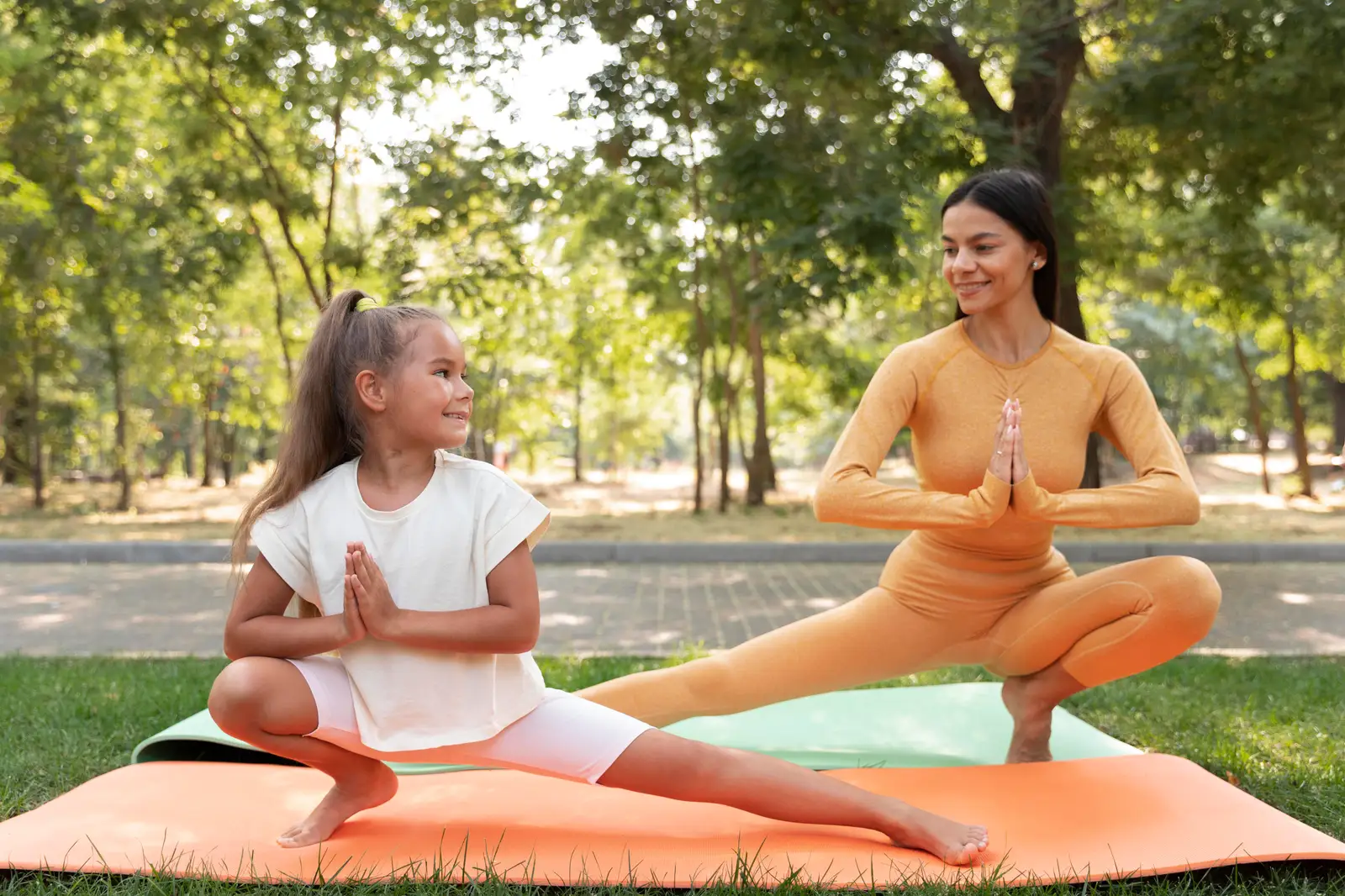
Beyond the general track, speciality certifications exist for populations where general training honestly isn't enough. The two with formal registry recognition are children's yoga and prenatal yoga — in the Yoga Alliance system, dedicated schools hold RCYS and RPYS registrations, and their graduates can register as RCYT and RPYT respectively. Prenatal work in particular carries real responsibility; if you intend to teach pregnant students regularly, treat the dedicated certification as substance, not decoration.
Plenty of other speciality certificates exist — yin, restorative, therapeutic, seniors, and more. Most are additions layered on a 200-hour foundation rather than replacements, and their value tracks the quality of the school issuing them. The pattern to trust: foundation first, speciality when a real teaching direction calls for it.
How to choose your certification path
Match the path to the goal, not the other way around:
You want to teach at studios or gyms in the US, UK, Europe or Australia → a 200-hour training at a Yoga Alliance–registered school, followed by RYT registration. This is the broadest, safest recognition.
You want to teach online to an international audience → the same, since RYT is the credential a stranger in another country can verify.
You plan to teach long-term in one specific country → do the ten minutes of research on that country's national framework first, then choose a training that satisfies it — or confirm an international certificate does.
You want academic credit or campus structure → look at college programs, and check their registry status alongside the credit.
You're drawn to a specific population — children, pregnancy → start with a foundation certification, then do the dedicated speciality training at a school registered for it.
You're not sure you want to teach at all yet → consider a 100-hour foundation or simply deepening practice before buying a certification you may not need.
A tip from our teaching hall: the most common certification question students ask us before enrolling isn't "which credential is best?" — it's "will this certificate work back home?" And the honest answer is that we ask them a question back: who, exactly, do you imagine handing it to? Name the studio, the gym, the country. Once you can picture the person who'll read your certificate, the right path usually chooses itself in about a minute.
What yoga teacher certification costs
Honestly: certification costs vary too widely — by country, format, and what's bundled into the fee — for any single "market rate" to be truthful, and we won't invent one. What we can give you is our own published pricing as a concrete residential reference point: our courses run from $730 for the 100-hour foundation to $2,700 for the 500-hour private-room immersion, with the standard 200-hour certification at $1,200 (shared room) or $1,350 (private) — including 23 days' accommodation, three vegetarian meals daily, materials and certification. Home-country studio programs typically price tuition alone, since you live at home; online programs typically cost less than either. Registration fees (if you register), insurance, and travel sit on top of any path.
The full fee-by-fee breakdown — what a training fee actually buys, the hidden-cost checklist, and how the 20% deposit works — is in our yoga teacher training cost guide. The one rule that travels across every path: compare total cost with everything counted, never headline tuition.
Frequently asked questions
Which certificate is best for yoga teachers? There's no single best — recognition depends on where you'll teach. For studio and gym teaching across North America, Europe and Australia (or online internationally), a 200-hour certificate from a Yoga Alliance–registered school, followed by RYT 200 registration, is the most widely recognised combination. If you'll teach in a country with its own national framework, check what local employers ask for before choosing.
What certifications do yoga teachers need? Legally, in most countries: none — yoga teaching is unlicensed. Practically: a 200-hour teacher training certificate is the near-universal baseline studios expect, RYT registration where employers use the registry, liability insurance once you teach publicly, and a dedicated speciality certification if you teach children or pregnant students regularly.
How long does it take to be a certified yoga teacher? The 200-hour training itself takes about a month in a full-time residential format (ours runs 23 days) or three to six months part-time. From decision to certificate, most people complete the path within six months to a year. Our guide to becoming a certified yoga teacher includes the step-by-step timeline.
What is the highest salary for a yoga teacher? Honest answer: there's no reliable single figure — pay varies enormously by country, city, setting and format, and we won't quote numbers we can't stand behind. The consistent pattern is that certification alone doesn't set income; experience and format do. Teachers earn more through private clients, specialisation, workshops, retreats, and eventually training other teachers than through drop-in classes alone.
Can you teach yoga without certification? Legally, in most countries, yes — no law stops you. Practically, most studios and gyms won't hire uncertified teachers, insurers ask about training, and students increasingly check. More importantly, serious training teaches you to keep bodies safe. The certificate is the by-product; the competence is the point.
Do yoga certifications expire? Your school-issued certificate doesn't expire. Registrations layered on top of it typically renew — Yoga Alliance registration, for example, involves an annual renewal with continuing-education expectations, and national frameworks set their own rules. Check the current requirements of whichever body you register with rather than trusting any article's memory of them.
See the whole board, then choose your square
If mapping the landscape has pointed you toward a residential, registry-recognised training, you're welcome to look at our courses — 200, 300 and 500-hour certifications (RYS 200, 300 & 500) plus children's and prenatal speciality programs (RCYS & RPYS), taught in Rishikesh with a maximum of 20 students per batch and a 20% deposit to hold a seat. And if you're still comparing paths — including paths that don't lead to us — message us on WhatsApp anyway. Helping people choose well is the part of this work we'd do for free, and sometimes the honest answer is a college program down the road from your house.
Author note (byline): Gangesha Adi (E-RYT 500, RCYT, RPYT, YACEP) founded Pure Soul Yoga School and has fielded the "will this certificate work in my country?" question from students of more than 50 nationalities — often enough to know the answer starts with their goal, not with any school's brochure.