Sirsasana Benefits: Headstand, Learned the Safe Way
Let's begin where most articles end: Sirsasana is the one pose in this library we ask you not to learn from an article. The tradition calls headstand the king of asanas, and its genuine rewards — upper-body strength, refined balance, and a composure you can't fake upside down — are real. But it is also the pose where internet self-teaching most often goes wrong, because the price of a bad attempt is paid by the neck. So this guide does something slightly different from the others in our pose series: it gives you the honest benefits, the full risk picture, and the preparation you can safely do alone — while being direct that the pose itself belongs in front of a qualified teacher.
This article is for general education and is not medical advice. Inversions carry real risks for some people — please read the contraindications below and consult a qualified healthcare professional before attempting headstand.
What is Sirsasana?
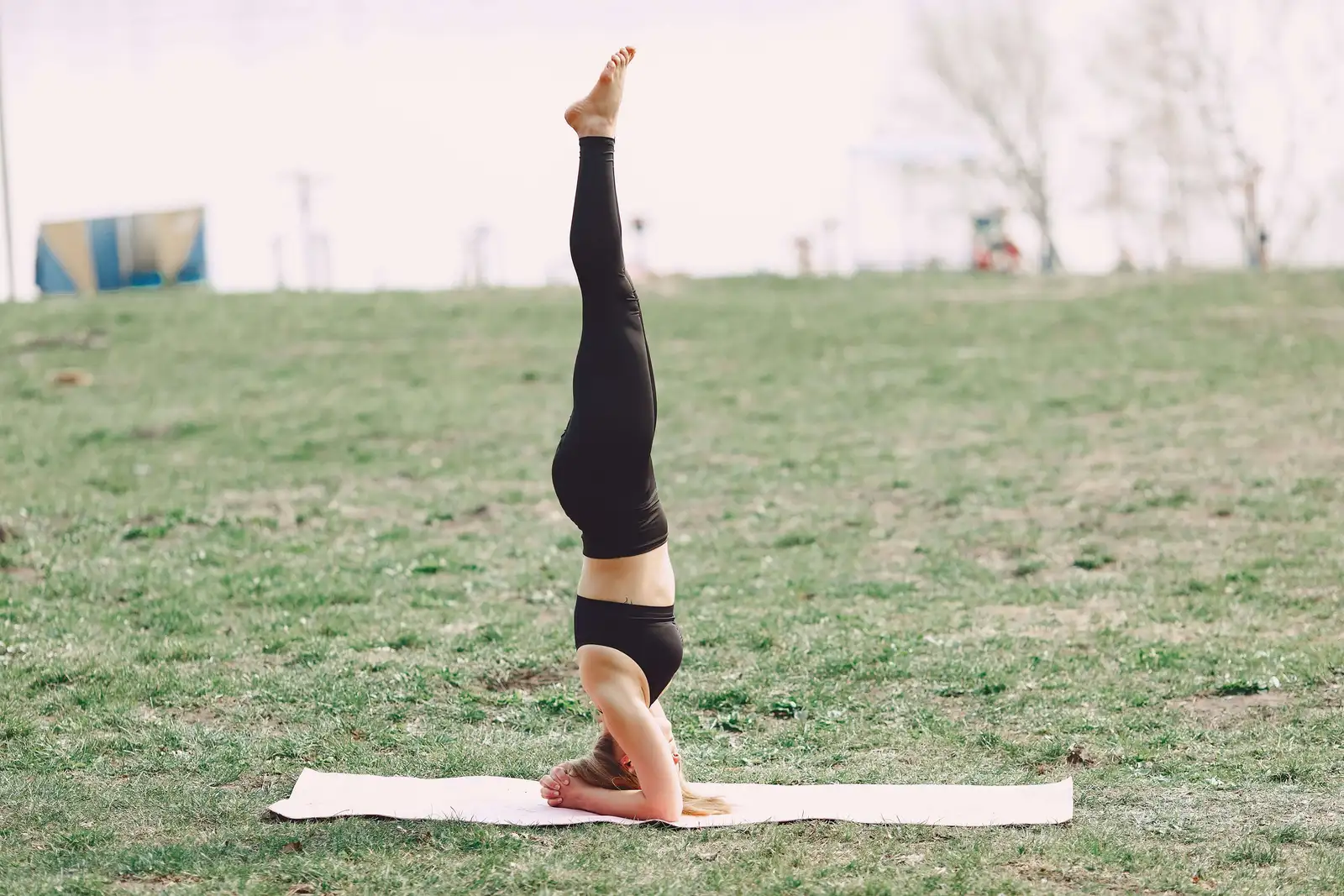
Sirsa (śīrṣa) is Sanskrit for head; sirsasana is the head-standing pose. The version taught almost everywhere is Salamba Sirsasana — supported headstand — in which the forearms and interlaced hands form a tripod base and carry a substantial share of the load, with the crown of the head resting inside the cradle of the hands. The body balances fully inverted, heels stacked over hips over shoulders. Classical tradition places it at the summit of asana practice; in the asana library it sits in the inversions family, marked advanced, and that label is not decoration.
How Sirsasana is built (the supervised path)
These steps describe how a teacher will construct the pose with you — and steps 1–3 are safe, valuable homework on their own.
Build the prerequisites. Hold a strong forearm plank and dolphin pose (downward dog on the forearms) for a minute each, comfortably. This is the strength floor for headstand — without it, the neck takes what the shoulders can't.
Learn the base. Kneel, place the forearms down with elbows shoulder-width, interlace the fingers into a cup. This triangle — two elbows, clasped hands — is the foundation; press it down hard enough that the head stays light.
Practice dolphin walk-ins. From the base, straighten the legs and walk the feet toward the elbows, hips rising over the shoulders. Most of headstand's difficulty lives right here.
Crown down, under supervision. The crown of the head — not the forehead, not the back of the skull — rests in the hands' cradle. The forearms keep pressing; the neck stays long and central.
Lift without jumping. With hips over shoulders, the feet grow light; knees draw in, then the legs extend upward with control. A teacher spots the hips; a wall catches overbalance.
Stay small. First holds are seconds, not minutes, with even breathing throughout.
Exit with the same control — knees fold, feet land silently — then rest in child's pose before rising, and come up slowly.
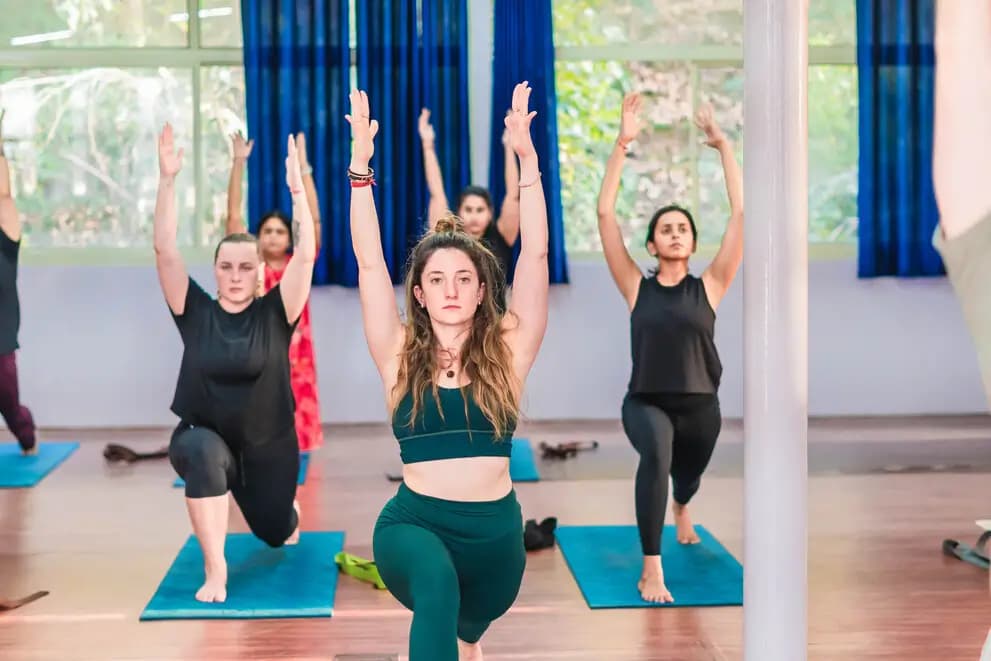
At our school, this progression is spread across weeks of the 200-hour training, not minutes of a single class — students see how it unfolds within the daily asana sessions of the training day. There is no version of this pose worth rushing toward.
Sirsasana benefits — separated from the mythology
Strength you can measure. Shoulders, arms and core work hard in a held headstand — and harder still in the entries and exits. The strength case is the pose's most concrete benefit.
Balance at its most demanding. Balancing inverted on a small base trains proprioception intensely; practitioners typically find their balance in ordinary poses improves alongside.
Composure under novelty. Being calm, breathing evenly, while inverted is a trainable psychological skill, and students consistently describe it as the pose's deepest reward. That's experience speaking, not laboratory evidence — but it's honest experience.
The traditional claims, labelled as such. Classical teaching credits sirsasana with refreshing the brain, improving circulation, kindling vitality — and modern marketing adds "anti-aging". Inversion does transiently shift blood toward the head, which is also precisely why the contraindications below exist. Robust evidence for lasting circulatory, cognitive or anti-aging benefits is lacking; we pass these claims on as tradition, clearly labelled.
What headstand is not: a shortcut, a detox, or a required milestone. A practitioner who never inverts can build a complete, lifelong practice.
Common mistakes
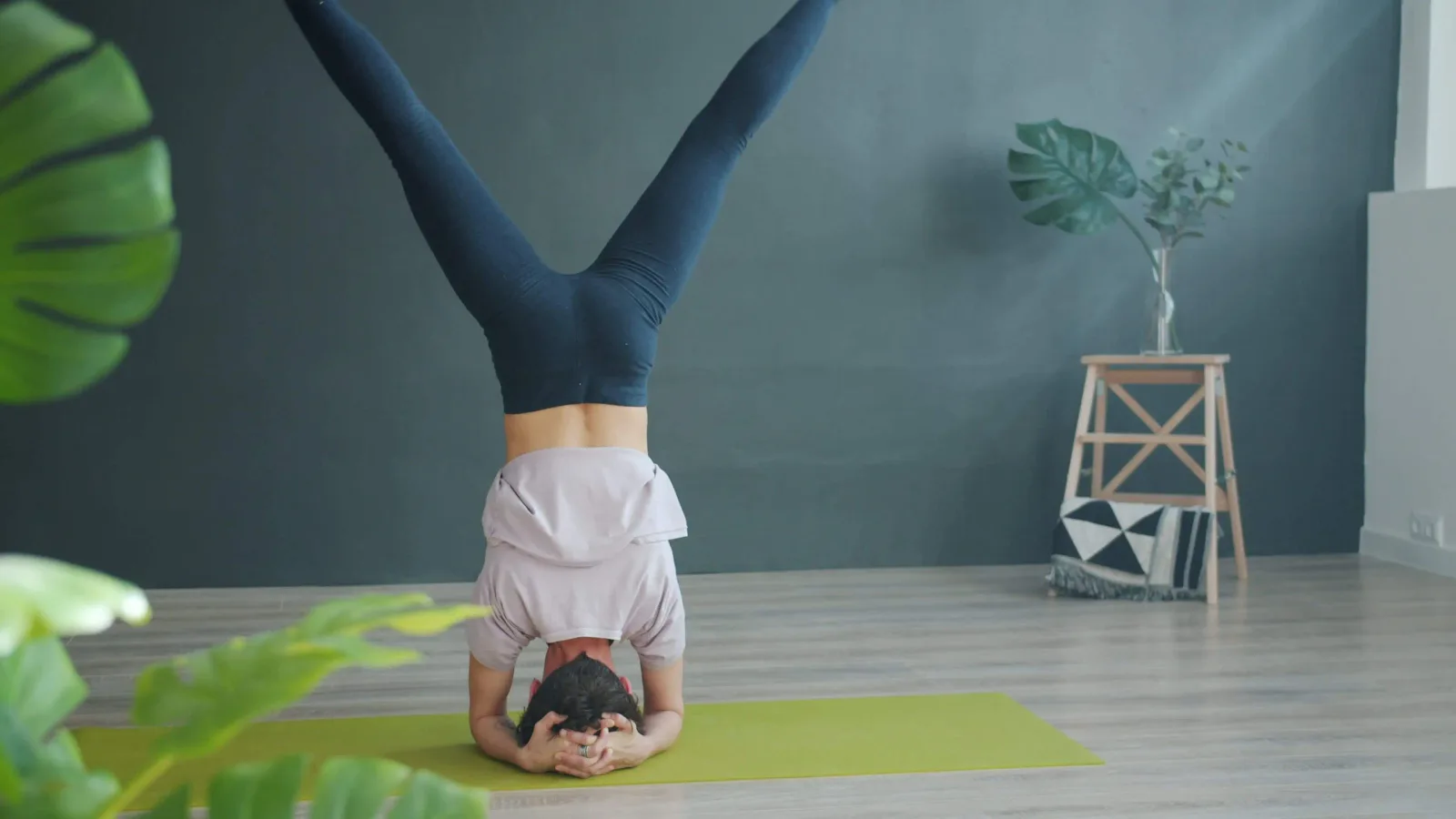
Weight on the head instead of the forearms. In good salamba sirsasana the arms carry generously and the head rests lightly. If your neck feels compressed, the base has failed — come down.
Kicking up. Momentum-based entries sail past the balance point and land as falls. Control in, control out — if you can't lift without jumping, the prerequisite strength isn't there yet.
Elbows sliding wide. The base collapses outward and the neck inherits the load. Elbows stay shoulder-width, forearms pressing.
Turning the head while inverted. Never. Come down first, look after.
Chasing duration early. Long holds add nothing for a beginner and multiply the cost of fatigue-failure.
Who must not practice headstand (contraindications — read all of it)
This list is longer and firmer than for other poses, deliberately.
Neck injuries or cervical spine problems — including past whiplash, disc issues or cervical arthritis. The inverted position loads the neck; damaged structures should not take that load. This is the primary risk of the pose.
High blood pressure, heart disease, or history of stroke — inversion raises pressure in the head and face; get explicit medical clearance before any inverted practice, and consider gentler alternatives permanently.
Glaucoma, other eye-pressure conditions, or recent eye surgery — eye pressure rises measurably in inversions; headstand is generally ruled out. Ask your eye specialist.
Pregnancy — this is not the time to be learning headstand; even experienced practitioners should take individual guidance from doctor and teacher.
Osteoporosis, unmanaged obesity, epilepsy, or recent surgery — each changes the risk calculation; individual professional advice first.
Menstruation — traditional schools advise resting from inversions during menstruation; modern opinion varies. We frame it as tradition and leave the choice with the practitioner and her teacher.
If any item above applies, legs-up-the-wall pose delivers gentle inversion-flavoured rest with a fraction of the risk — and downward dog offers a mild, accessible half-inversion. Neither requires clearance for most people; both are honest substitutes.
Variations and safer alternatives
Dolphin pose — the complete preparation: same base, same shoulder work, head off the floor.
Wall-supported headstand — the standard learning environment; the wall removes the fear of toppling while balance is trained. Still a teacher-supervised stage, not a solo shortcut.
Half headstand (feet on wall, hips over shoulders) — an intermediate step that builds the inverted position without full balance.
Legs up the wall (Viparita Karani) — restorative, near-universal, and genuinely calming.
Headstand stools/props — these exist; we still recommend learning body-built headstand with a teacher first, since props change the load without teaching the control.
Frequently asked questions
Is it good to do Shirshasana every day?
For a trained practitioner with no contraindications, brief daily headstands are common and generally well tolerated. For a learner, daily preparation (dolphin, plank, walk-ins) is excellent — daily unsupervised attempts at the full pose are not. Frequency is never the issue; readiness is.
How many minutes should we do Sirsasana?
Beginners: seconds — 10 to 30, building slowly. Established practitioners commonly hold one to three minutes. Traditional texts describe far longer holds for advanced yogis, but duration earns nothing by itself; a clean 30 seconds outranks a shaky 3 minutes every time.
Is Sirsasana anti-aging?
There is no reliable evidence that headstand slows aging, improves skin, or reverses grey hair — those are marketing extensions of traditional vitality claims. What it demonstrably offers is strength, balance and confidence, which are themselves fine companions for aging well.
What are the disadvantages of Sirsasana?
Practiced without adequate strength, teaching or screening: neck strain and injury, falls, raised blood pressure in the head, and increased eye pressure — which is why the contraindication list above is long. Practiced with proper preparation, supervision and screening, the risk profile drops sharply. The disadvantage, in short, is unsupervised shortcuts.
Learn it with a teacher — really
Everything difficult about headstand is easier, and everything dangerous about it is safer, with a qualified teacher beside you. Inversion teaching — preparation, spotting, screening — is core curriculum at our 200-hour yoga teacher training in Rishikesh, where batches stay small (maximum 20 students) so nobody inverts unwatched. Meanwhile, the rest of the asana library offers years of practice that asks nothing of your neck. Questions? We're on WhatsApp.
References
National Center for Complementary and Integrative Health (NCCIH) — Yoga: What You Need To Know (including notes on yoga-related injury and safe practice).
Peer-reviewed literature on intraocular pressure changes in inverted yoga postures (glaucoma caution basis; exact citation to be finalised at publish).
Traditional hatha yoga teaching on sirsasana as the "king of asanas" (classical Indian schools; presented as tradition, not clinical evidence).
Reviewed for health accuracy by Dr. Bhupinder Singh Arora (M.D. Ayurveda), consulting Ayurvedic physician at Pure Soul Yoga School. This article is educational and not a substitute for personal medical advice.
Author note (byline): Gangesha Adi (E-RYT 500) teaches the headstand progression across the full length of the 200-hour course at Pure Soul Yoga School, Rishikesh — and considers the student who waits a month for it wiser than the one who kicks up on day two.