Yoga in Bali: An Honest Guide to Wellness Retreats on the Island
Here is the short answer, from a school that teaches on the island: Bali is one of the easiest places in the world to hand your nervous system a genuine rest. A Bali wellness retreat typically means a residential stay — yoga and meditation daily, vegetarian meals cooked for you, spa care, and unstructured time in a landscape of rice terraces and ocean — on an island whose own living Hindu culture makes daily ritual feel normal rather than imported. Retreats here run year-round, the dry season (roughly April to October) is the most reliable window, and the honest price range runs from backpacker-simple to eye-watering luxury, with solid mid-range residential retreats — ours included — starting from a few hundred dollars for five days.
And here is the part most guides skip: where you stay on the island changes the experience more than almost any other decision. Ubud and Canggu are both "yoga Bali," and they are utterly different places. This guide compares the areas honestly, explains what a wellness retreat actually includes, when to come, how Bali compares with Rishikesh — we teach in both, so we'll be fair — and the practical details of getting here.
In this guide: - Why Bali became a yoga island - The areas, honestly compared - What a Bali wellness retreat includes - When to come: dry season vs green season - Bali vs Rishikesh - Practical notes: flights, visas, getting around - FAQs
Why did Bali become a yoga island?
Three real things sit underneath Bali's wellness reputation, and none of them is marketing.
The island practices its own devotion, daily. Bali is a Hindu island in a mostly Muslim country, and Balinese Hinduism is not a heritage display — it is everywhere and constant. Small palm-leaf offerings appear on doorsteps and pavements every morning; temple ceremonies close village roads with cheerful regularity; the island even observes an annual day of total silence, when the airport closes and everyone — visitors included — stays in and keeps quiet. Practicing yoga in a place that takes ritual, offering and stillness seriously does quiet work on you, even though Balinese religion and Indian yoga are distinct traditions with their own histories.
The landscape does half the teaching. Emerald rice terraces, jungle river valleys, volcano silhouettes, and a coastline that runs from gentle sunrise beaches to dramatic surf cliffs — all within an island you can drive across in a few hours. Morning practice with the doors open to tropical birdsong needs no soundtrack.
The infrastructure grew up around wellness. Decades of travellers seeking exactly this experience mean the island now supports a deep ecosystem of retreat kitchens, spa therapists, sound-healing practitioners and yoga teachers. That density has a downside — quality varies wildly, and parts of the island are heavily commercialised — which is exactly why the next section matters.
Where in Bali? Ubud, Canggu, Sanur and Uluwatu, honestly compared
We name neighbourhoods here, not businesses — the area you choose sets the tone of your entire stay.
Ubud — the inland, jungle-and-culture heart
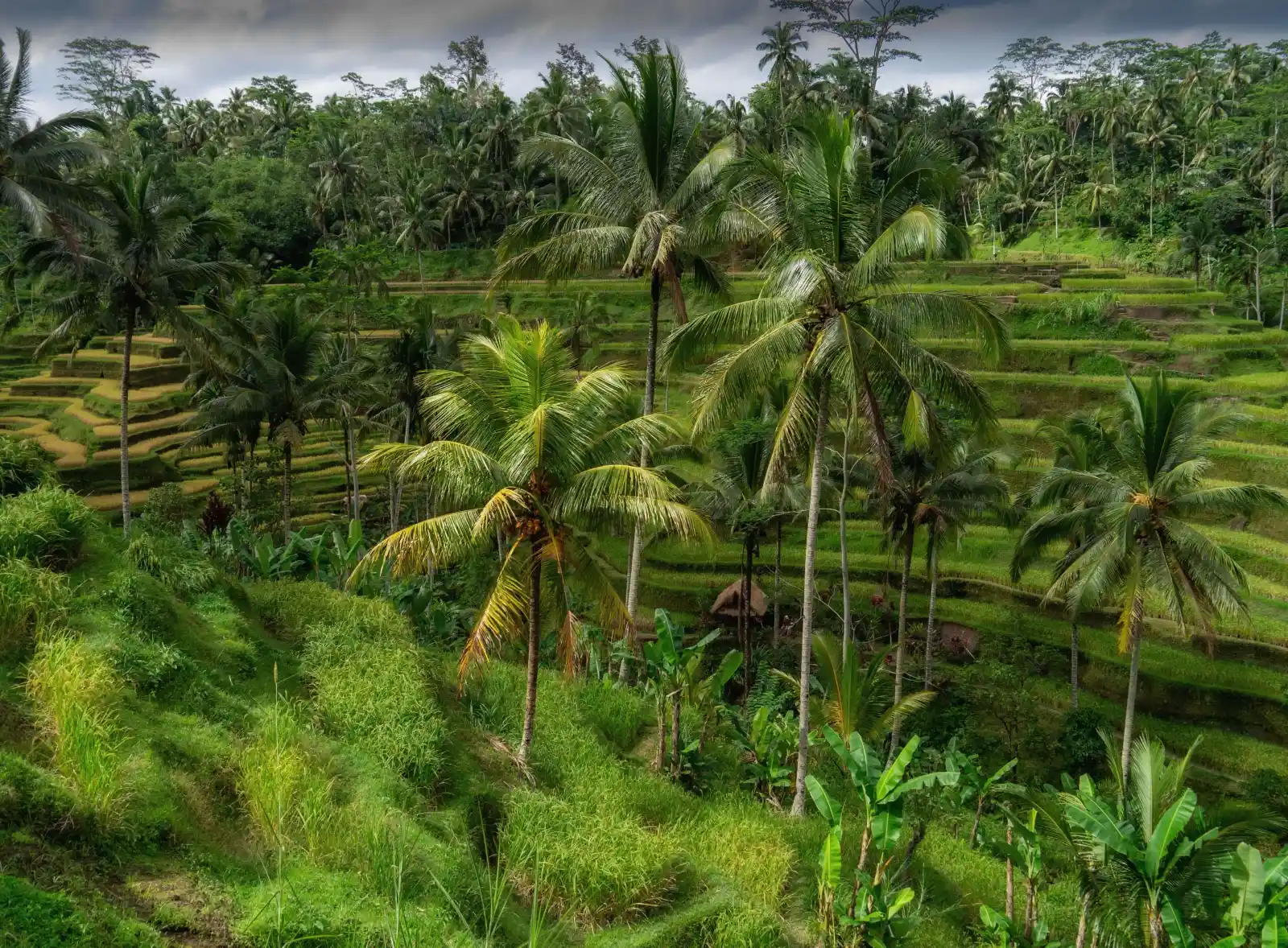
Ubud sits inland, upland and beach-free, ringed by rice terraces and river gorges. It is Bali's cultural centre — temples, dance, craft villages, healers — and the island's undisputed yoga and wellness capital. Mornings are green and misty; the surrounding countryside offers ridge walks and terrace paths that empty your head better than any app.
Honestly: central Ubud is busy. The main streets carry real traffic and real crowds, and the monkeys of the forest sanctuary area are professional thieves. The magic lives five to fifteen minutes out of the centre, in the villages and valleys — which is where retreat life tends to happen anyway. Choose Ubud if your priority is immersion, nature and culture rather than beach and nightlife. Our own retreat and teacher training campus is in the Ubud area, for exactly these reasons.
Canggu — the surf-coast, social option
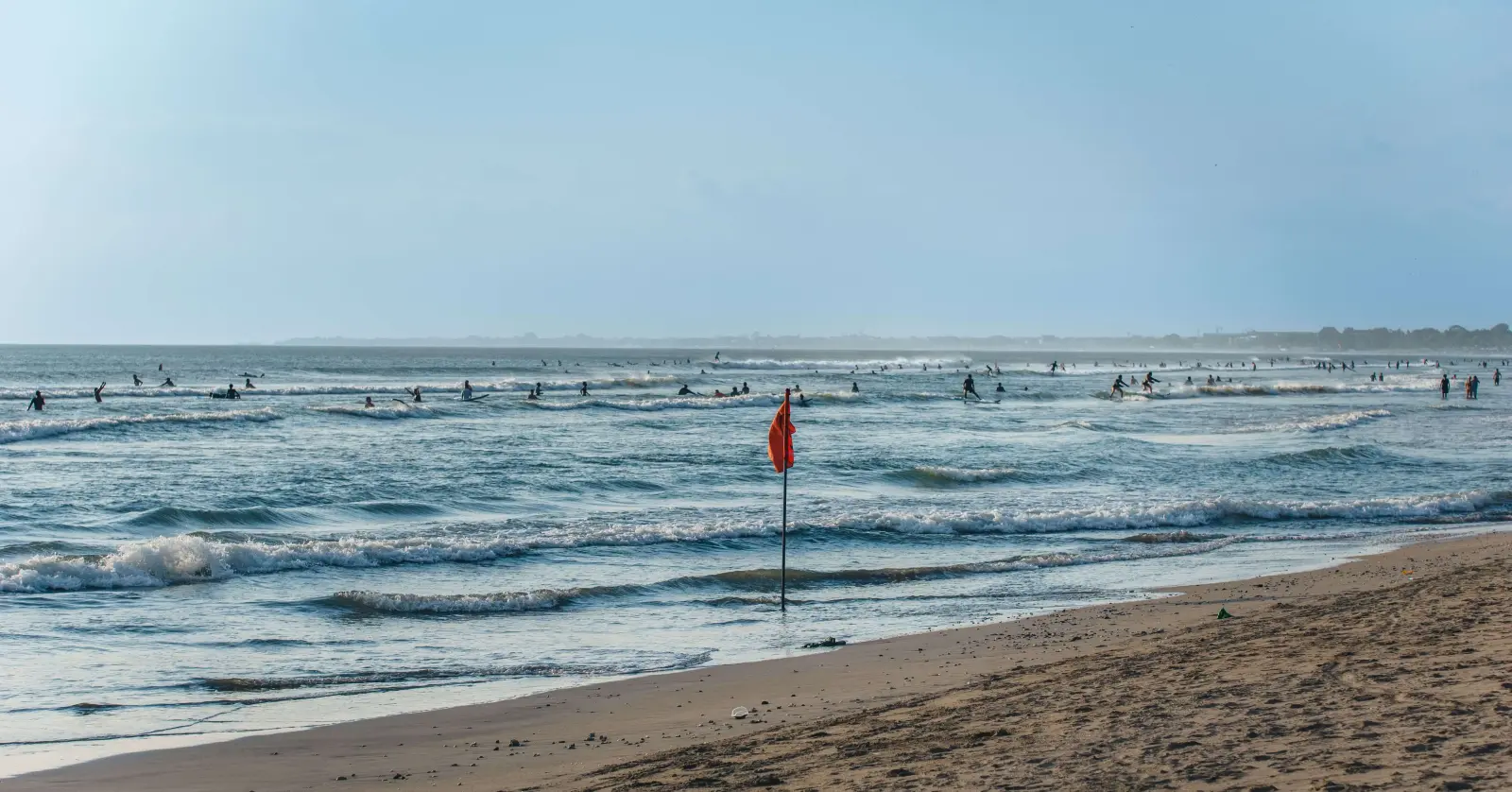
Canggu is a stretch of black-sand surf coast that grew from rice-field villages into Bali's most energetic international neighbourhood: surf at sunrise, yoga mid-morning, cafés full of laptops, beach clubs at sunset. The practice scene is real and lively, and if you want your wellness with waves and a social calendar, this is the coast for it.
Honestly: Canggu's growth outran its lanes years ago — traffic is the local sport — and it is a scene. Some people find that energising; others find it the exact noise they came to escape. Choose Canggu if surfing matters, you're travelling solo and want easy company, and you'd rather integrate practice into a buzzing life than retreat from it.
Sanur — the calm early-morning coast
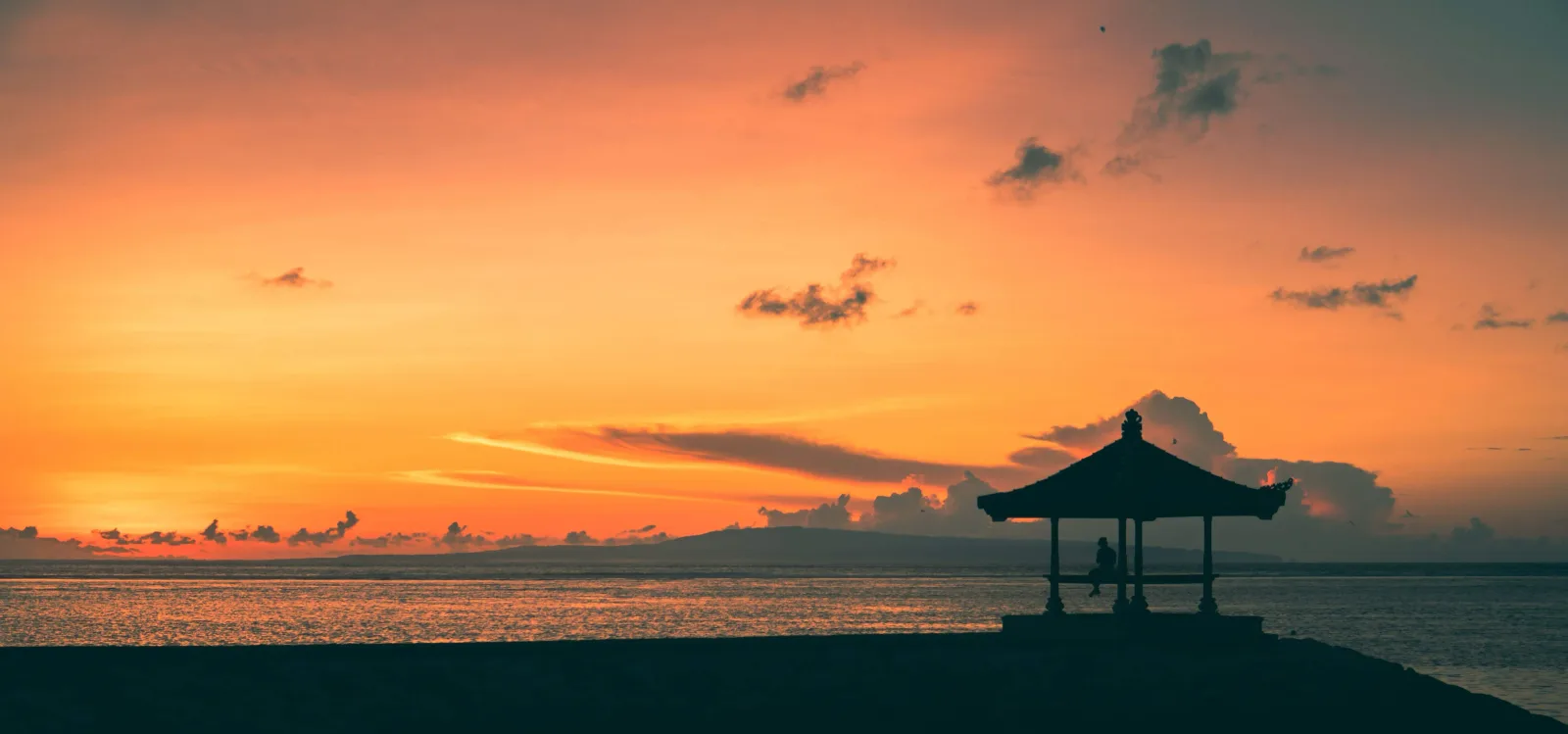
Sanur, on the southeast coast, is Bali at its gentlest: a long, reef-sheltered beach promenade, calm water, sunrise instead of sunset, and an unhurried, older-skewing crowd. There's yoga here, but it's a place you choose for pace, not scene. Choose Sanur if you want quiet, swimmable mornings and a mellow base — often as a soft landing before or after a retreat inland.
Uluwatu — cliffs, surf and drama
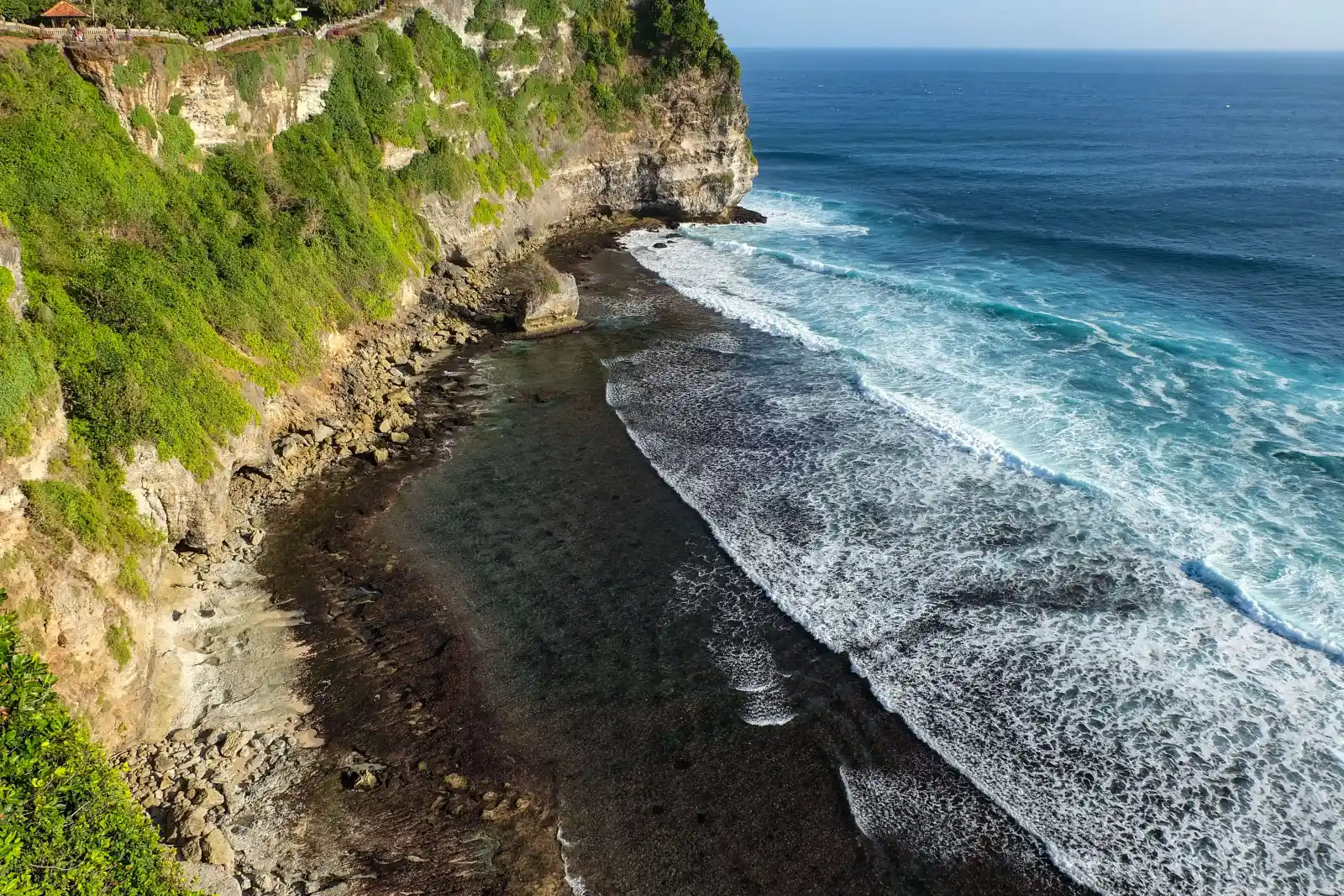
Uluwatu crowns the Bukit Peninsula at Bali's southern tip: limestone cliffs, world-famous surf breaks, a clifftop sea temple, and the island's most theatrical sunsets. The vibe is barefoot-luxe and surf-led, quieter than Canggu but remote — you're a proper drive from everything else. Choose Uluwatu if ocean drama and surf are the point and you're happy to stay put once you arrive.
The honest summary: jungle-and-culture immersion → Ubud. Surf and social energy → Canggu. Gentle and quiet → Sanur. Cliffs and drama → Uluwatu. There is no wrong answer, only wrong expectations.
What does a Bali wellness retreat actually include?
Formats vary across the island, so rather than generalise about programs we haven't attended, here is the real anatomy of ours — a useful benchmark for judging any retreat you're comparing.
Our yoga retreat in Bali is a five-day residential program in the Ubud area — with longer or shorter stays arranged on request — and it includes:
A private room, always. Single or double — no dormitories on retreat. Rest is the product; a shared room undermines it.
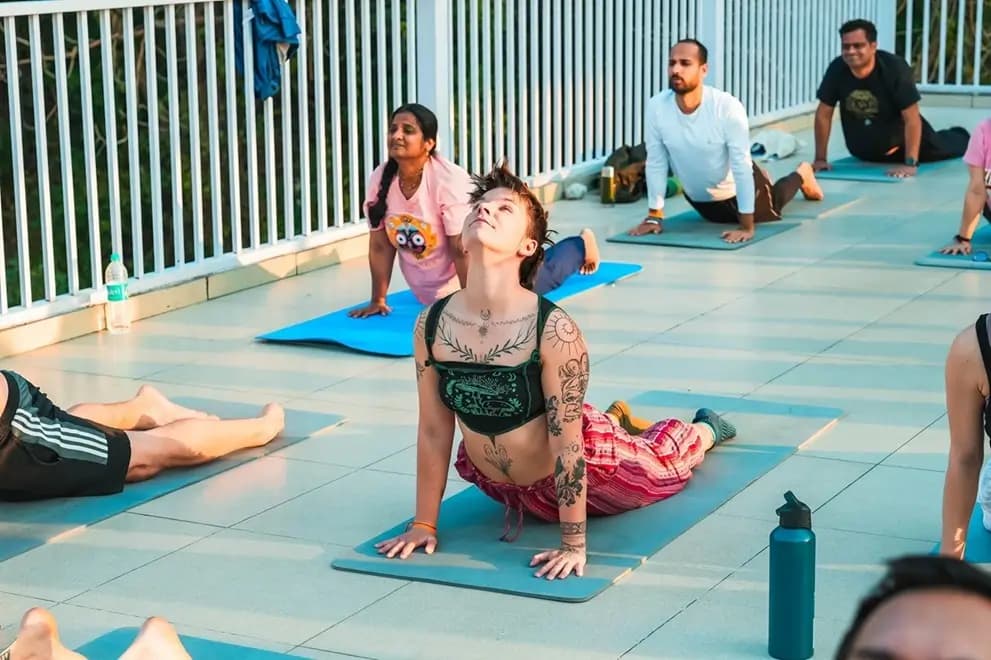
Two daily practice sessions plus meditation — a sunrise flow and a restorative afternoon practice, with pranayama and guided meditation woven through, and Yoga Nidra before the final evening.
Three sattvic vegetarian meals daily, herbal tea, and filtered drinking water around the clock.
One complimentary Balinese spa session — on the island that arguably perfected the massage, this is not a gimmick; it lands on day two, when your body has just remembered how tired it was.
A day built around silence — Yin practice, a sound-healing gong bath, and a creative workshop — plus cultural excursions to temples and rice terraces on later days.
Any-day start, year-round. The retreat begins on the date you choose rather than a fixed calendar — useful when your flights, not our brochure, decide your dates.
Pricing, plainly: the five-day retreat starts from $699 for a single private room ($899 double) at the current reduced rate against the regular price, covering the room, all meals, every session and the spa session; custom-length stays are quoted personally. A 20% deposit reserves your dates. We publish this not to sell you in a guide, but because "what does a retreat cost?" deserves numbers, not mystery — and any retreat that won't show you a full price before you enquire has told you something already.
A tip from our teaching hall: wherever you book, ask for the daily schedule in writing before you pay. A genuine wellness retreat protects empty hours as fiercely as it schedules practice — if every hour is programmed, you've found a fitness camp wearing incense.
When is the best time for a Bali retreat?
Bali is warm all year — this close to the equator, the variable isn't temperature, it's rain.
Dry season — roughly April to October. The clearest skies, the lowest humidity, the most reliable window for terraces, treks and cliffs. Also the busiest, especially mid-year; book further ahead.
Green season — roughly November to March. Lush landscapes, dramatic skies and quick tropical downpours that usually pass within hours rather than settling in for days. The island is quieter and greener; you'll want sandals that forgive puddles.
For a residential retreat, honestly, either works: practice halls are covered, the spa doesn't care about the weather, and green-season rain on a jungle roof is its own kind of meditation. If your plans lean heavily on excursions and coastline, favour the dry months. Tell us your dates and we'll tell you truthfully what to expect and what to pack.
Bali vs Rishikesh: an honest comparison from a school that teaches in both
We run programs in both places, so we have no side to take — only differences to describe.
Choose Rishikesh for depth of source.
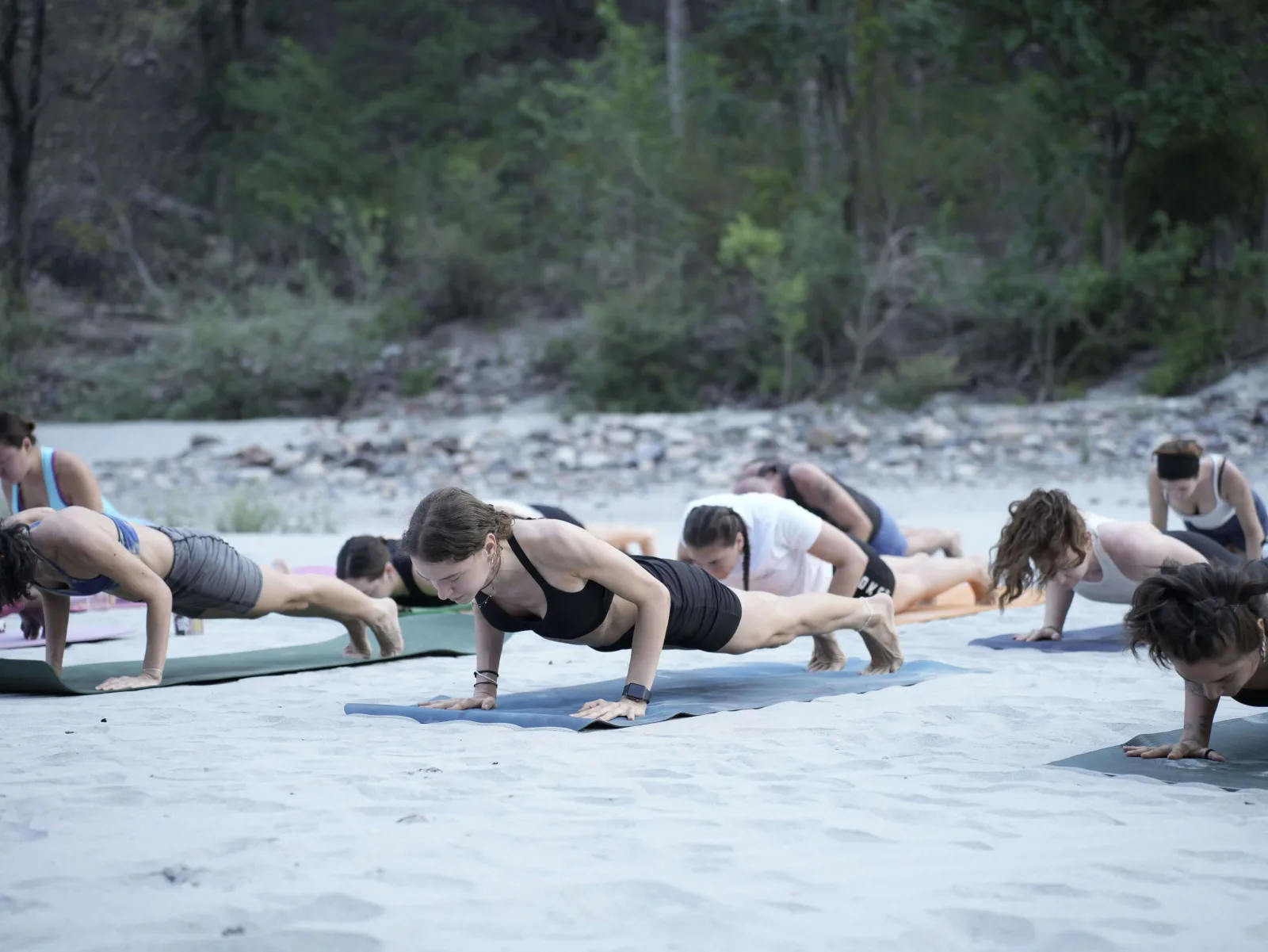
Rishikesh is where the yoga tradition lives at full strength: a Himalayan pilgrimage town on the Ganga, dense with lineage-trained teachers, ashram culture and philosophy taught as a living subject. It is also a real, noisy, austere Indian town — that's part of its power. We've written the full honest case in our guide to yoga teacher training in Rishikesh.
Choose Bali for softness of landing.
Bali wraps practice in comfort: tropical nature, spa culture, gentler logistics, food that never challenges you, and an island culture of daily ritual that harmonises with retreat life without being yoga's homeland. The trade-off is the flip side of the same coin — more comfort, more commercial gloss, less austerity, and a wellness scene where marketing sometimes outruns substance.
A fair rule of thumb from years of watching students choose: Rishikesh transforms, Bali restores. If you want study, discipline and the tradition at its source — especially for teacher training — lean Rishikesh. If you want to rest, heal and be cared for in beautiful surroundings — especially for a first retreat — lean Bali. Plenty of our students, in time, do both.
Practical notes: flights, visas, and getting around
The airport. Bali has one international gateway: Ngurah Rai International Airport at Denpasar, in the island's south, with direct connections across Australia and Asia. From the airport, Ubud is about a 1.5-hour drive; we can arrange pickup at extra cost — just ask when booking.
Visas, hedged as they must be. Indonesia offers a visa on arrival to many nationalities, obtainable at Denpasar airport. Rules, fees and eligible countries change, so treat every blog — including this one — as a pointer, not an authority: check the current requirements for your nationality on Indonesia's official immigration channels before you fly. We're happy to help with supporting documents once you've booked.
Getting around. Bali has no trains and distances deceive — a short-looking hop can be an hour in traffic. Most retreat guests simply don't need to move much: choose your area well (see above) and let the island come to you on excursion days.
Money and manners. Carry some cash for small purchases and temple donations, dress modestly at temples (sarongs are usually provided or rentable), and step around — never over — the little palm-leaf offerings on the pavement. The island notices courtesy.
Frequently asked questions
What's the typical cost of a Bali wellness retreat?
The honest answer is that Bali's range is enormous — from simple homestay-style programs to ultra-luxury sanctuaries costing more per night than our entire retreat. What matters is what the number includes. As a concrete benchmark: our five-day residential retreat in the Ubud area starts from $699 for a single private room, including accommodation, all meals, every session and a Balinese spa session. When comparing, always ask whether the quoted price covers room, food and classes together — many attractive headline prices cover only one of the three.
Are Bali retreats worth it?
If you choose honestly, yes — with one condition: be clear on what you're buying. A good residential retreat delivers something a holiday rarely does — structure, practice, rest and care, with the decisions taken off your plate. Guests consistently tell us the deepest value isn't the massages; it's the routines they carry home. A retreat is worth it when its schedule, area and pace match what you actually need — and not worth it when you book a party coast wanting silence, or a silent valley wanting a scene.
What is the best wellness retreat in Bali?
We won't rank retreats — including our own — because every "best of Bali" list you'll find is either advertising or one person's holiday. Use a filter instead: a full residential price shown openly before you enquire · a written daily schedule with protected free time · private rooms if rest is the goal · real reviews describing the food and teachers specifically, not just the pool · and honest pre-booking answers to a hard question or two. Any retreat that passes all five is a sound choice, in any area of the island.
Do I need a visa to attend a retreat in Bali?
Many nationalities can obtain a visa on arrival at Denpasar airport, which comfortably covers a short retreat stay. But visa rules genuinely change, so check the current requirements for your passport on Indonesia's official immigration channels before booking flights — and ask us if you'd like help with supporting documents.
Which part of Bali is best for yoga?
Ubud, by weight of history and habit — the inland jungle-and-culture heart is where the island's wellness life concentrates, which is why our retreat and teacher training are based there. But "best" is personal: Canggu suits surf-and-social practitioners, Sanur suits those who want calm, and Uluwatu suits cliff-and-ocean drama. The areas section above compares them honestly.
Can I do yoga teacher training in Bali instead of just a retreat? Yes — Bali is one of the world's most popular TTC destinations, and we run a 200-hour yoga teacher training in Bali in the Ubud area: 23 days, residential, with a new batch starting monthly, delivered by our Yoga Alliance–registered school (RYS 200) so graduates are eligible to register as RYT 200. A retreat restores you; a training remakes you — different tools for different seasons of life.
If the island is calling
The truthful summary: Bali offers the softest entry into retreat life anywhere we teach — real practice wrapped in real comfort, on an island whose own daily devotion keeps the experience from feeling like theatre. Choose your area with honest eyes, favour retreats that show their schedule and full price up front, and give yourself at least five days; the first two are just your shoulders coming down.
When you're ready for specifics, our yoga retreat in Bali page has the full day-by-day journey, inclusions and dates — start any day of the year — and if teaching is the longer dream, explore yoga teacher training in Bali. Still deciding between the island and the Himalayas? Message us on WhatsApp and ask. We teach in both, we love both, and we'll tell you honestly which one fits the season you're in.
Author note (byline): Gangesha Adi (E-RYT 500) founded Pure Soul Yoga School in Rishikesh and leads its programs across India and Bali, where the school's retreat and teacher training campus sits in the Ubud countryside.