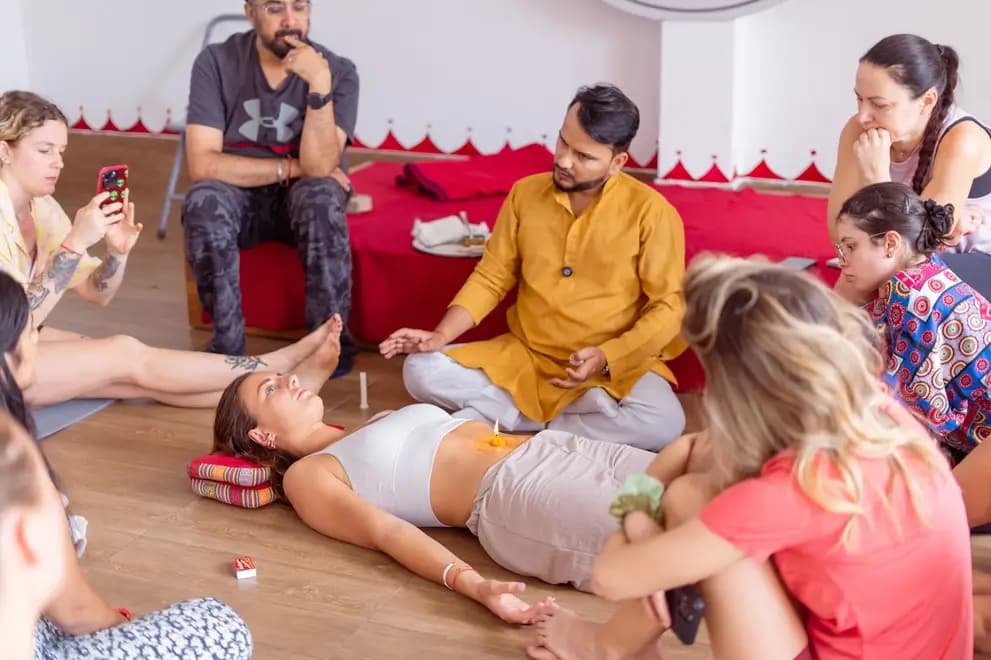
The Yoga Retreat Guide: What to Expect & How to Choose
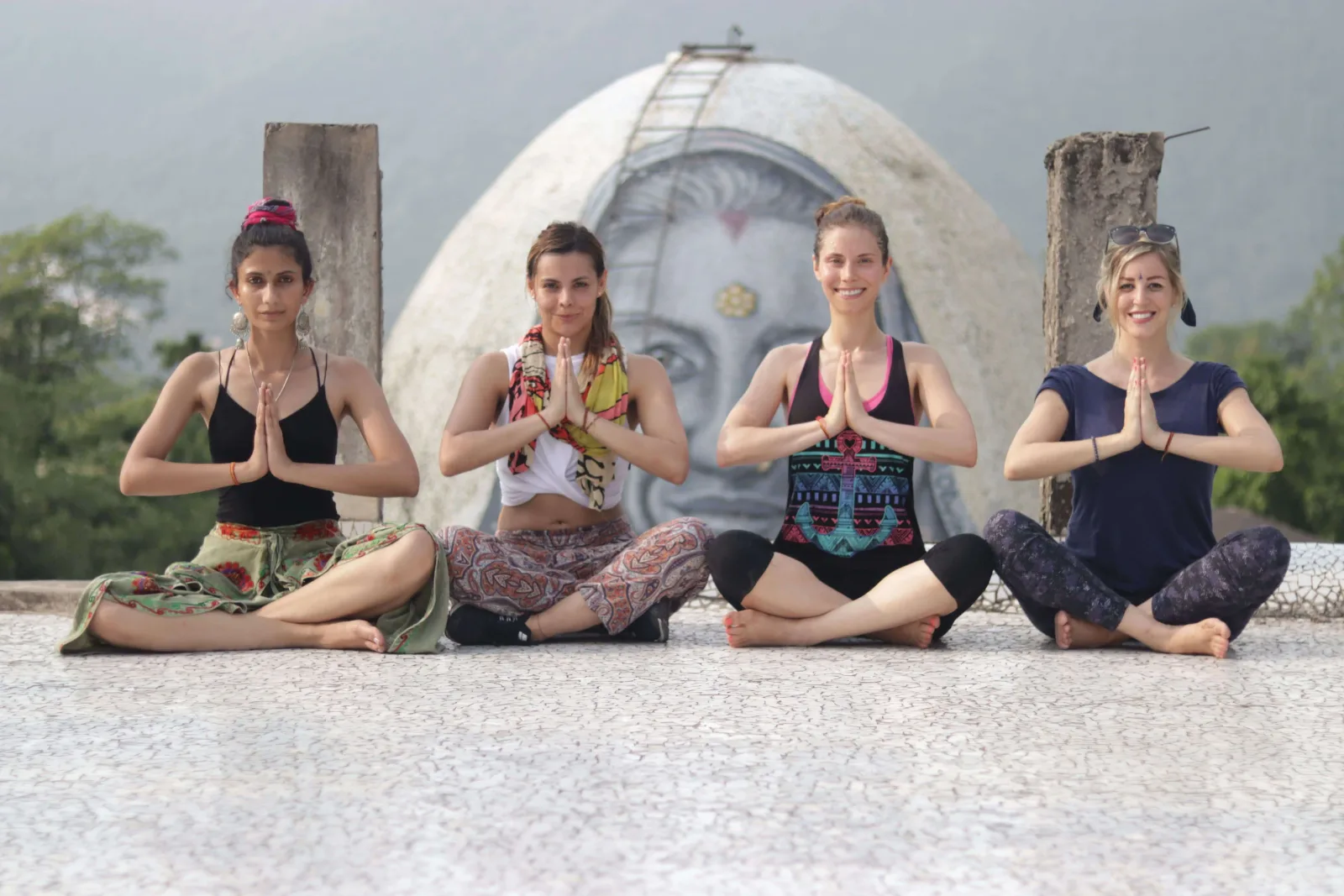
Here is what to expect at a yoga retreat, in one honest paragraph: structured but unhurried days — usually two yoga or meditation sessions, three fresh meals, generous free time — in a residential setting where everything (room, food, classes) is arranged so you only have to show up. No, you don't need to be flexible, experienced or spiritual. Yes, there will be early mornings. And no, a good retreat is not a holiday with a yoga class bolted on — it's a deliberately gentle rhythm that most first-timers say recalibrated something a week of beach holiday never touches.
This guide walks you through a real retreat day hour by hour (ours, in Rishikesh — not a hypothetical), the inclusions and fine print worth checking anywhere, how a retreat differs from a yoga teacher training, and a checklist for choosing well. Plus straight answers to the questions first-timers actually ask.
In this guide: - What happens during a yoga retreat? - A real retreat day, hour by hour - The details brochures skip - What the first 48 hours actually feel like - Retreat or teacher training? - How to choose a yoga retreat - When to go, and what to pack - First-timer FAQs
What happens during a yoga retreat?
Strip away the marketing and a yoga retreat is three things braided together:
Daily practice — typically a morning session (yoga, pranayama or meditation) and an evening one, taught to your level. On a retreat, unlike a training course, sessions are usually invitational rather than compulsory: the practice serves you, not an attendance sheet.
Residential care — your room, three meals, tea, and a schedule someone else has thought through. The point of a retreat is subtraction: no cooking, no commuting, no deciding. What's left is space.
Rest and place — free hours, optional therapies, and wherever the retreat lives. In Rishikesh that means the Ganga a short walk away, the evening Aarti on the riverbank, and the Himalayan foothills doing their quiet work in the background.
Depending on the retreat's focus you may also find Ayurvedic treatments, philosophy talks, chanting, nature excursions or silence periods. What you should not expect: fitness-bootcamp intensity, compulsory spirituality, or being the only beginner in a room of acrobats. Any well-run retreat is built for mixed levels, because that's who actually comes.
A real retreat day, hour by hour
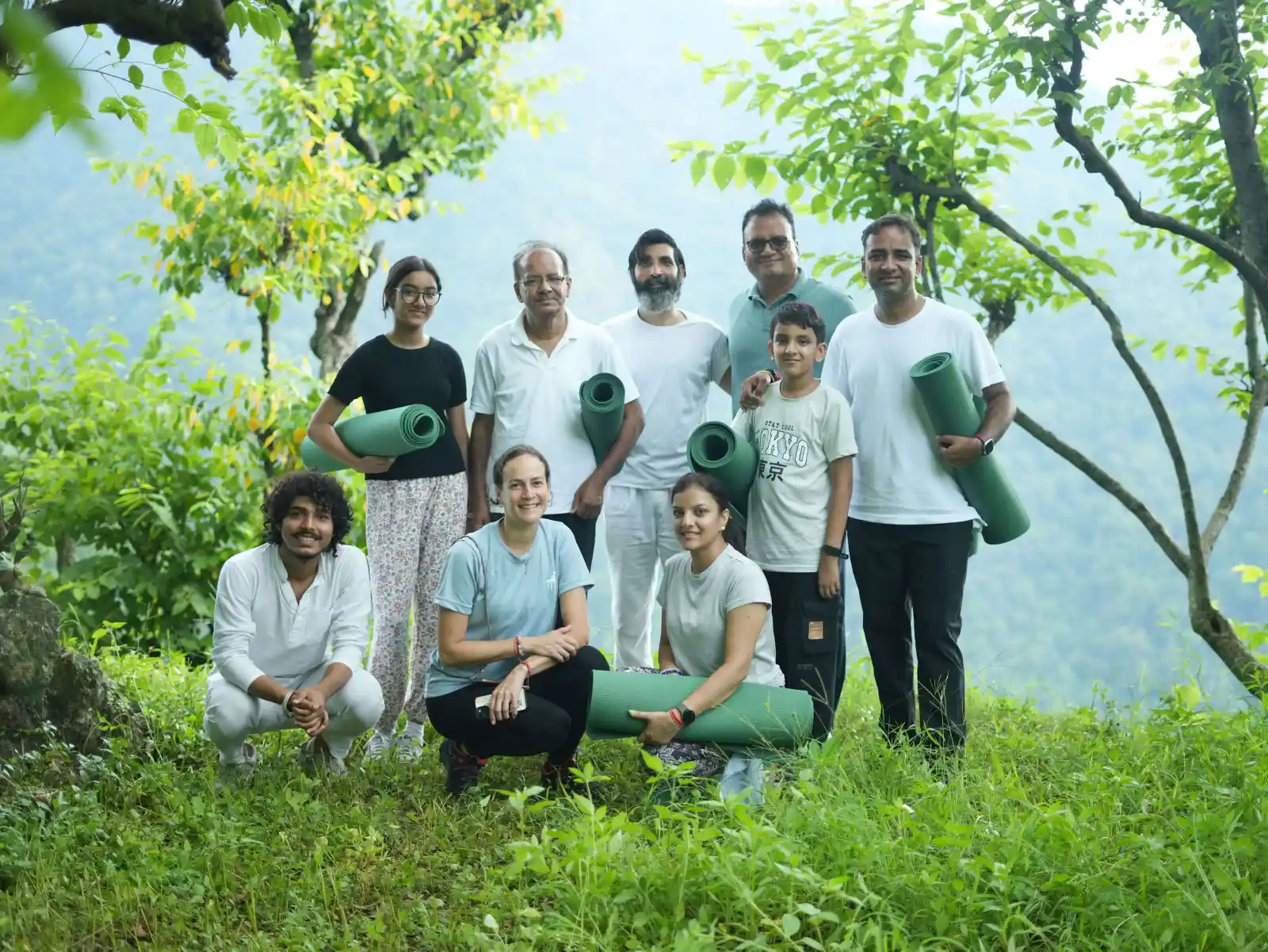
Generic answers help nobody, so here is the actual daily rhythm of our retreat in Rishikesh — a fair template for what a traditional-style retreat day looks like anywhere:
Time | What happens |
|---|---|
05:15 – 06:15 | Sadhana / Meditation |
06:30 – 07:45 | Pranayama / Hatha session |
09:00 | Breakfast |
10:30 – 11:30 | Yoga philosophy |
12:30 – 13:30 | Lunch |
14:00 – 16:00 | Free time / rest |
16:15 – 17:45 | Ashtanga session (optional) |
18:00 – 19:00 | Evening meditation |
19:15 – 20:15 | Dinner |
Sunday | Excursion / free day |
A few things worth noticing in that table, because they answer the questions people are really asking:
Yes, mornings start early. The 5:15 sitting follows the traditional understanding that the pre-dawn hours are the quietest for practice. It is also the session retreat guests most often name as the one they came to love. Timings flex with weather and the group's needs — a schedule should serve people, not the other way around.
The afternoon is genuinely yours. Two free hours after lunch, every day. Nap, journal, walk to the river, sit in a café in Tapovan. Retreats that timetable every waking minute have misunderstood the assignment.
"Optional" means optional. The late-afternoon Ashtanga session is there for guests who want a stronger practice; skipping it for a massage or a riverside walk carries zero guilt. This is the biggest single difference from a training course.
One day a week belongs to the town. Sundays are for excursions or nothing at all — waterfalls, temples, the things to do in Rishikesh that make this valley more than a venue.
One structural point that surprises many first-timers: good retreats don't have to run on fixed group start dates. Ours begin on any date of the month, at any length from a 3-day reset to a 21-day immersion (or longer), shaped around your goals — worth knowing before you bend your flights around someone's calendar.
The details brochures skip
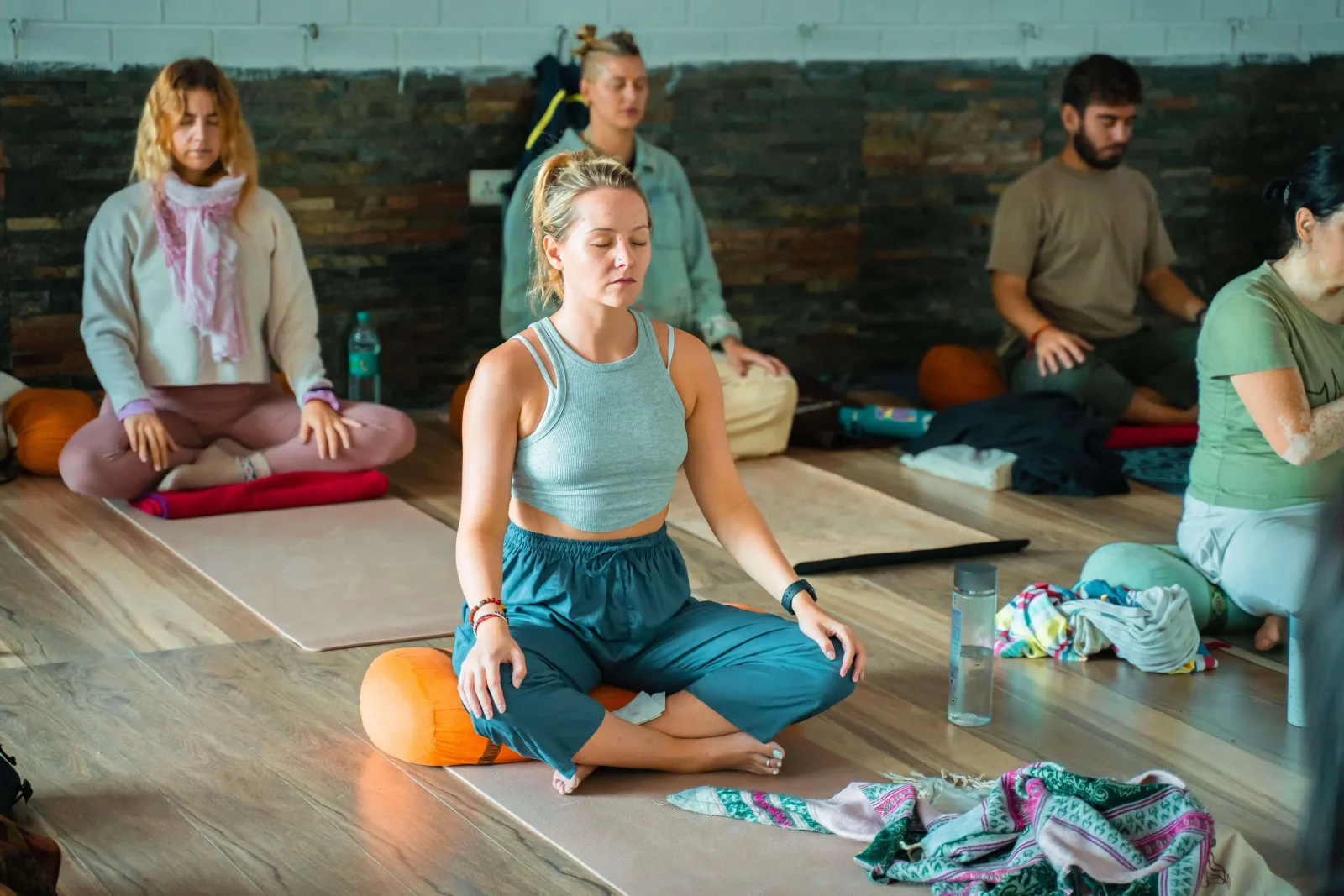
After years of welcoming retreat guests — and hearing what went wrong at retreats elsewhere — these are the four honesty checks that separate a well-run retreat from a pretty photo gallery. We'll state plainly how we handle each; ask the same questions of any retreat you consider.
Where exactly will you sleep? Photos show the best room; contracts deliver the spare one. Our policy is simple: every retreat guest gets a private room — we don't offer shared or dormitory rooms on retreats at all, so the quiet you came for is guaranteed rather than upsold. Whoever you book with, get your exact room category in writing.
What is genuinely included? "All-inclusive" is the most elastic phrase in the retreat world. Our inclusion list is: stay, all sattvic vegetarian meals, all yoga and meditation sessions, philosophy sessions, excursions — and one complimentary full-body massage during your stay. Not included, and said out loud: additional therapies and massages beyond that one. An honest retreat tells you both lists; a vague one lets you discover the second list at checkout.
Who decides your treatments? This one matters medically, not just financially. At retreats offering Ayurvedic therapies, treatments should follow an assessment — not a menu. Our model is consultation-first: a personal consultation with our Ayurvedic doctor, Dr. Bhupinder Singh Arora, before any Ayurvedic treatment (held online when he isn't on-site), with therapies then prescribed to your constitution and charged separately. If a retreat lets you order Shirodhara the way you'd order dessert, treat that as a signal about everything else. For the deeper end of this — full detox programs — see our Ayurveda retreat in Rishikesh page for how doctor-led programs are structured.
How is the price built? Anchored, transparent pricing beats mystery quotes. As a reference point: our 7-day retreat with a private room is $499 for international guests (₹45,000 for Indian guests), everything above included; other lengths are quoted personally against your dates and goals, within a day. Whatever retreat you consider, a real number for a defined package — with the exclusions named — is the mark of a school that expects you to compare.
A word on food and water, because it's the worry international guests voice most: meals at a traditional retreat here are sattvic and vegetarian, cooked fresh, and any school worth your money provides filtered water throughout and takes "sensitive stomach" seriously. Ask directly; the quality of the answer tells you a lot.
What the first 48 hours actually feel like
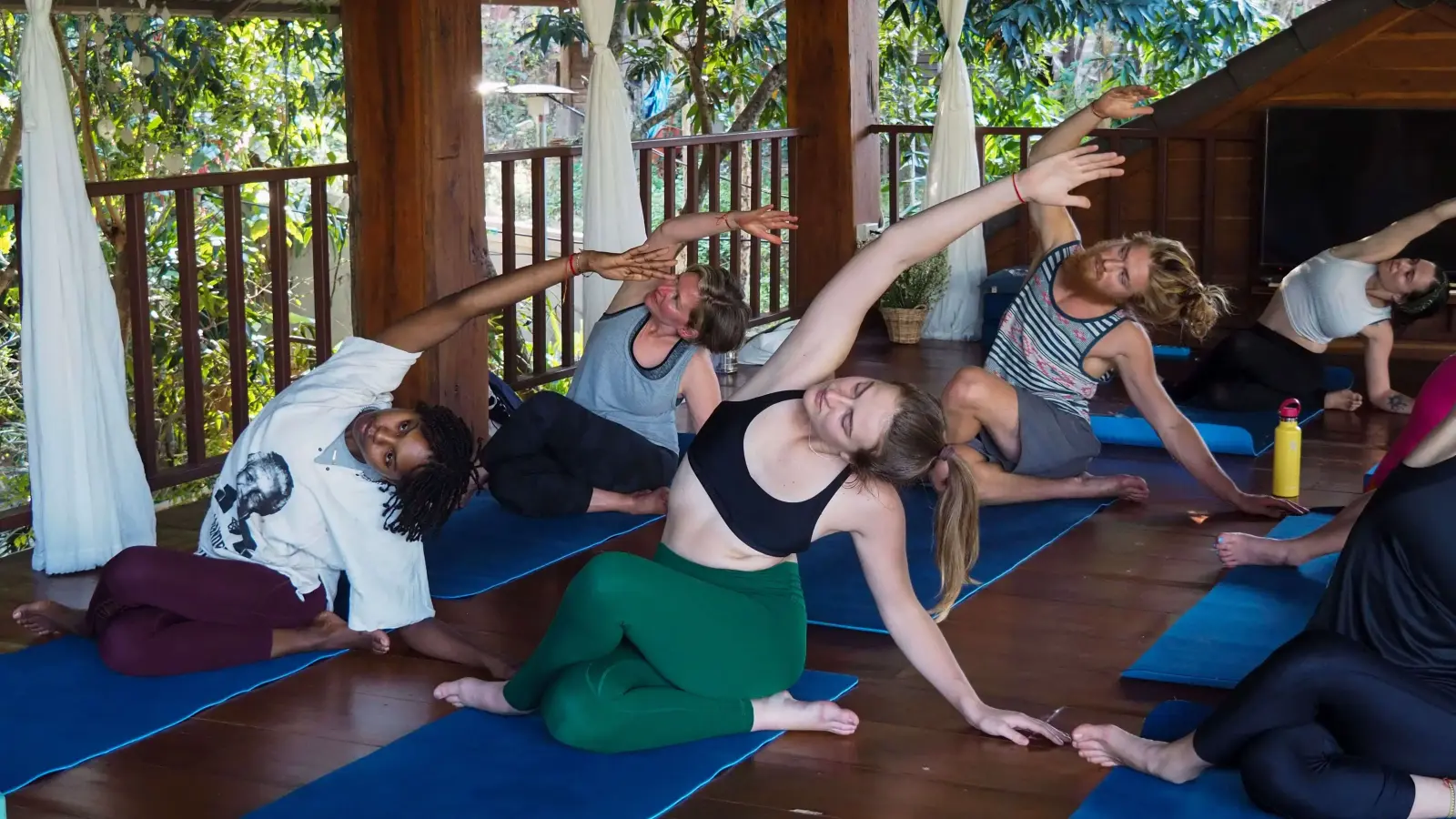
Nobody warns first-timers about the adjustment window, so let us. The first day or two of a retreat rarely feel like the photos — they feel like withdrawal. From noise, from your phone, from the low-grade urgency you've been calling normal. Common and completely unremarkable: restlessness in the first meditation sittings, a strong afternoon nap your body has apparently been owed for months, and the odd wobble of "what do I do with a free hour?"
Then, somewhere around the second or third morning, the rhythm takes. The 5:15 bell stops feeling early. Meals eaten without a screen start tasting like something. The free hours stop needing to be filled. This arc is so consistent across guests that we schedule around it — which is one practical reason short stays are best treated as a floor, not a target: a 3-day reset is real, but the deeper settling tends to arrive after the adjustment window closes, which is why 7 days is the length most first-timers thank themselves for.
Two more honest expectations. First, emotions surface — when the noise stops, whatever was underneath it gets its turn, and the occasional teary meditation is normal, welcome, and handled kindly by any experienced teacher. Second, you will not be transformed into a different person by Friday. What guests actually report is quieter and better: sleeping properly, breathing lower in the body, and remembering what their own company feels like. A retreat's job is to return you to yourself, then send you home with a practice small enough to keep — ours closes with exactly that: a simple daily routine of asana, breath and meditation sized to your real life, not to retreat life.
Retreat or yoga teacher training — which is right for you?
The two get confused constantly, and choosing wrong wastes a precious trip. The short version:
Yoga retreat | Yoga teacher training (YTT) | |
|---|---|---|
Purpose | Rest, reset, deepen your own practice | Certification to teach; structured study |
Pace | Gentle; sessions largely invitational | Full days, six days a week; attendance matters |
Schedule | Flexible — any-day start, 3–21+ days | Fixed batch dates; typically 12–58 days |
Content | Yoga, meditation, therapies, excursions | Asana, anatomy, philosophy, teaching practice, exams |
Outcome | You, restored | A certificate (e.g. RYT-200 eligibility via Yoga Alliance registration) |
Right if… | You want to receive | You're ready to study and eventually give |
If you're torn, two of our guides settle it for most people: the honest comparison of 100, 200, 300 and 500-hour trainings shows what course life demands, and a day in the life at our school shows the training rhythm hour by hour — put it beside the retreat table above and the difference explains itself. A useful rule of thumb from our enquiry conversations: if your first question is "how much rest will I get?", you want the retreat; if it's "what will I learn?", you're a training student who doesn't know it yet.
How to choose a yoga retreat: a checklist
We won't rank retreats or schools — rankings online are mostly advertising wearing a costume. What we can give you is the checklist we'd hand a friend. A retreat that answers all eight clearly is almost always a safe choice; two or more dodges and you should keep looking.
Room reality. Exact room type in writing, with real photos of that category. Private bathroom? Heating or fan for the season?
Group size. Small enough that teachers learn your name and your knees. (Our course batches cap at 20; retreat groups run smaller still.) "Intimate" without a number is not an answer.
Inclusions honesty. Both lists — included AND excluded — in writing before payment. Watch for therapy packages sold as included but delivered as "one introductory session".
Doctor access. If Ayurvedic treatments are offered: who assesses you, what are their qualifications, and is consultation required before treatment? Consultation-first is the standard to insist on.
Food and water. Fresh vegetarian cooking, filtered water throughout, honest handling of dietary needs. Ask what happens if your stomach struggles in week one.
Teacher credentials. Who actually teaches daily (not just the founder's bio), and what tradition do they teach? A retreat is only as good as its 6:30 a.m. class.
Flexibility. Can you start on your dates, at your length? Fixed-date group retreats aren't wrong, but you shouldn't discover the constraint after booking flights.
A human answers. Send a question on WhatsApp or email before booking. Speed, warmth and specificity of the reply is the single best preview of how you'll be treated on arrival.
One deliberate omission from this list: "best retreat" searches. Skip them. Match the retreat to your nervous system, budget and dates using the eight points above — the retreat that's best for a marathon-running 28-year-old and the one for a burnt-out 55-year-old are different places, and both are right.
When to go, and what to pack

Timing matters more in Rishikesh than most destinations. October to April is the sweet season — crisp mornings, clear skies, the town alive but breathable. The monsoon months bring heavy rain and the height of summer brings real heat; both are workable for indoor-focused stays but wouldn't be our first suggestion for a first visit. The full month-by-month picture is in our guide to the best time to visit Rishikesh for yoga.
Packing is lighter than you fear. Comfortable practice clothes that cover shoulders and knees (modest and practical wins in a spiritual town), a warm layer for pre-dawn sits, sandals you can slip off at hall doors, a refillable water bottle, and any personal medications. Mats and props are provided at most residential retreats — ask rather than haul. We're preparing a complete packing checklist for India as its own guide; until then, one WhatsApp message to your school answers the "should I bring…?" list in minutes.
First-timer FAQs
How much does a yoga retreat cost in Rishikesh?
Far less than the same week would cost in the West, because you're at the source rather than an export. As a concrete anchor: our 7-day retreat — private room, all meals, all sessions, excursions and one massage included — is $499 for international guests, ₹45,000 for Indian guests, with other lengths quoted personally within a day. Prices across town vary with room standard and inclusions, which is exactly why the inclusions checklist above matters more than the headline number.
What should I wear at a yoga retreat in India?
Comfortable, breathable clothing you can practice in, with shoulders and knees covered as the default — that respects local norms and, practically, protects you from sun and pre-dawn chill alike. Loose cotton trousers, t-shirts, a shawl or warm layer for morning meditation, and modest wear for town walks and temple visits. Nothing formal, nothing precious: laundry is simple and dress codes are relaxed, just conservative-leaning.
Do I need yoga experience to join a retreat?
No. Retreats are built for mixed levels, and complete beginners are a normal part of every group — sessions are taught to the room, and on a retreat nothing is graded and nothing is compulsory. If a retreat you're considering suggests otherwise, it's a training course in disguise; check the retreat vs training table above.
What do people do at meditation retreats — is that different from a yoga retreat?
There's a spectrum. A yoga retreat like the day described above includes meditation daily but balances it with movement, meals and free time. Dedicated meditation retreats push further along the stillness axis — more sitting hours, sometimes periods of silence, occasionally full silent formats where talking, phones and even reading are set aside. Wonderful, and demanding. First-timers are usually happier starting with the balanced format and graduating to intensive silence once sitting for an hour feels like home.
How do I prepare for a yoga or meditation retreat?
Lightly. Practically: sort your visa early, arrive a day ahead if you can to soften jet lag, and bring the packing list above. Physically: nothing is required, though a few weeks of even ten daily minutes of stretching or breath practice makes the early sessions friendlier. Mentally — the one that matters: arrive without a scorecard. The guests who struggle most are the ones auditing their relaxation hourly; the rhythm works on you fastest when you stop supervising it.
How much do meditation retreats cost?
It varies enormously by country and format — from donation-based silent retreats to luxury-priced programs — so treat any single number online with suspicion. The honest method: fix your dates and country, then compare total cost against the two lists (included/excluded) from the checklist above. In Rishikesh, residential formats with meditation at their core sit in the same range as the retreat pricing described earlier — town, not resort, economics.
When should I avoid Rishikesh?
If you have full flexibility, steer around peak monsoon (roughly July–August, when rain is heaviest) and the hottest pre-monsoon weeks of May–June. October–April is the season we'd choose for a first retreat. That said, "avoid" is strong — indoor-focused stays run year-round, the monsoon valley is spectacularly green, and quieter months have their own gifts. The month-by-month honest table is in our best time to visit guide.
If a retreat is calling you
Reading about a retreat day is one thing; waking up inside one, with the Ganga a few minutes' walk away and nothing on your list but practice, breakfast and rest, is another. If the rhythm on this page feels like something your life is quietly asking for, start with our yoga retreat in Rishikesh — the schedule, inclusions and pricing above, starting on any date that suits you. If you're weighing other settings or lengths first, our retreat hub lays out every option in one place. And if you're simply not sure yet — message us on WhatsApp with your dates and what you're hoping for. A real human replies, usually within hours, and "I'm just researching" is a perfectly good opening line.
Author note (byline): Gangesha Adi (E-RYT 500) leads the teaching team at Pure Soul Yoga School, Rishikesh, where he has welcomed retreat guests and training students from 50+ nationalities — many of whom arrived with exactly the questions this guide answers.