
Best Time to Visit Rishikesh for Yoga: Honest Month-by-Month
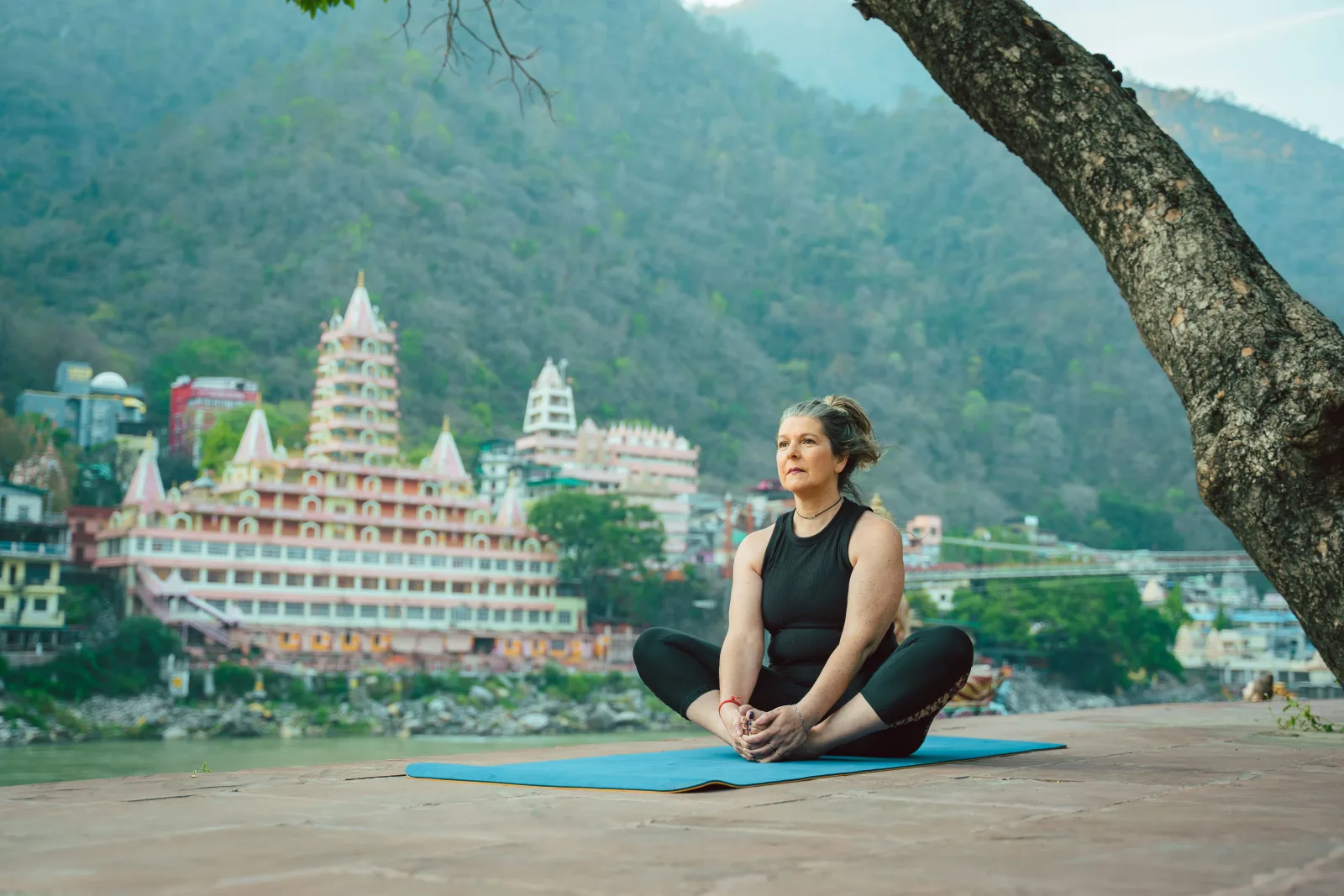
The straight answer: October to March is the best time to visit Rishikesh for yoga. The monsoon has washed the valley green, days are clear and mild, mornings are perfect for practice, and every outdoor experience — river ghats, sunrise treks, rafting — is at its best. Within that window, October–November and February–March are the sweet spots; December and January are beautiful but genuinely cold in the mornings.
That said, we run courses year-round, and after a decade of teaching here we can tell you honestly: every season suits someone. The hot months are quiet and cheap. The monsoon is the town at its most private and most green. What follows is the month-by-month reality — including the parts that make some guides contradict themselves — so you can match the season to your priorities rather than to a brochure.
(If you're still deciding on the destination itself, start with our full guide to why yoga teacher training in Rishikesh — this post assumes Rishikesh and helps you pick the month.)
The three seasons, without the contradictions
Travel articles about Rishikesh often trip over themselves — calling October "winter" in one paragraph and "post-monsoon" in the next, or telling you to avoid the peak crowds of a season they just recommended. Here is the clean version:
October to March — cool and clear (prime season). Post-monsoon freshness turning to crisp winter, then early spring. Best overall conditions; also the busiest and most expensive stretch, especially October–November and around February–March.
April to June — hot (quiet season). Temperatures climb steadily to genuinely hot afternoons by May–June. Mornings remain workable, halls are shaded, town is quieter, prices soften. Fine for training; hard for midday sightseeing.
July to September — monsoon (green season). Heavy rains, high humidity, a powerful brown river, dramatic skies. The cheapest and quietest months, with real trade-offs: rafting closed, treks slippery.
One clarification worth making, because it confuses people: Rishikesh's tourist peak and its weather peak are the same season. There is no secret window where the weather is perfect and the town is empty. If you want prime weather, you accept company; if you want solitude, you accept heat or rain. Choosing knowingly is the whole game.
Rishikesh month by month
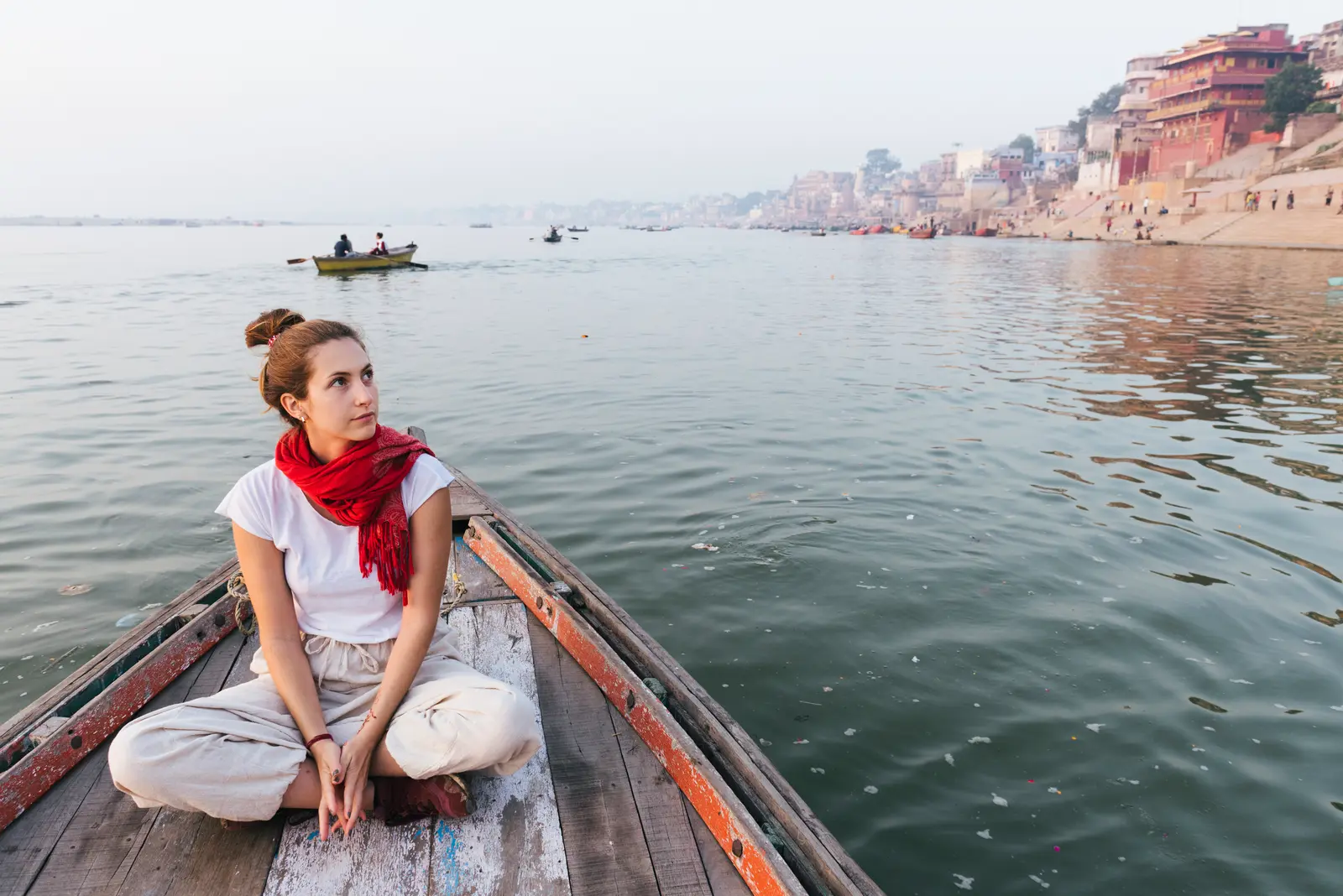
Temperatures below are approximate typical ranges (night–day) — the foothills swing noticeably between a cold sunrise and a warm afternoon, so pack for both ends of the day.
Month | Typical temps | Weather | Crowds & cost | Verdict for yoga |
|---|---|---|---|---|
January | ~7–20°C | Cold mornings, sunny days, occasional fog | Moderate | Good — bring warm layers for early practice |
February | ~9–23°C | Crisp, clearing, spring begins | Building | Excellent — many say the single best month |
March | ~13–28°C | Warm days, cool nights | High (festival month) | Excellent — International Yoga Festival energy |
April | ~18–34°C | Warming fast, hot afternoons | Easing | Good — early practice fine, midday indoors |
May | ~22–38°C | Hot; occasional pre-monsoon storms | Low | Workable — for heat-tolerant students; quiet town |
June | ~24–38°C | Hot and increasingly humid; rains begin late month | Low (spike around Yoga Day, June 21) | Workable — indoor practice; monsoon arriving |
July | ~24–33°C | Monsoon: heavy rain, lush hills | Lowest | Trade-off season — green, cheap, wet |
August | ~24–32°C | Peak monsoon; river high and brown | Lowest | Trade-off season — most private month of all |
September | ~22–31°C | Rains retreating; valley at its greenest | Low, rising late month | Improving — late September is a quiet gem |
October | ~17–31°C | Clear skies, washed air, ideal days | High | Excellent — prime season opens |
November | ~11–27°C | Crisp, sunny, cooling | High | Excellent — many consider it the peak |
December | ~8–21°C | Cold mornings and nights, bright days | Moderate–high (holiday spike late month) | Good — beautiful, but pack real warmth |
(No heating is the norm in Rishikesh buildings, as across most of North India — in December–January that matters more than the numbers suggest.)
Choosing by what you actually care about
If you want the best all-round conditions: come October–November or February–March. Clear skies, comfortable practice temperatures, every Sunday activity available — from sunrise treks to river ghats — and the town's international energy at its height. Book courses and accommodation well ahead; these months fill first.
If you want fewer people and lower costs: the monsoon (July–September) is the honest answer, with May–June close behind. Retreat and room prices dip, batches are smaller, and the town belongs to the people who live and study here. Accept the trade-offs with open eyes: in monsoon, rafting shuts for the season, waterfall paths get slippery, and some days it simply rains all day. Training is unaffected — practice moves fully indoors, and there is something genuinely lovely about pranayama to the sound of rain on the roof.
If you're cold-sensitive: avoid December–January, or come prepared. Nights can drop to single digits Celsius, and 6 a.m. practice in an unheated hall is bracing. Students from cold countries mostly shrug; students from warm ones mostly wish someone had warned them. Consider this your warning — and your packing list: thermals, a proper fleece, warm socks.
If you're heat-sensitive: avoid May–June. Afternoons at 38°C are no one's favorite study environment, even though mornings and evenings stay usable and schools schedule around the heat.
If festivals matter to you: aim for March, when the International Yoga Festival brings teachers and practitioners from around the world to town, or June 21, when International Yoga Day fills Rishikesh with mass outdoor classes each year. Holi (the color festival, usually March) and Diwali (the festival of lights, usually October–November — dates shift with the lunar calendar) are both memorable here, with Diwali's lamps on the river especially beautiful. Festival weeks mean crowds and higher prices; that's the deal.
If your goal is a retreat rather than a training: everything above still applies, with one addition — retreats are more outdoor-flexible than trainings, so prime season buys you more (riverside meditation, unhurried ghat evenings). Our yoga retreats in Rishikesh run year-round with any-day starts, so you can aim for exactly the week you want rather than fitting a fixed batch date.
What to pack, season by season
A short, experience-earned list — the items students most often wish they'd brought:
October–November: Layers. Mornings start cool and days finish warm, so think T-shirt plus fleece plus light jacket, peeled off as the sun climbs. Sunscreen still matters at this latitude.
December–January: Real warmth — thermals, a proper insulated jacket, warm socks, and a shawl or blanket layer for early meditation. A hot-water bottle sounds excessive until your first 6 a.m. sit; it isn't. Days remain mild, so keep the light layers too.
February–March: The easiest packing of the year — light layers, one warm top for dawn, and something festive-washable if you'll be here for Holi (colors do not come out of clothes you love).
April–June: Light, breathable cotton, a refillable water bottle, electrolyte sachets, sunglasses, and a hat. Practice clothes dry fast; everything else should too.
July–September: Quick-dry everything, a real rain jacket (umbrellas lose to monsoon wind), sandals with grip for slick lanes, and dry-bags or zip-locks for electronics. Assume laundry takes days and pack one spare of anything essential.
Year-round: modest cover-ups for temples and ghats (shoulders and knees), slip-on footwear you can shed at doorways, and any personal medicines — pharmacies here are good, but exact brands vary. If a particular practice mat is dear to you, bring it; otherwise ask your school what's provided before packing one.
What about the Ganga Aarti and the river itself?
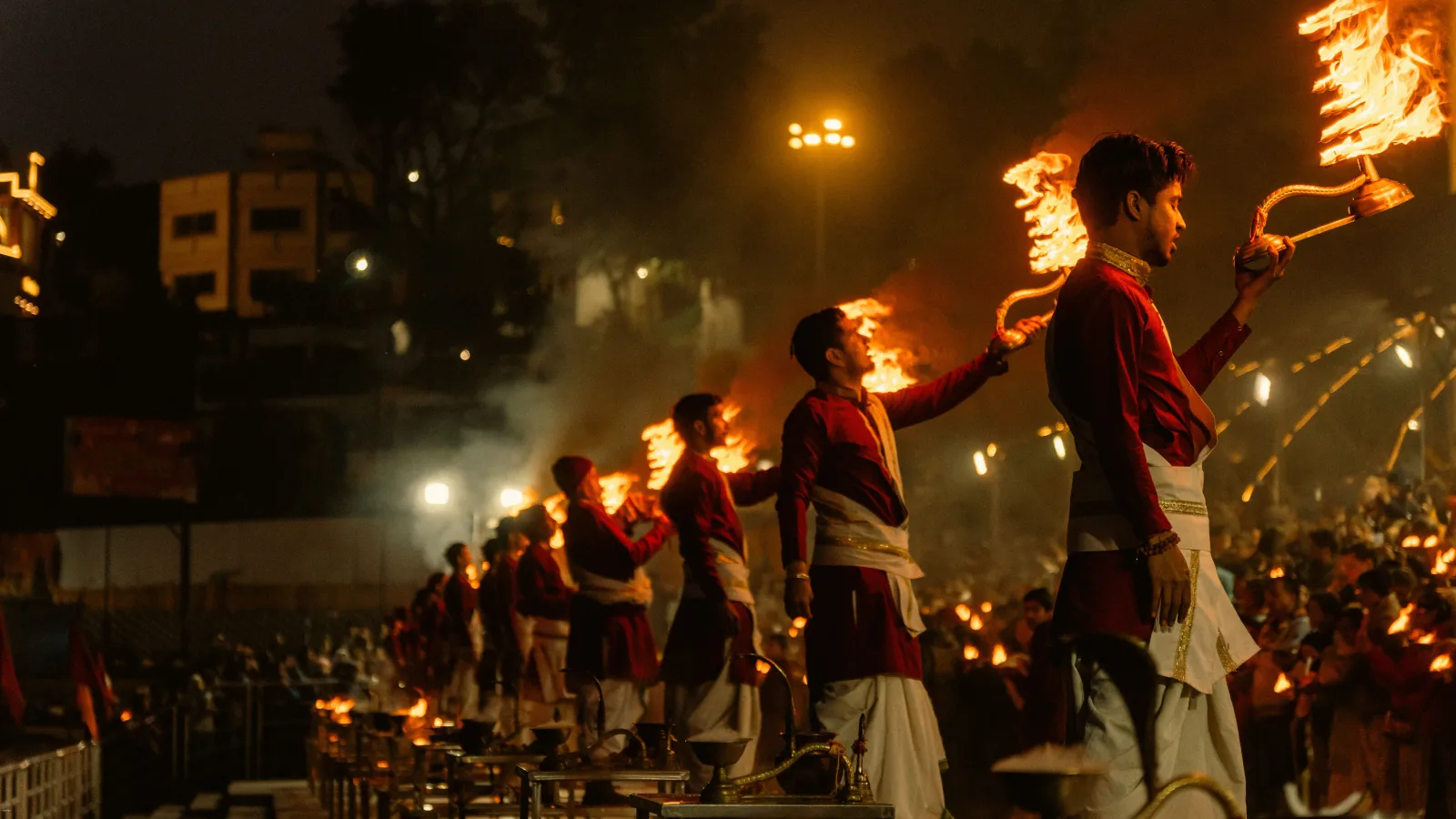
The evening Ganga Aarti happens every single day of the year, rain or shine — season only changes the experience. In prime season it's warm-lit and well attended; in monsoon it's rain-slicked, thunderous, and nearly private; in winter you'll want a shawl and a chai afterwards. There is no wrong month for it.
The river changes more than the ritual does. October through April it runs comparatively clear and blue-green — this is when rafting operates (roughly late September/October to June; it closes during the monsoon when the river runs high). In monsoon the Ganga becomes a powerful brown flood: magnificent to watch, not to enter. Whatever the month, swim only at recognized safe spots and take local advice seriously.
Frequently asked questions
When should you avoid Rishikesh?
There is no month we'd flatly tell you to avoid — but match the season to your tolerance. Avoid May–June if you struggle in heat, July–September if a wet holiday would disappoint you, and December–January if cold mornings without central heating sound miserable. For training specifically, none of these stop the course; they just change the experience around it.
How much does a yoga retreat cost in Rishikesh?
Less than almost anywhere comparable. As a benchmark from our own published pricing: residential yoga teacher trainings start from around $1,200 for the 200-hour course, meals and accommodation included, and retreats are quoted per stay with anchored "from" pricing plus a personalized quote (private room, one complimentary massage per stay). Prices soften outside prime season; see retreat details for current figures.
In which month do foreigners visit Rishikesh most?
The international high season runs October–November and February–March — the same window as the best weather. March adds the International Yoga Festival crowd. December sees a smaller holiday-season spike despite the cold.
Which month is less crowded in Rishikesh?
July and August are the quietest months of all, followed by May, June, and early September. If you want prime-season weather with slightly thinner crowds, the edges of the window — early October and late March/early April — are the best compromise available.
Do yoga courses run during the monsoon?
Yes — ours run every month of the year. Monsoon batches tend to be smaller and more inward-looking, all practice is comfortably indoors, and many students who choose the green season deliberately come back praising it. Just pack quick-dry clothes and expect your laundry to take its time.
Pick your month, then come
If you take one thing from this guide: October to March for the classic experience, monsoon for solitude and green, summer for quiet budget immersion — and no month is wasted. The course is the same six-days-a-week rhythm whatever the sky is doing; the season just chooses the backdrop.
When you've picked your window, check dates and availability for the 200-Hour Yoga Teacher Training in Rishikesh — prime-season batches genuinely fill early, with a 20% deposit reserving your seat — or message us on WhatsApp and tell us your month; we'll tell you honestly what it will be like, packing list included.
Author note (byline): Gangesha Adi (E-RYT 500) has taught through every Rishikesh season for over a decade at Pure Soul Yoga School in Tapovan — including the monsoons most travel guides have never sat through.