Vajrasana Benefits: The Thunderbolt Seat, Done Right
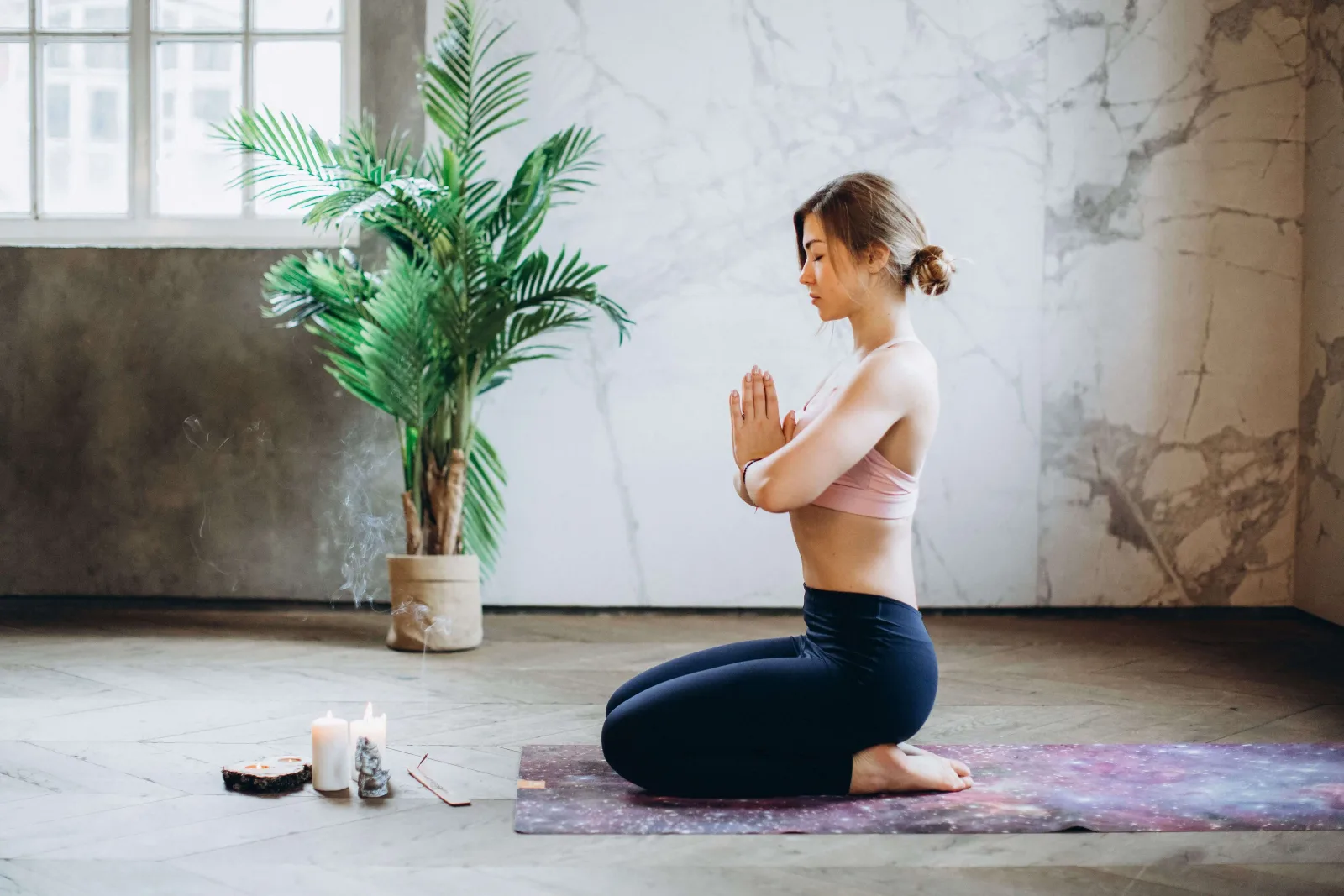
Vajrasana is the kneeling seat of yoga — shins on the floor, hips resting on the heels, spine tall. It asks for no flexibility you don't already have, which is why it is usually the first meditation seat we give beginners, and it carries one distinction no other pose in the asana library shares: tradition treats it as the one pose you may practice directly after eating. Its genuine benefits are modest and real — a stable, upright base for breathing and meditation, a stretch for stiff ankles and knees, and easier tall posture — and this guide keeps to those, along with the honest version of the digestion story.
This article is for general education and is not medical advice. If you have knee, ankle or joint problems, please consult a qualified healthcare professional about your individual situation.
What is Vajrasana?
The name comes from vajra — the thunderbolt, the weapon of Indra in Indian tradition, a word that also means diamond — and asana, seat or pose. Hence its two English names: Thunderbolt Pose and Diamond Pose. The image is of something unshakeable, and that is the job description: vajrasana exists to be sat in, steadily, while something else (breathing practice, meditation, chanting, a meal's aftermath) happens on top of it.
Don't confuse it with virasana (Hero Pose), where the hips drop between separated heels onto the floor or a block. In vajrasana you sit on your heels. The two look similar in photographs and feel completely different in the knees.
How to sit in Vajrasana (step by step)
Kneel on a folded mat or blanket with your knees together.
Point your feet straight back, big toes touching, heels apart just enough to make a small cradle.
Lower your hips onto your heels so the insides of the feet catch the sit bones.
Stack your spine upward — pelvis neutral, crown of the head rising, chin level.
Rest your palms on your thighs, shoulders heavy, face soft.
Breathe normally. Stay 30 seconds to 2 minutes at first.
To come out, lean forward, sweep the legs to one side, and stretch them straight before standing.
When the ankles or knees complain, don't push through — go straight to the props in the variations section below. Comfort is not a compromise here; a seat you can't relax in cannot do its job.
Vajrasana benefits — what's real, what's tradition
A steady seat for breath and meditation. This is the pose's chief gift. The kneeling base holds the pelvis slightly forward, which stacks the spine upright with far less effort than cross-legged sitting demands from tight hips. That's why we use it constantly in pranayama practice — the posture takes care of itself and attention can go to the breath.
Ankle and knee mobility. Sitting on the heels puts the ankles into a full stretch across the front and takes the knees through deep, unloaded bending. Practiced patiently, most people find their ankles and knees grow noticeably more comfortable in this range within a few weeks — useful far beyond the mat.
Posture with less effort. Minutes spent tall in vajrasana are minutes spent rehearsing an upright spine. Many students find it carries over to how they sit at a desk, though that's observation from the teaching room, not a research finding.
Quietness. Any still, comfortable seat with steady breathing tends to settle the mind, and research on meditation and slow breathing broadly supports a calming effect. That's the honest scope of the claim — the calm comes from what you do in the seat, not from the shape alone.
Digestion — the traditional teaching. Tradition holds that sitting in vajrasana after a meal supports agni, the digestive fire, and Indian households have passed down the after-dinner kneel for generations. The traditional reasoning: the position is said to gently direct circulation toward the abdomen while keeping the body upright and still. Modern evidence for a direct digestive effect is limited, so we present this as tradition rather than medical fact — while noting the tradition is pleasant, harmless for healthy knees, and a better after-dinner habit than the sofa.
The old version of this article promised weight loss, blood-pressure regulation and menstrual relief from this pose. We've removed those claims — they aren't supported, and you deserve accuracy more than enthusiasm.
The post-meal tradition, in practice
Almost every pose in yoga comes with the instruction "practice on an empty stomach." Vajrasana is the classical exception: five to ten minutes of quiet kneeling after eating is a long-standing custom, especially after the largest meal of the day. If you'd like to try it, keep it gentle — no breath retention, no long holds, just an easy upright seat and normal breathing. Treat it as a tradition you're testing in your own body, not a prescription.
Common mistakes
Sitting between the heels instead of on them. That's virasana territory and a very different knee demand. Keep the heels under the sit bones.
Slumping. A collapsed vajrasana teaches nothing. If staying tall is exhausting, shorten the hold rather than surrendering the spine.
Enduring numb feet. Tingling that builds into numbness means circulation is pinched. Come out, stretch the legs, and next time add props or reduce the time.
Rushing the timeline. Students hear "meditation seat" and attempt twenty minutes on day one. Two comfortable minutes, added to gradually, beats one heroic sitting followed by a week of avoidance.
Who should be careful (contraindications)
Knee injuries or recent knee surgery — the deep flexion may aggravate them; get individual clearance first.
Significant ankle stiffness or injury — build up with the blanket support below rather than forcing the stretch.
Severe joint disease in the legs — take your doctor's advice before adding kneeling practice.
Pregnancy — the seat itself is generally considered gentle, but take guidance from your doctor and a qualified prenatal teacher on timing and duration.
Sharp pain anywhere, at any point, means come out. Stretch discomfort fades as you exit; injury pain doesn't.
Variations and props
Cushion between heels and hips — takes most of the load off the knees; the standard beginner setup.
Rolled blanket under the ankles — softens the front-of-ankle stretch for stiff or bony ankles.
Knees slightly apart — often more comfortable for larger bodies and after meals.
Meditation bench — a small kneeling bench keeps the shape while removing nearly all knee and ankle pressure; a genuinely good long-term option.
Chair — if kneeling remains impossible, an upright chair seat serves every purpose vajrasana serves. The seat is the means, never the goal.
Frequently asked questions
How long should you sit in vajrasana?
Begin with 30 seconds to 2 minutes and add time as the ankles and knees adapt. For breathing or meditation practice, 5–10 comfortable minutes is plenty; for the traditional after-meal sit, 5–10 minutes is also the customary range. There's no prize for duration through pain.
Can you really do vajrasana after eating?
Yes — it is the one pose tradition explicitly permits after meals, and the custom is a gentle few minutes of upright kneeling. Keep it easy and skip it if kneeling on a full stomach feels wrong for your body. The digestive benefit is traditional teaching, not established medical fact.
Is vajrasana good or bad for the knees?
Both answers exist because bodies differ. For healthy knees, the deep unloaded bend is generally a useful mobility practice. For injured or arthritic knees it can aggravate symptoms — use the cushion setup, keep holds short, and get professional advice if you have a knee condition.
What is the difference between vajrasana and virasana?
In vajrasana you sit on your heels with the feet beneath you; in virasana (Hero Pose) the feet move outside the hips and you sit between them, on the floor or a block. Virasana demands considerably more from the knees and ankles — learn vajrasana first.
Keep building your seat
A steady seat is the quiet foundation of everything else in yoga — the complete asana library shows where vajrasana sits among the other foundational poses. And if you want to understand why the seats matter — how posture, breath and meditation interlock — that is exactly the ground our 200-hour yoga teacher training in Rishikesh covers in its first weeks. Questions about practice or training? Message us on WhatsApp anytime.
References
National Center for Complementary and Integrative Health (NCCIH) — Yoga: What You Need To Know (general evidence on yoga and wellbeing).
NCCIH — Meditation and Mindfulness: What You Need To Know (evidence context for seated practice and relaxation).
Traditional hatha yoga teaching on vajrasana and post-meal practice (as taught in classical Indian schools; presented here as tradition, not clinical evidence).
Reviewed for health accuracy by Dr. Bhupinder Singh Arora (M.D. Ayurveda), consulting Ayurvedic physician at Pure Soul Yoga School. This article is educational and not a substitute for personal medical advice.
Author note (byline): Gangesha Adi (E-RYT 500) teaches vajrasana as the first meditation seat to beginners at Pure Soul Yoga School, Rishikesh — students of 50+ nationalities have learned to sit still on this simple kneeling base.