Yoga Mudras: 10 Hand Gestures, How to Do Them & What They Mean
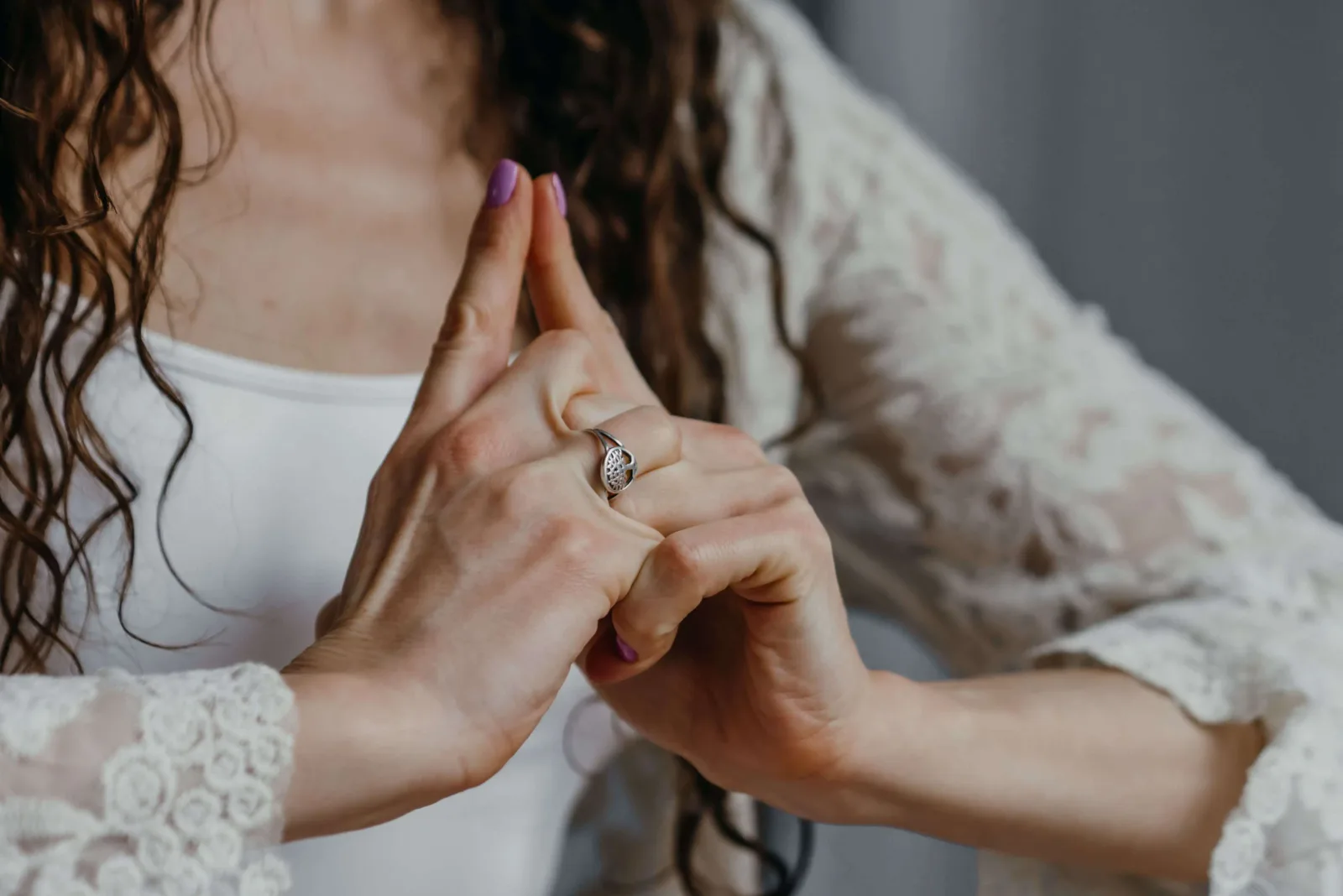
Yoga mudras are symbolic hand gestures — the Sanskrit word mudra means "seal" or "gesture" — used in meditation, pranayama and ritual to steady the mind and, in the traditional account, to direct the flow of prana, the life-force of yogic philosophy. You have almost certainly seen them: the index finger and thumb joined in a circle on a meditator's knee is gyan mudra, and the palms pressed together at the heart in greeting is anjali mudra, the gesture behind "namaste."
Before we go through the ten major mudras one by one, we owe you the sentence most articles on this topic leave out: the health claims attached to mudras come from tradition, not from laboratory evidence. We'll say exactly what that means — and why mudras are still worth learning — right at the start. Then: how to practise, the ten gestures themselves (gyan, chin, anjali, dhyana, prana, apana, vayu, shunya, surya and bhairava), and how mudras fit into meditation and breathwork.
What are mudras, exactly?
In the yogic traditions, a mudra is a gesture that "seals" or channels energy and attention. The hand mudras this guide covers are properly called hasta mudras (hasta = hand) — one branch of a much larger family. In the classical hatha texts, in fact, most of the practices called "mudra" are whole-body techniques: the Hatha Yoga Pradipika and the Gheranda Samhita describe mudras involving posture, breath retention and internal locks, taught as advanced practice. The hand gestures most people mean today come to us through tantric ritual, temple and Buddhist iconography, classical Indian dance, and the later teaching traditions — which is why you'll find the same gesture carrying slightly different names and meanings in different lineages.
The traditional logic behind hasta mudras is elegant. In the framework shared by Ayurveda and hatha yoga, the body is built from five elements (pancha mahabhutas), and each finger is said to correspond to one: the thumb to fire, the index finger to air, the middle finger to space, the ring finger to earth, and the little finger to water. Joining, folding or extending particular fingers is traditionally said to balance these elements and guide prana along the body's subtle channels — the same map of nadis and energy centres we describe in our guide to the 7 chakras.
Whether or not you take that map literally — and we'll be honest about that next — the practical role of a mudra is something any meditator can verify: it gives the hands a job. Hands with a job stop fidgeting, and a still body is half of a still mind.
Do mudras actually work? An honest answer
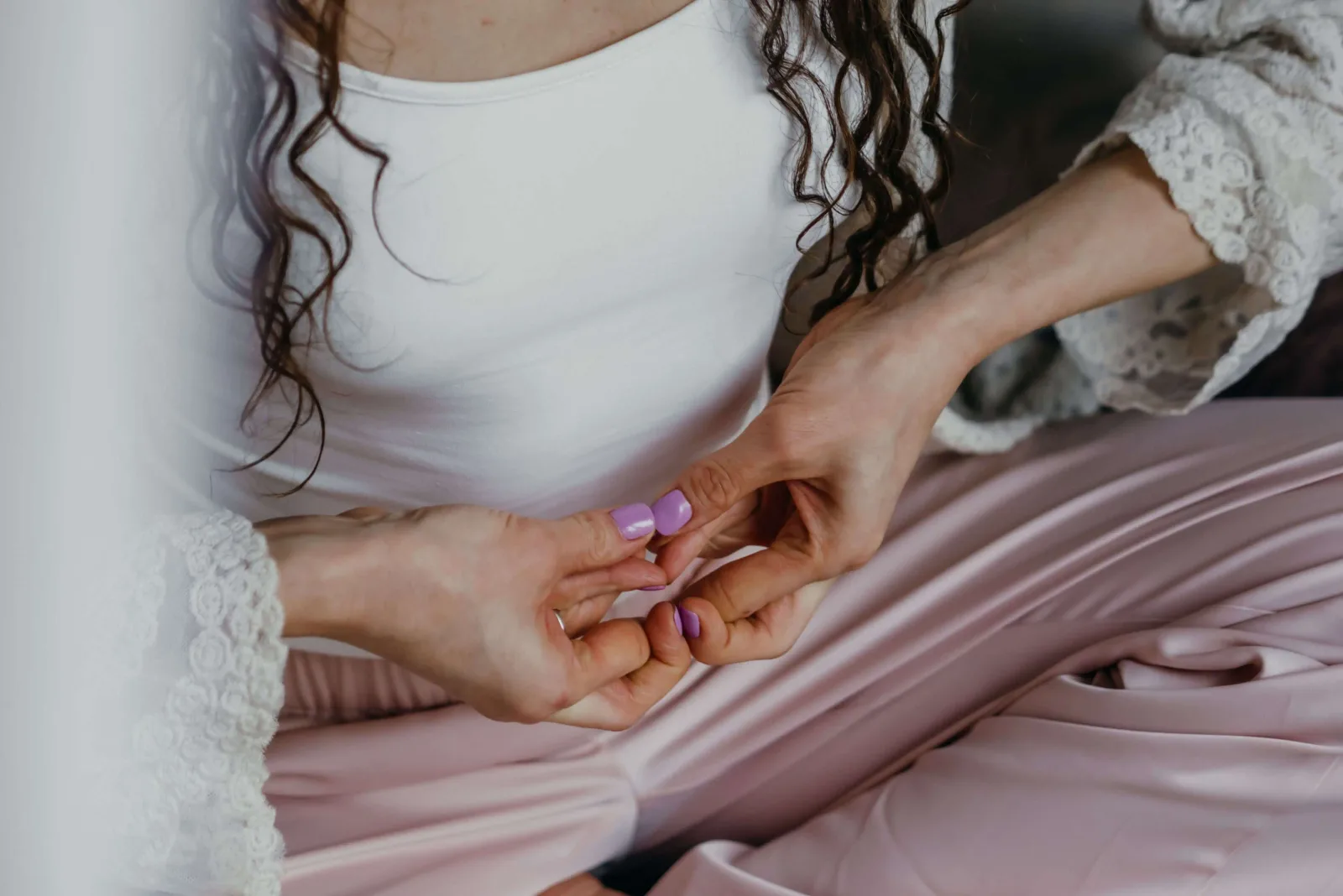
We teach mudras daily, and precisely because we do, we'd rather you trust us than be dazzled by us. So, plainly:
What the tradition says: mudras seal and redirect prana, balance the five elements, and support everything from digestion to vitality to states of deep meditation. These claims sit inside a coherent traditional system, taught and refined over many centuries, and they are made in good faith by that tradition.
What research says: there is no robust scientific evidence that hand mudras produce specific physiological effects — on eyesight, digestion, joints, or anything else. A small number of preliminary studies exist, but they are exploratory, with small samples and weak designs; no firm conclusions can be drawn from them. Claims that a mudra can treat or cure a medical condition have no scientific support, and you should be wary of anyone who makes them. If you have a health concern, that is a conversation for a doctor, not a hand position.
What is genuinely, observably true: mudras work beautifully as anchors for attention. A gesture held with awareness gives the wandering mind a physical reference point — the same principle behind following the breath or counting a mala in japa meditation. They carry meaning, and meaning changes how we practise: sitting down and forming dhyana mudra is a small ritual that tells your nervous system this time is different. And they connect you to a living tradition — the same gestures held by practitioners and carved into temple walls for many centuries.
Hold mudras the way we suggested holding the chakra map: as a contemplative tool, valuable on its own terms, not as medicine. Everything below uses "traditionally said to" deliberately — it marks the traditional account, not a verified effect.
How to practise a mudra
There is no complicated technique. A few guidelines cover almost everything:
Sit comfortably — any steady meditation seat works, spine easy and tall.
Form the gesture with both hands unless noted otherwise, resting them on the knees or thighs, or in the lap.
Keep the touch feather-light. Finger contact should be gentle; the rest of the hand stays soft.
Add the breath. Mudras are traditionally practised with slow breathing or during meditation and pranayama, not as a standalone exercise.
Hold for as long as feels natural. Traditional teachers often suggest anywhere from a few minutes up to fifteen or so; there is no research-established "dose," so let attention — not the clock — decide.
A tip from our teaching hall: if your hand aches, you're pressing too hard. The mudra is a reminder, not a grip — form it, forget it, and let the attention rest on the breath. When you notice the gesture has dissolved, simply re-form it. That noticing is the practice.
The 10 major mudras at a glance
Mudra | The gesture | Traditionally associated with |
|---|---|---|
Gyan | Index fingertip to thumb tip, palms down | Knowledge, concentration, memory |
Chin | Index fingertip to thumb tip, palms up | Consciousness, receptivity |
Anjali | Palms together at the heart | Greeting, gratitude, centring |
Dhyana | Hands cupped in the lap, thumbs touching | Deep meditation, equanimity |
Prana | Ring + little fingertips to thumb tip | Vitality, awakening prana |
Apana | Middle + ring fingertips to thumb tip | Elimination, downward energy |
Vayu | Index folded to thumb base, thumb over it | Settling the air element |
Shunya | Middle finger folded, thumb over it | Space element, the ears |
Surya | Ring finger folded, thumb over it | Inner fire, metabolism |
Bhairava | Right hand resting in the left, palms up | Union, absorption |
Now each one properly.
Gyan mudra — the seal of knowledge
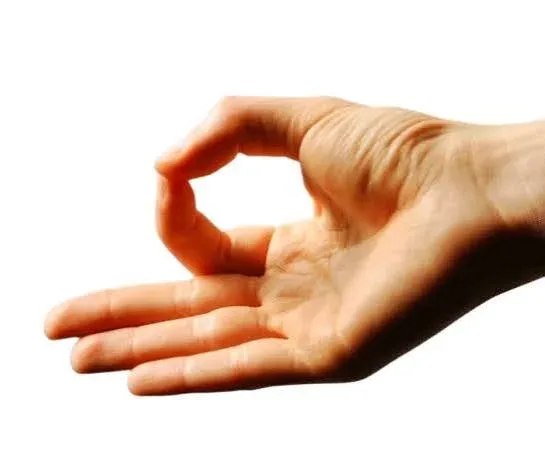
How to do it: touch the tip of the index finger to the tip of the thumb, forming a circle; extend the other three fingers softly. Rest the hands on the knees, palms facing down.
Gyan (from the Sanskrit jnana, "knowledge") is the most recognised mudra in the world and the default gesture for seated meditation in many lineages. Symbolically, the index finger stands for the individual self and the thumb for the universal — their meeting is the whole aim of yoga in one small circle. It is traditionally said to sharpen concentration and memory and to support steady, wakeful meditation. If you learn only one mudra, learn this one.
Chin mudra — the seal of consciousness
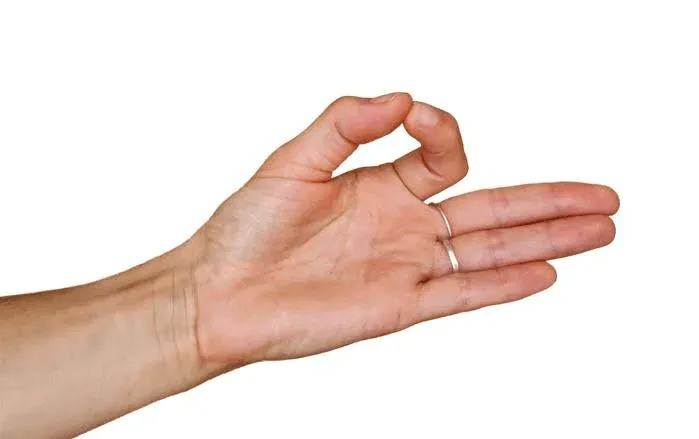
How to do it: the same finger position as gyan — index fingertip to thumb tip — but with the palms turned up, resting on the knees or thighs.
Many lineages distinguish the two by orientation: palms down (gyan) is taught as grounding and settling, palms up (chin) as open and receptive. Others teach the names interchangeably, or distinguish them by whether the index fingertip touches the thumb tip or folds to its base — a good example of how a living tradition varies between teachers. Chin mudra is traditionally said to invite receptivity: a natural choice for practices of listening, chanting or open awareness.
Anjali mudra — the gesture of reverence
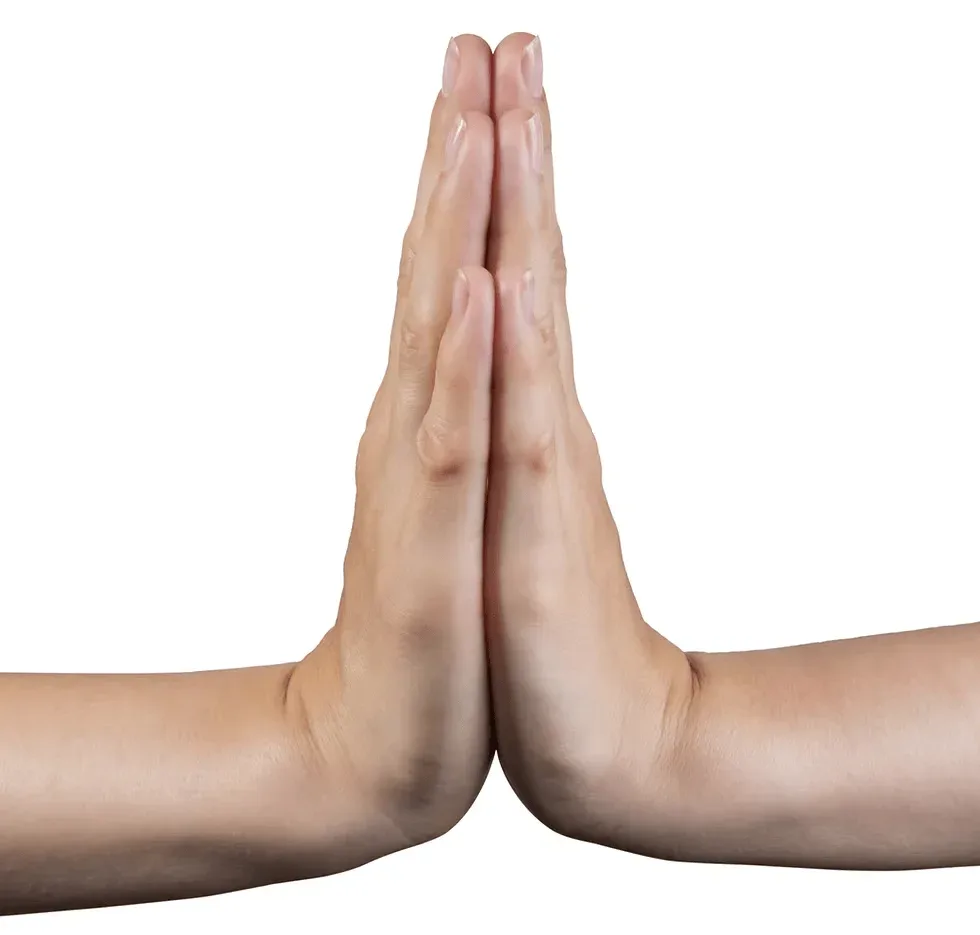
How to do it: press the palms lightly together at the centre of the chest, fingers pointing up, thumbs resting toward the sternum. Often paired with a slight bow of the head.
Anjali means "offering" or "salutation" — this is the gesture that accompanies "namaste" across India, and it opens and closes practice in yoga halls everywhere. Bringing the two hands together at the heart is traditionally said to unite the two sides of the body and centre the mind in respect and gratitude. It needs no belief at all to do its work: pause, palms together, one breath — and notice how reliably the mind gathers.
Dhyana mudra — the meditation seal
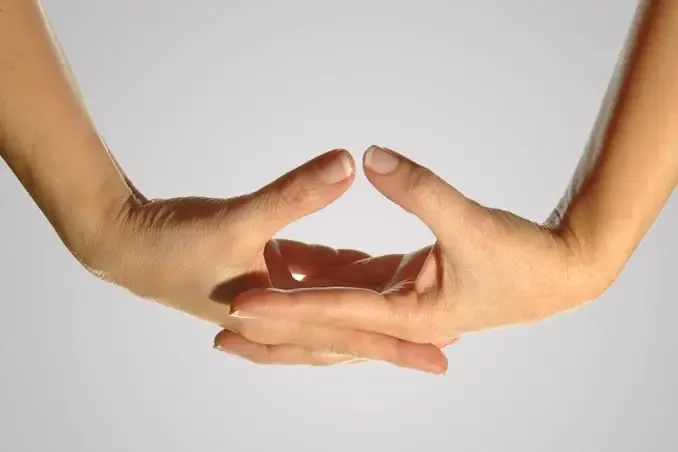
How to do it: rest the hands in the lap, right hand cupped on top of the left, palms up, with the thumb tips touching lightly to form a gentle oval.
Dhyana means meditation — the seventh of the eight limbs of yoga — and this is the gesture you see on images of the meditating Buddha across Asia. It is traditionally associated with deep contemplation and equanimity: the balanced oval of the thumbs is said to represent the union of stillness and awareness. Practically, it is the most restful of all the mudras for long sits, since the hands support each other and the shoulders can fully release.
Prana mudra — the seal of vitality
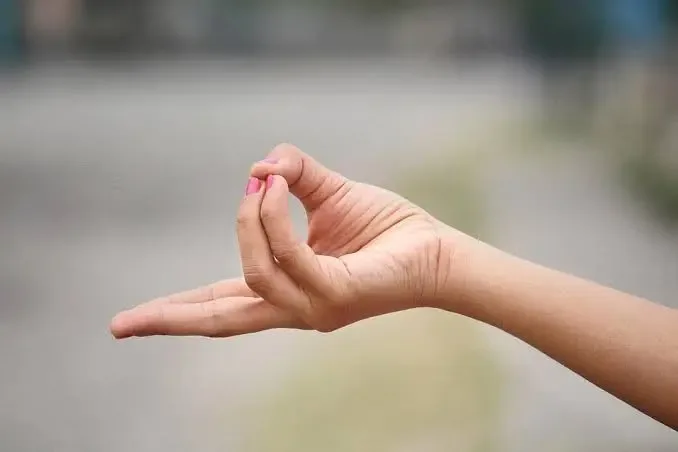
How to do it: touch the tips of the ring finger and little finger to the tip of the thumb; extend the index and middle fingers.
Named for prana itself, this gesture joins the fingers assigned to earth and water with the thumb's fire. It is traditionally said to awaken vital energy, reduce fatigue and — in traditional accounts — support the eyes. Those are traditional claims, not clinical ones; what practitioners reliably report is that it makes a pleasant anchor for slow, full breathing when energy feels low.
Apana mudra — the seal of downward energy
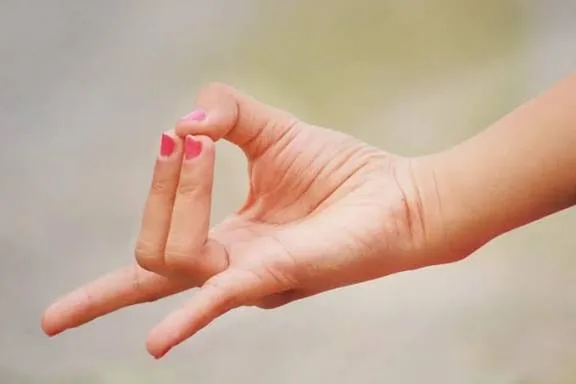
How to do it: touch the tips of the middle and ring fingers to the tip of the thumb; extend the index and little fingers.
Apana is, in yogic physiology, the downward-moving current of prana that governs elimination. This mudra is traditionally said to support digestion and the body's eliminative functions and to settle energy downward — which is why some teachers suggest it for grounding at the end of a strong practice. As ever: a traditional association, held gently, not a therapy.
Vayu mudra — the seal of air
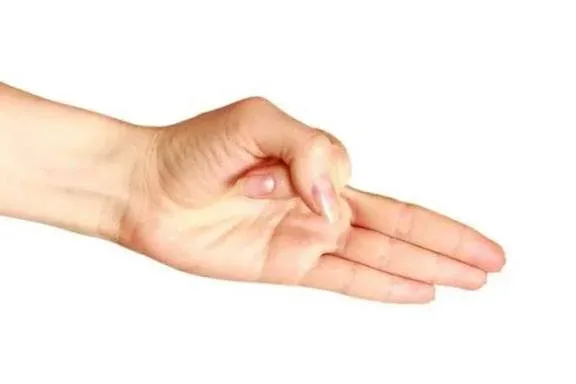
How to do it: fold the index finger down to the base of the thumb, then rest the thumb lightly over it; extend the other three fingers.
Vayu means wind or air. By folding the "air finger" under the thumb's fire, this gesture is traditionally said to settle an excess of the air element — restlessness, scattered thoughts and, in traditional accounts, complaints the tradition attributes to excess vata, such as gas or joint discomfort. Modern medicine does not recognise that mechanism; if joints or digestion genuinely trouble you, see a professional. As a meditation seal for a jumpy, windy mind, though, it is a lovely gesture to sit with.
Shunya mudra — the seal of emptiness
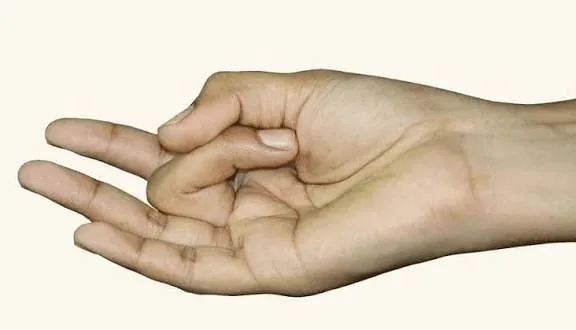
How to do it: fold the middle finger down to the base of the thumb and press the thumb gently over it; extend the other fingers.
Shunya means emptiness or the open sky — and the middle finger is the finger of space. The gesture is traditionally associated with the ears and hearing (the tradition links the space element with sound) and, more broadly, with cultivating inner spaciousness. That second, contemplative meaning is the one we teach with confidence: a physical reminder, held in the hand, that the mind can be roomy.
Surya mudra — the seal of the sun
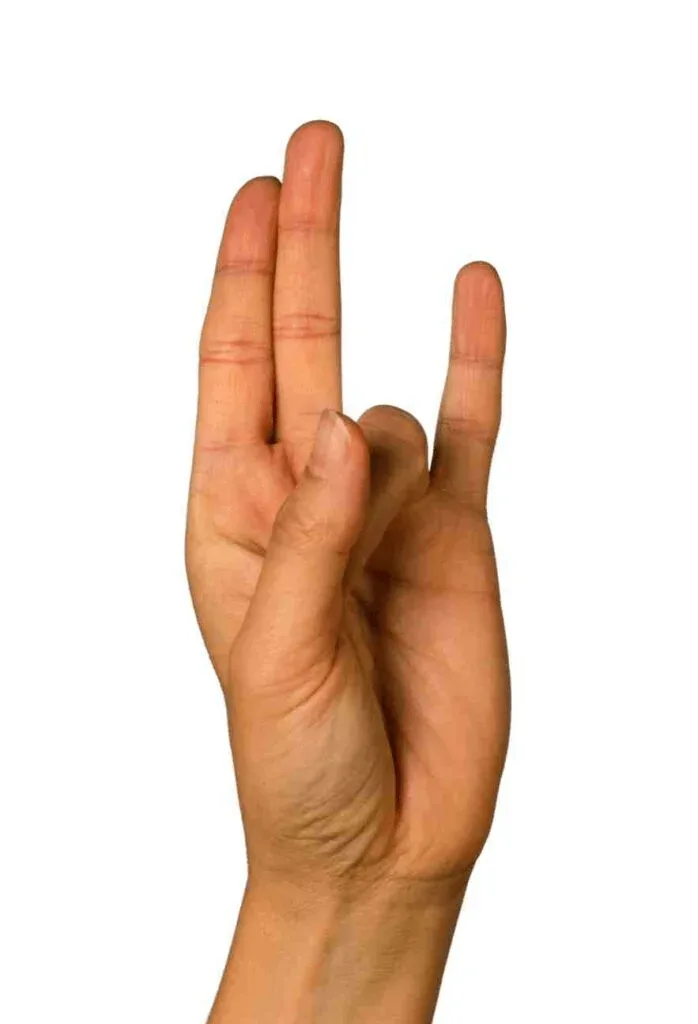
How to do it: fold the ring finger down to the base of the thumb and press the thumb over it; extend the other fingers.
Surya means sun. Folding the earth finger beneath the fire of the thumb is traditionally said to kindle inner heat — digestive fire, metabolism, alertness — which is why some traditional teachers pair it with morning practice. There is no evidence it changes your metabolism, and it is no one's weight-loss tool; there is real value, though, in a gesture that marks a practice as bright, wakeful and warming.
Bhairava mudra — the seal of union
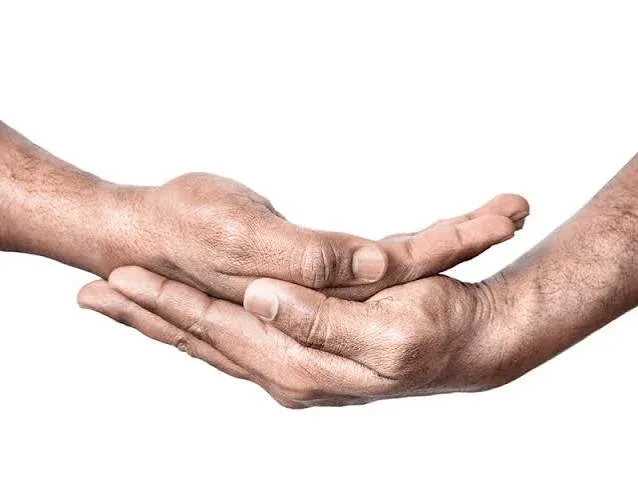
How to do it: rest the back of the right hand in the palm of the left, both palms facing up, thumbs relaxed (not touching), hands resting in the lap.
Bhairava is a fierce form of Shiva, and this quietly powerful gesture is traditionally associated with the dissolving of the sense of separateness — the two hands, undivided, resting as one. With the left hand on top, the same gesture is called bhairavi, its feminine counterpart. It looks almost identical to dhyana mudra and serves the same territory: long, silent, absorbed sitting. Many students find it the most natural gesture of all — which is, perhaps, the teaching.
How mudras are used in meditation and pranayama
Mudras rarely stand alone; they are the quiet companions of the two practices they serve.
In meditation, a mudra is chosen at the start of the sit and simply held — gyan, chin, dhyana or bhairava are the classic choices — giving the hands a settled home and the attention a physical anchor to return to. If you're building a sitting practice from scratch, our guide to meditation techniques for beginners covers the seat, the breath and the wandering mind; a mudra slots into any of those techniques from day one.
In pranayama, the hands are busier than you might think: gyan or chin mudra rests on the knees during practices like bhramari and full yogic breathing, and alternate-nostril techniques use a dedicated gesture of their own to close the nostrils. The breath practices themselves — and how to learn them safely — are covered in our guide to pranayama breathing techniques; this article deliberately teaches none of them, only the gestures that accompany them.
Both practices sit inside the larger frame of the tradition — mudras belong to the meditative limbs of the eight limbs of yoga, the path this cluster of guides walks through step by step.
Frequently asked questions
Which yoga mudra is best?
There isn't one, and we'd be honest with you if there were. The tradition matches the gesture to the purpose: gyan or chin for everyday meditation, dhyana or bhairava for long silent sits, anjali for opening and closing practice. If "best" means "which should I start with," the answer is gyan mudra — simplest, most universal, and impossible to get meaningfully wrong.
Do hand mudras really work?
It depends what "work" means. As tools for steadying attention and marking the shift into practice: yes, observably. As producers of specific physical effects — better eyesight, digestion, metabolism: there is no reliable scientific evidence for those traditional claims, and we won't pretend otherwise. Practise them for what they demonstrably are — meaningful, mind-settling gestures — and let the rest remain what it is: tradition, honestly labelled.
What are 5 mudras?
A classic beginner's set of five: gyan (knowledge), chin (receptivity), anjali (reverence), dhyana (meditation) and prana (vitality). Between them they cover greeting the practice, sitting in it, and closing it.
Which mudra is best for health?
None has proven health effects, so we won't recommend one as medicine. Within the traditional account, health themes are assigned to vayu (air/restlessness), surya (digestion and warmth), apana (elimination) and prana (vitality) — and you're welcome to explore those associations as contemplation. For an actual health concern, please see a qualified professional; a mudra is not a treatment.
How long should you hold a mudra?
Traditional teachers commonly suggest a few minutes at a time, often up to around fifteen; in meditation, simply hold it for the length of the sit. There's no evidence-based dose, so let comfort and attention decide — a mudra held with awareness for two minutes is worth more than one clamped absent-mindedly for an hour.
Learning mudras where they are still taught daily
The honest way to learn mudras is the way they've always been passed on — from a teacher, inside a living practice of meditation and breathwork, with the tradition explained rather than hyped. That is precisely the territory of our Meditation Yoga Teacher Training in Rishikesh, where mudras are taught in their classical context alongside daily meditation, mantra and pranayama, in small batches of at most 20 students. Curious whether it's right for you? Ask us anything on WhatsApp — real humans answer, usually within hours.
This article is for general education and is not medical advice. Traditional claims about mudras are presented as tradition, not as verified effects. Please consult a qualified healthcare professional about any health concern.
References
Hatha Yoga Pradipika (attributed to Svatmarama) — classical hatha yoga's treatment of mudras as advanced (largely whole-body) practices.
Gheranda Samhita — classical enumeration of mudras within the sevenfold hatha discipline.
Patanjali's Yoga Sutras — the eight-limbed framework (dharana, dhyana) within which meditation gestures are used.
National Center for Complementary and Integrative Health (NCCIH) — research overviews on meditation and yoga (practice outcomes; notes the limits of evidence).
Peer-reviewed exploratory literature on yoga mudras (e.g., small preliminary studies indexed on PubMed Central) — cited here only as evidence that research is early-stage and inconclusive.
Author note (byline): Gangesha Adi (E-RYT 500) teaches meditation and yoga philosophy at Pure Soul Yoga School, Rishikesh, where hasta mudras are part of the daily meditation and mantra curriculum for students of 50+ nationalities.