Sukhasana Benefits: The Easy Pose That Isn't Easy
Sukha means ease, comfort, happiness — so Sukhasana translates, charmingly, as "the easy pose." Then a beginner raised on chairs sits cross-legged for five minutes and discovers aching knees, a rounding lower back, and feet falling asleep, and the name starts to feel like a joke. Here is the truth both ways: sukhasana genuinely is the most accessible of yoga's classical meditation seats, and its benefits — a stable base for breathing practice, gradually freer hips, a spine that learns to hold itself tall — are real. But for modern, chair-shaped bodies it usually needs to be built, with props and patience, before it feels anything like its name. This guide covers what the pose offers, how to set it up so it actually works, and what to do when it hurts.
This article is for general education and is not medical advice. If you have knee, hip, or lower-back problems, please consult a qualified healthcare professional about your individual situation.
What is Sukhasana?
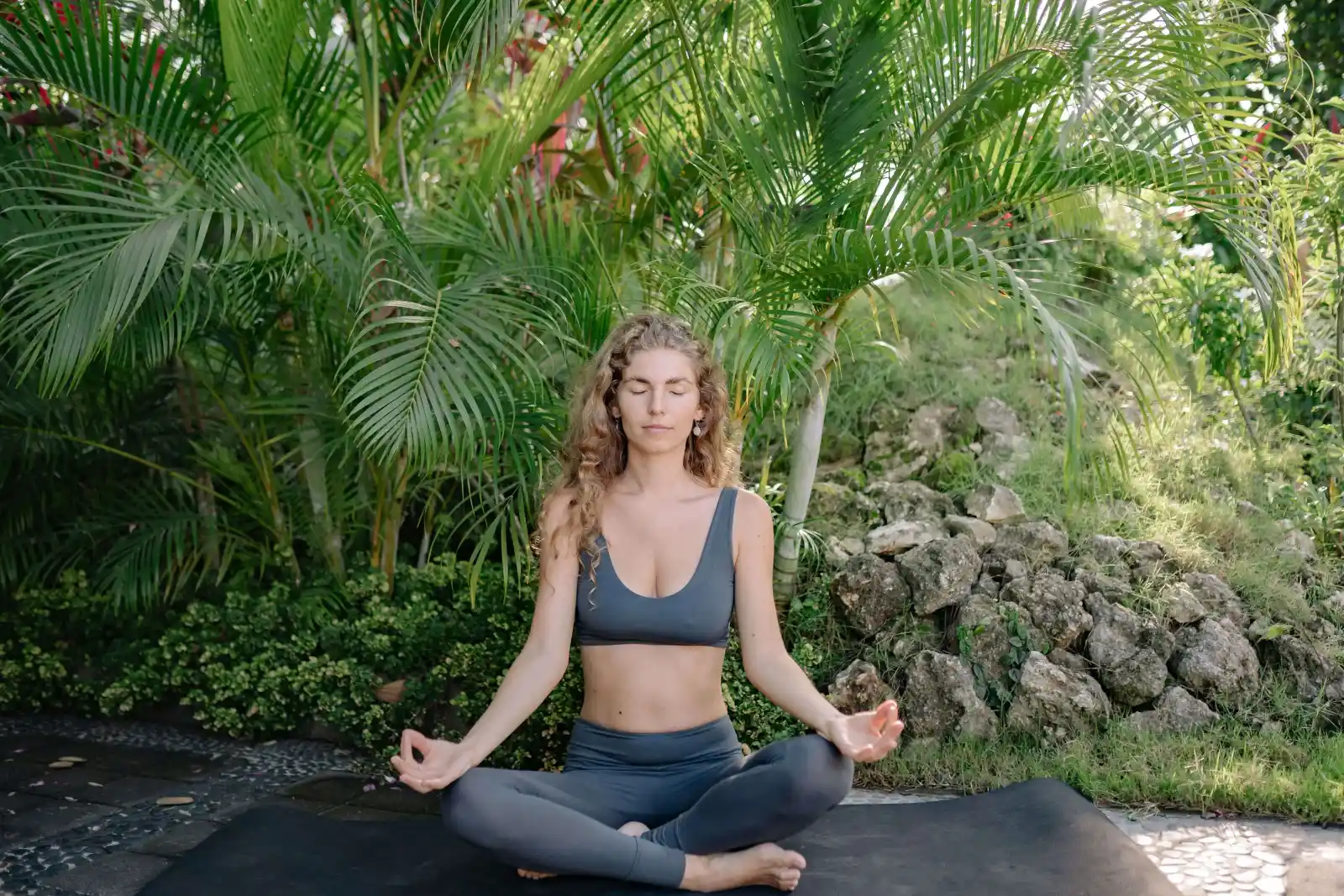
Sukhasana is the simple crossed-leg seat: shins crossed at mid-line, each foot resting beneath the opposite knee, spine upright, hands on the knees or in the lap. It is deliberately less demanding than the deeper seats — no folding the feet onto the thighs as in padmasana (lotus), no tucking under the hips as in the kneeling vajrasana. In the asana library it sits in the seated family with one job description: to be a platform steady and comfortable enough that you can forget your body and attend to your breath. Classical teaching asks exactly two things of a meditation seat — that it be sthira (steady) and sukham (comfortable) — and sukhasana is the seat most people can actually meet those two conditions in.
Why the seat matters more than it looks
Almost everything in yoga that isn't movement happens sitting down. Pranayama, chanting, and every meditation technique we teach beginners all need a base that can be held without fidgeting or slumping. A collapsed seat shortens the breath and turns meditation into a fight with discomfort; a well-built one disappears from awareness entirely. That is sukhasana's real significance: not what it does while you hold it, but what it makes possible.
How to build a seat that lasts (step by step)
Sit on height. Fold a blanket or take a firm cushion and sit on its front edge, so the pelvis tips slightly forward. For most bodies this is non-negotiable, not remedial.
Cross the shins, letting each foot rest under the opposite knee with a comfortable gap between feet and pelvis — the legs form a loose triangle, not a tight knot.
Check the knees. Ideally they rest level with or below the hips. If they float high, add more height under the hips, or slide support under the knees themselves.
Stack the spine. Rock gently until you feel the weight land on the two sitting bones evenly, then lengthen up through the crown — tall, not stiff.
Settle the shoulders and hands. Shoulders back and heavy; hands on the knees or resting in the lap.
Swap the cross halfway. Whichever shin naturally goes in front, alternate it day to day — the asymmetry is real and the habit prevents it settling in.
Start with five to ten minutes and let duration grow with comfort, not willpower.
Sukhasana benefits — kept honest
A workable meditation seat, today. Unlike lotus, which can take years of hip opening, sukhasana with a cushion is available to most people immediately. This is its headline benefit: it makes seated practice possible now.
Gently freer hips and ankles. The crossed position places the hips in mild external rotation and softly stretches the knees and ankles. Practiced regularly, this may help ease the stiffness that long chair-sitting builds — gradually, and within your body's own range. It is a mild opener, not a deep one, which is exactly why it can be held for so long.
A spine that learns to support itself. Sitting tall without a backrest is light, persistent work for the postural muscles. Over weeks, students commonly find their unsupported sitting — on the mat and off it — becomes less effortful.
Calm — through what you do in the seat. Sukhasana is where slow breathing and meditation happen, and those practices are associated in research with reduced stress reactivity. We'd rather credit the practice than the pose: the seat itself doesn't lower stress, but it is the doorway to the things that may.
The traditional claims, labelled. Classical sources associate seated postures like sukhasana with grounding, improved digestion, and settled energy. Some modern articles go much further — cortisol numbers, brain rewiring. We pass on the traditional associations as tradition, and leave the laboratory claims to laboratories; the honest, demonstrable benefits above are enough to justify the pose several times over.
When Sukhasana hurts — and what to do about it
Discomfort in this pose is information, not failure. Knees complaining? More height under the hips, support under the knees, or shorten the sit. Lower back rounding and aching? The pelvis has tipped backward — sit higher on the cushion's edge, or spend a period sitting against a wall. Feet falling asleep? Loosen the cross and change it more often. And if the crossed position simply doesn't suit your body, vajrasana offers a kneeling alternative, and a firm chair with a tall spine is a fully legitimate meditation seat — steadiness matters; the leg arrangement doesn't.
Real cautions: with recent knee or hip injury or surgery, take professional advice before floor-sitting; with sciatica or disc problems, prolonged sitting of any kind may aggravate symptoms — keep sessions short and guided. Sharp knee pain is always a stop signal.
Frequently asked questions
What are the disadvantages of Sukhasana?
For unprepared bodies: knee and ankle strain from forcing the cross without props, a slumped lower back from sitting flat on the floor, and numb feet from long holds. All three are setup problems rather than pose problems, and the props section above addresses each. People with existing knee, hip, or lower-back conditions should get individual advice first.
Which disease is cured by Sukhasana?
None — and we'd encourage healthy suspicion of any article naming one. Sukhasana is a sitting position; it treats nothing. What it offers is a stable base for breathing and meditation practices that may support stress management and general wellbeing alongside — never instead of — professional medical care.
How often should I do Sukhasana?
Daily, if you like — it is gentle enough that frequency isn't the concern. A practical rhythm: sit for your pranayama or meditation practice (five to twenty minutes), alternate which shin crosses in front, and come out when steadiness turns into struggle. Consistency over months, not marathon sits, is what changes the hips and posture.
Do I have to sit on the floor to meditate?
No — this may be the most liberating sentence in the article. The tradition asks for a steady, comfortable seat; it does not legislate the furniture. A chair with your feet flat and spine tall satisfies every requirement. Floor seats like sukhasana are worth cultivating for their grounding quality and hip benefits, but no one's meditation is disqualified by a chair.
Take a seat, then learn what to do in it
A comfortable sukhasana is the beginning, not the goal — the interesting part is the breathing and meditation practice it holds. Start with our guide to meditation techniques for beginners, and if the seated practices become the heart of your yoga, that path leads naturally to our meditation teacher training in Rishikesh — or begin with the broader foundation of the 200-hour training, where seat-building is week-one material. We're on WhatsApp for any question.
References
National Center for Complementary and Integrative Health (NCCIH) — Meditation and Mindfulness: What You Need To Know (evidence context for seated practices).
Patanjali, Yoga Sutras II.46 — sthira sukham asanam ("the posture is steady and comfortable"; classical basis for the seat's two qualities).
Traditional hatha yoga teaching on sukhasana as a meditation seat (classical Indian schools; digestion and grounding associations presented as tradition, not clinical evidence).
Reviewed for health accuracy by Dr. Bhupinder Singh Arora (M.D. Ayurveda), consulting Ayurvedic physician at Pure Soul Yoga School. This article is educational and not a substitute for personal medical advice.
Author note (byline): Gangesha Adi (E-RYT 500) has handed a folded blanket to nearly every new student who ever sat down flat on the floor at Pure Soul Yoga School, Rishikesh — this article is that blanket, in writing.