Tadasana Benefits: Why Mountain Pose Is the Template
Here is a quiet test we give new students: stand still, with real attention, for ten slow breaths. Almost nobody lasts three before discovering that "just standing" is full of decisions — where the weight sits in the feet, what the knees are doing, where the ribs have drifted, whether the breath is actually moving. Tadasana, Mountain Pose, is the practice of making those decisions well. Its benefits are unglamorous and foundational: better postural awareness, honest balance, steady legs, and a calm, collected kind of attention. It will not bend you into anything impressive. It will quietly improve every pose you do after it — which is why our asana library calls it the template pose, and why it earns a full guide of its own.
This article is for general education and is not medical advice. If you have balance problems, dizziness, or blood-pressure concerns, please consult a qualified healthcare professional about your individual situation.
The pose hiding in plain sight
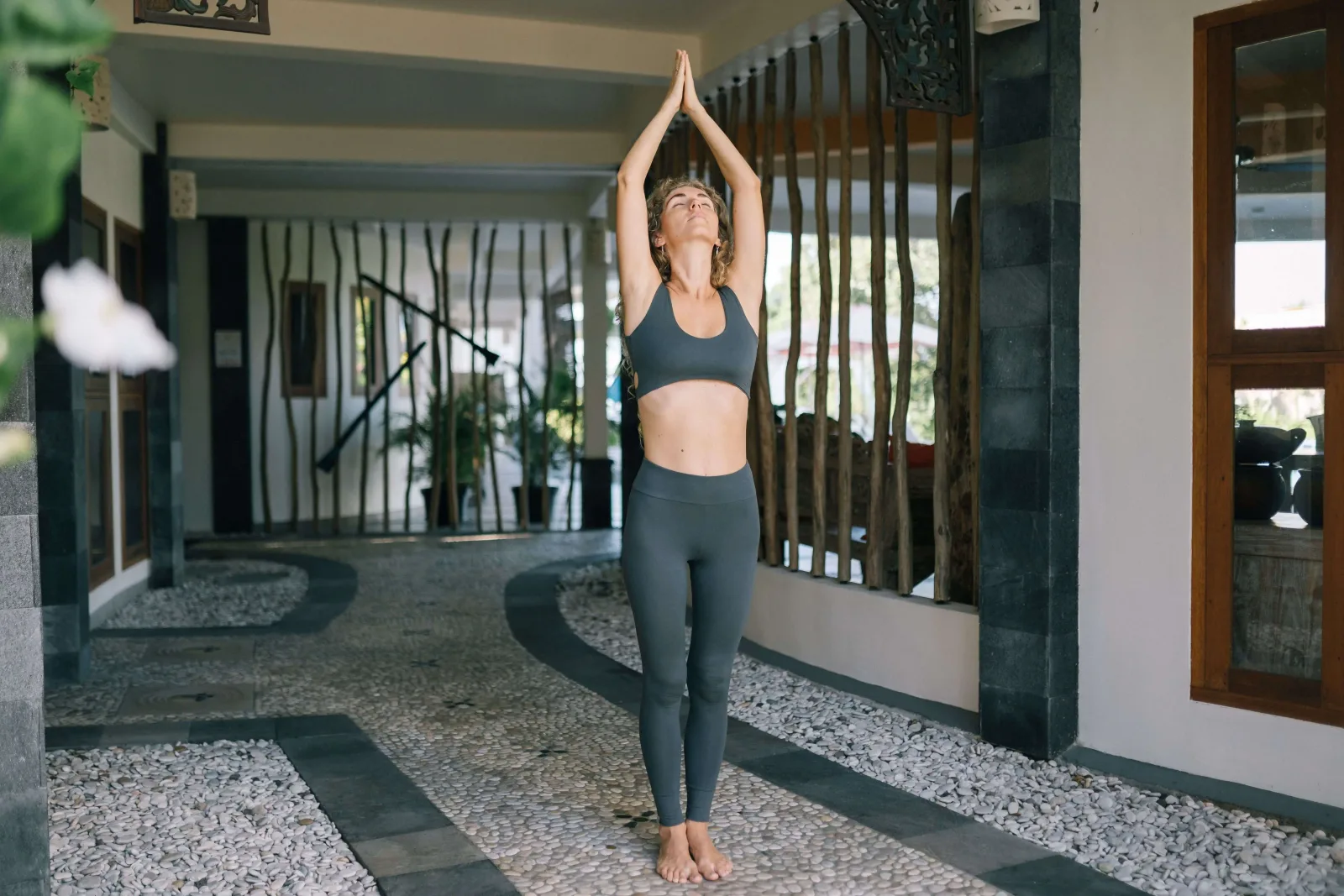
Tada is Sanskrit for mountain; tadasana is the mountain pose — standing upright, feet grounded, spine tall, arms resting at the sides. In some lineages the same upright stand is called Samasthiti, "equal standing," and the two names are used almost interchangeably: same shape, slightly different emphasis (samasthiti is often the command to return to attentive neutral between poses). Whichever name your teacher uses, this is the position every standing posture starts from and returns to — step your feet wide from here and you are on the way to Trikonasana; fold forward from here and a Sun Salutation has begun.
The five checkpoints: how to stand in Tadasana
Searchers often ask for the "five points" of tadasana. Lineages count differently, but the working checklist we teach runs from the ground up:
Feet. Stand with feet together or hip-width apart. Spread the toes, then balance the weight evenly — front to back, side to side, left foot to right. Most people find they've been living on one leg.
Legs. Lift the kneecaps gently by engaging the thighs. Active, not locked — a hard-jammed knee is not a strong knee.
Pelvis and belly. Let the tailbone drop and the lower belly tone lightly, so the lower back keeps its natural curve without exaggerating it.
Chest and shoulders. Lift the breastbone without flaring the ribs; roll the shoulders back and let them fall away from the ears. Arms hang easily, fingers alive.
Head. The crown reaches upward as if the whole spine were being measured; chin level, gaze soft and forward.
Then breathe — slow, even, unforced — and stay for thirty seconds to a minute. That's the entire pose, and doing all five things at once with a quiet mind is the entire challenge.
A tip from our teaching hall: stand with your back lightly against a wall once a week — heels, sacrum, and the back of the head in contact. The wall gives you honest feedback about where your habitual stand has drifted, and the feeling of "tall" it teaches is the feeling tadasana wants.
Tadasana benefits — what standing well actually trains
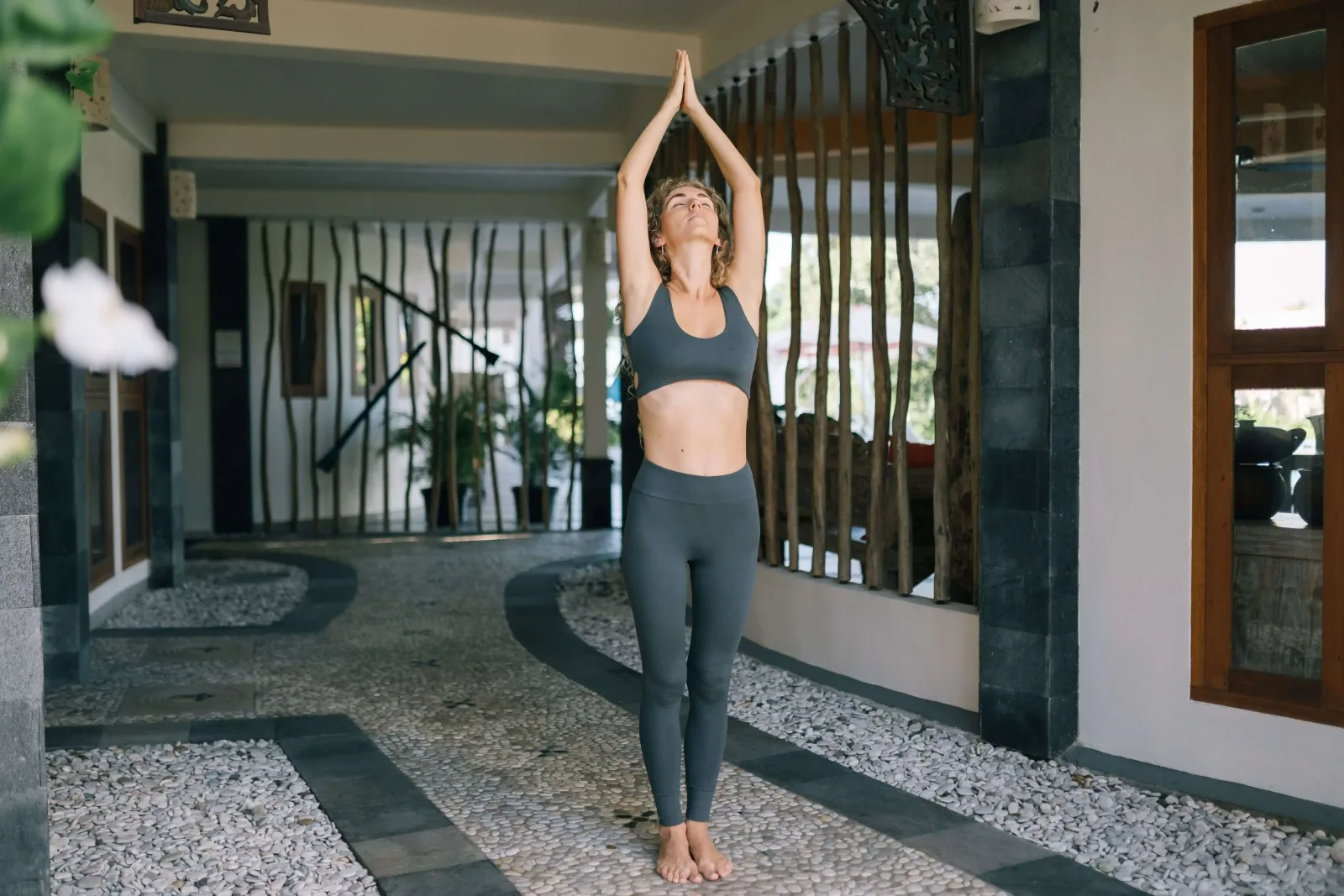
Postural awareness you can carry all day. This is tadasana's clearest gift. The pose doesn't force good posture on you; it teaches you to notice your alignment — the slumped chest, the locked knees, the weight collapsed into one hip — and to correct it yourself. That awareness may help reduce the everyday strain that slouched standing and sitting place on the back and neck, and it transfers to queues, desks, and railway platforms in a way few poses do.
A genuine, gentle balance practice. Balancing on two feet with eyes open sounds trivial until you narrow your base, slow your breath, and pay attention. Tadasana trains the constant small corrections that keep a body upright — the foundation that harder balances like tree pose are built on.
Quiet strength in the legs and core. Active thighs, a toned belly, and a long spine are muscular work, mild but real. Held attentively, tadasana keeps the postural muscles honest rather than building bulk — think of it as maintenance for the machinery of standing.
A steady mind, borrowed from a steady body. Standing still with full attention is effectively a short standing meditation, and many practitioners find it collecting and calming. We say that as teaching experience, not laboratory evidence — but it is the reason classes so often begin here.
The traditional claims, labelled. Older teaching credits tadasana with improving circulation, digestion, and energy, and popular articles sometimes add height increase for children. Take these as tradition respectfully passed on: robust modern evidence for them is lacking, and no pose can lengthen bones. What tadasana demonstrably offers is alignment, awareness, balance, and calm — which is plenty.
Common faults (the pose is simple; standing well is not)
Weight poured into the heels or one hip — the "waiting for a bus" stand. Redistribute; the four corners of both feet share the load.
Locked-back knees. Hyperextension switches the thigh muscles off and hangs the body on the joints. Micro-bend, then engage.
Ribs flaring as the chest "lifts". The lift comes from a long spine, not a puffed chest — keep the front ribs soft.
Shoulders creeping toward the ears. Roll them back, then let them be heavy.
Holding the breath while concentrating. If the breath stops, the pose has become a performance. Let it move.
Who should be careful
Tadasana is among the safest poses in yoga, but a few sensible cautions apply. If you experience dizziness, light-headedness on standing, or blood-pressure issues, keep the stance wider, keep the eyes open, and stand near a wall or chair for support. Prolonged rigid standing is not the goal for anyone — the pose should feel active yet easeful, never strained. During late pregnancy, a wider stance and nearby support are wise. Any pain while simply standing deserves a professional's attention rather than more standing.
Frequently asked questions
What disease does Tadasana help with?
Honestly: none, in the sense of curing or treating a disease — and articles claiming otherwise overreach. As part of a regular practice, tadasana may help with the postural aches that come from habitual slouching, and it contributes to the balance training that healthy aging depends on. For any medical condition, yoga is a possible support alongside professional care, never a substitute for it.
What are the 5 points of Tadasana?
Different schools phrase them differently, but the working version is the checkpoint list above: grounded, evenly weighted feet; active legs; a neutral pelvis with a lightly toned belly; a lifted chest with relaxed shoulders; and the crown of the head reaching tall. Even breathing threads through all five.
What are the three benefits of Tadasana?
If we had to pick three: postural awareness you can use all day, genuinely trained balance, and a steadier, calmer attention. The longer, hedged version is in the benefits section above.
What are the disadvantages of Tadasana pose?
Very few — which is part of its value. The realistic ones: standing rigidly for long periods can cause light-headedness or fatigue in some people (especially with low blood pressure), and locked knees or a forced military posture can create strain the pose is meant to remove. Practiced with soft joints and easy breath, tadasana is about as low-risk as movement gets.
Start every practice here
The best pose in the library to master first is the one that improves all the others. Stand in tadasana for a minute before practice and you will feel the difference it makes downstream — in triangle, in your sun salutations, everywhere. And if you'd like to understand alignment deeply enough to teach it — tadasana is literally the first pose our trainees learn to teach on the 200-hour yoga teacher training in Rishikesh, because correcting a student's stand teaches you to see every pose that grows from it. Questions? We're on WhatsApp.
References
National Center for Complementary and Integrative Health (NCCIH) — Yoga: What You Need To Know (general evidence on yoga, balance, and wellbeing).
NIH National Institute on Aging — resources on balance training and fall prevention (context for the balance benefit).
Traditional hatha yoga teaching on tadasana/samasthiti as the foundational standing posture (classical Indian schools; circulation and energy claims presented as tradition, not clinical evidence).
Reviewed for health accuracy by Dr. Bhupinder Singh Arora (M.D. Ayurveda), consulting Ayurvedic physician at Pure Soul Yoga School. This article is educational and not a substitute for personal medical advice.
Author note (byline): Gangesha Adi (E-RYT 500) begins every beginner course at Pure Soul Yoga School, Rishikesh with ten silent breaths in tadasana — and maintains that the students who take those breaths seriously learn every other pose faster.