Yoga Poses for the Chakras: A Root-to-Crown Practice Guide
Yoga poses for the chakras pair one or two postures with each of the seven energy centres the yogic tradition describes along the spine — grounding poses for the root, hip-openers for the sacral centre, heart-openers for anahata, and so on, finishing in stillness at the crown. This guide gives you that full root-to-crown practice: which poses are traditionally associated with each chakra, how to do them safely, and what this kind of practice can honestly offer.
One thing before we begin. This is the practice companion to our guide to the 7 chakras explained — that article covers what the chakras are, where the system comes from, and how to hold it with clear eyes. We won't repeat the theory here. The short version you need for practice: the chakras are a contemplative map from the yogic tradition, not verified anatomy — and the poses below are real, beneficial postures whether or not you take the map literally.
Can yoga poses really "balance" the chakras?
Here is the honest answer we give in our own philosophy classes. The tradition says yes: postures, breath and attention are said to free the flow of prana through the subtle body's channels, clearing the centres from root to crown. Modern science has no way to measure any of that, and we won't pretend otherwise.
What we can say from years of teaching is this: practising with the chakra map changes how you practise. Instead of stretching mechanically, you bring attention to one region of the body and one theme of your life at a time — steadiness at the root, openness at the heart, honesty at the throat. That combination of posture, breath and directed attention is simply good yoga, and it tends to leave people feeling more settled and more self-aware. Whether you call the result "balanced chakras" or "a focused, embodied practice," the mat work is identical.
How to use this sequence: move slowly, hold each pose for five to ten unhurried breaths, and rest your attention on the region named. Practise the full ladder in one 25–30 minute session, or pick the one centre whose theme feels loudest in your life right now. If you're unfamiliar with any posture, our yoga pose library covers the foundations.
Muladhara (root chakra) — Mountain and Tree Pose
The root centre, at the base of the spine, is traditionally associated with stability, security and groundedness — so its poses are the ones that teach you to stand.
Tadasana (Mountain Pose). Stand with feet hip-width apart, weight even across both soles. Lengthen up through the crown, soften the shoulders, and breathe — feeling the floor hold you. Five to ten breaths. It looks like "just standing"; done with attention, it is the most grounding pose in yoga.
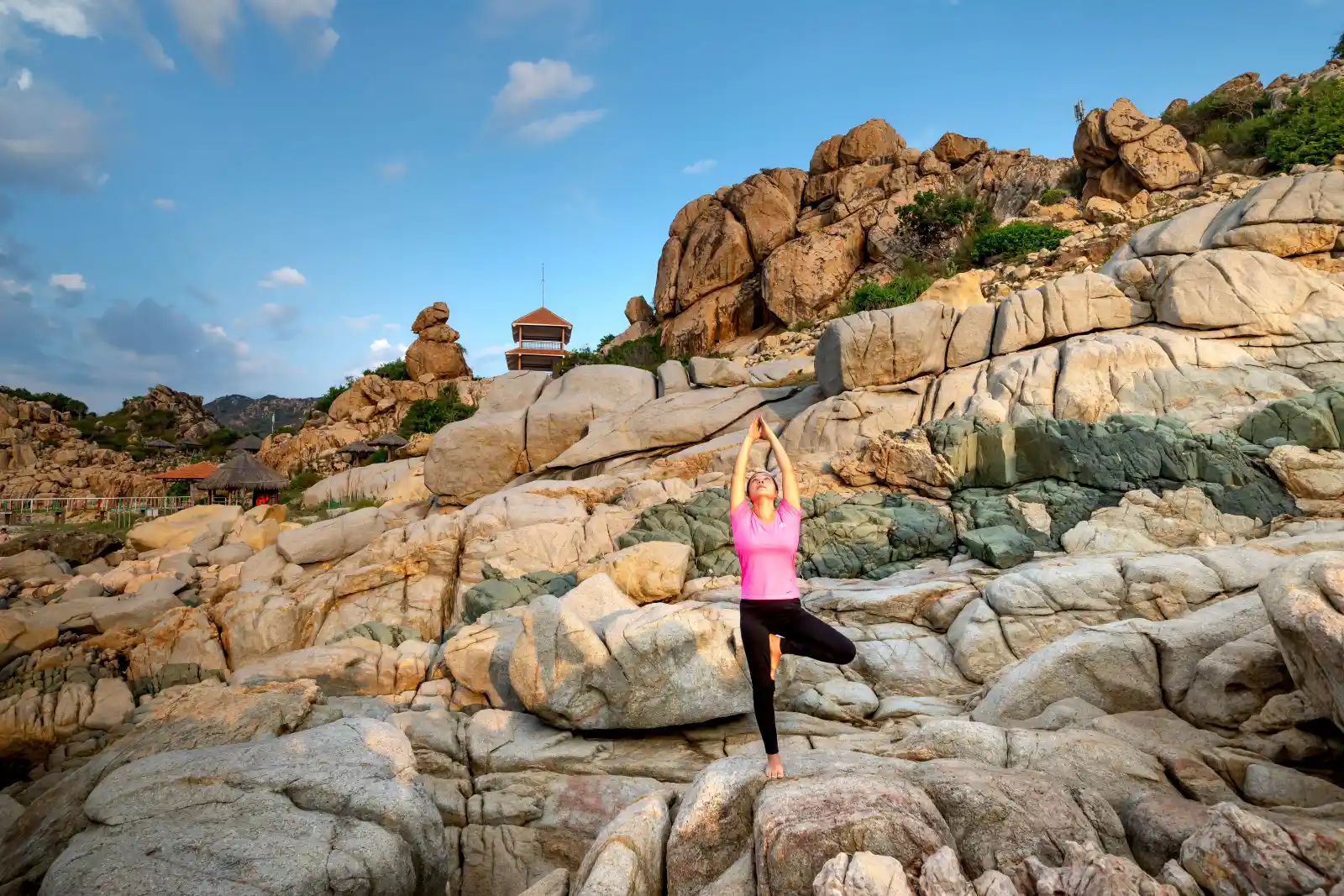
Vrksasana (Tree Pose). From Mountain, shift your weight into one foot and place the other sole against the inner ankle, calf or thigh — never on the knee. Hands together at the heart, gaze steady on one point, five to ten breaths per side. Wobbling is not failure; it's the practice. A wall behind you is a perfectly honourable prop.
Svadhisthana (sacral chakra) — Garland and Bound Angle Pose
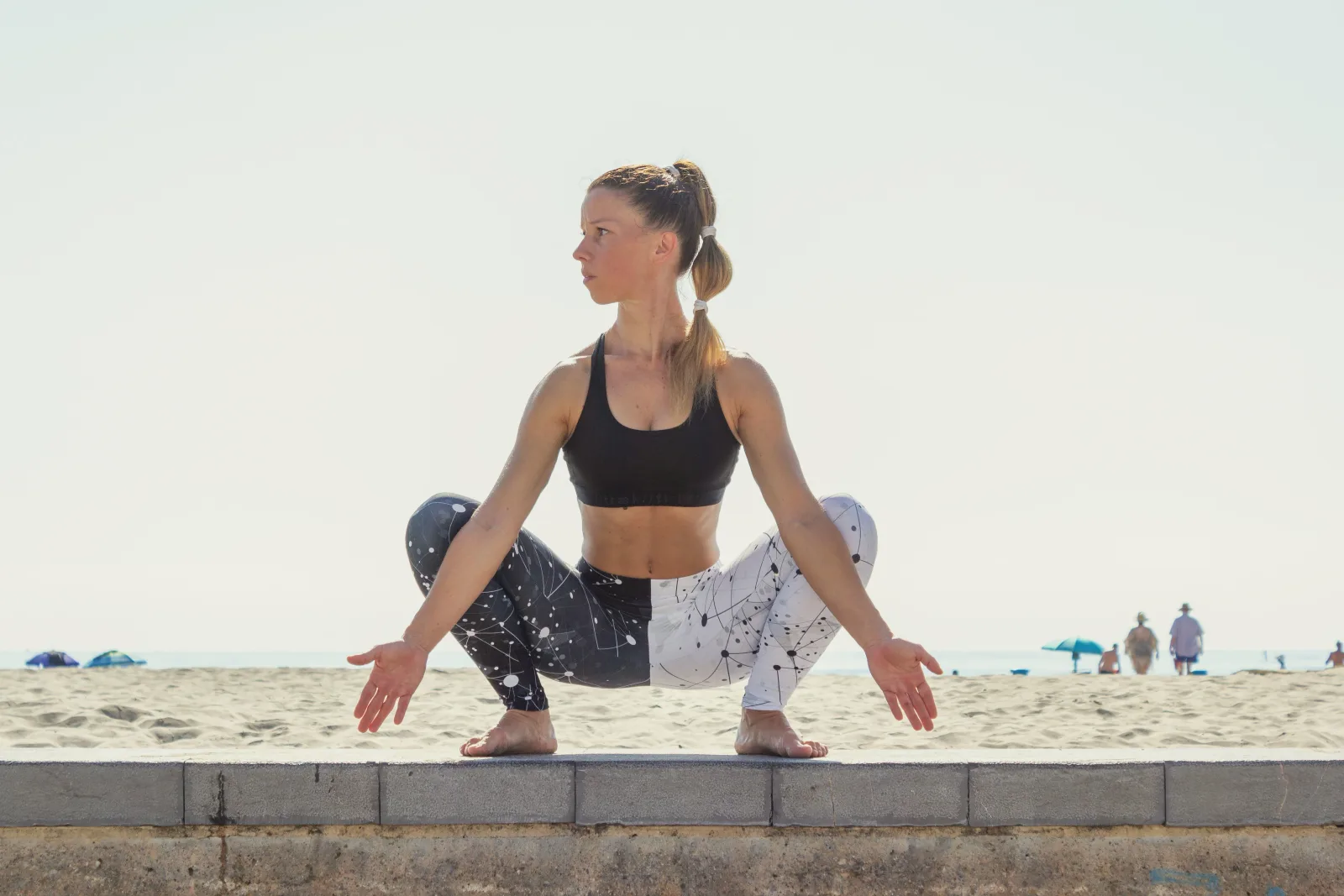
The sacral centre, in the lower abdomen, is traditionally associated with creativity, pleasure and emotional fluidity. Its poses open the hips — the region where, teachers like to say, we store what we don't express.
Malasana (Garland Pose). From standing, walk the feet a little wider than the hips, turn the toes out, and sink into a deep squat. Bring the palms together and press the elbows gently into the inner thighs, keeping the spine long and chest lifted. If your heels lift or your knees complain, sit on a block or cushion — the pose works just as well supported.
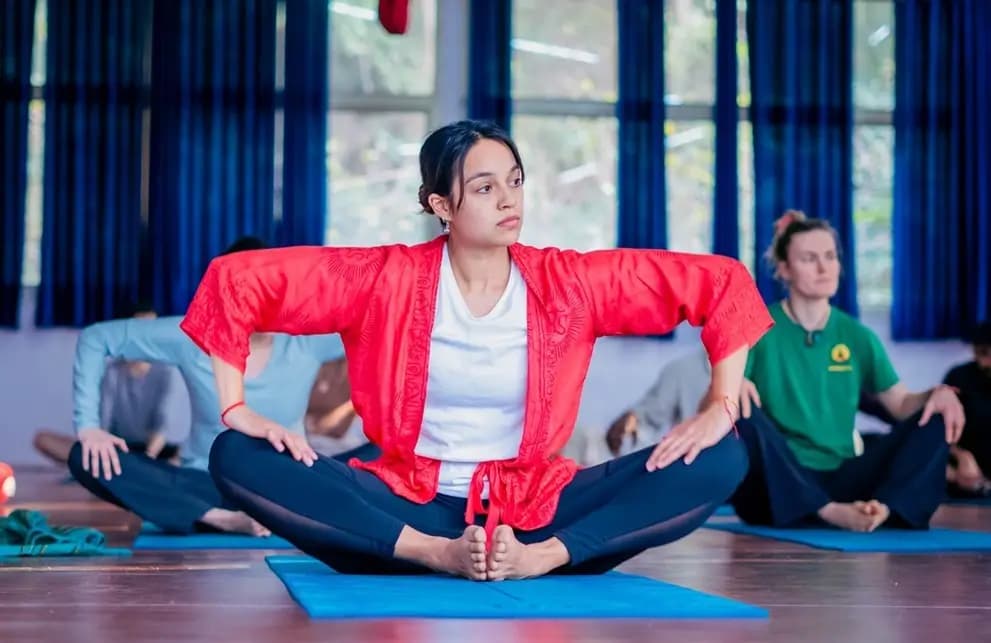
Baddha Konasana (Bound Angle Pose). Sit, bring the soles of the feet together, and let the knees fall outward. Hold the feet and sit tall, or hinge slightly forward. Breathe into the low belly for eight to ten breaths.
Manipura (solar plexus chakra) — Boat Pose
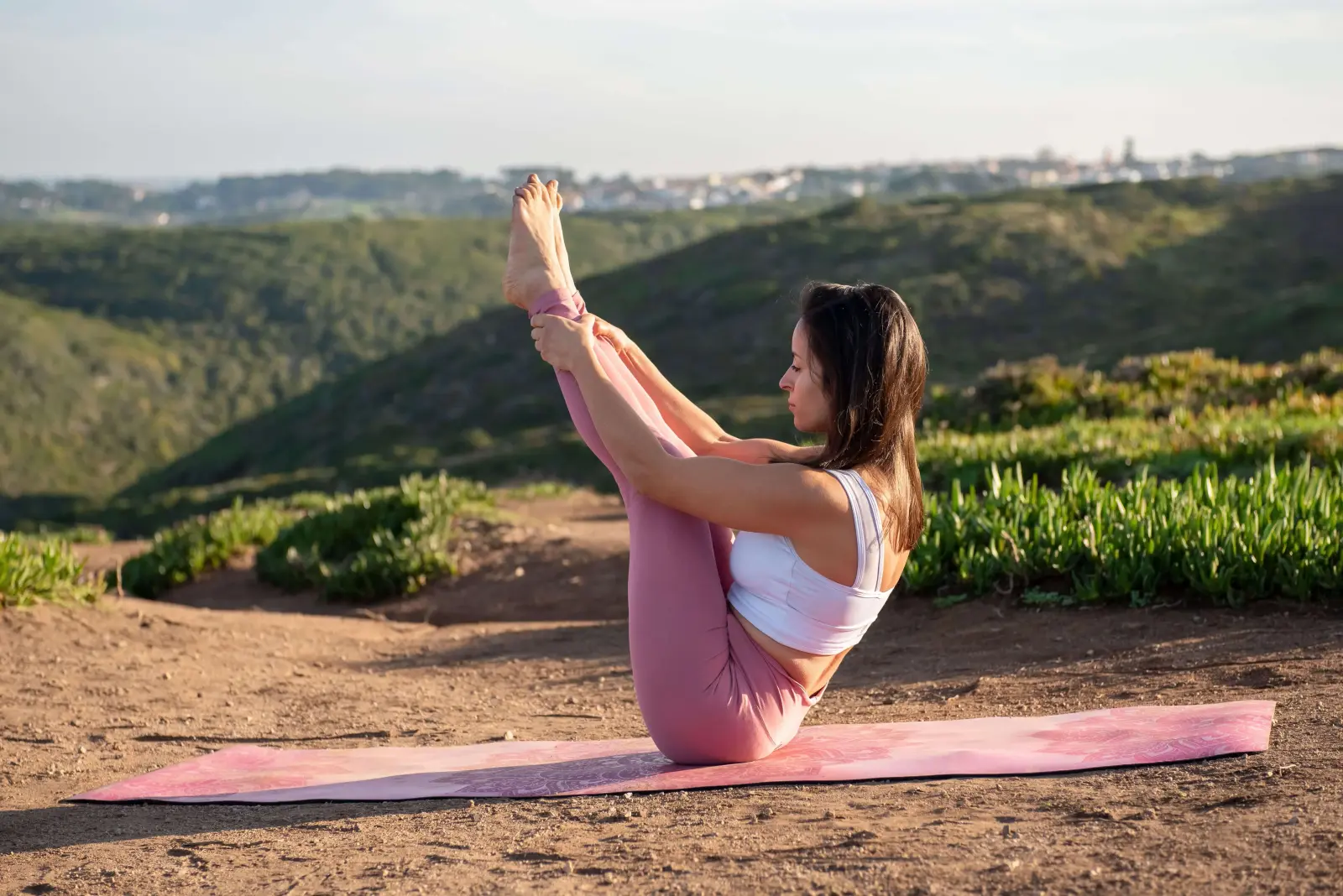
The navel centre is traditionally associated with willpower, confidence and inner fire — and nothing lights that fire quite like Navasana.
Paripurna Navasana (Boat Pose). Sit with knees bent, feet on the floor. Lean back slightly onto the sit bones, lift the shins parallel to the floor, and extend the arms forward. Keep the chest lifted rather than collapsing. Five breaths, rest, repeat. Bent knees, or hands lightly behind the thighs, are sensible modifications — a shaking, collapsed boat builds nothing but frustration.
A tip from our teaching hall: in belly-centred poses, exhale a fraction longer than you inhale and keep the navel region soft between efforts. Effort plus ease is the whole recipe — for Boat Pose and, the tradition would add, for willpower itself.
Anahata (heart chakra) — Camel Pose and Cobra
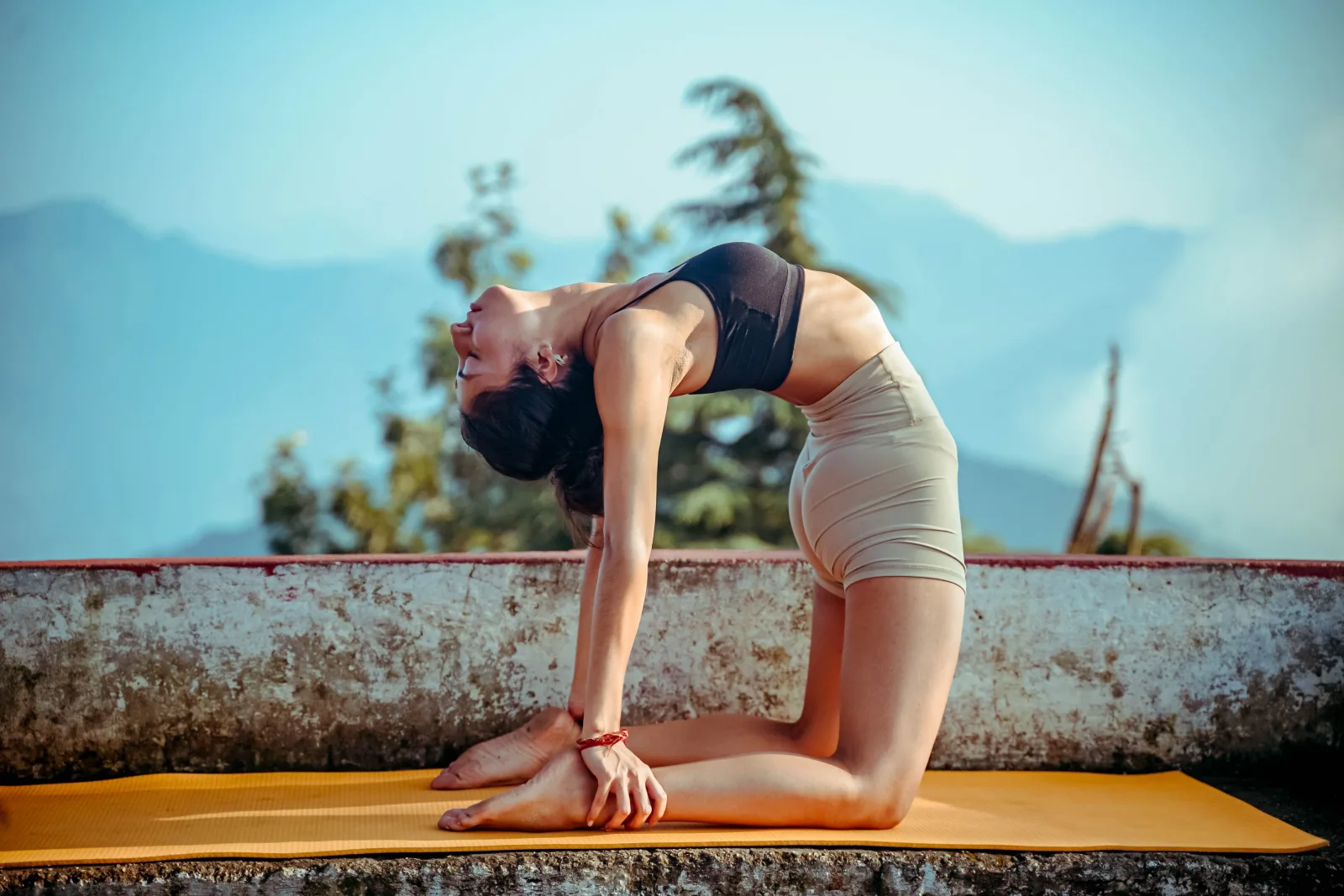
The heart centre, at the middle of the chest, is traditionally associated with love, compassion and forgiveness. Its poses are the backbends — postures that physically open the front of the chest, which most of us spend all day closing over desks and phones.
Ustrasana (Camel Pose). Kneel with thighs vertical, hands supporting the lower back, fingers pointing down. Lift the chest toward the ceiling and arch back only as far as the front body opens comfortably — reaching for the heels is entirely optional. Keep the neck long rather than dropping the head back. Five breaths, then rest in Child's Pose.
Bhujangasana (Cobra Pose). A gentler heart-opener if Camel feels like too much: lie on your belly, hands under the shoulders, and peel the chest up on an inhale, keeping the elbows soft. Our full guide to bhujangasana's benefits breaks the pose down step by step.
Vishuddha (throat chakra) — Supported Shoulder Stand or Supported Bridge
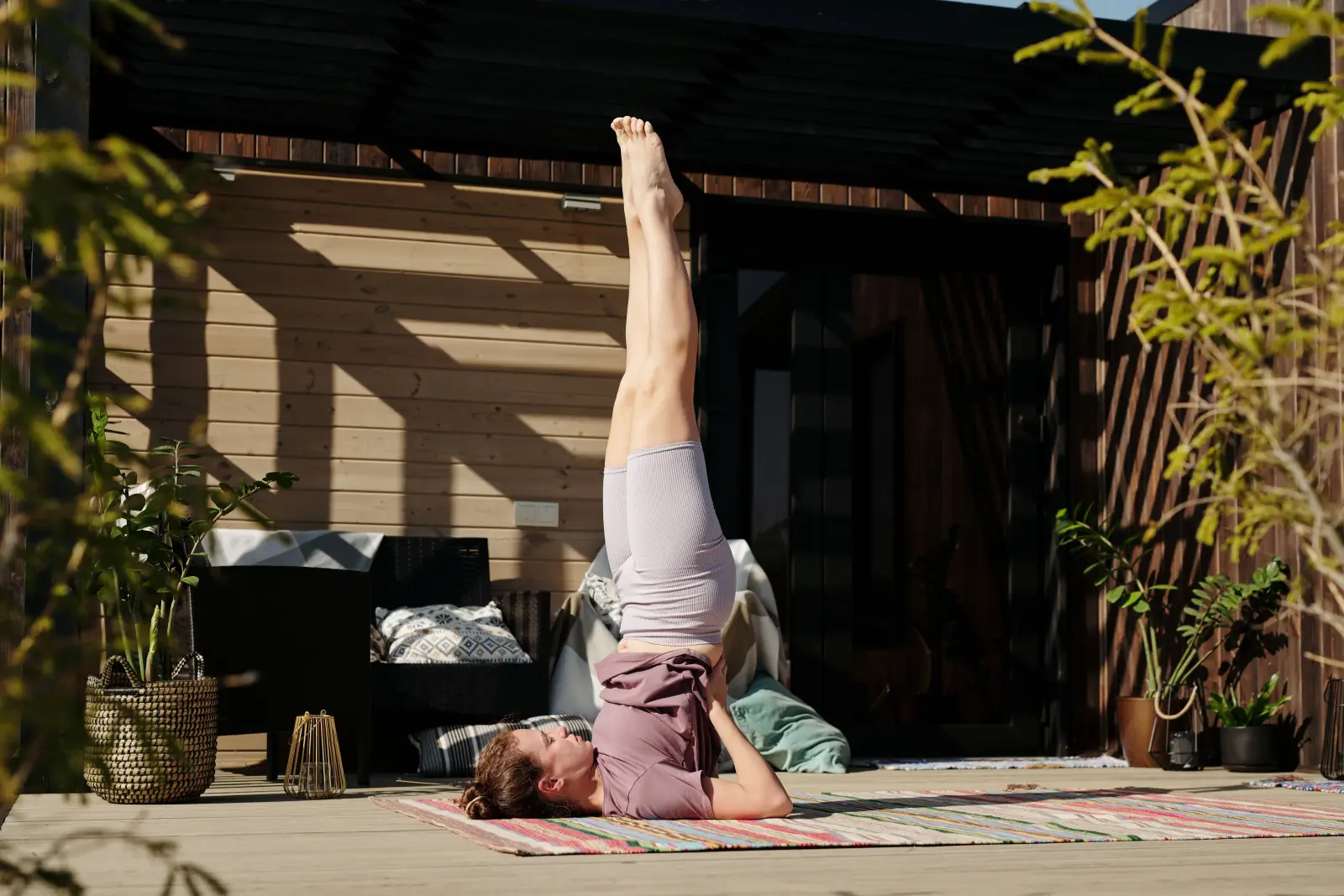
The throat centre is traditionally associated with communication, expression and truthfulness. The classical pose here folds the chin toward the chest, bringing pressure and attention to the throat.
Salamba Sarvangasana (Supported Shoulder Stand). Lie on your back, lift the legs and hips, and support the lower back with your hands, elbows on the floor. This is an intermediate inversion with real contraindications — neck issues, high blood pressure, pregnancy — so please learn it from a teacher first; our guide to sarvangasana covers the safe setup in detail.
Setu Bandhasana (Supported Bridge) — the accessible alternative. Lie back, bend the knees, feet hip-width, and lift the hips, sliding a block under the sacrum if you like. The chin softens naturally toward the chest — the same throat-region attention with a fraction of the risk. This is the version we give most students first.
Ajna (third-eye chakra) — Easy Pose with eyebrow-centre focus
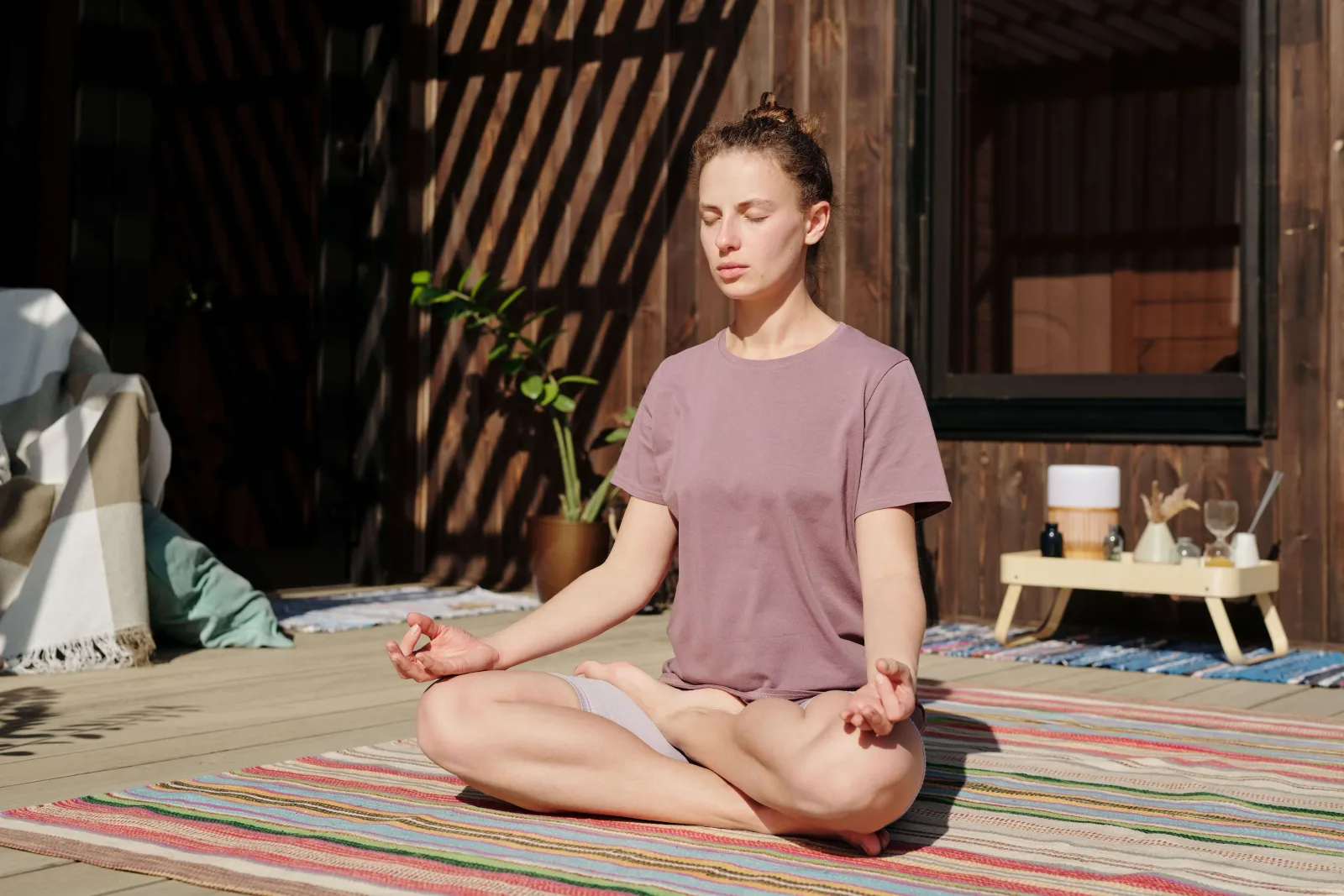
The brow centre is traditionally associated with intuition, insight and clarity — and its "pose" is really the doorway into meditation.
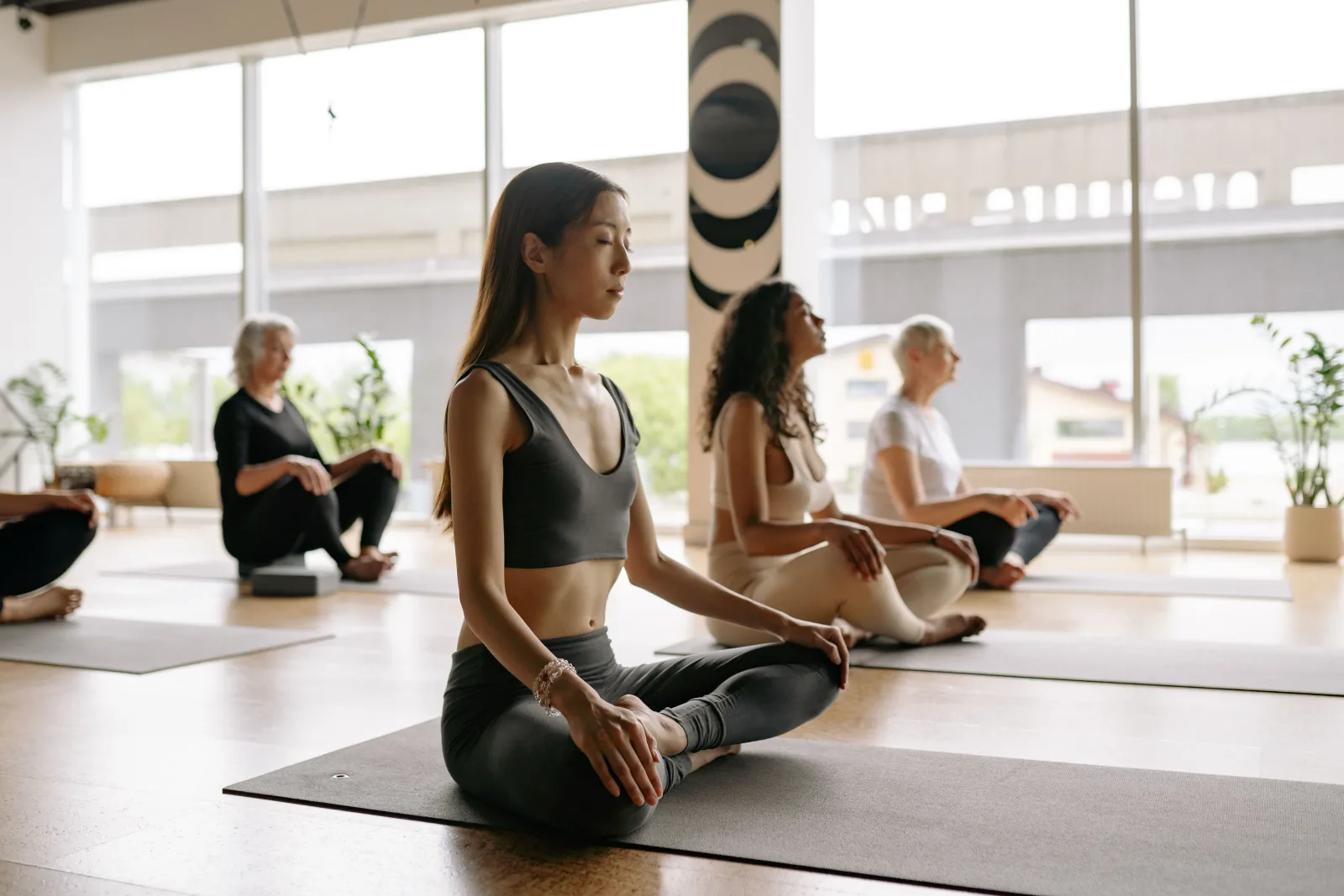
Sukhasana (Easy Pose). Sit cross-legged on a cushion so the hips sit higher than the knees, spine tall, hands resting on the thighs. Close the eyes and rest your attention gently at the space between the eyebrows — without straining the eyes upward. Follow the breath there for two to five minutes. If sitting meditation is new territory, our guide to meditation techniques for beginners will take you further than any pose description can.
Sahasrara (crown chakra) — Corpse Pose
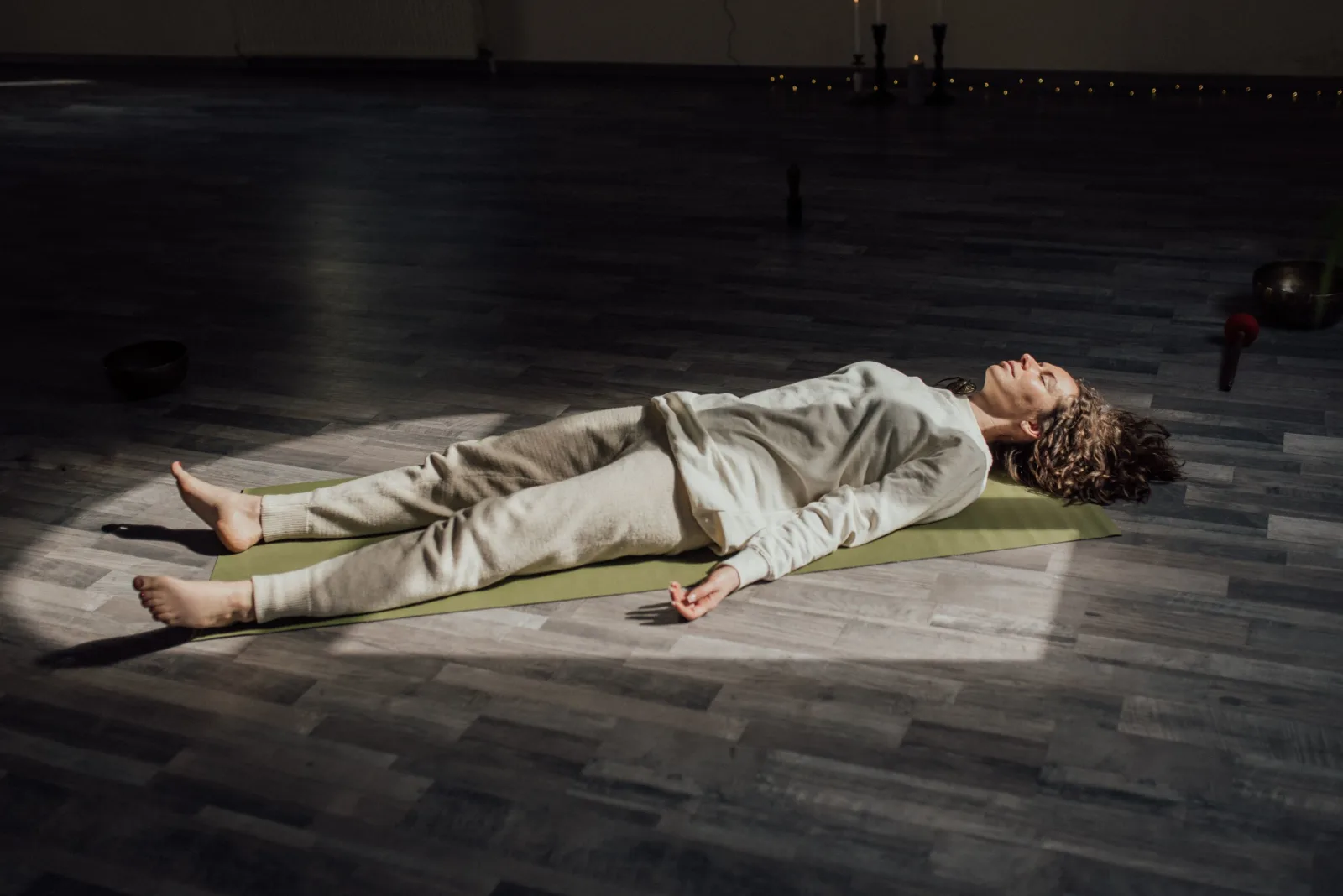
The crown centre is traditionally associated with transcendence and unity — and fittingly, its pose asks you to stop doing altogether.
Savasana (Corpse Pose). Lie flat on your back, legs relaxed apart, palms up. Close the eyes and let the breath return to its natural rhythm, releasing the body region by region from feet to crown. Stay five to ten minutes. In our classes we treat Savasana as the harvest of the practice, not the nap after it — everything the sequence stirred settles here.
Putting it together
Practised in order, these poses make a natural arc: standing and grounding, hip-opening, core fire, heart-opening, gentle inversion, sitting, stillness. Two or three rounds a week is plenty; a single centre's pose held with real attention beats seven done on autopilot. The tradition also pairs this work with breath practices — alternate-nostril breathing (anulom vilom) is the classic companion — and with mantra, chanting a seed syllable at each centre. If claims about chakras ever cross into promises of healing illness, though, be wary: that isn't what this practice is for, and anything affecting your health belongs with a doctor.
Frequently asked questions
Does yoga activate chakras?
According to the tradition, yes — posture, breath and attention are precisely the tools said to awaken and clear the energy centres. There's no scientific evidence for chakras as physical structures, so "activation" can't be measured. What practice reliably does is train attention, release physical tension and steady the breath — which is why the sequence feels the way it does, whichever explanation you prefer.
How do you unlock all 7 chakras?
The tradition would gently push back on the word "unlock" — this isn't a video game, and honest teachers don't promise instant openings. The classical path is gradual: regular asana, breathwork, meditation and ethical living, sustained over years. Start with the root-to-crown sequence above, add breath practice, and let "unlocking" take care of itself.
What are the 7 chakras of yoga?
From root to crown: muladhara (base of spine), svadhisthana (lower abdomen), manipura (navel), anahata (heart), vishuddha (throat), ajna (brow) and sahasrara (crown) — each traditionally associated with a theme, from security up to transcendence. For the full map — meanings, history and how to hold it honestly — read our complete guide to the 7 chakras.
How do you align all 7 chakras?
"Alignment" in the traditional sense means prana flowing freely through every centre — cultivated exactly as above: move through poses for each chakra in sequence, breathe consciously, and close in meditation and Savasana. Treat it as a practice rhythm, not a one-time fix, and use the seven themes as prompts for honest self-reflection between sessions.
Where this practice can take you
If working root-to-crown on the mat leaves you curious about the deeper end — the meditation, mantra and philosophy this map was actually built for — that is the daily curriculum of our Meditation Yoga Teacher Training in Rishikesh, taught in the town where these practices have been handed down for generations. Questions before you commit to anything? Ask us on WhatsApp — real humans answer, usually within hours.
References
Hatha Yoga Pradipika (attributed to Svatmarama) — classical source on asana, prana and the energy centres.
Shat-Chakra-Nirupana (tantric text, translated in Arthur Avalon's The Serpent Power) — the classical description of the chakras.
National Center for Complementary and Integrative Health (NCCIH) — research overviews on yoga and meditation (documented practice outcomes; limits of evidence).
Author note (byline): Gangesha Adi (E-RYT 500) teaches asana, meditation and yoga philosophy at Pure Soul Yoga School, Rishikesh, where students of 50+ nationalities practise this root-to-crown sequence as part of the school's chakra and subtle-body curriculum.